Short answer: Give the show one job, choose one repeatable format, and assign three decisions: who owns the business goal, who approves the editorial output, and who supplies the expertise. Use a production system for scheduling, recording, editing, packaging, and distribution. Your team should own judgment, not every production task.
The usual mistake is to treat a company podcast like a small media department. The launch plan fills up with microphones, editors, video setups, guest coordination, artwork, clips, publishing accounts, and analytics before anyone has written down why the show should exist.
A lean team needs a smaller operating model. The show still requires editorial ownership. It does not require a full-time producer if a system can carry the repeatable work around that judgment.
Give the show one repeatable job
Start with a sentence that connects one audience to one useful outcome:
This show helps [specific audience] understand [recurring problem] by hearing [credible source] explain [decisions, examples, or lessons].
That sentence is more useful than a broad theme. "A podcast about B2B growth" leaves every episode open to debate. "A weekly conversation where revenue leaders unpack one decision that changed their go-to-market motion" gives the team an editorial filter.
Before you choose a name or microphone, answer:
- Who should recognize that an episode is for them?
- What recurring question will the show help them answer?
- Who has firsthand knowledge worth hearing?
- What should the listener be able to do or understand afterward?
- Why is a conversation better than another article or webinar?
If the substance already exists in a document and no human perspective is needed, a source-to-audio tool may be simpler than an interview show. Build a podcast workflow only when the recurring audio format earns its place.
Choose a weekly format your team can repeat
A small team should begin with one format, not a rotating menu of interviews, panels, news episodes, narrative stories, and video roundtables.
Three workable starting points are:
| Format | Source of the episode | Internal work that remains |
|---|---|---|
| Expert interview | A customer, operator, partner, or internal expert | Choose the guest, set boundaries, approve the episode |
| Topic episode | A focused brief, research pack, or point of view | Supply and verify the source material, approve the final argument |
| AI-led discussion | An approved topic and source set | Set the angle, review facts, approve the output |
Use the same episode length range, structure, review path, and publishing day for the first four episodes. Consistency makes the workflow observable. It also lets the team learn whether the format is sustainable before adding complexity.
Spotify's current guide to starting a podcast recommends planning the topic, format, branding, recording, and distribution as connected parts of the launch. For a company show, the practical extension is to make each of those parts owned and repeatable.
Assign three roles, even if one person holds two
You do not need three new hires. You need three named responsibilities.
The business owner
This person decides why the show exists, which audience matters, and what success should look like. They protect the show from becoming a collection of interesting conversations with no commercial or editorial direction.
The editorial approver
This person approves the angle, factual claims, sensitive material, final episode, and promotional copy. Approval should have a deadline and a clear default action. "Send it around to the team" is not an approval workflow.
The guest or source owner
This person supplies the expertise or makes sure the right guest does. For an interview show, they confirm fit, context, consent, and any boundaries before the conversation. For a topic episode, they provide and verify the source material.
One marketing lead can be both business owner and editorial approver. A founder can be the source owner for early episodes. The important part is that every decision has one name beside it.
Build the workflow from idea to distribution
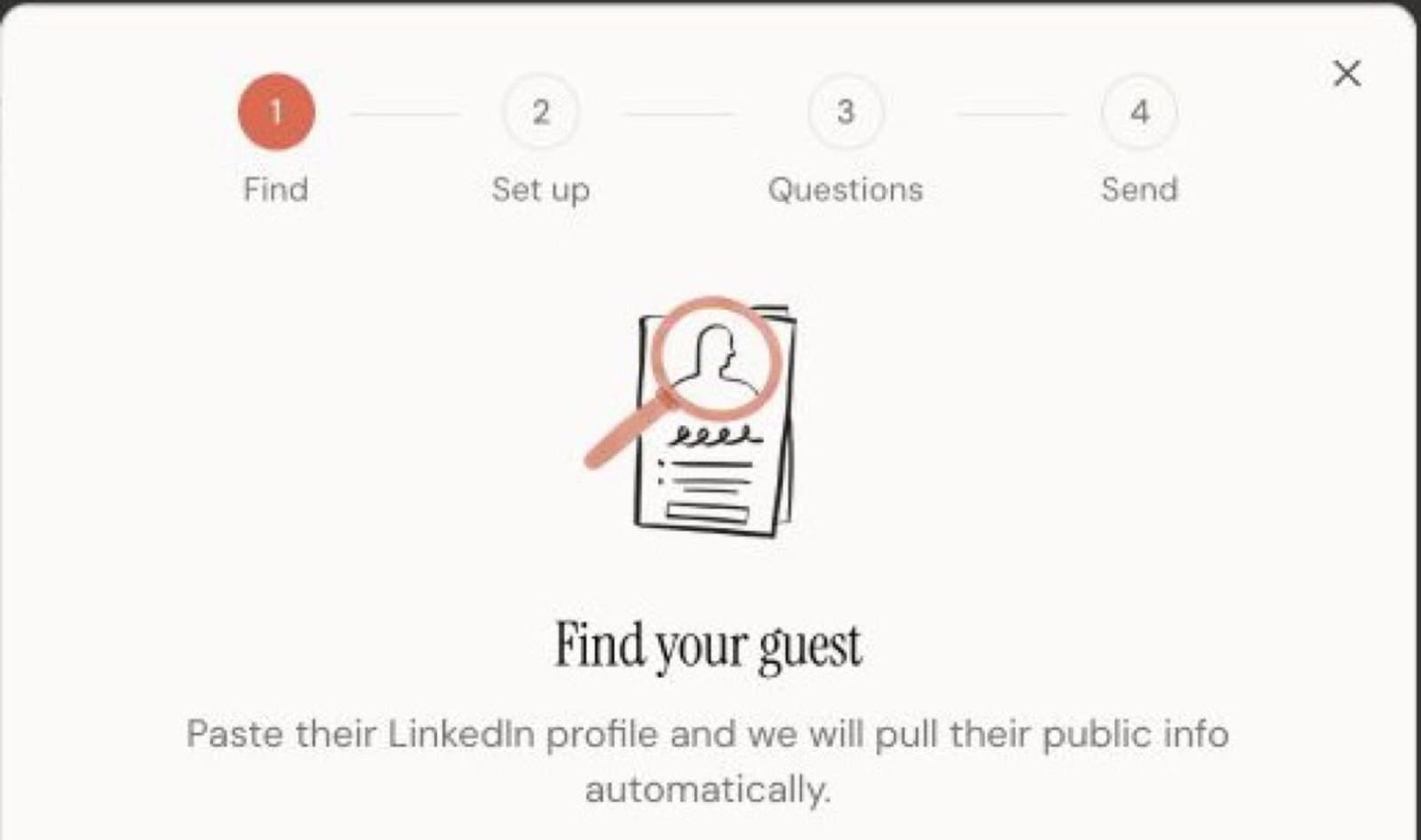
The production system should make the handoffs visible. A practical weekly flow is:
- Choose the episode job. Write the listener question and the source of the answer.
- Prepare the input. Confirm the guest and boundaries, or assemble the approved source pack.
- Record or generate. Capture the conversation or create the episode from the approved brief.
- Review the substance. Check facts, names, permissions, sensitive statements, and the final argument.
- Package the episode. Create the title, description, transcript, chapters, artwork, and useful clips.
- Distribute it. Publish the feed, episode page, social assets, email copy, and internal sales link.
- Review the signal. Record what the right audience listened to, shared, replied to, or used in a conversation.
Mato's public how-it-works page maps its workflow across planning, recording, editing, clips, distribution, and measurement. Its distribution page covers the downstream publishing layer. The useful question is not whether every step exists. It is which steps still require your team's judgment every week.
Apple's podcast RSS requirements are a useful launch boundary: a public feed needs the required tags, artwork, at least one episode, and a unique identifier for every episode. Treat feed validation and directory submission as setup work, then keep the weekly team focused on the episode.
Decide what a finished episode includes
"Publish the podcast" is too vague for a handoff. Define the finished package before the first recording.
A lean definition of done might include:
- approved audio
- final title and description
- transcript and show notes
- episode artwork
- public episode page and RSS entry
- one or two channel-specific promotional assets
- one internal link and summary that sales or customer teams can reuse
- analytics tags or campaign links agreed before distribution
Here is a current public Mato-produced episode. The embed is useful because it shows the actual listener handoff, not a production mockup.
Listen to the episode
Debt, Dimon, and Gold: Nearing $40 Trillion
A published episode of Outside the Dollar, distributed through Mato.

Your definition of done may be smaller. A full transcript and two strong clips can be more useful than twelve assets nobody has time to review.
Use a four-week launch plan
Do not try to perfect a season before you have run the workflow once.
Week 1: lock the show contract
- Write the audience-and-job sentence.
- Choose one format and one publishing cadence.
- Name the three owners.
- Define what requires approval and who can stop publication.
- Create the show name, description, visual direction, and feed checklist.
- Select the first two episode topics or guests.
The output is a one-page show contract, not a brand deck.
Week 2: produce the pilot
- Prepare one brief.
- Run one recording or generation.
- Review the episode for substance and consent.
- Produce the minimum finished package.
- Log every point where the work waited for a person.
Keep the pilot private until the team agrees that the workflow and output are publishable. The purpose is to expose the operating work, not to prove that the first attempt is perfect.
Week 3: test the full publishing path
- Make the approved episode available through the public feed.
- Validate the feed and submit the show to the directories that matter.
- Publish the episode page and planned promotional assets.
- Give internal teams the approved link and context.
- Confirm that ownership, artwork, descriptions, and links display correctly.
Apple's submission guide explains the validation and review step for an RSS-based show. Spotify also documents how hosted shows expose an RSS feed for submission to other listening platforms. Directory setup is not the same thing as ongoing audience growth, but it makes the show findable where listeners already are.
Week 4: repeat and remove friction
- Produce the second episode with the same format.
- Compare actual internal work with the pilot.
- Remove a handoff, asset, or approval step that did not add value.
- Keep any step that protected facts, consent, brand, or usefulness.
- Set the next four-episode queue.
The second run is the real test. A workflow that only works through founder heroics is not yet a company system.
Calculate team time from your workflow, not an industry average
There is no honest universal answer to "How many hours does a weekly company podcast take?" The result depends on format, guest coordination, review depth, asset count, and how much the production system handles.
Build your estimate from the work your team will actually retain:
| Recurring task | Owner | Your minutes per episode |
|---|---|---|
| Select topic or guest | Business owner | ___ |
| Approve brief and boundaries | Editorial approver | ___ |
| Guest or source preparation | Source owner | ___ |
| Review final episode | Editorial approver | ___ |
| Approve distribution assets | Business owner or approver | ___ |
| Review performance and feedback | Business owner | ___ |
| Total internal time per episode | ___ |
Keep one-time launch work separate: naming, artwork, feed setup, directory submission, analytics configuration, and reusable templates. Then multiply recurring minutes by planned monthly episodes and the real loaded cost of the people involved.
Podcast ROI calculator
Model the operating cost of your show
Adjust cadence, production time, team cost, and outside spend using your own assumptions instead of a universal benchmark.
Annual savings with Mato
$16,560/year
That’s the gap between running this show in-house and running it on Mato. Same cadence, length, and quality — plus 456 hrs handed back to your team.
Side by side · annual
In-house productionDIY
$60,960cost
480 hrsteam time
MatoBusiness · yearly
$44,400cost
24 hrsteam time
Recommended for your show
Business
$3,500/mo+ $50/published episode · annual billing available
Weekly cadence with full-length episodes calls for the full platform — live AI interviews, vertical clips, attribution, and the distribution stack.
See full plan detailsBased on the assumptions entered above. A directional estimate, not a quote.
The point is not to force a positive ROI estimate. It is to make hidden coordination visible before the show becomes another weekly commitment.
Keep one approval deadline
Many small-team podcasts stall after production, not before it. The audio exists, but the final reviewer has no deadline or the promotional copy circulates through five stakeholders.

Use one approval packet and one deadline. It should contain the episode, title, description, transcript or relevant passages, and the exact promotional assets that need review. Ask the approver to choose:
- approve
- approve with named corrections
- hold for a stated reason
Factual corrections and consent boundaries should always be easy to raise. Preference changes should not reopen the entire episode after the agreed review window.
What should stay human
Removing production work is not the same as removing accountability.
Keep a person responsible for:
- choosing a worthwhile audience and episode question
- deciding whether a guest is credible and appropriate
- setting consent, privacy, and commercial boundaries
- verifying consequential factual claims
- judging whether an edit changes meaning
- approving what the company publishes under its name
- responding when a guest or listener raises a legitimate concern
- deciding what the performance signal means for the next episode
Automation can prepare briefs, coordinate calendars, process audio, draft descriptions, find clip candidates, format assets, and distribute approved output. Those are valuable reductions in workload. They do not make the system the publisher of record.
Four failure modes to prevent
No single owner
If everyone contributes and nobody can decide, the show will wait. Give the business goal and final editorial call to named people.
Too many formats
Every format creates a new production path. Run one format for four episodes before adding another.
No approval deadline
An open-ended review turns a weekly show into an irregular show. Set the deadline when the episode is commissioned, not when it is finished.
Distribution begins after publication
The episode topic, title, guest, clips, email angle, and sales use should support the same listener job. Decide that distribution logic before recording so promotion is not an afterthought.
The operating model is working when the next episode is unsurprising: the team knows what it is for, who supplies the substance, who approves it, what ships, and when.
Pressure-test the operating model
Model the real workload before you commit to a weekly show.
Use your cadence, team cost, review time, and production assumptions to see what the podcast requires—and which work a production system should remove.
Frequently asked questions
Can a company start a podcast without hiring a producer?
Yes. The company still needs a business owner, an editorial approver, and a guest or source owner. A production platform or service can handle recurring coordination, recording, editing, packaging, and distribution. The company remains accountable for the purpose, facts, consent, and final approval.
What is the minimum team for a weekly branded podcast?
Think in responsibilities rather than headcount. You need someone to own the business goal, someone to approve the editorial output, and someone to supply or coordinate the expertise. One person may hold two roles, but every decision needs a named owner and deadline.
How much team time does a weekly podcast require?
Calculate it from the tasks your team keeps: topic or guest selection, preparation, factual review, final approval, distribution approval, and performance review. Separate that recurring time from one-time feed, artwork, directory, and analytics setup. Avoid relying on a universal hours-per-episode claim.
Should a small marketing team launch weekly or monthly?
Choose the fastest cadence the team can repeat without weakening the episode or skipping review. A weekly format creates a faster learning loop, but a monthly show is better than a weekly promise the team cannot sustain. Test the same format twice before locking the schedule.
What podcast work should not be automated?
Do not automate final responsibility for consent, sensitive boundaries, consequential facts, meaning-changing edits, or publication under the company's name. Automation can prepare and execute the workflow; a person should own the judgment.
When should a company hire an agency instead?
Use an agency when the show depends on human hosting, narrative reporting, field production, detailed sound design, high-touch guest management, or a creative service team making decisions with you. A software-led workflow is better suited to repeatable formats with clear internal ownership.