Short answer: Use an AI podcast generator when the substance already exists in documents or prompts. Use an AI audio studio when your team wants to script and direct the episode. Use an AI interviewer when a real guest's knowledge is the source. Hire an agency when strategy, human hosting, or produced storytelling needs a service team.
These options all produce audio, but they solve different problems. The useful comparison starts with where the episode's substance comes from, then asks who owns the editorial work every week.
The four podcast production models
| Production model | The episode starts with | Who speaks | Best fit | Work your team still owns |
|---|---|---|---|---|
| Source-to-audio generator | Documents, links, or uploaded research | AI voices | Audio overviews of material that already exists | Source selection, fact checking, and deciding where the audio belongs |
| AI audio studio | A prompt, script, recording, document, or production brief | AI voices, recorded voices, or both | Scripted podcasts, training, ads, and translated audio | Editorial direction, scripting choices, revisions, and approval |
| AI interviewer and production engine | A live conversation with a real guest | AI host and human guest | Recurring expert, customer, partner, or industry interviews | Guest choice, boundaries, review, and final approval |
| Full-service podcast agency | A business goal and creative brief | Usually human hosts and guests | Flagship shows, high-touch strategy, and produced storytelling | Executive input, stakeholder decisions, and agency management |
Some products cross these boundaries. A studio may accept recordings. An agency may use AI. An interview platform may also generate scripted episodes. The table describes the main production job, not every feature a vendor offers.
What an AI podcast generator is good at
A source-to-audio generator works best when the knowledge already exists.
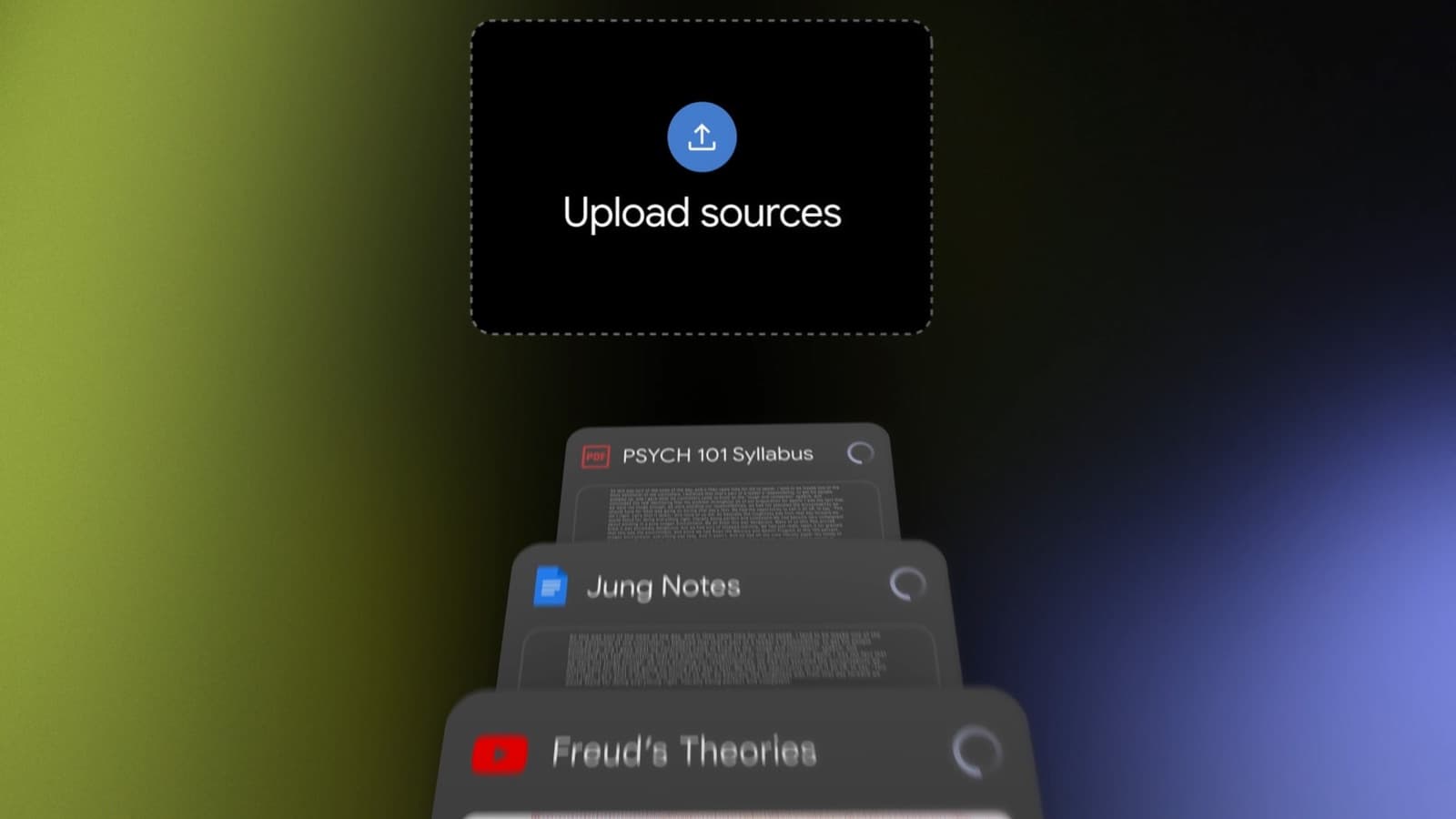
Google's NotebookLM Audio Overviews create AI-hosted discussions from sources in a notebook. Google currently offers formats named Deep Dive, Brief, Critique, and Debate. The official help page also warns that generated audio may contain inaccuracies or glitches, which is a useful reminder to review the result.
Choose this model when:
- a report, research pack, or set of links already contains the substance
- the goal is to listen, learn, review, or share an overview
- a guest relationship is not part of the value
- speed matters more than creating new source material
Do not add an interview workflow when no interview is needed. If the actual job is "help our team listen to this research," source-to-audio is the direct answer.
Its boundary is equally clear. A source can only supply what it contains. It cannot tell a story that was never documented, explain why a decision felt risky, or answer a follow-up based on something a guest says in the moment.
What an AI audio studio is good at
An AI audio studio helps a team turn prepared material into finished audio while keeping editorial control in the workspace.
Wondercraft currently presents podcast creation from text, documents, and other prepared inputs, with AI voices and editing tools. Jellypod's agency workflow describes turning reports, decks, and webinar recordings into branded episodes, then editing the script, regenerating audio, and distributing the result.
Choose an AI audio studio when:
- the team wants to approve or edit the script before release
- the episode can be built from supplied material
- synthetic voices, cloned voices, or language versions are part of the format
- a marketer, producer, or subject-matter expert can direct the editorial input
This model removes parts of recording and post-production. It does not decide what the show should say. Source quality, script judgment, factual review, and the weekly publishing decision still need an owner.
That makes an AI audio studio a good fit for training, internal communications, product updates, scripted thought leadership, and other formats where the message is known before production starts.
What an AI interviewer changes
An AI interviewer starts with a live conversation rather than a finished source.
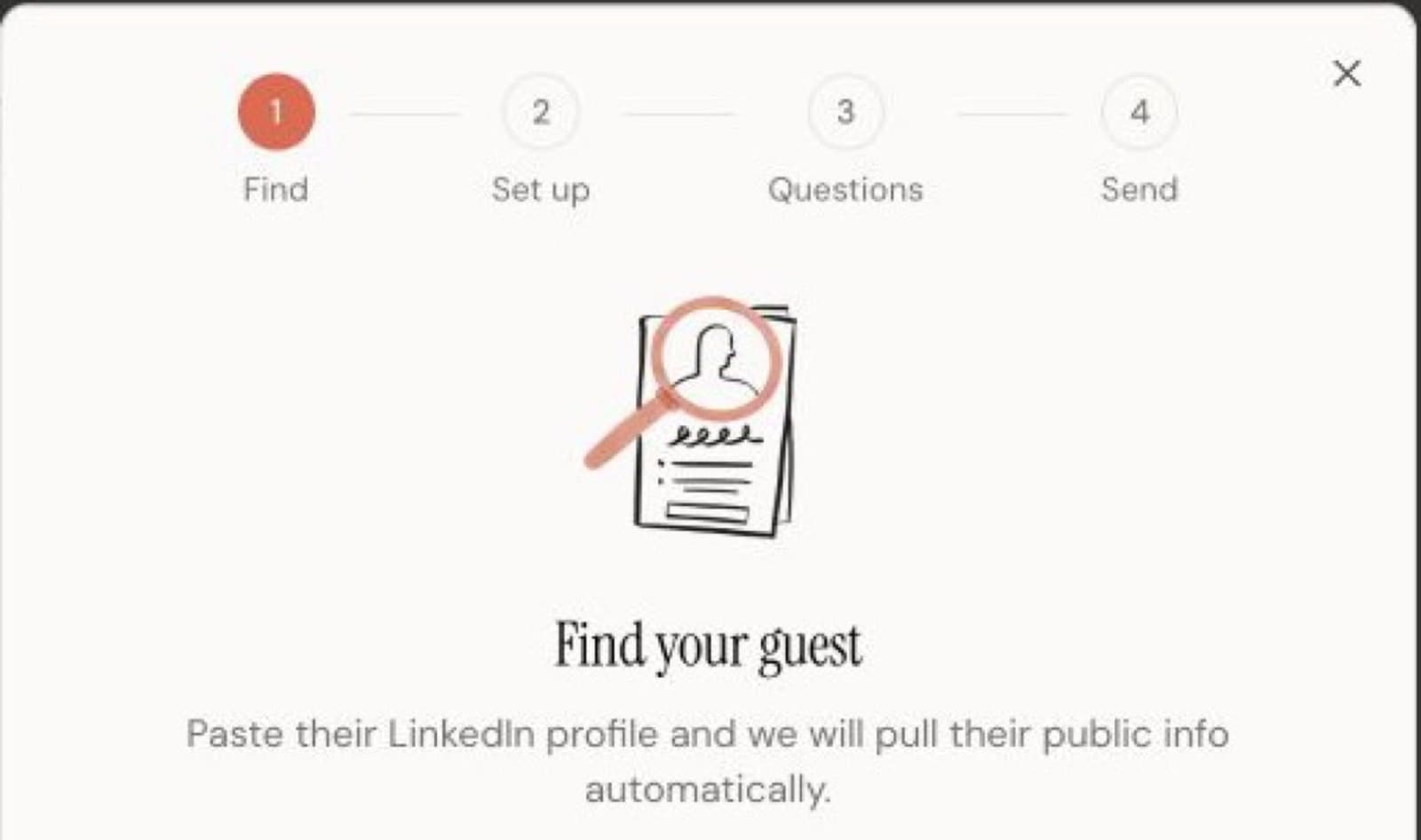
Mato's live-interview workflow is built around an AI host speaking with a real guest, responding to what the guest says, and asking follow-up questions. Mato's public workflow then covers production outputs such as audio, transcript, show notes, cover art, review, and distribution.
Choose an AI interviewer when:
- the guest's firsthand knowledge is the reason to listen
- the episode should discover material that is not already documented
- a small team needs a repeatable way to run expert or customer interviews
- the business wants a show cadence that would be difficult to staff traditionally
- the guest relationship matters alongside the published episode
The guest remains the source. The AI host reduces the work required to prepare, conduct, and package the conversation.
That also changes how the interview system should be evaluated. Natural voice quality is not enough: it has to notice useful details, ask grounded follow-ups, avoid stacking questions, recover from interruptions, and preserve a human review boundary. Our review of four 2026 AI-interviewer studies explains why those behaviors matter.
This distinction matters for customer stories. A written case study can document approved facts. An interview can reveal the decision process behind those facts: what the customer worried about, what nearly failed, and how they describe the change in their own words.
It also matters for expert content. The useful answer often appears after someone asks "why?" or "what happened next?" A live interview can pursue that thread. A document summary cannot.
An AI interviewer is not the right format for every conversation. Sensitive investigations, crisis interviews, therapeutic subjects, and personality-led shows may require a skilled human interviewer.
When a podcast agency is the right answer
A full-service agency supplies people and production judgment, not merely software.
Fame positions itself as a B2B podcast production agency. Lower Street offers podcast production services built around strategy and production. Quill focuses on corporate podcast production and marketing.
Choose an agency when:
- the show depends on a known human host or executive voice
- the format needs narrative reporting, field recording, or detailed sound design
- guest booking, coaching, and white-glove preparation are central
- the company wants a service partner to make creative and operational decisions
- the risk or ambition of the show justifies close human involvement
An agency can also make sense for a limited flagship series where craft matters more than volume.
The tradeoff is the service model. More custom work and coordination usually make capacity increases slower than a software-led workflow. That can be a rational choice when the creative brief needs it. Compare actual proposals rather than assuming an agency price or timeline.
Five questions that reveal the right model
1. Should the episode summarize or discover?
If the substance already exists, start with a generator or studio.
If the episode should uncover new experience, reasoning, or stories, use an interview workflow. Then decide whether the conversation needs a human interviewer, an AI interviewer, or a more produced agency process.
2. Is a real person's voice essential?
If the episode succeeds without a guest, use the simpler model.
If the listener needs to hear the customer, expert, founder, or partner directly, choose a workflow built around a real conversation.
3. Who owns the editorial work each week?
A studio makes scripting and audio production faster, but someone still directs it. An agency supplies a service team. An AI interviewer can reduce recurring preparation and production work, while the business still chooses the guest, boundaries, and final cut.
Write down the weekly owner before buying a tool. Software without an owner becomes another unused subscription.
4. Is the goal one audio asset or a repeatable show?
A single source summary and a weekly customer-interview show need different systems.
For a recurring show, evaluate guest preparation, consent, recording recovery, review, editing, distribution, transcripts, clips, analytics, and approval. Audio generation is one step in that chain.
Before naming the show or choosing a production model, you can also use Mato's free 3-episode Pilot Builder to test whether you have three credible guests, three useful episode premises, and a cadence your team can actually sustain.
5. What must stay human?
Keep people in the decisions where judgment, consent, trust, and reputation matter.
For one show, that may mean a human host and an agency. For another, it may mean a real guest remains the source while an AI host handles the interview and production workflow. For a research overview, it may mean a person selects and verifies the sources.
The answer by use case
| Use case | Start with | Why |
|---|---|---|
| Listen to a report or research pack | Source-to-audio generator | The source already contains the value |
| Turn an approved script into voiced audio | AI audio studio | The team wants control over prepared language |
| Create audio training in several languages | AI audio studio | Script control and voice options matter more than a guest |
| Publish recurring customer or expert interviews | AI interviewer and production engine | The guest supplies new source material |
| Produce a narrative flagship series | Full-service podcast agency | Reporting, human direction, and production craft drive the format |
| Build a show around a known executive host | Human-led production or agency | The host's identity is part of the product |
| Launch several focused interview shows | AI interviewer and production engine | A repeatable interview workflow reduces staffing pressure |
| Make a one-off internal audio briefing | Source-to-audio generator | A full show workflow would add unnecessary work |
Where Mato fits, and where it does not
Mato fits companies, publishers, and networks that want real human expertise at the center of a recurring show without staffing a traditional production process for every episode.
Mato's AI hosts conduct live conversations with human guests. The Mato platform then connects that conversation to the broader episode workflow.
Mato is not the best choice when:
- the only need is an audio summary of existing documents
- the show depends on a named human host
- the format requires investigative reporting or produced narrative scenes
- the subject needs skilled human facilitation
- the team wants to handcraft every line and sound cue
Clear limits make the choice easier. A company should not buy an interview system for a document-summary problem or hire a full-service agency for a disposable internal overview.
Compare the operating workflow, not the demo
Most vendors can produce an impressive sample. A recurring business podcast needs an operating model.
Ask each vendor to show:
- How source material and guest context enter the workflow
- What the guest or internal expert experiences
- Who reviews factual claims and the final edit
- What happens when a recording or generation fails
- How transcripts, show notes, clips, episode pages, and distribution are handled
- What the internal team must do for every episode
- How the workflow handles consent, approvals, and corrections
- How success will be measured after publication
If cost is part of the decision, use the Mato podcast ROI calculator to model your own cadence and production assumptions. A calculator cannot choose the format, but it can expose the operating cost behind it.
Test the model, not the demo
Bring one real guest. Compare the workflow with your own show.
Mato can run a live AI-hosted interview and show you what the production handoff looks like. Use the result to decide whether an interview workflow, audio studio, or agency fits your team.
Frequently asked questions
Is an AI podcast generator the same as an AI podcast host?
No. A generator creates audio from a prompt, script, document, or other supplied source. An AI podcast host can conduct a conversation. Mato's AI hosts are designed to interview human guests live and respond to their answers.
Is an AI audio studio a replacement for a podcast agency?
Sometimes. A studio can reduce scripting, voice, editing, and revision work. An agency supplies strategy, service capacity, creative judgment, and production management. The right choice depends on which work your team wants to own.
When should a business use a podcast agency?
Use an agency when the show needs human hosting, high-touch strategy, narrative craft, guest management, or a service team that owns delivery with you.
When should a business use an AI interviewer?
Use an AI interviewer when customer, expert, or partner knowledge should drive the episode and the team needs a repeatable way to conduct and package those conversations.
Can a company combine these production models?
Yes. A company might use an AI interviewer for recurring expert episodes, an audio studio for scripted updates, and an agency for a flagship series. Give each model a defined job so the workflows do not compete for the same episode.