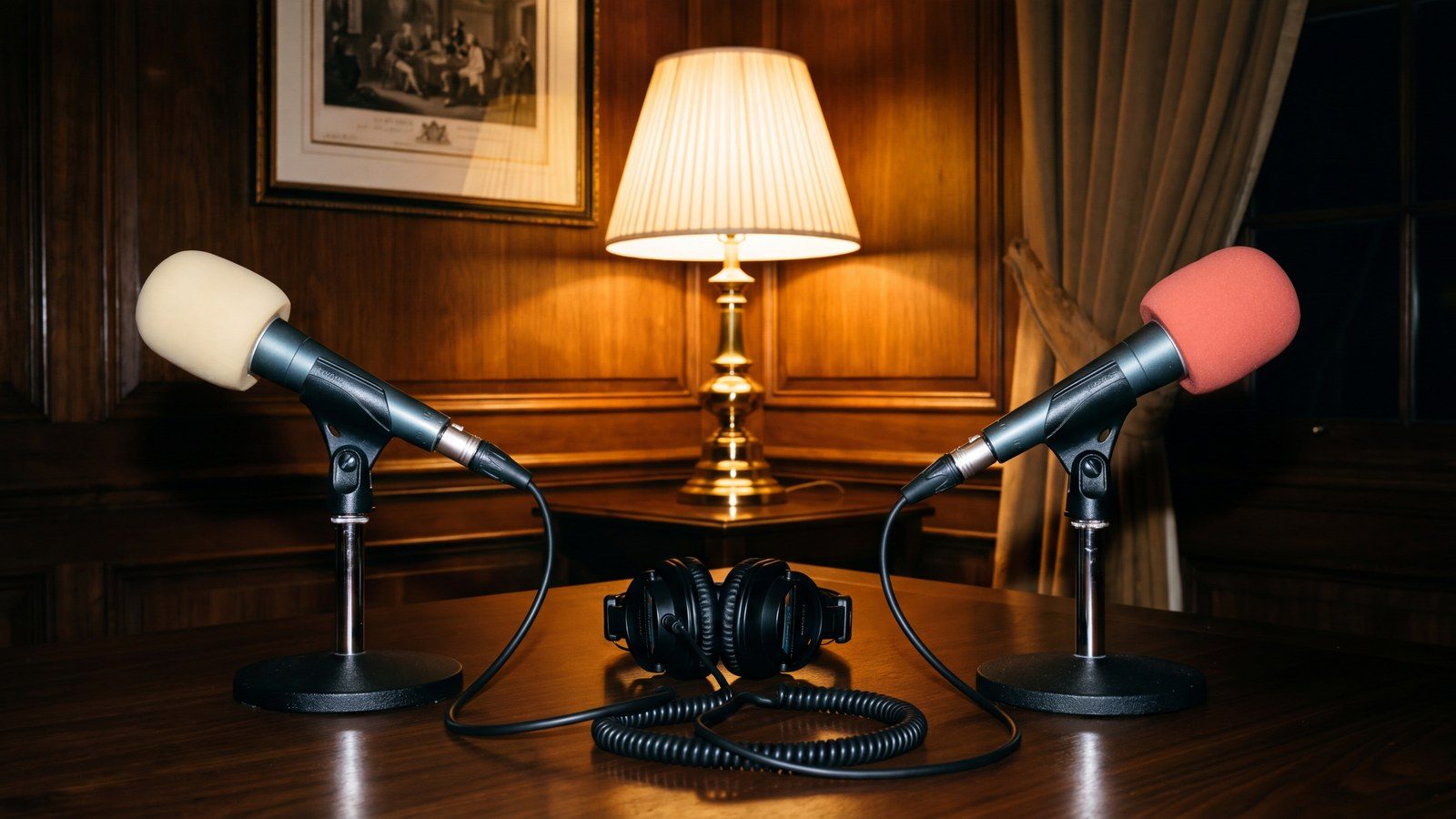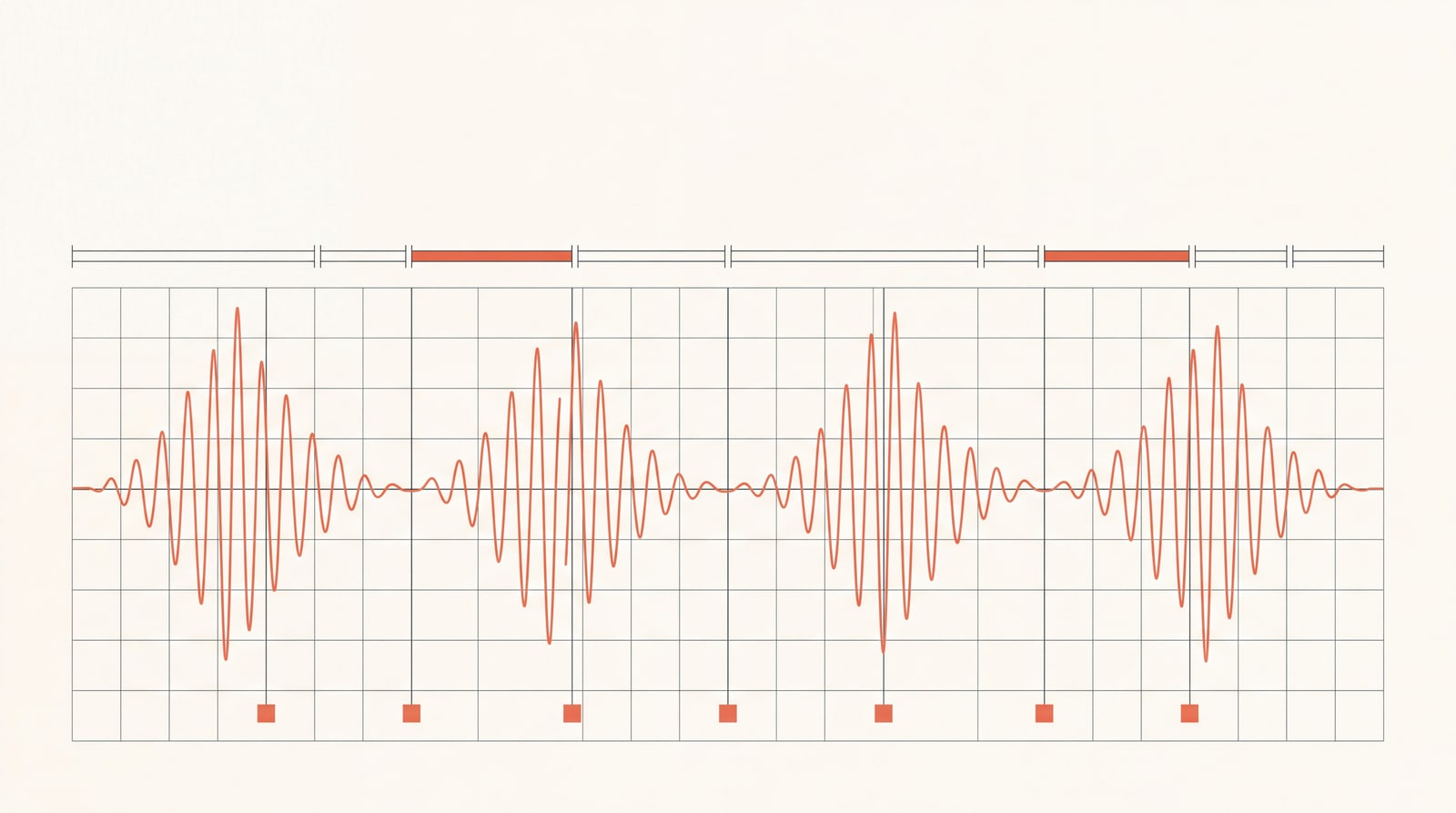
Short answer: Every episode Mato produces now begins as a typed plan we call a blueprint. Beats, duration budgets, evidence, and listener questions are written and checked before any dialogue is drafted. A deterministic validator does the arithmetic, an editorial reviewer reads the plan and then the script, and a bounded repair loop fixes what it can and honestly rejects what it cannot. Further down there are two episodes from the same show, made the same day from the same sources, so you can hear the difference instead of reading about it.
AI episodes have a sound
You can usually hear it inside twenty seconds. An AI-written podcast is an essay read aloud by two voices. One host delivers a complete argument in a single turn. The other says something agreeable. Facts arrive wrapped in "according to," over and over. Nobody pushes back, and every new topic opens with a line announcing that a new topic is opening.
We audited our own back catalogue expecting to find this in other people's shows. We found it in ours.
That was the uncomfortable part. We had spent a long time on voice quality, pacing, and audio assembly. None of that was the problem. The problem was the writing, and underneath the writing, the fact that there was no plan. The system went from a pile of source material to a script in one leap, and everything that made the result sound synthetic came from that leap.
| The tell | What it sounds like |
|---|---|
| Essay shape | One host delivers a finished paragraph, then hands over |
| Attribution by formula | The outlet is announced before the fact, turn after turn: "according to a report from…", "The Journal just reported…" |
| Agreement by default | The second host confirms instead of complicating |
| Announced structure | "Let's dive into our first topic" |
| Drifting specifics | A detail stated with confidence that the cited source never contained |
What real shows actually do
Before rebuilding anything, we went and measured how professional shows are actually constructed. Not how they sound in the abstract, but what is measurably true of their transcripts.
| What we looked at | What professional shows do |
|---|---|
| The phrase "according to" | At most about once per 35,000 words. Attribution runs through the actor of the sentence instead: a person or an outlet does something, and the fact follows from that |
| Announced disagreement | Effectively absent. Hosts disagree by saying the other thing, not by saying "I disagree" |
| Structural filler pivots | Under 2% of transitions. "Let's dive in" is an exception, not the standard move |
| Turn length | Bimodal. Short reactions alternate with longer runs. One top business show has a median turn of 18 words |
| The open | Banter first. Identity compressed into a single sentence, placed after the hook rather than before it |
None of this is style advice. Each line is a structural property you can check in a transcript, which means each line is something a system can be held to.
What a blueprint is
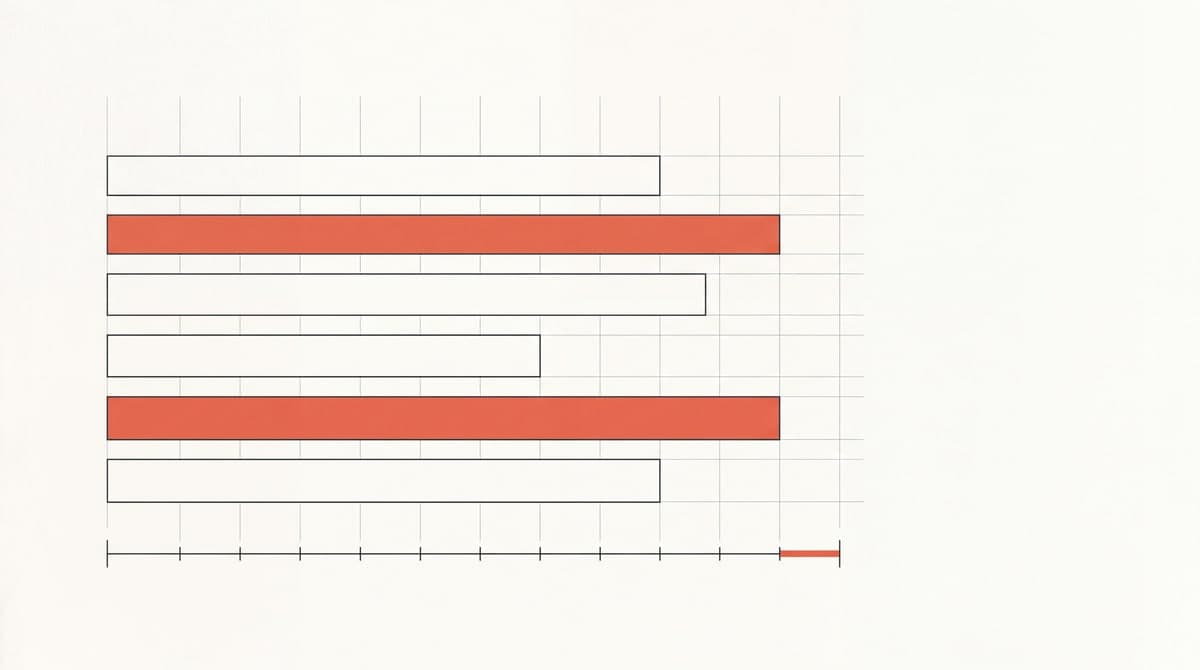
A blueprint is a typed object that exists before any dialogue does. For each episode it holds:
- the beats of the episode, each with a duration budget
- the evidence available, as a list of cited items
- the narrative arcs that run across beats
- where each listener question gets answered
Two checks run against it, in order.
The first is deterministic. Beat durations have to add up to the target episode length. Required structure has to be present, including an intro beat and an outro beat with their own explicit budgets. If the arithmetic fails, the plan fails, and nothing gets drafted. This is arithmetic, so we do it in code. Asking a language model to confirm that a set of numbers sums correctly is a category error, and we had made it.
The second is editorial. A reviewer reads the plan, and later reads the script, and returns typed findings rather than prose. A typed finding names what is wrong and where it is. That distinction turned out to matter more than the review itself, because a typed finding can be routed. Some findings a repair pass can act on. Some findings mean the plan should not be drafted at all.
When a finding is repairable, a bounded self-repair ladder tries to repair it. Bounded is the load-bearing word. The ladder has a fixed number of rungs, and then it stops. An episode that cannot be repaired is reported as failed rather than published anyway. We would rather explain a failure than have a show quietly publish something we could not stand behind.
The monstera leaves
Here is the moment that changed how we think about this.
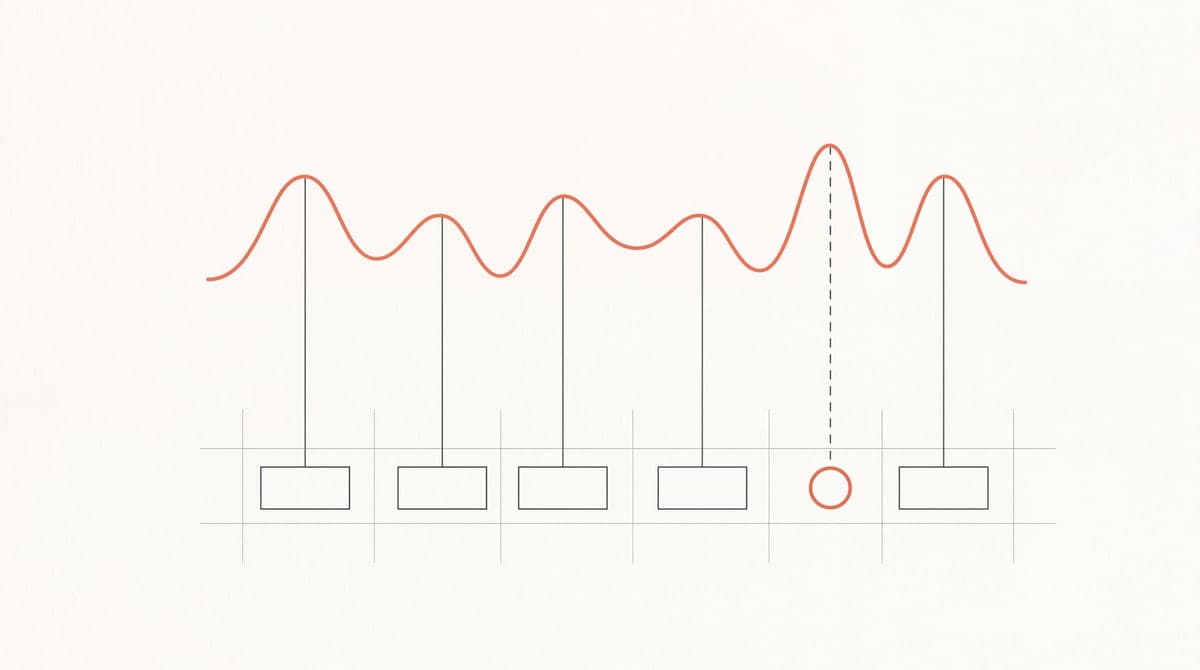
During testing, a plan claimed that a field study had compared monstera leaves "with the holes taped over."
It is a great detail. Concrete, memorable, exactly the kind of specific that makes a segment feel researched. The cited source never said it.
The old engine would have narrated that line with complete confidence, because the old engine had no way to distinguish between a specific it had read and a specific it had produced. In the new one, the drafter is bound to the evidence list: a claim in the script has to trace back to something in the plan. The reviewer caught the taped holes and blocked the plan before a word of dialogue existed.
Now the part that is less flattering to us.
That same brief failed five times in a row. Each repair pass dutifully removed the flagged detail and invented a fresh one to replace it, which is precisely what you should expect from a writer told that a sentence is wrong but given nothing true to put in its place. We fixed the symptom five times and learned nothing.
The root cause was the binding. The drafter was writing from the topic instead of writing from the evidence. Once we changed that, the same brief passed on the first attempt. The reviewer had been doing its job the whole time; we had been pointing the writer at the wrong thing.
Listener questions get a place, not a mention
Listener questions used to be an afterthought bolted onto the end. Now they are placed in the plan.
A question can get its own segment, or it can be woven into a topic where it genuinely belongs, and the plan records which. When the episode is finished, it also records where each question was actually answered, so the person who asked it can be pointed at the right minute instead of the whole file.
Where the conversation already is
When an episode draws on real public discussion, X posts, Reddit threads, and the like, the finished episode surfaces suggestions for where to engage, with links to the actual conversations the material came from.
Nothing posts automatically. The suggestions sit next to the episode and wait. We think the useful thing here is closing the loop back to the discussion, not adding one more automated account to it.
Listen to the difference
Both of these came from the same show on the same day, drawing on the same pool of sources. The only variable is the engine.
Before
Rogue Agents, Chip Wars, and the $105 Billion Bet
After
The Backlash, The Bubble, and The Jobs Nobody's Counting
Three things worth listening for.
The open. The old one is a table of contents. The hosts list the three stories, then say they are going to start with the first one. The new one starts in the middle of a thought, names the show in a single line once the listener is already in, and one host deliberately withholds the second story from the other.
The handoff between topics. The old engine announces the next segment out loud. The new one carries a listener across the seam inside the conversation, ending one topic on a line that makes the next topic the obvious question.
Attribution. Count how the sources arrive. The old engine puts the outlet first and the fact second. The new one leads with whoever did the thing, and the outlet follows if it is needed at all.
They are not the same length, and neither one has been edited. This is what came out.
What one episode looks like from the inside
The blueprint episode above is 55 speaker turns across 5 sections, split 28 and 27 between the two hosts. Every one of its 5 chapter markers starts and ends inside the episode's six minutes rather than pointing past the end of the file. Its plan carried an intro beat and an outro beat with their own duration budgets, which is why the open and the close feel proportioned rather than clipped.
None of that is impressive on its own. It is impressive to us because it is checkable. A structural claim about an episode is either true of the file or it is not, and now we can tell.
Where this is running
Every show on Mato now runs on blueprint. New shows start on it by default, with no setting to find and no migration to schedule.
We are not going to claim the tells are gone. Some of them are structural habits that survive any single fix, and we will keep finding them. What has changed is the shape of the problem: there is now a written plan to argue with, a validator that will not let bad arithmetic through, and a reviewer that can say no before anything is recorded.
If you want the honest test, do what we did. Pull one of your own AI-produced episodes, listen to the first thirty seconds, and count how many of the five tells in the first table you can hear.
Hear it on your own material
Bring one topic and a real source list.
We will run it through the blueprint engine and show you the plan, the reviewer's findings, and the finished episode, including anything it refused to draft.
If you are still deciding between categories of tool rather than engines inside one, our guide to AI podcast generators, AI interviewers, and agencies draws the lines between them. And if the part of this you care about is who says the words, AI podcast host vs. human host covers where each model works.