
The production surface grew in two directions this week. Conversations can now become structured written content, and voice work has a dedicated lab with stronger controls around references, previews, and long-running generation jobs.
New features
Content marketing article writer
The Content workspace can turn transcripts, source material, and fresh research into a structured article draft. It keeps a source ledger beside the writing, supports multiple editorial angles, and can prepare material for WordPress, Klaviyo, and Mato's own publishing flow.
MOSS Voice Lab and uploaded voice cloning
Voice Lab can create previews from selected reference audio or an uploaded recording. Source previews, transcription, generation status, and candidate review now live in one place, so an operator can hear the evidence before choosing a voice.
Admin controls for MOSS production
Voice jobs can be routed through admin overrides, resumed safely after interruption, and spread across available capacity. The show-level admin view brings talent coverage, source audio, and Scribe transcription into the same workflow.
Expert interview workflow guide
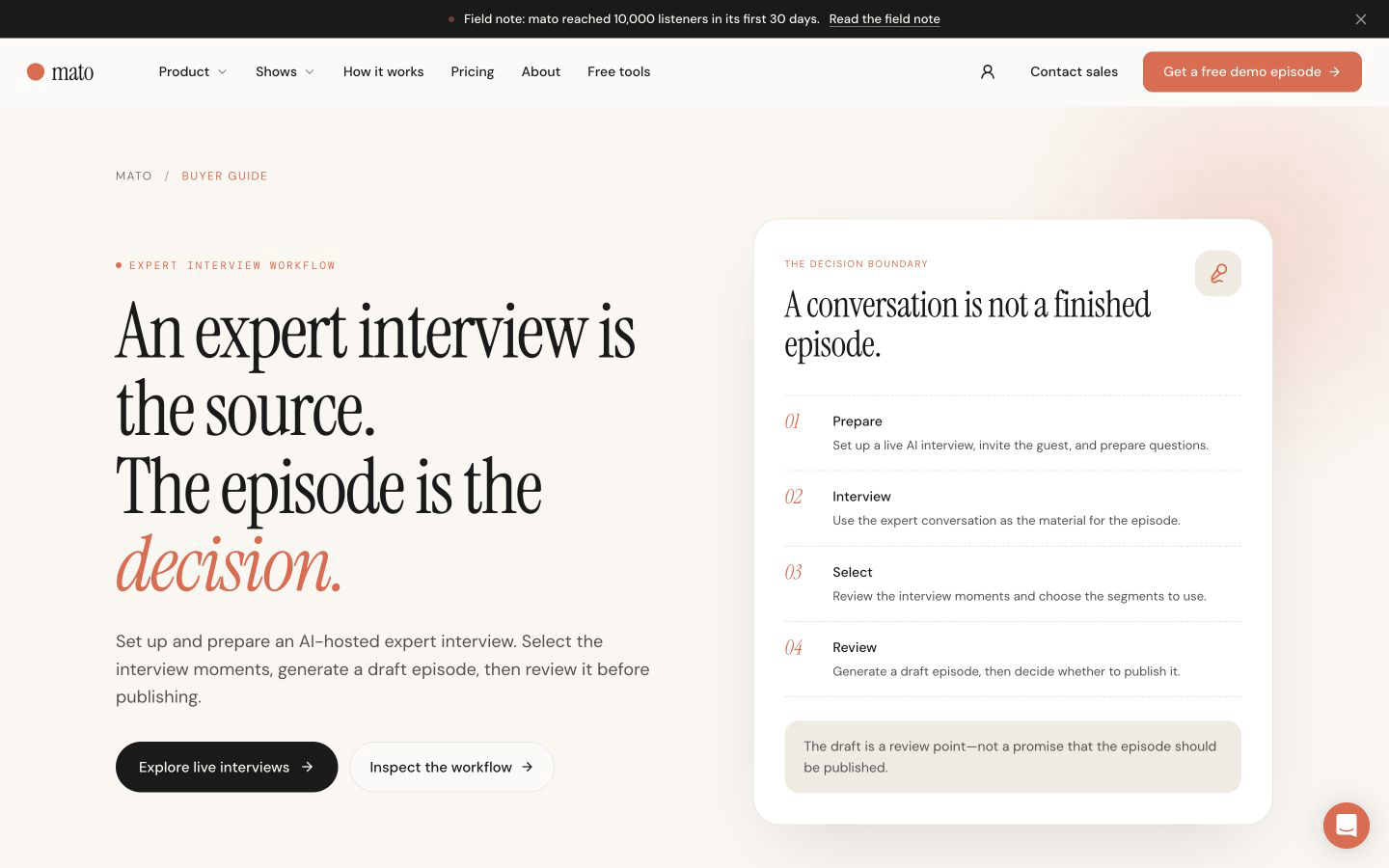
A new public buyer guide explains the boundary between recording a conversation and producing a reviewed episode. It walks through preparation, interviewing, selection, and editorial review without treating every recorded answer as publishable material.
Improvements
Consent-safe PostHog measurement now follows acquisition and media activity without retaining sensitive form or authentication data. Voice reference selection also checks longer recordings and exact WAV requirements before a candidate can move forward.
Bug fixes
Duplicate Supabase migration versions no longer block the production migration check. The guard now catches the collision before deployment rather than leaving the release pipeline to discover it late.
Backfilled on August 29, 2026. The screenshot shows the current public expert-interview guide, not a historical capture from August 10.