Mato just raised pre-seed Read more

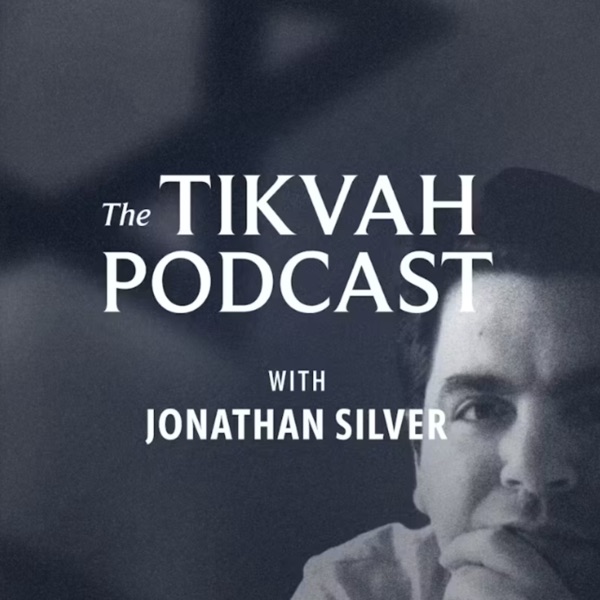
Podcast charts
Published by Tikvah
The Tikvah Fund is a philanthropic foundation and ideas institution committed to supporting the intellectual, religious, and political leaders of the Jewish people and the Jewish State. Tikvah runs and invests in a wide range of initiatives in Israel, the United States, and around the world, including educational programs, publications, and fellowships. Our animating mission and guiding spirit is to advance Jewish excellence and Jewish flourishing in the modern age. Tikvah is politically Zionist, economically free-market oriented, culturally traditional, and theologically open-minded. Yet in all issues and subjects, we welcome vigorous debate and big arguments. Our institutes, programs, and publications all reflect this spirit of bringing forward the serious alternatives for what the Jewish future should look like, and bringing Jewish thinking and leaders into conversation with Western political, moral, and economic thought.
On the charts
Every published chart this podcast appears in, in the snapshot behind this page. Each one links to the chart it came off.
From the feed
The latest episodes published to this podcast’s own RSS feed. Titles and descriptions are the publisher’s.
Even the most casual consumer of social media has noticed it. The explosion of anti-Jewish memes, videos, grotesque jokes, snickering, trolling—and, in a different register, material that is quite a bit darker—has flooded our screens. Since October 7, we've grown accustomed to talking about the rise of anti-Semitism as though it were the weather, a cloudy mood that settled over American campuses and American streets that we can describe and deplore and hope that it passes. Today's guest argues that this way of thinking misses the point entirely, because much of what looks like weather is in fact the product of arson, much of what seems like spontaneous surges in anti-Semitism is in fact the deliberate practice of information warfare by Russia, Iran, and China against the United States. Eliana Aiken is a policy fellow at Defense Technology Alliance, and her August essay in Mosaic explores " Anti-Semitism as Information Warfare ." The essay walks us through the machinery of this campaign in granular detail. It explains what troll farms and SIM farms are. It explains how bots manufacture the appearance of popularity. She reports on research that points toward the astroturfing of figures like Nick Fuentes, whose content is amplified at a rate no organic audience could produce. Aiken's argument is that, in anti-Semitism, America's adversaries have found a potent tool to divide Americans, sow confusion and disorder in American society, turn Americans against one another, and distract the country from their own offensive strategic maneuvering. She discusses that argument in conversation with Mosaic 's editor Jonathan Silver.
Man is a storytelling animal, and conveying the experience of the human condition in poetry and prose helps us understand and contend with it. That's true in all times and places, and it is why students of a society and its culture have much to learn from its poets. Contemporary Israel is one of the most interesting societies anywhere on earth, and its poets encompass the depth of its culture—God and man, the inescapability of war, human vices large and small. Today, we take a peek into their work. Making this possible is Michael Weingrad, a scholar of modern Hebrew and Jewish literature who is on the faculty of Hillsdale College, where he is helping to build a new undergraduate program in Judaism and Western Civilization. Weingrad recently founded an online publication, the New Jerusalem Review , where he publishes his translations of contemporary Hebrew verse into English. Today, he sat down with Jonathan Silver, the host of the Tikvah podcast and the editor of Mosaic , to introduce some of the most revealing selections from some of his favorite writers. The subject is important not only because of the intrinsic value of poetry, but also because anglophone literary culture has grown hostile to Israeli and Jewish writers, especially since October 7, and the poems Weingrad translates are not the safe, well-behaved kind of poetry that makes its way into the standard anthologies. They come out of a Hebrew-language literary world that most American readers, Jewish or Gentile, have almost no access to—a world that includes religious and secular, skeptics of multilateral summits and peace processes, and even conservatives. This episode of The Tikvah Podcast is generously sponsored by Dr. Kenneth Weiss in memory of his father, Eliezer Lipa ben Uri. If you are interested in sponsoring an episode of The Tikvah Podcast, we invite you to join the Tikvah Ideas Circle. Visit tikvah.org/circle to learn more and join.
By the spring of 1948, three armed Jewish militias had been fighting and working towards the birth of modern Israel. There was the Haganah, under David Ben-Gurion, which would become the core of the new Israel Defense Forces. There was the Irgun, led by Menachem Begin, and a smaller group, the Lehi. Begin agreed to dissolve the Irgun units operating in Israel into the new army, a decision he made in the name of national unity and cohesion even though tensions between the Irgun and the Haganah were deep, and Haganah operatives had previously informed on their counterparts in the Irgun to British officials. Even so, the Irgun had pledged to become a part of the IDF in the newly formed state of Israel. A month after Ben-Gurion declared independence, a ship named the Altalena set sail from France under the auspices of the Irgun, carrying rifles and some 900 immigrants, many of them survivors of the Shoah. The ship left port the same day a United Nations cease-fire took effect, a truce that barred the importation of any new arms or combatants into the country. When it reached the coast at Kfar Vitkin just north of Tel Aviv, a dispute broke out over how the weapons would be distributed, and in particular over Begin's insistence that a share go to an Irgun battalion in Jerusalem, which he argued stood outside the truce's terms since Jerusalem's status remained unsettled under the UN partition plan. The standoff turned violent onshore, and Begin ordered the ship to sail south, to Tel Aviv, in full view of the city and the international press. Near what is today Frishman Beach, Ben-Gurion gave the order to open fire on the ship, and by this time, with Begin aboard, on his main political rival. Two officers refused before a third accepted the command. Sixteen Irgun men and three IDF soldiers were killed. And Begin, standing on the burning deck with comrades dying around him, ordered his own men not to fire back. He would repeat that order over the radio that night: never, he said, could he condone a war between brothers. The specter of the Altalena has haunted Israeli politics ever since. It plays a potent and mythological role in the imagination of the political right as one of the earliest examples of a centralized government dominated by the political left that uses the power of the state against its domestic opponents. Now, six weeks before an Israeli election, the wreckage of the Altalena has been discovered. To discuss the ship's sinking and the significance of its recovery, Jonathan Silver, the host of the Tikvah podcast and the editor of Mosaic , is joined by the historian, educator, and writer Avi Shilon. Shilon is the author of, among other works of scholarship, the definitive biography of Menachem Begin, published in 2012 by Yale University Press.
Friends of Israel and enemies of Israel both commit the same mistake when they assume that, in American colleges and universities, the faculty hired to teach Jewish subjects are, in their own way, supportive of the Jewish state. The assumption is a reasonable one, and each side's error mirrors the other. The friends of Israel naturally suppose that academic scholars of Jewish history, Jewish thought, the history of Israel, and the arts and letters of Hebrew are there to offer context and support and are both capable of and inclined to explain Israel's case on campus. That doesn't mean that they would be expected to support any particular Israeli policy or Israeli politician or each and every maneuver of the Israeli military, but that they support Zionism in some fundamental sense. And Israel's enemies think that same thing, but of course from the opposite point of view, seeing in the entire enterprise of Jewish studies and all of its related fields and disciplines a vehicle for propaganda. It turns out that both are wrong. There's a good chance that an average member of a faculty of Jewish studies, Israel studies, Hebrew studies, or Holocaust studies holds a documented public position against Israel. Nearly four in ten of the professors specifically teaching Jewish civilization on American campuses are on the record as being hostile to Israel. Those data come from newly released findings of the largest audit yet undertaken of the views of professors of Jewish civilization in America, published recently by the Ronn Torossian Foundation and a publication called The Olam . The audit's own headline number is higher still—better than half, and past 70 percent at the Ivies—but that figure blends named professors together with institutional listings and petition tallies. The number above is the most important: faculty individually identified as teaching these subjects, and what they've put on the public record. To think through what this means, Jonathan Silver, the editor of Mosaic and host of the Tikvah podcast, is joined by Rachel Fish. Fish is a scholar of modern Israel, Zionist thought, and contemporary anti-Semitism, and the incoming CEO of the Israel Institute. They discuss not just these numbers, but how a discipline built to study Jewish civilization on serious scholarly terms ends up, in a meaningful share of cases, working against that civilization's national survival. We talk about what it means for the pipeline that produces the next generation of professors: graduate admissions, dissertation topics, and the hiring committees that decide who gets to teach. And I ask her about what a Jewish family sending a child to campus in the coming weeks needs to understand before that student walks into the classroom.
Visitors to Jerusalem's Old City see a marvelous religious diversity that is unique in the contemporary Middle East, and made possible by Israeli sovereignty. For most of Jewish history, the Jewish people have lived at the mercy of other nations, and the security of Jewish communities depended on the Christian or Muslim rulers in whose lands Jews lived. But in the Old City of Jerusalem, one walks around and sees so many religious sites, Christian and Muslim, of immense theological significance, all protected by the laws and law-enforcement officers of the Jewish state. Israel's commitment to the security of Christian and Muslim sites and worshipers is, seen through the eyes of history, a breathtaking accomplishment. But an accomplishment of this kind is also a test. There are shocking reports of Christian worshippers and Christian clergy being harassed by Jewish Israelis. The Wall Street Journal and other outlets have recently reported on a spike of such abhorrent incidents. Israel's president, prime minister, and chief rabbis, along with several members of the Knesset and other prominent figures, have all condemned this behavior. But even if the perpetrators are not in any way representative of Israeli society as a whole, it is worth seeking to understand why these contemptible acts are happening and what they mean. Rabbi Mark Dratch chairs the International Jewish Committee for Interreligious Consultations and has been writing about the ugly reports of spitting on Christian worshippers and on the damage and disrespect done to a Christian statue by an Israeli soldier in Lebanon. He joins the podcast today to discuss these topics with the host and editor of Mosaic Jonathan Silver. The primary subject of their conversation is not diplomacy or Israel's reputation abroad, though of course these things matter greatly. Instead, the focus of this episode is what the Jewish tradition calls hillul Hashem , desecration of God's name, and what it means for a people who spent thousands of years in exile to preside over religious minorities of the kind they once were.
Traditional Jews pray in a minyan , a quorum of ten men who form the communal setting in which an individual Jew prays as a part of the Jewish people. In January of 2021, a man named Daniel Grand sent an email to some of his friends, seeing if he could organize a minyan at his home. He lives in University Heights, Ohio, just outside Cleveland, too far from his synagogue to walk on Shabbat and holidays when driving is forbidden by Jewish law. A neighbor saw the invitation and complained to the may or's office, after which the city sent Grand a cease-and-desist letter. Praying with guests in his home, the city told him, made his house a place of worship, and a place of worship requires a zoning permit he did not have. A public hearing followed, at which neighbors said, on the record, that they did not want the area known as a Jewish neighborhood. Without the proper zoning and permitting, the city arranged for police surveillance of Grand 's house. His neighbors set up cameras to make sure that visitors would not come there to pray. And there was, in the fine print of the city's own code, a cruelty that reads almost like satire: had Grand actually won his permit, transforming his home into a house of worship, he and his family would have had to move, since a house of worship cannot also be a residence. Grand sued the city, and his case was thrown out because the court held that it was not yet ripe, a legal term that refers to the fact that the local zoning board had not yet ruled against him, and was officially still considering his application. This December, the Supreme Court will consider the case of Grand v. University Heights . To discuss this case, Jonathan Silver, the editor of Mosaic and host of the Tikvah podcast, is joined by John Bursch, who is one of the attorneys representing Grand. Bursch is senior counsel and vice-president of appellate advocacy at Alliance Defending Freedom and a veteran of many oral arguments before the Supreme Court, and formerly served as a solicitor general in the state of Michigan.
For half a century, Israel treated its adversaries as if their intentions could be tracked and might change according to circumstances. With the states surrounding it, that assumption largely held: Egypt, for instance, signed a peace treaty and kept it, whatever else occurred in the region. But with the radical forces that Iran built around Israel in the years before October 7, that same assumption proved catastrophic. Hamas, Hizballah, the Houthis, and the militias in Syria and Iraq do not vary in their commitment to Israel's destruction. What varies is only their capability. And so Israel has been forced to exchange a doctrine built on monitoring intention for one built on continually destroying capability, whatever the diplomatic cost, wherever preparations for war are found. Today's guest, Dan Schueftan, calls this doctrine preventive violence, or simply, violent maintenance. Schueftan is the director of the National Security Studies Center at the University of Haifa. In conversation with Mosaic 's editor Jonathan Silver, he lays out this doctrine, its roots, and the circumstances that forced Israel to adopt it. He then offers a threat assessment of Iran's proxy network as it stands today: in Gaza, Lebanon, Yemen, Syria, and Iraq—before turning to the sepearate question of Turkey.
In the spring of the year 73, after Jerusalem had already fallen to Roman forces, 960 Jews atop a desert fortress chose death by their own hand rather than surrender. We know the story because of Josephus, the 1st-century Jewish historian and former rebel commander who turned chronicler of the very revolt he had once been a part of. Yesterday was Tisha b'Av, which commemorates the destruction of the two Temples. Josephus records another catastrophe: Masada, the last stand of the Sicarii, the most militant faction of the Jewish rebels, against Rome, and a mass suicide that Jewish tradition has argued over ever since. Was it heroism? Was it madness? Should the Jews of Masada instead have followed in the path chosen by Rabbi Yohanan ben Zakkai and the sages at Yavneh—accommodating the enemy to preserve the Torah? This week's podcast is an episode of The Pillars, a series produced by the Lobel Center for Jewish Classical Education and hosted by Rabbi Mitchell Rocklin. In this episode, Rabbi Rocklin takes up Josephus's account directly—what it asks of us, what the rabbis made of it, and what it has come to mean for the modern state of Israel. The episode first aired this past March, but its questions are the questions Jews are reflecting on during this week in the liturgical calendar, about the demands of Jewish sovereignty and God's providence in history.
This week, Rabbi Ari Lamm joins Mosaic 's editor Jonathan Silver to discuss the biblical idea of election or chosenness. Rabbi Lamm has argued that Genesis itself is a long sequence of choosing and rejection—Adam over the animals, Abel over Cain, Isaac over Ishmael, Jacob over Esau—and that the Bible never once tells us why. We learn how God assesses a life after the fact; we are never shown the reasoning behind the choice itself. One midrash even imagines Abraham chosen by lottery. Rabbi Lamm suggests that this silence is deliberate: chosenness is a mystery, an acknowledgment of the limitations of human understanding. Naturally, the subject of chosenness has long been discussed within the Jewish tradition, and Rabbi Lamm focuses on the debate between Judah Halevi and Moses Maimonides about whether divine election is earned or something carried through inheritance. With this in mind, the conversation turns to the theological puzzle facing 17th-century English Christians: should Israel in Scripture be understood as the church or as the actual, literal, Jewish people? And once some concluded it meant the latter, an old theological problem became a new and productive one. Rabbi Menasseh ben Israel, the great Amsterdam sage at the center of that story, offered European thinkers a way to hold Jewish particularity and universal natural law together rather than against each other, and in doing so shaped the political thought of a nation. The conversation expands on themes Rabbi Lamm explored in his 2025 Sapir essay, " The Rebirth of Chosenness ." This episode of The Tikvah Podcast is generously sponsored by Celine and Kenneth Weiss in memory of their parents. If you are interested in sponsoring an episode of The Tikvah Podcast, we invite you to join the Tikvah Ideas Circle. Visit tikvah.org/circle to learn more and join.
In April of this year, Israel's Foreign Ministry created a position that had never before existed: special envoy to the Christian world. The appointment came after a string of incidents that have strained Israel's standing with Christian communities: an IDF soldier destroyed a statue of Jesus in Lebanon; during the war with Iran, the Latin patriarch of Jerusalem, Cardinal Pizzaballa, was barred for safety reasons from the Church of the Holy Sepulcher; a nun was assaulted in Jerusalem; and videos of Jewish Israelis despicably spitting on Christians have gone viral on social media. There are not very many of these incidents, thankfully, but each and every one does enormous damage to Israel's standing and contradicts all of the good work that Israel does to keep its Christian minority safe. Aside from the publicity problems that they create, these incidents (with the exception of the protective measures that kept worshippers from Jerusalem's holy places during a ballistic-missile attack) are in and of themselves wrong. That's why they've been so roundly condemned by the highest levels of Israeli government, including by Prime Minister Netanyahu. In response, the foreign minister Gideon Sa'ar has appointed one person to mediate Israel's relationship with the Christian world as a full-time charge. That person is George Deek, a veteran Israeli diplomat, an Arab Christian whose family has lived in Jaffa for hundreds of years, and the first Christian in Israel's history to reach ambassadorial rank, serving in Nigeria, Norway, and finally Azerbaijan before assuming this post. In today's podcast, Ambassador Deek addresses those incidents directly, distinguishing isolated wrongdoing from patterns that demand real institutional response. He lays out an argument about why Israel's bond with the Christian world is simultaneously theological and strategic and delineates his strategy in relation to the major cultural crises of our moment: that the Middle East is losing its ancient minorities at the same time the West is losing its confidence, and that both crises stem from the same failure to answer honestly the question of what went wrong—a failure that too easily curdles into blame, and from blame into anti-Semitism. This episode of The Tikvah Podcast is generously sponsored by Jeffrey Druckman and Erica Goldman in memory of Vicki Frolich. If you are interested in sponsoring an episode of The Tikvah Podcast, we invite you to join the Tikvah Ideas Circle. Visit tikvah.org/circle to learn more and join.
When students begin to study international politics, they meet some very old and well-established schools of thought. These approaches disagree about a fundamental question: what is the most important kind of information to acquire? One school of thought recommends studying power: who holds the weapons, and who fears whom. From that, the thinking goes, you'll be able to map the hierarchies and relationships that tell you everything essential that you need to know. Another recommends studying the cultures and dominant ideas that constitute the spirit of a given regime—to try to understand the way a nation will behave based on what it loves, what it honors, and how it understands itself. Of course, ideally you would want to understand both. This week, I'm bringing together two of the most sophisticated, interesting analysts of the Middle East to discuss how they approach the region. When Michael Doran looks at the Middle East, he focuses relative power. Doing so gives him the ability to separate the signal from the noise. The vitality of theological disputes and national cultures is constrained by the ability of the state to deploy force, whether in Iran, Egypt, Turkey, or Saudi Arabia. When Hussein Aboubakr Mansour looks at the Middle East, by contrast, he sees a set of ideologies whose provenance he traces back to European philosophy. How do these two angles of vision relate to one another, and what does each offer? And what do they reflect back to us about America and the West? Michael Doran is a senior fellow and director of the Center for Peace and Security in the Middle East at the Hudson Institute, and host, together with Gadi Taub, of the podcast Israel Update, which is cosponsored by Hudson and Tablet. Hussein Aboubakr Mansour is a fellow at JINSA's Gemunder Center, a columnist at Mosaic , and the author of the Abrahamic Metacritique on Substack. This conversation was recorded live in front of an audience of elite undergraduates, participating in this year's Beren Summer Fellowship, where this week, Michael Doran and Hussein Aboubakr Mansour have been resident faculty members. This episode of The Tikvah Podcast is generously sponsored by Vicki Phillips in memory of Phyllis Bordorf. If you are interested in sponsoring an episode of The Tikvah Podcast, we invite you to join the Tikvah Ideas Circle. Visit tikvah.org/circle to learn more and join.
Today 's conversation is about a publishing project: the Koren Tanakh of the Land of Israel . The concept of the series is that it takes the books of the Hebrew Bible and sets them back down in the world that produced them—in the Land of Israel, and in the economic, political, theological, and cultural setting of the ancient Near East. Around each verse it gathers what is known about that world: its archaeology and geography, the languages and the treaties and the pantheon of gods of the tribes and nations and empires among whom Israel was situated. In its modest form, the claim behind all this is one almost no one would dispute: to know the world a text came from can help you understand the text better. But a less modest claim is folded inside the modest one. For roughly two centuries, the academic study of the Bible used much of this same material—archaeology, comparisons with other sources from the ancient Near East—to take the text apart: to dissolve it into sources and redactors, to historicize revelation until what remained was an artifact of clumsy human pastiche. This series takes up the same tools and turns them to the opposite purpose. Here the history does not dissolve the text. It mediates the text, and more intimate knowledge of the ancient world carries the reader toward the integrity of the Tanakh, rather than away from it. The instruments that an earlier generation of scholars deployed to disenchant the Hebrew Bible are, in this series, put into the service of reading it with intellectual and religious integrity. And, now that Koren has published all five volumes of the Humash (the Five Books of Moses), as well as the books of Samuel, something else becomes clear. Proximity to the Land of Israel itself helps to open up the meaning of the text. If knowing how a field was watered, or how a city withstood a siege, brings the verse nearer, then the return to the Land of Israel is not only a political restoration . It is also a condition for reading our sacred scripture with greater fidelity . For most of our history, most Jews studied Torah in exile, praying and longing for, but at a great distance from, places in which the story of ancient Israel unfurls. Conversely, the ingathering of the Jews in the land of their fathers can change the way they read the text, so that Zionism itself enhances the learning of Torah. The Koren Tanakh of the Land of Israel is a marvelous accomplishment, and it has been captained by the series's editor, David Arnovitz. Arnovitz joins the Tikvah Podcast this week to discuss the book of Deuteronomy, the series as a whole, and the wager it makes about history, about the land, and about the rediscovery of the Hebrew Bible. This episode of The Tikvah Podcast is generously sponsored by Vicki Phillips in memory of Stanley Bordorf. If you are interested in sponsoring an episode of The Tikvah Podcast, we invite you to join the Tikvah Ideas Circle. Visit tikvah.org/circle to learn more and join.
This week we bring you a conversation between Eric Cohen, president and CEO of Tikvah, and the former vice-president of the United States, Mike Pence. The conversation was recorded before a live audience at the Fund for American Studies, and we are grateful to our friends at TFAS for the invitation and for the work they do: forming young leaders in the principles of individual liberty, free markets, and honorable leadership, and sending them out to advance the cause of a free society in their communities and around the world. The conversation opens where so much American reflection on these questions begins, with George Washington's letters to the Jews of Newport and Savannah—the promise of religious liberty on the one hand, and the vision of America as a providential, almost-chosen nation on the other. Those two ideas do not sit together easily, and Cohen and the vice-president think together about what they mean and how they relate: the biblical sources of the founding, the place of Scripture in American education, the case for school choice and the renewal of the universities, and the meaning of federalism in the conservative project. At the heart of this conversation is a fascinating discussion about American expressions of Christianity. Cohen, speaking as a religious Jew, believes that the strengthening of American Christianity is the surest hope for American renewal, and he also warns that a strain of anti-Semitism now gathering strength on the political right would turn that Christianity to perverse ends. To these comments Vice-President Pence adds his reflections about religious culture, and together, Cohen and Pence arrive at a description of a Hebraic Christianity and a Hebraic America—a country that understands the Hebrew Bible not as an atavistic relic, but as the foundation it has in fact always been. This episode of The Tikvah Podcast is generously sponsored by Jessica and PJ Heyer. If you are interested in sponsoring an episode of The Tikvah Podcast, we invite you to join the Tikvah Ideas Circle. Visit tikvah.org/circle to learn more and join.
In 2024, the Atlantic ran a splashy feature titled "The Elite College Students Who Can't Read Books." Professors at the Ivy League and at other elite universities reported that their students, among the most credentialed young people in the country, could no longer make their way through a whole book. One Columbia professor described his bewilderment when a student told him she had never once been assigned a full book in high school. At Tikvah we work with hundreds of educators, and they have observed that it's not only the skill of reading that is in decline; it's also the culture around reading, the patience and attention and habits of the mind that really important books demand. That is where Rabbi Mark Gottlieb begins the conversation you are about to hear. Rabbi Gottlieb has been a guest on the Tikvah Podcast before. He is a senior adviser and treasured colleague at Tikvah, and the head of school at the Dr. Miriam and Sheldon G. Adelson School in Las Vegas, Nevada. At the most recent Marom conference, the annual Tikvah gathering of Jewish day-school leaders, he sat down with Shilo Brooks for a session called "A Republic of Readers: Why Great Books Make Good Citizens." Dr. Brooks runs the George W. Bush Presidential Center and hosts the Free Press podcast Old School . He is also living proof of the stakes. As he tells it, the great books did not merely educate him. They saved his life. Tikvah does not want simply want to air complaints about how the culture of reading has eroded, but to do something about it. This summer, Tikvah Online Academy is running a series of book-clubs for rising sixth, seventh, and eighth graders, live over Zoom. They will tackle The Hobbit , The Lion, the Witch and the Wardrobe , The Phantom Tollbooth, Tom Sawyer , The Life of Frederick Douglass , and more. Applications are open now at Tikvah.org/TOA. This episode of The Tikvah Podcast is generously sponsored by Ilene and David Siscovick and family. If you are interested in sponsoring an episode of The Tikvah Podcast, we invite you to join the Tikvah Ideas Circle. Visit tikvah.org/circle to learn more and join.
From the phone that sits in his pocket, a person can now order almost anything online and have it delivered to his door the next morning. For all of human history, no one on earth had that kind of power, and now, within a single lifetime, every middle-class American has it. Walmart or Amazon or other major e-commerce platforms will bring you whatever you want: a vintage edition of a particular book, a specific article of clothing in a specific size, same-day delivery of kosher pastrami from Costco. Americans are now used to getting what they want, when they want it, with very little delay. That's because the interpretation of vast amounts of data has already told retailers that a person is likely to want diapers and baby formula, or the new Winston Churchill biography, or, having bought a new phone, an extra phone charger, already prepositioned in nearby warehouses, just waiting for someone to want it and press "ship." As a result, it's hard for us to understand intuitively why some things take time to manufacture, and why, when we read reports of missile and interceptor stockpiles, the American military, with all its might, can't just order up another arsenal and have it at the ready. After this spring's combat operations against Iran, the U.S. has used up a lot of missiles. Here are some numbers, drawn from analysis published this spring by the Center for Strategic and International Studies. In the course of Operation Epic Fury, the United States fired over 1,000 Tomahawk cruise missiles from a prewar inventory of approximately 3,100. Recent annual production is less than 200, and replacement is not projected until late 2030. Up to 1,430 Patriot interceptors were expended from a prewar inventory of roughly 2,330, at a production rate of 650 per year—half of which go to allied nations. And 290 of America's 360 interceptors for Terminal High Altitude Area Defense—the most advanced missile-defense system we field, known as THAAD—were fired. We produce about 96 of these interceptors per year. Needless to say, there are other things that we need those missiles for. And some strategists believe that China or another adversary might look at the state of American munitions and decide that a window of opportunity has opened up. How did the most powerful military in the history of the world arrive at this moment? What does the supply chain behind a Patriot missile actually look like, all the way down to the raw materials? And what would serious industrial mobilization require? These are among the questions that Mosaic 's editor Jonathan Silver takes up with Ryan McBeth. McBeth spent twenty years in the U.S Army as an infantryman, and is now an intelligence analyst with a popular YouTube channel he uses to explain military affairs to non-specialists. You can learn more about him, and follow his work, at ryanmcbeth.substack.com . In today's podcast, McBeth explains why he is not quite so worried about the state of the American arsenal. This episode of The Tikvah Podcast is generously sponsored by Robert and Ilana Saposh. If you are interested in sponsoring an episode of The Tikvah Podcast, we invite you to join the Tikvah Ideas Circle. Visit tikvah.org/circle to learn more and join.
Ayaan Hirsi Ali was born in Somalia, grew up in Saudi Arabia, Ethiopia, and Kenya, fled to the Netherlands in 1992 to escape an arranged marriage, became a member of the Dutch parliament, and collaborated with the filmmaker Theo van Gogh on a short film about the treatment of women under Islam. Ever since Van Gogh was murdered by a Dutch Islamist on an Amsterdam street in 2004, with a death threat addressed to her pinned to his chest with a knife, she has lived under security protection. She is the author of several books, among them Infidel , her memoir, and Heretic , in which she argued that Islam requires a reformation from within if it is to be compatible with liberal democratic civilization. For twenty years she was among the world's most prominent atheists—not merely in her personal convictions but in her public arguments, which held that reason and individual freedom were incompatible with religious submission of any kind. In November of 2023, she announced that she had become a Christian. That announcement, and the essay she wrote explaining it, raised one of the most searching questions in contemporary intellectual life: what does a civilization require in order to defend itself, and can secular liberalism supply it? This week, Ayaan Hirsi Ali joins the Tikvah Podcast to discuss her diagnosis of what political Islam is doing to Europe and to America—a diagnosis that has only sharpened since October 7—and her argument that the assault on Jews and Jewish life is not merely a Jewish problem but a leading indicator of a broader civilizational vulnerability. This conversation was recorded live before members of the Tikvah Society in New York City. If you'd like information about joining the Tikvah Society, write to us at society@tikvah.org and we'll get right back to you. This week's episode of the Tikvah Podcast is generously sponsored by Dr. Michael Schmerin and family. If you are interested in sponsoring an episode of the Tikvah Podcast, we invite you to join the Tikvah Ideas Circle. Visit tikvah.org/circle to learn more and join.
On May 4, President Trump issued a proclamation which reads: In special honor of 250 glorious years of American independence and on the weekend of Rededicate 250—a national jubilee of prayer, praise, and thanksgiving—Jewish Americans are encouraged to observe a national Sabbath. From sundown on May 15 to nightfall on May 16, friends, families, and communities of all backgrounds may come together in gratitude for our great Nation. This day will recognize the sacred Jewish tradition of setting aside time for rest, reflection, and gratitude to the Almighty. It is worth pausing on what an astonishing thing that is. For most of Jewish history, when the most powerful ruler in the world turned his attention to the Jews, it was not to encourage their devotion to Jewish law. It was to constrain the Jews, to tax them, to suppress them, to expel them, or to put an end to the miraculous story of the Jews in history. So did Pharaoh, Antiochus, Hadrian, the kings of England and Spain, and the tsars. Even more benign monarchs—the Habsburg emperors, or Napoleon—conditioned the protections of civic life on the Jews giving up some of their distinctiveness. America is exceptional. And now, in the year of America 's 250th birthday , the incumbent of the most powerful office on earth has issued a formal proclamation encouraging the Jews to be more Jewish. To discuss this momentous occurrence, Mosaic 's editor Jonathan Silver is joined by the historian, writer, former government official, and Washington insider Tevi Troy, who recently wrote an article titled, "A National Sabbath for American Jews." The article appeared on May 14, 2026 in the Wall Street Journal , and is the point of departure for today's discussion.
Every year on Shavuot, many Jews have the custom of reading the book of Ruth. The holiday commemorates the giving of the Torah at Sinai—the moment when the Jewish people gathered at the foot of the mountain and declared, "we will do and we will listen." The rabbis paired Sinai with Ruth for a reason. Sinai is the national conversion story, in which the whole people, swept up in thunder and fire, accept the covenant. Ruth is a more intimate counterpart: a tale of one woman, at the lowest possible moment, with every worldly reason to return to the clan of her birth, who decides instead to join the same covenant. " Your people shall be my people, " she says to Naomi, " and your God shall be my God. " Ruth was not drawn toward the Jewish people at their moment of triumph but in her and her chosen family's hour of despair. That tension, between being drawn to Judaism and being pushed toward it, between choosing a people and being chosen, is at the heart of today's conversation with the Daily Wire reporter and video journalist Kassy Akiva, who converted to Judaism in April 2023. In an essay in the October 2024 issue of Commentary —written while she was a Tikvah Krauthammer fellow—Akiva reflected on the long road that brought her to Judaism: the hate mail, the death threats, the stalker who went to federal prison, the years of traveling to Israel before she was Jewish, the beit din , the seminary in Jerusalem, the mikveh. The essay, titled "Anti-Semitism Helped Make Me a Jew," was composed in the immediate aftermath of October 7, not long after a visit to the Gaza border. The intensity of that moment was bound up with her conversion. We are now a few years further on. The vicious anti-Israel activism that followed in the wake of Hamas's attack on southern Israel has not dissappeared , but it has, for many, settled into something less acute. In that context, Mosaic 's editor Jonathan Siliver has invited Akiva t o return to that essay and its argument, and to discuss whether anti-Semitism was the engine of her Jewish life or merely the road sign that pointed her toward it, what ordinary Jewish life looks like now that the adrenaline of that first year has either deepened or faded, and what she makes of the convert 's particular vantage point—as someone who, only a few months into being a Jew, was asked by people who had been Jewish their whole lives how to handle the anti-Semitism she had already been forced to learn how to carry. This week's episode of the Tikvah Podcast is generously sponsored by Dr. Michael Schmerin and family. If you are interested in sponsoring an episode of the Tikvah Podcast, we invite you to join the Tikvah Ideas Circle. Visit tikvah.org/circle to learn more and join.
In the spring of 2026, Israel and the United States conducted joint offensive military operations against Iran: coordinating targets, dividing airspace, and operating with a degree of integration that has no precedent in the history of the alliance. The operation significantly degraded Iran's military capabilities, and it marked what many analysts regard as a genuine turning point, not just in the regional balance of power, but in the nature of the American-Israeli relationship itself. For decades, that relationship had been structured as a powerful patron supporting a dependent client. What the Iran war suggested to some observers is that Israel has—at least in part—outgrown that structure. That is the backdrop for a debate that is now live in both Jerusalem and Washington: what should American military aid to Israel look like when the current memorandum of understanding between the two countries expires in 2028? The U.S. currently provides Israel with approximately $3.5 billion annually in grants, earmarked for the purchase of American-made military equipment—an arrangement that dates to the aftermath of the Yom Kippur War and that has been renewed, and periodically enlarged, ever since. For most of that period, the case for the aid seemed self-evident. First the Arab states, and then Iran and its proxies, were actively threatening Israel's existence. American military and diplomatic support was an indispensable buttress of Israel's security. Whether that case remains self-evident today, in the wake of a war that has significantly diminished Iranian capabilities, is now a serious question being debated by Israelis and Americans of good faith, with thoughtful arguments on multiple sides. In this episode, Mosaic 's editor Jonathan Silver speaks with a proud Israeli patriot who has been making the case for ending American aid for some time. Dr. Raphael BenLevi is a senior fellow at the Misgav Institute for National Security and Zionist Strategy, director of the Churchill Program for Statecraft and Security at the Argaman Institute in Jerusalem, a reserve officer in the IDF intelligence branch, and an occasional contributor to Mosaic . He recently published an essay in Foreign Affairs titled " America Should Be Israel 's Partner, Not Its Patron ." This week's episode of the Tikvah Podcast is generously sponsored by Steven Kleinman in memory of his mother, Estelle Fox. If you are interested in sponsoring an episode of the Tikvah Podcast, we invite you to join the Tikvah Ideas Circle. Visit tikvah.org/circle to learn more and join.
Something has been happening in Michigan politics that deserves the attention of everyone who cares about the health of American democracy. And, as they so often are, the Jews are at the center of events. Taking root in Michigan is a specific and serious ideological threat—Islamism—that is gaining influence inside the Democratic party. This is a story about what happens when that influence is unnamed, accommodated, and finally normalized. And it is a story with major national implications. Muslim Americans serve in the U.S. military, teach in schools, build businesses, raise families, and love this country. Presumably, most Muslim citizens of America see their futures as bound up with the future of this republic, with no sympathy for those who would undermine it. But a radical Islamic political ideology has taken hold in specific institutions, among them the Michigan Democratic party. In March of this year, a Hizballah-inspired attacker drove a truck into the largest Reform synagogue in West Bloomfield, Michigan, when over a hundred children were inside. Two weeks later, the Michigan Democrats held their statewide convention, and the incumbent Jewish regent of the University of Michigan—a man whose home had been attacked, whose family had been terrorized—was denied renomination and replaced by a Dearborn attorney who had praised Hizballah on social media. The leading candidate for the Democratic Senate nomination excused the synagogue attacker. And the pro-Israel Senate candidate was booed by delegates when she addressed the Jewish Voters Caucus. To discuss this growing threat, our guest this week is Jesse Arm, who grew up in West Bloomfield and is now a vice-president at the Manhattan Institute. This week's episode of the Tikvah Podcast is generously sponsored by Dr. Michael Schmerin and family. If you are interested in sponsoring an episode of the Tikvah Podcast, we invite you to join the Tikvah Ideas Circle. Visit tikvah.org/circle to learn more and join.
Ranking source
Apple Podcasts rankings via the Mato Topic Intelligence Platform.
Observed September 20, 2026.
Apple and Apple Podcasts are trademarks of Apple Inc., registered in the U.S. and other countries.
Pairs with
Bring this source into Mato to read its transferable patterns, then turn them into an original show for your own audience.