Mato just raised pre-seed Read more

Podcast charts
Published by Janek Gwizdala
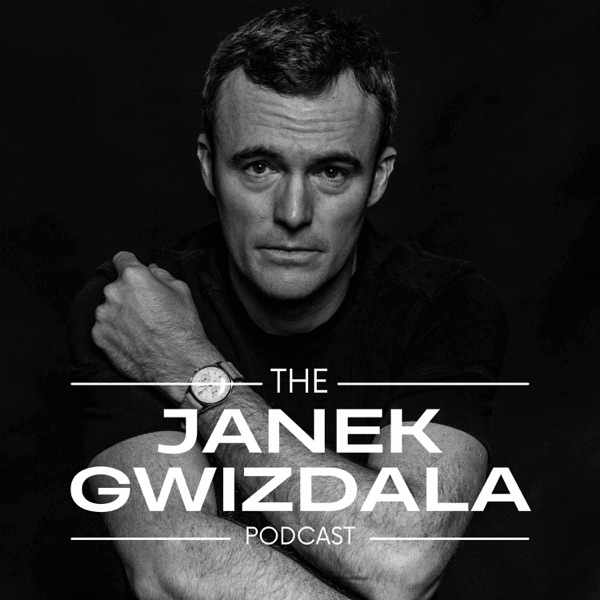
Dive deep into the music universe with the podcast that unveils the journey of one of the most influential bass players in the music industry – Janek Gwizdala. Designed for bass enthusiasts and musicians alike, each episode is a sonic exploration into the world of groove, gear. technique, and artistic evolution. Janek Gwizdala, renowned for his mastery of the bass, shares his life's narrative – from the early days as a budding musician to his current status as a sought-after sideman and solo artist. Whether you're a seasoned bassist or simply appreciate the magic of live music, join us as we unravel the layers of Janek's experiences, revealing the secrets behind his signature sound. Expect in-depth conversations with Janek and special guests, offering unique perspectives on music, composition, and the art of creating an unforgettable groove. Explore the challenges and triumphs of a professional bass player, gain insights into the creative process, and discover the stories behind some of Janek's most iconic performances. Whether you're looking for inspiration for your own musical journey or simply want to bask in the rich tones of the bass, "The Janek Gwizdala Podcast" is your backstage pass to the world of bass and music. Subscribe now for an intimate look at the life and legacy of Janek Gwizdala's bass-centric career. janekgwizdala.substack.com
On the charts
Every published chart this podcast appears in, in the snapshot behind this page. Each one links to the chart it came off.
From the feed
The latest episodes published to this podcast’s own RSS feed. Titles and descriptions are the publisher’s.
With the 10th anniversary of American Elm this year, I recently started contemplating the idea of a remix/remaster with not only some new material that never made it on the first release, but also some video footage since I release no visual representation of the album at the time. While I was digging through hard drives this week on the hunt for all that old material, I came across a duo album I made in 2018 with guitarist Gabriel Santiago that never saw the light of day. Despite the performances being great on the session, there were some technical issues with the audio files that left me pretty deflated at the time and convinced I could never release the material. I chalked it up to bad luck and tried to forget about it and move on. It turns out, not all the audio files were ruined, and even those that had some nosie on them may well be salvageable in today’s technologically advanced framework that we edit music in. Suffice to say, the files have been sent off to Juan Pablo in Argentina, and there’s a good chance a new album will be popping up in the not-to-distant future. Elsewhere in the episode, I talk about: • The possible tenth-anniversary edition of American Elm• How these discoveries could result in two more releases before the end of 2026• Why I rarely listen to my albums once they’re finished• The danger of becoming attached to your most popular work• What I’m learning from teaching private lessons again• Potentially releasing more footage from the Quiet Places sessions with Peter Erskine and Nir Felder• My completely unprepared first encounter with the Chase Bliss Bad Mood pedal• Producing and encouraging other artists not to leave important music buried• Building a future around fewer, but far more meaningful, live performances Ultimately, this episode is about getting out of my own way: becoming less attached to imperfections, more comfortable with vulnerability, and more willing to let the work exist. Because sometimes the difference between an abandoned recording and a beautiful album is eight years, better technology, and a little more perspective. LINKS Private one-on-one lessons Listen to Quiet Places Music, books, and educational material Watch the podcast on YouTube Get full access to Janek's Newsletter at janekgwizdala.substack.com/subscribe
If you’re already subscribed to my substack, you’ll have read a little about what’s in today’s episode yesterday already. Go straight to the video if that’s the case, and get stuck into the practice routine I’m sharing today. For those new to the podcast or to my substack…. The longer I play music, the more value I find in returning to simple ideas. This episode begins with one major-scale exercise pulled from a practice video I recorded nearly eight years ago. It’s a straightforward shape, but it contains an enormous amount of useful information: fretting-hand technique, articulation, fretboard knowledge, major-scale harmony and the ability to feel equally comfortable in every key. I demonstrate the exercise in several positions, discuss the fingering and pull-off mechanics, and explore ways of introducing rhythmic variation. Then I show how quickly a technical pattern can escape the practice room and become something musical through inversions, suspensions, tension, resolution and spontaneous harmonic movement. But the episode is also about something larger: deciding where our time should go. After 30 years of traveling to play music, I’m thinking carefully about the balance between touring, recording, teaching and family life. I still intend to record extensively. and my goal is to release at least three albums a year—but accomplishing that means becoming more selective about the work I accept and more protective of the time I have at home. That thinking has led to two new ideas. The first is the launch of my private one-on-one Zoom lessons. There is now a limited selection of one-hour sessions available each week, with options to book either a single lesson or a discounted package. These lessons don’t have to be limited to scales and technique. We can work on improvisation, practice strategy, finding direction when you feel stuck, preparing for professional situations, navigating the music business or simply getting better results from the limited time you have with your instrument. We live in an era of unprecedented access to musical information. What most musicians still lack is personal feedback: someone they trust who can look at what they’re doing, identify what is working, uncover what isn’t and help determine the most productive next step. The second idea is a small-group, one-day music intensive. I’m imagining approximately six hours of teaching with two instructors, a maximum of around 40–50 attendees, a good shared lunch, opportunities to meet other musicians and potentially a closing performance. It would offer more depth and interaction than a conventional clinic without requiring the expense and logistical commitment of a residential music camp. I’d love your input: • What would make an intensive like this impossible to miss?• What have you disliked about clinics or music camps you’ve attended?• Who would you like to see joining me as a guest instructor?• Which city should we bring it to? Ian Martin Allison, John Patitucci and Henrik Linder are among the musicians I think could be fantastic collaborators, but nothing is fixed and your feedback will help shape the idea. In this episode • The simple exercise I still practice after 30 years• Developing confidence in every key• Technique, articulation and fretting-hand mechanics• Making repetitive material more engaging• Turning a scale pattern into actual music• Balancing professional music with family life• Why I’m becoming more selective about touring• Launching private one-on-one lessons• Information versus meaningful personal feedback• The idea behind a new one-day music intensive• Why experienced musicians still need trusted advice Links Book a private lesson Browse my books, music and educational materials Watch the episode on YouTube More soon, Janek Get full access to Janek's Newsletter at janekgwizdala.substack.com/subscribe
After almost a month of packing, moving, unpacking, and barely touching the bass, I'm finally back in the studio, and my chops definitely aren't where I need them. With a weekend at Birdland with Steve Smith and Vital Information coming up, it would be very easy to panic and spend every available minute working on the music for the gig.Instead, I'm trying something different.I've been going back to classical music (Brahms in particular) and experimenting with arranging music I love for solo electric bass. Rather than immediately putting pressure on myself to be "gig ready," I'm using completely unrelated music to reconnect with the instrument, rebuild the mechanics of my playing, and get my ears and imagination working again. Make sure you’re signed up to this substack newsletter so you get every podcast episode, all the news about new music recordings, and all the lessons and behind the scenes information I share from my little world of bass and music. In this episode, I work through part of Brahms' Poco Allegretto from Symphony No. 3 and start asking some of the questions that might eventually shape an entire solo classical bass album.How much of the original harmony should I keep?Should I reharmonize it?Do I play the melodies completely solo, or use loops?Should there be improvisation?Could classical repertoire live alongside original music and more ambient, experimental sounds?And how far can I push the orchestration when I'm trying to make all of this work on a five-string electric bass tuned E–C?We also get into one of the harmonic exercises I've been using to get my hands moving again: taking V–I resolutions and breaking triadic ideas into groups of five using 2+3 and 3+2 patterns. It's a simple concept that opens up a huge amount of melodic and rhythmic material. You can find it in my book From Practice to Performance This episode ended up becoming a pretty accurate snapshot of where my musical brain is right now. I start with Brahms, move into dominant harmony, disappear into ambient sounds and effects, and somehow end up seriously thinking about what a solo classical electric bass record could become.There's also a little history behind all of this. Before bass became my instrument, I was heavily involved in classical guitar, working through the UK grade system to Grade 8 and playing solo classical guitar and in ensembles. A lot of the chordal and right-hand techniques I use on bass today actually come directly from that period of my life.I'd love your input on where I take it.If I make a solo classical electric bass album, would you want the visual side to be an important part of the project — filmed performances in a beautiful space — or would you rather put on headphones, close your eyes, and experience it purely as a record?Let me know in the comments.Also in this episode: the new studio is slowly coming together, the blue couch has returned, the new transcription book is finally in stock, and I found a photograph from my first semester at Berklee in 1998 featuring a fellow bass player you might recognize...More soon, Janek The Complete Bass Mastery eBook Course Get full access to Janek's Newsletter at janekgwizdala.substack.com/subscribe
The Three Pillars of My Musicianship This feels like a great way to end an era of the podcast. We’re moving this weekend, the studio is being packed up, and this is the final time I’m sitting down in front of the camera here before everything moves to the new house and a completely new studio. It felt appropriate that this episode ended up being about something pretty fundamental: the three pillars that have underpinned almost everything I’ve done as a musician for the past 30 years. But I only really started thinking about them this way quite recently. While signing and packing copies of How to Transcribe this week, I noticed how many people had bought it alongside Bass Player’s Guide to Sight Reading . Sitting next to those was The Bassist’s Book of Scales and Arpeggios , and suddenly this very obvious connection appeared. Technique. Reading. Transcription. Those three things have been with me throughout my entire career. Technique Scales, arpeggios, harmony, theory and the physical facility to actually execute the ideas I hear. I’m not practicing technique because I simply want to play fast. Even after more than 30 years of playing, there are still enormous areas of my technique and musicianship I want to improve that have nothing to do with speed or trying to impress anyone. Reading Reading gives me faster access to music. And despite having done it professionally for decades, it’s not some innate ability that appeared fully formed when I pick up the bass. It’s a skill I’ve worked incredibly hard on and one I still have to maintain. So for this episode I decided to test it. I pulled out two exercises from Bass Player’s Guide to Sight Reading that I haven’t played in years, spun up the play-alongs and took a shot at reading them cold while I was filming. I also break down what’s actually going through my head while I’m reading: scanning ahead, anticipating fingerings, deciding where on the instrument to play something, thinking about tone, remembering mistakes that might need fixing after the take and — hopefully — getting comfortable enough with the notes that I can stop thinking exclusively about reading and start thinking about music . Transcription This might be the deepest pillar of all. Almost all of the vocabulary you hear when I play comes from decades of listening, transcribing, absorbing and repeating music. Transcription isn’t just about writing somebody else’s solo on a piece of paper. It’s about immersion. It’s how I’ve learned languages within music, developed vocabulary and continually found new inspiration. It’s also probably the pillar I’ve neglected the most recently, and one I want to spend more time with again. The Work Never Ends One of the things I love most about the greatest musicians I’ve been fortunate enough to know is that none of them seem to think they’ve arrived. The people whose playing seems almost impossibly developed still have lists of things they want to practice, sounds they want to explore and areas of their musicianship they want to improve. Those lists make up several lifetimes worth of work, and the common thread I’ve noticed among so many of my musical heroes isn’t simply their ability. They love the work. In This Episode * The three pillars that have shaped my musicianship * Why technique isn’t about simply playing faster * What reading music actually gives you * Why sight-reading is a skill I still actively maintain * Attempting to sight-read my own exercises years after writing them * Testing myself on a piece in 7/4 * What I’m thinking about during a professional reading session * Why one or two takes matter in the studio * Thinking about sound and phrasing while reading * How transcription develops musical vocabulary * What I want to work on next * Why great musicians never run out of things to practice * Why loving the work might be the most important part of all The Complete Bass Mastery Bundle I’ve also bundled the three books that inspired this episode together for the first time: The Bassist’s Book of Scales and Arpeggios Bass Player’s Guide to Sight Reading How to Transcribe Together, they represent these three different but interconnected areas of musicianship: technique, reading and transcription. Each book also includes its accompanying video masterclasses and play-along materials , so this is really much closer to a complete course than simply a collection of three ebooks. And with that, it’s goodbye to this studio. Thank you to everyone who has watched and listened to the podcast from this room for the past two years. The next time you see me, hopefully within the next week or two, it’ll be from the new space. More soon, Janek Get full access to Janek's Newsletter at janekgwizdala.substack.com/subscribe
After more than thirty years of playing, practicing, recording, and touring, I still catch myself making this one annoying mistake when it comes to my practice time. The encouraging part is that when I do catch myself doing it, it often leads to the biggest breakthroughs, or at least some semblance of direction to take my process in that feels positive. In this week’s episode I talk about a pattern I noticed in my own playing: I naturally tend to create lines and harmonic movement that descend. Not always, but often enough that it has become one of those unconscious habits that bums me out when I realize I’m doing it. For the coffee drinkers there, you’ll know I’ve been spending the past couple of years exploring Neo-Riemannian triad transformation theory, a frighteningly academic name for an incredibly elegant way of thinking about major and minor triads. Rather than feeling like I’m forcing the issue when it comes to creating a harmonic landscape to make music in, I’ve found myself becoming fascinated by how much emotion and movement can come from moving just one or two notes at a time. In this episode I work through that process in real time. There isn’t a polished lesson plan or a finished composition waiting at the end. Instead, you’ll hear exactly how I experiment, where I get stuck, how I solve problems, and how a simple practice idea gradually starts becoming music. Along the way I also talk about: * Why listening back to your own playing is one of the most valuable practice tools available. * The creative freedom that comes from recognizing repetitive habits before they become limitations. * Performing recently with Peter Erskine, John Beasley, and Bob Sheppard, and how preparation creates the confidence to truly listen on stage. * My ongoing effort to simplify my studio, part ways with hundreds of pedals, and create an environment that encourages making music instead of collecting gear. As always, thank you for spending part of your week with me. I appreciate every listen, every comment, and every thoughtful conversation these episodes continue to create. More soon, Janek P.S. With the launch of “How to Transcribe” last week, we’ve created a new digital bundle that I think serves as a comprehensive path to truly mastering the fundamentals of music and musicianship: Ear Training, Reading and Technique. Get full access to Janek's Newsletter at janekgwizdala.substack.com/subscribe
This week I’m delivering on a promise from the last episode: a complete walkthrough of my new stereo pedalboard. After years of touring with much larger setups, I’ve downsized to a rig that gives me incredible flexibility while still producing the huge ambient sounds I’ve been chasing for years. I break down the entire signal chain, explain why each pedal earned its place, and demonstrate how I build everything from subtle harmonic textures to massive cinematic soundscapes. Along the way I also talk about: * Why I changed from my previous touring rig * The advantages of running a stereo setup * Boutique pedals versus multi-effects units * Creating ambient loops and evolving textures * Using effects as creative tools rather than distractions * Why expensive gear isn’t always necessary to make inspiring music I also share a quick update on my new book, How to Transcribe , the recent release of Quiet Places , and the excitement (and chaos!) of preparing for a house move while getting ready for upcoming performances. Whether you’re a bassist, guitarist, producer, or simply fascinated by creative music technology, I hope this episode gives you some ideas for your own musical journey. As always, if you have questions about anything I missed, leave a comment and I’ll cover them in a future episode. More soon, Janek Get full access to Janek's Newsletter at janekgwizdala.substack.com/subscribe
Bass players, coffee drinkers, ladies and gentlemen, the podcast is back! Full disclosure: I used chat gpt to generate the description of the podcast below based on a transcript of the episode. I’m still not sure how I feel about the whole AI thing in general, but I realized it saved me a ton of legwork today with something I’m not particularly good at (writing descriptions of things), and provides some information that might help you better understand what the episode is about and bring a little more value to you without accusing me of selling my soul to Sam Altman. I want to make it very clear that I have never used AI in the creation of music or of any of my books, and never will. That, to me, is a very clear line that should never be crossed. I would like your honest feedback on this, and to know whether youtube descriptions are a tolerable use-case for the technology since it allows me way more time to focus on practicing, playing and recording real music and video lessons to share with you all. Here goes… In this episode I catch you up on everything that's been happening, from touring with Steve Smith's Vital Information, to moving house here in Southern California, finishing my brand-new book How to Transcribe, and preparing for the release of my new live trio album Quiet Places.I also spend a good portion of the episode exploring one of the most inspiring harmonic concepts I've encountered in years: Neo-Riemannian triadic transformations. It's a simple idea built around major and minor triads, but it's completely changed the way I'm thinking about harmony, improvisation, voice leading, and creating melodic movement in my bass lines.We also talk about:• Why transcription is really about ear training• How immersion and repetition accelerate musical growth• Touring with a minimalist pedalboard setup• The Walrus Audio Mantle in real-world situations• Preparing mentally for performances with musical heroes• Building freedom through harmony instead of memorized licksIf you're interested in becoming a more musical improviser (not just learning more scales) this episode is for you.If you'd like to see a full rundown of my current touring pedalboard, leave a comment below. If enough people ask, I'll make a dedicated video. Thoughts? More soon, Janek Get full access to Janek's Newsletter at janekgwizdala.substack.com/subscribe
After years of building one of the most extensive bass pedal collections imaginable, I’ve made a big decision… I’m letting almost all of it go. In this episode, I talk through why I’m selling over 200 pedals , what triggered the shift, and how simplifying my setup is already changing the way I make music. This isn’t just about gear, it’s about creativity, focus, and letting go of the “collector mindset” in favor of something much more intentional. Owning more gear doesn’t necessarily make you more creative. In fact, it can do the opposite. I reference the Generation Loss Mkii as a key component of the process. It’s about removing friction, reclaiming focus, and getting more out of less. More soon, Janek Get full access to Janek's Newsletter at janekgwizdala.substack.com/subscribe
The podcast returns to its own channel with a 2026 reset: a clearer lane for each part of my output so the main YouTube channel can stay focused on harmony/theory-based lessons, while the podcast and live/performance content live on their own separate channels. I outline six recording projects I'm aiming to track across the year, share a packed touring schedule (US, Japan, Europe, Asia), and talk through a more realistic approach to tour gear —from compact boards to MIDI control, flight cases, and what I actually use on gigs. In this episode Why the podcast is back on the podcast-dedicated YouTube channel The 3-lane restructure for 2026: Main channel = harmony/bass lesson content Podcast channel = long-form conversation + gear talk Clips channel = live performance, studio, behind-the-scenes The “why” behind the shift: reduce stress, increase clarity, serve each audience better The six album/projects Janek is planning to track in 2026 Touring: how the volume is increasing in 2026 and what that means with family life A candid look at saying “yes” vs “no” as a working musician, and how that advice changes by age/career stage Gear logistics: what’s realistic to fly with, compact boards, and why “small but powerful” wins on the road Compact rig idea: Walrus Mantle + HX Stomp Testing rigs on warm-up gigs before international runs New Gator / Vertex case system and a compact board build plan MIDI control with a Morningstar MC4 The honest truth: on many gigs, only a fraction of the pedalboard gets used How the harmony/triads videos unexpectedly clicked, and why that success triggered the restructure The role of Substack: the hub where people can choose what to watch/listen to Links Mentioned in the Episode - Main Channel Triad Video 0 and Triad Video 1 - Clips Channel - Podcast Channel - SBL MIchael Jackson Cover Get full access to Janek's Newsletter at janekgwizdala.substack.com/subscribe
The latest short run of basses with RKM, in three new colors, is here! Check out all the specs below and use the contact email at the bottom of the description to enquire about ordering one today. We also get into triads on dominants chords and a recap of the comments section of the now infamous Mantle video from a couple of weeks ago. RKM CUSTOM 5JG Collab 2Scale: 33”No. Frets: 24No. Strings: 5Distance between strings: 17mmBody wood: Mahogany selected 2 pieceNeck: Hard rock Maple w/ carbon fiber reinforcementFretboard: Birdseye maple / Gaboon Ebony (fretted / fretless)Position markers: Luminlay Side dotsPickups: Nordstrand NP5F/NP5Fa (bridge/neck)Preamp: TRICKFISH IPA 3 band 18VTuners: Hipshot Ultralite w/ Bass XtenderBridge: Hipshot Style A 17mm brassStrap buttons: Dunlop StraplokGigbag: MONO Stealth blackOptions available:Body color:Dark Green / Dark gray / Surf BlueStyle:Fretted / Fretless with reference lines / Fretless clean fretboardTuningEADGC / BEADGOrder via email here: batch2@rkmbasses.com More soon, Janek Get full access to Janek's Newsletter at janekgwizdala.substack.com/subscribe
We're taking a look into the new Bass DI and preamp from Walrus audio in collaboration with Ian Martin Allison. Spoiler alert... It's a beautiful piece of gear, and the minor meltdowns about the price happening in the comments below the launch video are a little puzzling. For the most part though, the feedback is hugely supportive and positive which is both great, and greatly deserved. Hopefully this Episode gives you some perspective, some sounds, and a few things to think about when choosing the right gear for you. Besides sending me the unit to try, Walrus Audio are not a sponsor in any other way. I’m never paid for my opinion, and Walrus have no say in what I present to you. As you well know, I just like to make cool sounds with cool stuff. More soon, Janek Get full access to Janek's Newsletter at janekgwizdala.substack.com/subscribe
Following on from our most recent discussion on the subject, I get a little deeper into the weeds on the state of streaming, the music industry as a whole, and some of the ethical decisions we face when considering how to release our music and share it with the world. I have gone back and forth on the subject for many years, and endeavor to update my thinking on it as and when the information changes. It’s currently less of a negative thing than a positive thing for what my long-term goals are as an artist, and that’s what I get deeper into detail about in this episode. Far more so than the latest article published in my newsletter. More soon, Janek Get full access to Janek's Newsletter at janekgwizdala.substack.com/subscribe
To close out the year I’m counting down my top ten YouTube shorts for 2025 and revealing all the numbers from both 2024 and 2025 for comparison. It won’t buy me any beachfront property, but it’s not all doom and gloom, and it doesn’t signal the end by any stretch of the imagination. Don’t forget, that for the next 24hrs only, the entire store is on a 20% holiday sale, with all discounts added automatically at checkout. See you in 2026! Janek Get full access to Janek's Newsletter at janekgwizdala.substack.com/subscribe
Looking back on two emotional weeks on the road with Mike Stern's band featuring Dennis Chambers on drums. I'm diving deep into how the new pedalboard held up on tour, how the past creeps into my present sometimes, and what the future holds. More soon, Janek Our year-end holiday sale is now on! Get 20% off storewide with discounts added automatically at checkout: https://janekgwizdala.myshopify.com/ Get full access to Janek's Newsletter at janekgwizdala.substack.com/subscribe
I can’t believe I haven’t utilized this function on any of the pedals or amps I’ve owned. I’ve been getting so deep into the clean signal of my bass lately, especially with the addition of the Wetter Box from GigRig, and this week’s episode of the podcast takes a look at the latest mission to clean up the signal chain even more! More soon, Janek Get full access to Janek's Newsletter at janekgwizdala.substack.com/subscribe
With a rare trio gig tonight that doesn’t have a chordal instrument besides me in the band, I’m re-booting the partition of my brain that gives me access to a ton of harmony, melody, and comping. All on the bass! In this episode we’ll take a look at both an extended range 5-string with a high C string, and a standard 4-string tuning. More soon, Janek Get full access to Janek's Newsletter at janekgwizdala.substack.com/subscribe
I just built a brand new pedalboard from scratch and share the signal chain and some of the sounds with you in this episode. We also get into some much more important topics on the subject of our health and mental well-being as musicians. As I mention in the episode, I want to hear from you in the comments, get feedback on what you would like to hear more about, and moving forward it would be great to include elements of the behind the scenes of daily musician life. A life that doesn’t have to be sedentary and unhealthy, and that can lead to you being around way longer to make way more music. More soon, Janek Get full access to Janek's Newsletter at janekgwizdala.substack.com/subscribe
It’s incredible that a pedal which creates literally no sound at all, can be so sonically life-changing when it comes to my pedalboard and signal chain. The Wetter Box by Gigrig is by no means a new release, and it’s something I wish I’d tried many years ago. Kudos to Dan and the gang (not a sponsor of the podcast) for getting it so right when many others failed. Here are some other videos I mention in the episode for your reference. Earthquaker Devices Swiss Things was something I used for a long time when my board was in mono. Check out Josh Scott from JHS explaining parallel signal routing. And hear from the creator of the Wetter Box himself, Dan of That Pedal Show fame, talk about exaclty how you might use it. Again, none of these people are sponsors of the podcast, but it’s nice to have the best references when you have questions that go way beyond my security clearance. More soon, Janek Get full access to Janek's Newsletter at janekgwizdala.substack.com/subscribe
What happens when things are kind of crumbling on a session and you need the advice of someone who is close to doing more sessions than any other living bass player? You call Sean Hurley. This is the three part story of how we ended up subbing for each other on gigs we’re pretty well know for doing, and how we approach them in very different but very musical ways. More soon, Janek Get full access to Janek's Newsletter at janekgwizdala.substack.com/subscribe
I’m always tinkering with new ways to record and find sounds I’ve never produced before. Today I’m experimenting with ways of using a mic to capture more nuance and articulation in my picking hand when I record. The results are pretty startling in terms of how the dynamic range of the instrument is extended. More soon, Janek Get full access to Janek's Newsletter at janekgwizdala.substack.com/subscribe
Ranking source
Apple Podcasts rankings via the Mato Topic Intelligence Platform.
Observed September 21, 2026.
Apple and Apple Podcasts are trademarks of Apple Inc., registered in the U.S. and other countries.
Pairs with
Bring this source into Mato to read its transferable patterns, then turn them into an original show for your own audience.