Mato just raised pre-seed Read more

Podcast charts
Published by John Readman
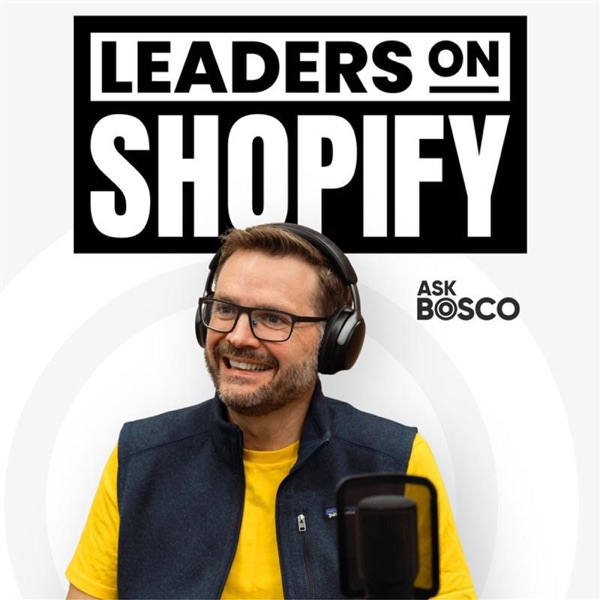
Leaders on Shopify is a new podcast hosted by John Readman, a digital marketing veteran with 25 + years’ experience helping brands accelerate growth online. As founder and CEO of Modo25 and Ask BOSCO®, John has worked with global names such as ASOS, Pepsi, BMW, Superdry and more - and he brings that battle-tested insight straight to this show. Each episode of Leaders on Shopify digs into the real stories, strategies and scaling lessons from executives, founders and experts using the Shopify platform. From practical growth tactics and data-driven marketing to leadership decisions that shape successful e-commerce brands, John’s no-nonsense conversations cut past buzzwords to the ideas that actually move the needle for Shopify merchants - especially those that have scaled or are scaling from mid-market to enterprise. Whether you’re a CMO, founder or Shopify partner, this podcast gives an insight into how leaders are navigating the challenges of rapid growth, mastering analytics and building brands that stand out - all while unlocking more value from the Shopify ecosystem. Expect honest insights, actionable takeaways and a host of guests who’ve lived the journey from early traction to serious scale.
On the charts
Every published chart this podcast appears in, in the snapshot behind this page. Each one links to the chart it came off.
From the feed
The latest episodes published to this podcast’s own RSS feed. Titles and descriptions are the publisher’s.
700 apps launched on Shopify in a single week this year. Most of them shouldn't exist. Some of them are brilliant. And almost nobody can tell the difference. Martin Cox, CEO of Shopify App Co has spent fourteen years on Shopify. He built an agency, sold it, then walked away to start again from nothing. This year alone he's launched four apps, with a fifth landing next week. Every week he sits down with the independent founders behind the apps that actually work. He knows what the junk looks like. He also knows why the best app you've never heard of will probably never get found. In this conversation we get into: Why the app store has stopped being where merchants discover apps What Built for Shopify really tells you, and what it doesn't Whether Sidekick is the biggest opportunity or the biggest threat in the ecosystem Why agentic commerce is still 0.1% of sales, and why the 18x growth headlines are nonsense Find out more: Native app co: https://apps.nativeappco.com/ ASK BOSCO Shopify app: https://apps.shopify.com/ask-bosco
Most Shopify stores hide search behind a tiny magnifying glass in the corner. Adam Pearce has the data on what that's costing you. Adam Pearce co-founded Blend Commerce about a decade ago and has worked on around 450 stores. Blend does one thing: conversion optimisation, Shopify brands only. He's blunt about what he still sees on sites turning over two or three million a year. Search that's desktop-only, or buried behind an icon nobody can hit with their thumb. Exposing the bar lifts conversion 30-50%, and customers who use search show 35-40% higher lifetime value. Social video sitting at the bottom of the page instead of second or third in the product gallery, where it moves average order value. Product pages that are still blocks and blocks of text when an accordion would take people straight to what they're actually searching for. He also argues most e-commerce teams are watching the wrong number. He recently told a client their revenue per session was up 78% in three months. The first thing they asked about was conversion rate. Inside this episode: the three apps he recommends to almost everyone, why Blend won't build headless, what a redesign should actually be about, and why brand obsession is the biggest barrier to getting results. The three tools he recommends Rebuy — upsells, cross-sells, personalisation, on-site search Microsoft Clarity — free heat mapping and session recording. Intelligems — A/B testing. Ecom Collab Club: https://www.eventbrite.co.uk/o/ecom-collab-club-37836312093 Blend Commerce: https://blendcommerce.com/ ASK BOSCO® Shopify app: https://apps.shopify.com/ask-bosco
Most brands scale the fun bit first. More ad spend, more traffic, more orders. Then the warehouse can't keep up, returns pile up, and the bit nobody planned for becomes the bit that breaks the business. Tom Gatenby, CEO of Squashed Pixel has been building on Shopify for 17 years and were one of the first ten partners in the UK. Squashed Pixel now spends as much time on warehousing systems, ERP integrations and order management as it does on storefronts. He's watched a lot of brands find this out the hard way. Useful if you're scaling or thinking about moving platform: How to work out what a platform really costs you — 12 months minimum, three to five years for the truth, and count the apps and conversion fees, not just the monthly bill Why WooCommerce being free usually isn't, once you add servers, SSL and downtime What actually makes brands replatform: being hacked, checkout failing on Black Friday, not being able to ship an idea in under six weeks Why 25 apps costs you more than 25 subscriptions What expanding into the EU really involves before you press go
Most Shopify merchants have no idea what their tech stack is costing them. Gareth Allen, Founder of Herd Agency, has been building on Shopify since the late 2000s, back when every enterprise brand insisted it was no good for SEO. Thirteen years on, with Herd now a Shopify Premier partner, he's seen what happens when merchants treat the app store like a sweet shop. The cost isn't just the subscriptions. It's the speed hit from apps you uninstalled months ago that left their code behind. It's the external dev resource you need to keep it all hanging together. When Chilly's came to Herd, their stack was what Gareth calls a spaghetti junction - and the biggest win from the migration wasn't the redesign, it was how much came out.
Shopify may be easy to launch on, but scaling brands often hit the same wall: messy integrations, broken data, and tech stacks that can’t keep up. In this episode, Jim Herbert, CEO of Patchworks, breaks down what really happens when a brand grows from $5 million to $20 million and beyond - and why the right infrastructure matters long before Black Friday exposes the cracks. With 26 years in e-commerce and leadership experience spanning Sceneric, Hybris, BigCommerce Europe, and Patchworks, Jim explains why apps work well at the beginning, why they start to fail as complexity grows, and how enterprise brands build a foundation that can scale without creating integration debt.
What if one of the biggest untapped growth opportunities in ecommerce isn't better ads, better AI, or better conversion optimization, but simply making your website usable by more people? Imogen from EnableAll joins the podcast to make the case that accessibility isn't a compliance exercise. It's a growth lever. One luxury retail client discovered that 6% of its revenue was coming from customers using an accessibility toolbar, and those customers were converting at 6x the average ecommerce benchmark. So why are so many brands still treating accessibility as a legal checkbox? Imogen breaks down what's actually happening behind the scenes: how inaccessible code excludes customers, what EnableAll changes at the code level, and how tools like screen readers and AI sign language can fundamentally change the way people shop online. Imogen and John also cover the global wave of accessibility legislation, why accessibility 'overlays' have developed such a bad reputation, and why fixing the underlying code matters. Plus which ecommerce verticals are leading the way, and why rushing into agentic commerce before fixing accessibility could actually make the internet less accessible, not more.
For the first time on Leaders on Shopify, John sat down with a guest that isn't human. Meet Boardy, an AI "superconnector" that spends its time talking to founders, operators, and investors across the ecommerce ecosystem, built specifically to spot patterns most people miss. Boardy and John talk about whether AI in Shopify is real or hype: it's real where it's reducing manual merchandising, improving forecasting, and helping lean teams move faster, but "fully autonomous growth" claims are still ahead of the evidence. On the App Store, now sitting at 18,000+ apps: still viable, but a generic clone won't survive. This episode discusses agentic commerce. When a shopper buys inside ChatGPT, who actually owns that customer, the brand, or the AI platform they bought through? Boardy's answer: it depends entirely on what data gets passed through, and who owns the first-party relationship is something brands need to actively protect, not assume.
Podcast description: Golf used to mean black trousers, black tops, and zero personality. Ben from Function18 helped change that, building a pure-play online golf apparel retailer from the ashes of a struggling bricks-and-mortar business, and riding out two decades of platform migrations, agency relationships, and a completely reshaped industry along the way. In this episode of Leaders on Shopify, John sits down with Ben to talk through the realities of running an ecommerce business for the long haul: why they moved from OSCommerce to Magento to Shopify (and what each platform taught them), the tension of competing with the very brands they stock as those brands go direct-to-consumer, and why golf's changing demographic, driven by younger players and pros being more open about their love of the game, has reshaped who they're selling to. They also get into where AI is already earning its place in the business, from product imagery to number-crunching, and Ben's refreshingly honest take on agentic commerce: useful for some purchases, a hard no for others, and a genuine unknown for everyone in ecommerce right now.
Mary-Anne Danarzo, founder of FireBelly, talks about building brands from the ground up, and what it actually takes to scale them. Mary-Anne shares how a career that started in mobile phone accessories sales led to an agency that's helped brands like Color Wow scale on Shopify all the way to a L'Oreal acquisition, including a Magento-to-Shopify migration that doubled their conversion rate overnight. In this episode, we talk about why nobody actually owns conversion rate inside most businesses, the difference between quantitative data and getting on the phone to real customers, and Mary-Anne's approach to building "brand brains". They also cover the AI tools reshaping ecommerce creative, why Shopify keeps winning against platforms like Salesforce Commerce Cloud for fast-scaling brands, and what medium-to-large brands get wrong when they hesitate to migrate.
What has eight years of working with scaling ecommerce brands taught Nathan Lomax? In this episode the co-founder of Shopify Platinum agency Quickfire Digital, sits down with John Readman to talk about the patterns he sees repeated over again on Shopify. From bot traffic skewing metrics and creating the illusion of a conversion problem, to brands obsessively acquiring new customers while ignoring the ones they already have, Nate is candid about where DTC brands go wrong between £1M and £30M. He also talks about decision paralysis, the temptation to in-house too early, and why some of the fastest-growing brands he's seen simply stopped procrastinating. The episode also covers Quickfire's own journey, from doing social media for a local chip shop to becoming one of a handful of Shopify Platinum agencies in the world, working with Tala, Reebok, Juicy Couture, Beaver Town, and Wrexham FC. Plus: honest takes on headless builds, the AI noise versus AI reality gap, agentic commerce, and how to know when a client relationship isn't working for either side.
When do you know it's time to leave your ecommerce platform? Neil Campbell, Chief Growth Officer at Smol, has been through it. His direct-to-consumer cleaning brand built a £45M business on Shopify, with every customer on subscription, starting with a free trial, and then made the call to leave Shopify. In this conversation with John Readman, Neil breaks down the full Smol journey, from early days on Shopify with Recharge as the subscription engine, through to the point where they were building so much custom development around and beyond Shopify that leaving started to make more sense than staying. He shares the moment Shopify's new checkout rollout forced the decision, why being half-in on a platform is often the hardest place to be, and what brands considering the same move need to think about before they take the leap.
Why are brands that went headless or bespoke quietly migrating back to Shopify? Liam Quinn, Director of Innovation at Visualsoft, one of Europe's largest Shopify partners, has watched the platform go from startup tool to enterprise default. In this episode, John and LIam get into the real cost comparison of Shopify versus Magento, Salesforce, and the other legacy platforms, including why brands that chose the headless or bespoke route are quietly migrating back. Liam shares what a £5,000 monthly agency retainer used to buy versus what it buys now and what the app ecosystem actually looks like for brands trying to scale past five million.
How do you grow an online shoe business to £65 million and what nearly breaks along the way? Stuart Paver has been selling footwear online since 1999, making him one of Europe's earliest ecommerce pioneers. In this episode he gets honest about the hidden costs of scaling online retail, why warehousing becomes your biggest headache, how AI is already transforming product photography, and what 25 years in the game tells you about surviving whatever comes next.
The infrastructure secrets behind scaling stores, why AI just crossed a critical quality threshold, and the hidden 4% cost lurking inside the future of ecommerce. Keith Matthews, founder of one of Ireland's leading Shopify Plus agencies, joins John Readman to reveal the infrastructure secrets behind scaling stores, why AI just crossed a critical quality threshold, and the hidden 4% cost lurking inside the future of ecommerce.
Ranking source
Apple Podcasts rankings via the Mato Topic Intelligence Platform.
Observed September 21, 2026.
Apple and Apple Podcasts are trademarks of Apple Inc., registered in the U.S. and other countries.
Pairs with
Bring this source into Mato to read its transferable patterns, then turn them into an original show for your own audience.