Mato just raised pre-seed Read more

Podcast charts
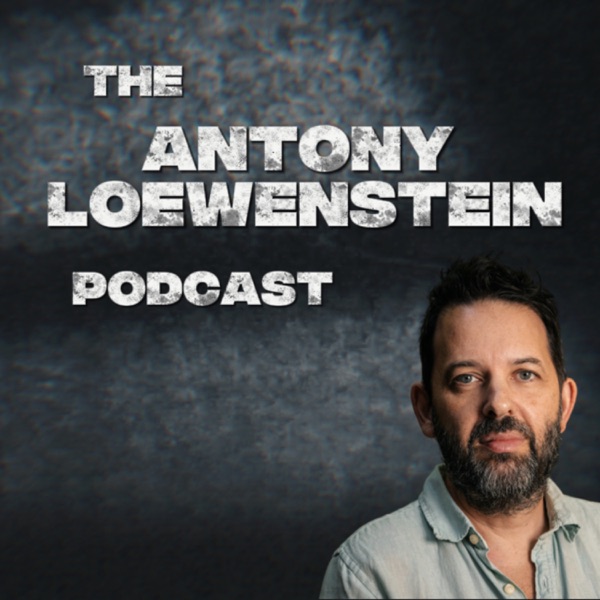
Published by Antony Loewenstein
Antony Loewenstein is an independent journalist, film-maker and author of the global best-selling book, The Palestine Laboratory. He’ll go beyond the headlines to reveal the global political and cultural shifts reshaping our world. For more information: https://antonyloewenstein.com
On the charts
Every published chart this podcast appears in, in the snapshot behind this page. Each one links to the chart it came off.
From the feed
The latest episodes published to this podcast’s own RSS feed. Titles and descriptions are the publisher’s.
In this episode, Antony Loewenstein explores the increasingly fraught debate around antisemitism, anti-Zionism, and the limits of political speech on Israel-Palestine. Drawing on recent examples from Australia, Israel and the wider pro-Palestine movement, he examines where legitimate criticism of Israel ends and dangerous conspiracy theories, fascism and real antisemitism begin. A challenging conversation about language, accountability, and the politics of solidarity. Ask me a question here: https://docs.google.com/forms/u/0/d/e/1FAIpQLSeDJgrNigh0SvGaGaVIwBo4vePw12F1wv0IBGwAppKbD79s2g/viewform?usp=publish-editor%E2%81%A0&pli=1&authuser=0 . Buy merch here: https://antonyloewenstein.bandtshirts.com.au/ Support independent journalism and donate here: https://www.paypal.com/donate/?hosted_button_id=NJRD5P7GYVGFY Produced by Lena Helou and Lem Zakharia.
In this episode, Antony Loewenstein answers your questions on Israel, antisemitism, free speech, Australia’s foreign policy, AUKUS and the growing risk of conflict with China. He also reflects on the personal cost of speaking out and why he believes people should challenge silence within their own communities. Buy merch here: https://antonyloewenstein.bandtshirts.com.au/ Ask me a question here: https://docs.google.com/forms/d/e/1FAIpQLSeDJgrNigh0SvGaGaVIwBo4vePw12F1wv0IBGwAppKbD79s2g/viewform?usp=publish-editor Support independent journalism and donate here: https://bit.ly/4rqn9wF Produced by Lena Helou and Lem Zakharia.
In this episode, Antony Loewenstein examines five years of Taliban rule in Afghanistan, reflecting on the 20-year US-led war, its devastating impact on Afghan civilians, the West’s failure to reckon with its own actions, and the country’s current political and economic crisis. He explores the Taliban’s treatment of women and girls, divisions within the movement, the role of the West and the International Criminal Court, and why engagement with Afghanistan may be more effective than isolation. Ask me a question here: https://docs.google.com/forms/d/e/1FAIpQLSeDJgrNigh0SvGaGaVIwBo4vePw12F1wv0IBGwAppKbD79s2g/viewform?usp=publish-editor Support independent journalism and donate here: https://bit.ly/4rqn9wF Produced by Lena Helou and Lem Zakharia.
In this episode, Antony Loewenstein responds to viral claimsabout the so-called "Greater Israel" project, examining how ideas once considered fringe are increasingly being discussed in mainstream political discourse. The conversation explores the ideology behind the concept, comments made by members of the current Israeli government, and whether the ongoing war has accelerated territorial ambitions in the region. The discussion also looks at Israel's dependence on USmilitary and diplomatic support, how a future reduction in American backing could reshape the regional balance of power, and why public opinion across the Middle East may have long-term geopolitical consequences. Produced by Lena Ahelou and Lem Zakharia. Support independent journalism and donate here: https://bit.ly/4rqn9wF
In this episode of The Antony Loewenstein Podcast ,Antony examines how immigration is being weaponised across the West, and how mainstream media outlets increasingly amplify far-right narratives aboutmigrants and refugees. Using the recent events in Ceuta, the Spanish enclave bordering Morocco, as a starting point, he explores the context often missing from sensational coverage, including poverty, unemployment, politicalrepression and the reasons people are forced to leave their homes. Antony also unpacks the rise of Fortress Europe, the role ofborder agencies such as Frontex, the treatment of refugees in places like Greece and Libya, and how anti-immigrant rhetoric has become central to far-right politics across Europe, the UK, the US and Australia. From Nigel Farage and Donald Trump to Pauline Hanson and Australia's offshore detentionregime, this episode investigates how fear, insecurity and misinformation are shaping the migration debate, and what a more humane alternative could look like. Produced by Lena Helou and Lem Zakharia. Support independent journalism and donate here: https://bit.ly/4rqn9wF
In this episode, Antony Loewenstein examines the continuing war in Gaza, international accountability, and the political future of Israel under Benjamin Netanyahu. The conversation explores why growing international criticism has yet to translate into meaningful consequences, the role of institutions like the International Criminal Court and the United Nations, and why UN Special Rapporteur Francesca Albanese argues that urgent action is needed now rather than after the conflict ends. Topics discussed include: Netanyahu's political future and Israel's far-right coalition International law and accountability Francesca Albanese's calls for action Why global pressure has struggled to stop the war What the ongoing conflict means for Palestinians and the wider region If you enjoy the podcast, please like, subscribe, leave a review, and share the episode. Your support helps independent journalism reach more people. You can also support Antony's work by donating: https://bit.ly/4rqn9wF Produced by Lena Helou and Lem Zakharia
If you value independent journalism, support this show : https://bit.ly/4rqn9wF In this episode, Antony Loewenstein examines the escalating confrontation between Israel, Iran and the United States, the growing risk of a wider regional conflict, and what these developments mean for ordinary people across the Middle East. The conversation explores shifting power dynamics, Australia's relationship with Washington, the humanitarian reality in Gaza and the West Bank, and the troubling paradox that while global support for Palestine has never been stronger, the prospect of Palestinian displacement and erasure remains a growing concern. Credits: Produced by Lem Zakharia and Lena Helou.
If you value independent journalism, support this show : https://bit.ly/4rqn9wF Sudan is facing the world's worst humanitarian crisis, yet it receives only a fraction of the international attention given to other conflicts. Antony Loewenstein speaks with British-Sudanese doctor, humanitarian expert and advocate Dr. Eva Khair about the war's devastating impact on civilians, the rise of famine and mass displacement, and the global powers helping fuel the conflict. They also examine why Sudan remains largely ignored by Western media and what must happen to prevent further catastrophe.
If you value independent journalism, support this show : https://bit.ly/4rqn9wF In this episode, Antony Loewenstein explores the growing fight over free speech in the West, focusing on Israel-Palestine, censorship, and efforts to redefine criticism of Israel as antisemitism. He examines the role of social media, mainstream media, and political institutions in shaping what can and cannot be said, and asks who ultimately benefits when dissent is restricted.
If you value independent journalism, support this show : https://bit.ly/4rqn9wF In this episode, Antony Loewenstein unpacks the rise of anti-multicultural rhetoric in Australia, reacting to Pauline Hanson’s push for a “monocultural” nation and what it reveals about identity politics today. He digs into the role of mainstream media in amplifying these ideas without proper scrutiny, and examines how race, power, and political narratives are shaping the country’s future.
If you value independent journalism, support this show : https://bit.ly/4rqn9wF In this episode, Antony Loewenstein reacts in real time to viral clips on war, immigration and racism, unpacking the narratives shaping public debate. He examines how fear, misinformation and culture wars are driving conversation in the West, from Middle East geopolitics to Australian identity politics.
If you value independent journalism, support this show : https://bit.ly/4rqn9wF In this episode, Antony Loewenstein explores the global rise of right-wing politics and asks what a real progressive alternative looks like. From the surge of figures like Trump and Pauline Hanson to shifting public sentiment, he examines how fear, economics, and power are reshaping politics today. Looking beyond critique, Antony discusses what effective resistance could look like and whether a new, hopeful vision for the left can emerge in response.
If you value independent journalism, support this show : https://bit.ly/4rqn9wF In this episode, Antony Loewenstein uncovers how Israel’s arms industry has reached record highs, generating billions while wars in Gaza and across the region continue. Drawing on over a decade of investigation, he explores who is buying these weapons and why global demand is surging despite widespread public criticism. He also examines the growing disconnect between public opinion and political elites, and the silence surrounding these profits, asking what accountability looks like in a world where war has become big business.
If you value independent journalism, support this show : https://bit.ly/4rqn9wF In this episode, Antony Loewenstein returns for Part 2 of his reaction series, breaking down a new batch of widely shared social media clips spanning Gaza, war narratives, Australian media, and immigration debates. From interviews defending alleged war crimes to viral claims about aid in Gaza and fear-driven rhetoric about national identity, Antony unpacks the messaging, context, and omissions behind what millions are watching online. Blending sharp media critique with on-the-ground insight and political analysis, Antony examines how these clips shape public opinion and what gets lost in the process. This episode expands beyond propaganda alone, highlighting how misinformation, nationalism, and emotional storytelling intersect across different issues dominating the digital conversation today.
If you value independent journalism, support this show : https://bit.ly/4rqn9wF In this episode, Antony Loewenstein confronts the ongoing reality in Gaza, arguing that a devastating war and alleged genocide have slipped from global attention despite continuing daily suffering. Drawing on firsthand accounts from Palestinians inside Gaza including stories of life in tent cities, collapsing infrastructure, and desperate attempts at survival, Antony paints a stark picture of a territory still under siege, where medical care is scarce, movement is restricted, and civilians endure unimaginable conditions that rarely make headlines. He also explores the broader political context, from international inaction and media silence to shifting public opinion in the West and the role of governments including Australia and the United States. Through personal testimony, investigative insight, and reflections on solidarity and accountability, Antony makes the case that Gaza remains central to understanding global justice today and warns of the consequences of looking away.
If you value independent journalism, support this show : https://bit.ly/4rqn9wF What’s really behind the viral clips flooding your feed? Antony Loewenstein reacts to widely shared social media videos associated with Israeli propaganda, unpacking how they’re crafted, why they spread, and what key context is often missing. Through a critical lens, Antony Loewenstein examines the narratives, visual tactics, and emotional messaging used to shape public opinion online, offering viewers a deeper understanding of how digital propaganda operates in real time.
If you value independent journalism, support this show : https://bit.ly/4rqn9wF What is life really like inside Iran right now? Antony shares exclusive audio messages from an anonymous Iranian insider living in Tehran, offering a rare and deeply personal look into everyday life inside the country. For her protection, her identity has been concealed and her voice altered, but her experiences reveal the reality of navigating checkpoints, censorship, and constant uncertainty in a highly controlled environment. Through her story, we hear how people continue to live, adapt, and find moments of freedom, from underground gatherings to navigating internet blackouts and the looming fear of conflict. This episode goes beyond headlines, providing an unfiltered perspective on what life inside Iran truly feels like right now.
If you value independent journalism, support this show : https://bit.ly/4rqn9wF This week, Antony Loewenstein is joined by producer Lem for an extended conversation unpacking Australia’s Royal Commission into antisemitism and social cohesion, the political forces behind it, and the broader debate around Israel, Palestine, Zionism, protest movements, and free speech. Antony examines how the Bondi terror attack became tied to a wider national conversation about antisemitism, the role of pro-Israel lobbying in shaping media and political narratives, and the growing push to criminalise pro-Palestine speech and protest in Australia and beyond. The episode explores the distinction between antisemitism and anti-Zionism, the emotional and political impacts of reporting on Gaza, the conflation of criticism of Israel with hatred of Jewish people, and how governments, media organisations, and lobby groups are responding to rising tensions. Antony also reflects on historical antisemitism, the role of nationalism, the future of democratic protest, and why many people are increasingly turning away from mainstream media coverage in search of independent journalism and more honest conversations.
If you value independent journalism, support this show : https://bit.ly/4rqn9wF In this final episode of the One Nation Series, we break down the real reason Pauline Hanson and One Nation feel “everywhere” right now and why that perception doesn’t match the actual vote. Journalist Amy Remeikis joins to unpack how media dynamics, not just voter sentiment, are amplifying far-right politics in Australia.
If you value independent journalism, support this show : https://bit.ly/4rqn9wF Pauline Hanson is often framed as a political outsider. But what if her real impact wasn’t electoral success, it was shifting the boundaries of what mainstream politics could say and do? In this episode, we trace how One Nation reshaped Australian political rhetoric from the late 1990s onward, and how both major parties absorbed elements of Hanson’s agenda. Rather than being pushed out of relevance, Hanson helped normalise positions on migration, national identity and security that later became standard across the political spectrum. We look at how John Howard strategically captured One Nation voters, how the Tampa crisis marked a turning point in asylum policy, and why Hanson’s prosecution and imprisonment strengthened her political narrative instead of ending it. The episode also explores the role of commercial media in keeping her visible during her so-called “wilderness years,” and how that visibility helped enable her return to the Senate in 2016.
Ranking source
Apple Podcasts rankings via the Mato Topic Intelligence Platform.
Observed September 15, 2026. Cached outside the daily freshness window; the positions keep the date they were taken on.
Apple and Apple Podcasts are trademarks of Apple Inc., registered in the U.S. and other countries.
Pairs with
Bring this source into Mato to read its transferable patterns, then turn them into an original show for your own audience.