Mato just raised pre-seed Read more

Podcast charts
Published by Maddie Alm
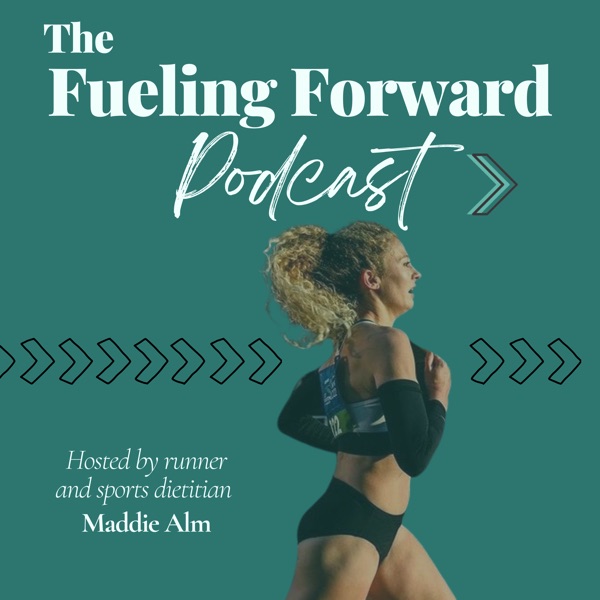
Hosted by Maddie Alm, sports dietitian and elite runner, The Fueling Forward Podcast is the place to go for all things running and sports nutrition. Learn from other runners as they discuss their own experiences with nutrition and performance and learn from Maddie, a registered dietitian and runner. Through these conversations, we will bust common nutrition myths and misconceptions around fueling for performance, so you can find an approach to fueling that will allow you to feel and perform your best without taking short cuts. Here at Fueling Forward, we believe in fueling your body for the long run!
On the charts
Every published chart this podcast appears in, in the snapshot behind this page. Each one links to the chart it came off.
From the feed
The latest episodes published to this podcast’s own RSS feed. Titles and descriptions are the publisher’s.
This episode is an interview with professional runner for Nike, Lauren Gregory. Lauren is a Colorado native, where she fell in love with running while out on the trails with her high school xc team. She immediately excelled and after becoming a 7x Colorado state champion and NXN runner up, Lauren committed to the University of Arkansas to pursue D1 collegiate running. Struggles with fueling led to a frustrating injury cycle and she nearly medically retired, but after finding her way back to a healthier version of herself, Lauren had a very successful collegiate career as a 7 time All-American and signed a professional contract with Nike right out of college. Lauren is now an accomplished track, road and trail athlete having won a US title in the vertical mountain running championships and the 10k trail championships, and making it to the final in the 5k at the 2024 US Olympic Trials. Lauren is also fresh off of her historic win at OCC UTMB as the first American woman to win the title. In this episode, we talk about: How growing up near so many trails allowed her to discover her love for running and what her progression to being one of the best runners in the state looked like How trying to eat “clean” and “healthy” in high school led to unintentional under fueling that resulted in two big stress fractures, and her advice for high schoolers struggling with injuries Why she doesn’t use a ton of metrics to track her performance and fitness How cutting corners with fueling in college led to an injury cycle that nearly caused her to quit running, but instead focused on correcting her fueling and was able to have a successful collegiate career Why changing her environment during her transition from college to pro opened her eyes to the importance of fueling, and what she has implemented since How the trail running world has changed her view on fueling, and why she thinks fueling is what won her the OCC title What trail races are like and why it’s a great options for runners who are feeling burnt out or need something new Her breakdown of her win at OCC and how it ended up coming down to a kick in the last 800m Why her motto for her training block and race was “don’t wait until you’re hungry”
While Maddie is on maternity leave, Alexa Gusman, the newest dietitian at Fueling Forward, is taking over to answer your questions! This episode is a Q&A episode where Alexa answers questions that have been submitted by listeners. Questions for today’s episode include: I have some abnormal iron and liver panel labs and am cross-training as I recover from an injury. How can I improve my labs to help improve my performance? As a healthcare worker, it's not always realistic to fuel every 2-4 hours. How can I navigate fueling when my schedule makes it difficult to do so? I'm a college athlete transitioning from living on campus to living on my own and starting to cook for myself. I have roommates who tend to eat a lot less than I do. How can I maintain adequate fueling while avoiding these restrictive thoughts and balancing cooking for myself? How can athletes with a history of an eating disorder or disordered eating manage anxiety and difficult thoughts that come back up around food? Thanks so much to everyone who has submitted questions so far! If you would like to submit a question for future episodes, you can do so on my website HERE or email me at fuelingforwardpodcast@gmail.com .
This episode is an interview with physical therapist, Lyndsay Centrowitz. Lyndsay is from Colorado, where she grew up running cross country and track. Her experience with injuries inspired her to pursue a career in physical therapy, and she received her doctorate in physical therapy then went on to practice in a prestigious clinic in Portland that specialized in treating runners. Lyndsay quickly realized there was a gap in women's pelvic health, especially within the context of female athletes, so she became certified as a pelvic floor health specialist. She started her own practice, StrongHER, to help fill that gap in women's health care. She currently lives in Chicago with her two kids and Olympic gold medalist husband, Matt Centrowitz. We talk about: How running injuries in high school led her to working with a physical therapist, which inspired her to pursue a career in the field Why she chose sports PT over pediatrics, and how she ended up in one of the most prestigious PT clinics for runners in Portland What it was like expanding her practice to include pelvic health, and how that led to her starting her own practice, StrongHER How she determined pelvic floor health was a major gap in the PT field, and what the process was like for her to get certified to fill that gap Common pelvic floor symptoms in runners that are not normal and might indicate a need to see a pelvic floor specialist What a pelvic floor PT does and what an appointment with one might look like The role she has seen nutrition play when it comes to physical therapy, especially injury rehab and recovery If you are interested in working with Lyndsay, you can learn more about her services on her website HERE .
I'm back from maternity leave! This episode is a Q&A episode where I answer questions that have been submitted by listeners. Questions for today’s episode include: I have always struggled with needing to go to the bathroom on runs. I have tried eliminating certain foods and even the FODMAP diet which I found to be restrictive. Do you have any reccomendations? I’m transitioning from high school to college training and I seem to be always hungry. We also don't practice until 5pm which has made fueling hard. Do you have any tips for managing hunger and fueling for later runs? I was diagnosed with osteopenia 2 years ago and even after going through eating disorder recovery and period restoration my follow up scan showed no improvements. Do you have any nutrition tips for building bone? I’m going to be walking on to my university's xc team this fall. Do you have any tips on how to navigate this transition to varsity running? Thanks so much to everyone who has submitted questions so far! If you would like to submit a question for future episodes, you can do so on my website HERE or email me at fuelingforwardpodcast@gmail.com .
While Maddie is on maternity leave, Alexa Gusman, the newest dietitian at Fueling Forward, is taking over to answer your questions! This episode is a Q&A episode where Alexa answers questions that have been submitted by listeners. Questions for today’s episode include: How can I catch underfueling before it starts affecting my menstrual cycle? What are other signs of underfueling beyond normal workout fatigue or lack of sleep? I often find myself bingeing at night and initially thought it was from underfueling earlier in the day. However, even after increasing my intake earlier in the day, I’m still overeating at night. How can I prevent these evening binges? When is the best time to take iron, and what can I do to improve my ferritin? How can I respond to friends who share harmful food beliefs? And what’s the difference between a dietitian and a nutritionist? Thanks so much to everyone who has submitted questions so far! If you would like to submit a question for future episodes, you can do so on my website HERE or email me at fuelingforwardpodcast@gmail.com .
This episode is an interview with professional runner for Nike, Christina Aragon. Christina is a Montana native where she grew up running and doing gymnastics. She was a 12x state champion between track and cross country, and even competed in the Olympic trials in the 1500 as a high schooler. Christina went on to run at Stanford University, where she was a 9x All-American and the 2016 U20 World Championships bronze medalist in the 1500. After college, Christina signed a professional contract with Nike and moved to Eugene to join the Bowerman Track Club, which has now morphed into the Oregon Track Club. Most recently, she finished 10th in the 1500 at the 2024 US Olympic Trials. In this episode, we talk about: What it was like balancing both gymnastics and running at a high level in high school, and how she ended up making the hard decision to give up gymnastics to focus on running How she navigated pressure as a high school runner and why she found national competitions helped take the pressure off Her struggles with body image that impacted her fueling starting her senior year of high school, and how this impacted her transition to collegiate running How losing he period for 3 years ended up leading to a 3 year injury cycle, and why it’s so important to fix the root cause of the issue and to allow your body to go through puberty How guidance from a teammate and coach helped her pull back her training and eat more to ultimately regain her health and get back to running What her transition from collegiate to professional running was like, and how she has been able to focus on honing in her mental skills for racing
While Maddie is on maternity leave, Alexa Gusman, the newest dietitian at Fueling Forward, is taking over to answer your questions! This episode is a Q&A episode where Alexa answers questions that have been submitted by listeners. Questions for today’s episode include: I'm going to be a runner in college next year, and I had a stress fracture this spring and an inconsistent period. My body fat percentage is a little high, and I'd like to lower it for optimal health/fitness. Do you have any tips or suggestions to lower my body fat percentage, regain my cycle, and stay healthy for college athletics? I'm a college runner who is struggling with getting good quality sleep. I've been taking melatonin and magnesium before bed; are there any other nutrition tips to help with sleep quality? I have a hard time knowing when I'm full and tend to have portions that are too big. How do I know when I've eaten enough, and how do I portion meals? I'm a high school cross country coach. What advice would you give to the parents of high school athletes to help their high schooler stay healthy, have fun in the sport, and fuel themselves well? Thanks so much to everyone who has submitted questions so far! If you would like to submit a question for future episodes, you can do so on my website HERE or email me at fuelingforwardpodcast@gmail.com .
This episode is an interview with app developer and marathon OTQ hopeful, Maryann Gong. Maryann is an NYC local and California native. She went to MIT where she got her bachelor's degree in computer sciences and her master's degree in AI. While at MIT, she ran on the track and xc team, becoming an All-American and a D3 champion in the indoor 3k. She struggled on and off with fueling and an injury cycle after her junior year, and her experience with this inspired her to create a training app for runners called Toga. She found her way to the marathon and is currently a member of Central Park Track Club chasing an OTQ in the marathon at Chicago this fall. In this episode, we talk about: How Maryann got into the sport of running in high school after transitioning from soccer What it was like transitioning from high school to running at an academically rigorous school like MIT, and why D3 was a good fit for her Her struggles with fueling that led to episodes of bulimia and an injury cycle, and how she found her way back from that to focus on fueling for performance Her new AI powered app for runners, Toga, and why it was important to her to include a feature that helps hold runners back to reduce risk of injury or burnout How she discovered high carb fueling during runs, and why she feels like it has changed the game for her to get 120g of carbs per hour during training and marathons If you would like to keep up with Maryann, you can find her on Instagram at @maryanngong. If you are interested in Toga, you can follow them on Instagram at @trainwithtoga and you can try it out free for 30 days using the code FUELINGFORWARD. You can find Toga in the app store HERE .
While Maddie is on maternity leave, Alexa Gusman, the newest dietitian at Fueling Forward, is taking over to answer your questions! This episode is a Q&A episode where Alexa answers questions that have been submitted by listeners. Questions for today’s episode include: I'm a high school track and cross-country athlete and definitely have a sweet tooth. My training load is relatively light compared to many other distance runners, and as the postseason approaches, my family has been encouraging me to cut back on sweets. What are your thoughts on this? I'm recovering from an eating disorder and working to get my period back. Since gaining weight, I've been struggling to hit my usual times on the track and have lost some of my motivation and enjoyment for running. Is this more of a mindset shift I need to work through, or could I still be experiencing physical effects from my past restriction? What tips would you give a high school athlete who wants to start fueling during long runs? How do you navigate the belief that "thinner equals faster," especially when that message is coming from your coach? Thanks so much to everyone who has submitted questions so far! If you would like to submit a question for future episodes, you can do so on my website HERE or email me at fuelingforwardpodcast@gmail.com .
This episode is an interview with former elite Canadian runner, Rachel Cliff. Rachel is the former Canadian record holder in the marathon and half marathon, and she also represented Team Canada at the 2017 and 2019 World Championships in the 10k and 5k respectively, the 2018 Commonwealth Games in the 10k, the 2018 NACAC Championships (she was the bronze medalist in the 10k), and the Pan Am Games (she was the bronze medalist in the 10k). She is currently the elite athlete advisor for Hettas and mom of 2. In this episode, we talk about: How she discovered running as a kid growing up in Canada, and how the Canadian high school running scene differs from the US What it was like growing up with a mom who was a dietitian, and how her mom stepping in when she lost her period in high school played a big role in her long term health in the sport Her transition from high school to collegiate running, how she struggled for a bit running slower than she did in high school while her body shifted, and how trusting the process allowed her to come back stronger Why periodization and prioritizing weight gain in the off season has been key for her, and how she found herself struggling in the years she didn’t do that Her transition to elite running, and how getting left off the Olympic team led to her going all in on training How pushing herself too hard towards her Olympic dream led to a mysterious career ending injury, and how she had to advocate for herself to get to the bottom of it If you would like to keep up with Rachel, you can find her on Instagram at @raecliff
This episode is a Q&A episode where I answer questions that have been submitted by listeners. Questions for today’s episode include: How do you know if you’re eating enough when you’re recovering from RED-S? Is getting your period back the only way to know, or will there be other signs? I’m a marathoner and have a family history of Type 2 diabetes. My A1C has been increasing, and I’m not sure how to balance managing my A1C and weight with fueling for performance. Do you have any advice? I just finished my high school senior track season and am getting ready for cross country in the fall, but I have a break between seasons. Should I fuel differently during this time or should I keep my intake up? I’ve been struggling with chronic IT band issues. Do you have thoughts on some nutrition changes I could make to better address this issue? Thanks so much to everyone who has submitted questions so far! If you would like to submit a question for future episodes, you can do so on my website HERE or email me at fuelingforwardpodcast@gmail.com .
This episode is an interview with professional runner for Saucony, Vanessa Fraser. Vanessa grew up in Northern California where she discovered and fell in love with running through Girls on the Run. She went on to run at Stanford University where she became a 10x All-American and the PAC-12 champion in the 10k. While at Stanford, she received her bachelor's degree in symbolic systems and her master’s degree management science and engineering. After college, she went on to run professionally, signing a contract with Nike and joining Bowerman Track Club right out of college. Vanessa has competed in multiple US championships in the 5k and 10k, and has a 5k time of 14:48. In addition to running professionally, she also works full time as a partnerships manager at a health care tech company. In this episode, we talk about: How she found the sport of running through Girls on the Run and what her progression looked like How an assignment to track calories from a middle school health teacher led to hospitalization, and what she learned from the experience What it was like going through periods of weight restoration and why she’s thankful her coaches, parents and doctors put her health first How she ended up running for Stanford, her dream school, despite not earning a scholarship right away Her transition to becoming a pro runner and advice for being patient during periods of lack of progress and injuries How increasing her carb intake has been instrumental to her success, and why fueling on long runs has been a big part of that Why working in addition to being a pro runner has helped her mindset around the sport and finding life balance You can keep up with Vanessa on Instagram or TikTok @nessafraser.
This episode is a Q&A episode where I answer questions that have been submitted by listeners. Questions for today’s episode include: As a pre-med student, I feel like I’ve turned to running and training as a coping mechanism to handle stress. How do you know if a training load is too high and inching towards overtraining? I’m a high school senior who runs track and xc and I’ve been working on getting my period back for over a year. I’ve gotten one cycle, but haven’t had any since. I feel like I’m doing all the right things, but also feel like I can’t stop gaining weight. Do you have any tips or advice for how to get and keep my period? I’m a high school track athlete and mostly compete in field events, but I will also do the 800. How would my fueling differ from an endurance runner? I’m a former collegiate runner and current dietitian working in an athletic department with the track/xc teams. My body has changed over the past year since I’m no longer training at a high level, and I find myself struggling with comparison and body image. Do you have any advice on how to navigate this? Thanks so much to everyone who has submitted questions so far! If you would like to submit a question for future episodes, you can do so on my website HERE or email me at fuelingforwardpodcast@gmail.com .
This episode is an interview with the food blogger and recipe developer behind Recipe Runner, Danae Halliday. Danae grew up in Arizona, where she discovered running through her older sister. She ran throughout high school, but found herself burnt out and took a break from the sport when she went to Arizona State University. When her sister started training for marathons, Danae found herself inspired to pick it up again and fell in love with the longer distance. Despite her love of food and recipe developing, Danae found herself struggling with an eating disorder. This led to a vicious injury cycle that she couldn’t find her way out of. She eventually reached out for help, and has been in treatment and active recovery since 2022. She hopes to get healthy enough to line up to race again soon! In this episode, we talk about: How her sister inspired her to start running in high school Why she took a break from the sport in college and how she found her way back to running How a comment from a coworker about her body led to restriction around food that resulted in an eating disorder Why she finally decided to seek help and what that has looked like for her Advice on how to be there for someone in your life struggling with an eating disorder Why it’s important to approach recovery and treatment from a way that works for you How she founded Recipe Runner and why developing recipes has been a healing tool for her throughout her eating disorder recovery You can keep up with Danae on Instagram at @reciperunner, and you can find her recipes and food blog on her website https://reciperunner.com/ ***A trigger warning for this episode: we do talk about an active eating disorder and eating disorder behaviors. If you are not in a place to hear that, you may want to skip this episode***
This episode is a Q&A episode where I answer questions that have been submitted by listeners. Questions for today’s episode include: A running influencer that I follow recently got a stress fracture but blamed it on biomechanics. This got me wondering if bone stress injuries are ever not related to fueling and overtraining in some way? Do you have any thoughts on this in the running culture? I’m a collegiate runner running 50-55 miles per week and am trying to put on weight. I’ve been drinking ensure drinks, but do you have any other tips for meals and snacks for weight gain? I recently experienced my first bone stress injury and I’ve also been dealing with chronically low ferritin. I’m in a healthcare system that is reluctant to provide more care than they deem necessary. How do I make sure that I’m getting all of the information I need to treat my injury with limited access to tests and treatment? How do I know which tests are important and worth advocating for? What are your thoughts on meal kits and how to navigate healthier options? Thanks so much to everyone who has submitted questions so far! If you would like to submit a question for future episodes, you can do so on my website HERE or email me at fuelingforwardpodcast@gmail.com .
This episode is an interview with sports psychologist and former professional runner, Lennie Waite. Lennie grew up abroad, where she primarily played soccer. She was recruited to play D1 soccer at Rice University, but after her sophomore year ended up switching to running and became a 2x All-American. She went on to run post-collegiately and represented Great Britain at 3 Commonwealth Games, the World Championships in 2017, and the 2016 Olympic Games in the steeplechase. Lennie did all of this while completing her PhD in Industrial-Organizational Psychology and becoming a Certified Mental Performance Consultant. She currently works with athletes and is also the chief science officer at Hite EQ, while being a mom to her 2 daughters. In this episode, we talk about: What it was like growing up abroad and how different the rhetoric is around food and sport How being good at a sport from a young age automatically creates pressure and expectations, and how she dealt with this Why she decided to pursue soccer instead of running initially in college and what led her to make that shift Her tips for helping athletes navigate pressure and comparison when it comes to racing What she sees athletes struggle with when it comes to fueling as a sports psych and some tips to work through those emotions If you would like to learn more about Lennie's and her services as a sports psychologist, you can go to her website HERE .
This episode is a Q&A episode where I answer questions that have been submitted by listeners. Questions for today’s episode include: In college I experienced a stress fracture, and since then I’ve been stuck in an injury cycle. Can you talk more about the science behind fueling to help heal injuries? What are your go to meals and snacks for track meets? I don’t have many resources at the meets and I’m someone who often runs 3 distance events. Is there a connection between motivation and energy levels, especially in a race? I notice lower motivation on days I don’t fuel as well, could these be related? You mentioned in a previous podcast that high cholesterol can be a sign of RED-S. What would you recommend for an athlete who tests high in cholesterol? Thanks so much to everyone who has submitted questions so far! If you would like to submit a question for future episodes, you can do so on my website HERE or email me at fuelingforwardpodcast@gmail.com .
Today's episode is an interview with Ali Feller of Ali on the Run. Ali discovered running when she was living in NYC as a way to be social, and ultimately fell in love with the sport. She created her blog, Ali on the Run, that eventually evolved into podcast and ultimately led her to become a race announcer and broadcaster. Ali completed the 2023 Eugene Marathon, after which she discovered a lump in her breast that led to a breast cancer diagnosis. Ali has been navigating life with stage 4 cancer while continuing to be a force in the sport, and has so many inspiring things to share. In this episode, we talk about: What it was like when she discovered running, and how she found herself falling in love with the sport Her relationship with food growing up as a dancer in the 90's, and how a diagnosis of Crohn's disease at the age of 7 impacted that What it has been like dealing with an inflammatory bowel condition that impacts running, and how she has navigated that over the years How she created Ali on the Run and what it's like being at the finish line of major marathons How her cancer diagnosis has impacted her ability to run, and how the running community has rallied behind her with support You can find Ali's podcast, The Ali on the Run Show, on all major platforms and you can find Ali on Instagram @aliontherun1.
This episode is a Q&A episode where I answer questions that have been submitted by listeners. Questions for today’s episode include: I’ve been struggling to get through an entire year healthy. I always make it through the fall and winter, then struggle with soft tissue injuries in the spring. Do you think this might be nutrition related or are these just things that come with running? What is your take on bicarb? Does it really make a difference and do you recommend it for high school athletes? I’m a high school swimmer and I’ve been struggling with GI issues immediately after races. This never happens during training. Can you think of anything that might be causing this and is there anything that might help from a nutrition standpoint? What advice would you give to an athlete that is struggling with fatigue, soreness that doesn’t go away, and is struggling in races? As her coach, how can I help an athlete recover from LEA/RED-S mid season? Thanks so much to everyone who has submitted questions so far! If you would like to submit a question for future episodes, you can do so on my website HERE or email me at fuelingforwardpodcast@gmail.com . You can find the links to the waitlists for the Fueling Forward programs below: High School Summer Boot Camp Series Fall Marathon Group Nutrition Coaching Program Healing Your Relationship With Food
This episode is an interview with NYC based RD, Natalie Rizzo. Natalie is the owner of Greenletes, a plant-based sports nutrition company, and she works primarily with plant-based athletes to help them learn how to fuel for health and performance on a plant-based diet. She has her Master's in Nutrition and Exercise Physiology from Columbia University and is the author of the cookbook Planted Performance. Natalie has been a vegetarian herself for over 15 years, and has completed 2 marathons and over 20 half marathons. She's also a mom to 2 boys. In this episode, we talk about: How Natalie found running later in life and caught the bug after finishing her first race Natalie's winding path to finding nutrition as a career after originally going into sales Her decision to become vegetarian and how she learned about plant-based sports nutrition through her own experiences Myths around plant-based eating for athletes How to navigate fiber intake as a plant-based athletes, and ideas for lunches for runners training in the afternoon/evening Top nutrition recommendations for plant-based runners and tips for anyone who is interested in becoming plant-based If you're interested in working with Natalie, you can learn more on her website https://greenletes.com/ and you can find her on Instagram @greenletes
Ranking source
Apple Podcasts rankings via the Mato Topic Intelligence Platform.
Observed September 20, 2026.
Apple and Apple Podcasts are trademarks of Apple Inc., registered in the U.S. and other countries.
Pairs with
Bring this source into Mato to read its transferable patterns, then turn them into an original show for your own audience.