Mato just raised pre-seed Read more

Podcast charts
Published by TED
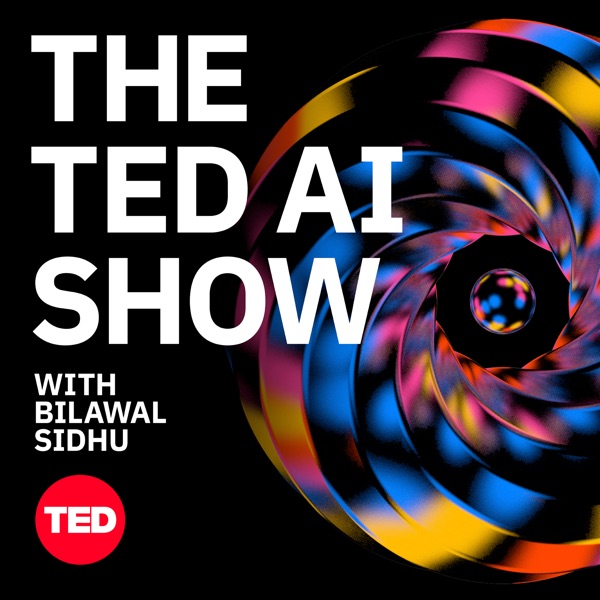
Sure, some predictions about AI are just hype – but others suggest that everything we know is about to fundamentally change. Creative technologist Bilawal Sidhu talks with the world’s leading experts, artists, journalists, and more to explore the thrilling, sometimes terrifying, future ahead. Hosted on Acast. See acast.com/privacy for more information.
On the charts
Every published chart this podcast appears in, in the snapshot behind this page. Each one links to the chart it came off.
From the feed
The latest episodes published to this podcast’s own RSS feed. Titles and descriptions are the publisher’s.
Imagine if one day, your quiet neighborhood came alive with a steady hum… and it never went away? All throughout the United States, data centers are popping up next door and in your backyards. These buildings guzzle millions of water, cause noise pollution, and are raising homeowners’ utility bills. In this first episode of a four-part miniseries, Sherrell interviews environmental health scientist Dr. Jacoby Wilson on what happens when data centers infiltrate a neighborhood. They discuss why data centers disproportionately undermine working class communities and how Dr. Wilson is working developing ortdinances to better regulate data centers and holding planning commissions accountable. Talk featured How to build an equitable and just climate future | Peggy Shepard TED Tech host Sherrell Dorsey guides you through the latest ideas from TED Speakers. She uncovers riveting questions that sit at the intersection of technology, society, science, design, business, and innovation. Listen now: https://link.mgln.ai/twb3KD Hosted on Acast. See acast.com/privacy for more information.
Today, we are sharing a special episode from the chart-topping tech podcast web3 with a16z crypto. Produced by venture capital firm Andreessen Horowitz, the podcast explores the technology, people, and business ideas driving the next era of internet innovation. This episode – part of a series covering leading “Trends for 2025” – covers the intersection of crypto and AI. Topics range from why having a unique ID matters in a world of deepfakes to AI agents in games to truly autonomous chatbots. You’ll also get to hear from a16z crypto team members, including chief technology officer Eddy Lazzarin, on what they are personally excited about for 2025 given their unique view of the industry. To listen to more episodes of web3 with a16z crypto, such as part one of the series “Trends for 2025,” follow the show here: https://link.mgln.ai/2YNuuu . Or can also subscribe to the a16z crypto newsletter for more trend updates, builder guides, industry reports, and more. Hosted on Acast. See acast.com/privacy for more information.
This episode is part of a feed swap from our friend at Vox’s Unexplainable podcast. Good Robot is a miniseries hosted by Julia Longoria. Today’s episode, “The magic intelligence in the sky” examines how before AI became a mainstream obsession, one thinker sounded the alarm about its catastrophic potential. So why are so many billionaires and tech leaders worried about… paper clips? Good Robot was made in partnership with Vox’s Unexplainable team. Episodes will be released on Wednesdays and Saturdays. For more, go to vox.com/goodrobot Hosted on Acast. See acast.com/privacy for more information.
Whether you’re trying to find your way around a new city or just looking for a place to eat, it’s become second nature to many people to turn to Google Maps to get us from point A to point B. On the last episode of this season of The TED AI Show, we’re chatting with Keyhole (now known as Google Earth) founder and current Niantic SVP of Engineering Brian McClendon. Brian and Bilawal discuss how even the most detailed digital maps have blind spots, how Pokemon Go could be an unlikely partner to fill in the blanks – and how augmented reality is making the future of navigation immersive. In the second half of the show, Bilawal recaps some of the big learnings from the first season of this show, and teases a big update about season 2. For transcripts for The TED AI Show, visit go.ted.com/TTAIS-transcripts Hosted on Acast. See acast.com/privacy for more information.
As AI technology advances, it’s becoming harder and harder to distinguish between work done by humans and work done by computers. But is AI becoming more human, or are we becoming more digital? Synthesia is a video platform that uses AI to generate lifelike video avatars, further blurring the lines between humans and their digitized lookalikes. In this episode, Bilawal sits down with Synthesia’s CEO, Victor Riparbelli, to discuss the benefits of having your own AI avatar, how companies are using this tool to improve communication, and why media literacy is more important than ever in a world of ever-thinning lines between real and fake. They dissect the risks that come with making this technology available to the public, the strict rules Synthesia has in place to protect their users, and question the ethics of having a digital clone. Tune in to see if you’ll be sending your own AI avatar to your boring meetings in the near future. For transcripts for The TED AI Show, visit go.ted.com/TTAIS-transcripts Hosted on Acast. See acast.com/privacy for more information.
Human brains are often described as computers — machines that are “wired” to make decisions and respond to external stimuli in a way that’s not so different from the artificial intelligence that we increasingly use each day. But the difference between our brains and the computers that drive AI is consciousness – our inner world, defined by experience and awareness. Anil Seth is a professor of cognitive and computational neuroscience at the University of Oxford. He studies human consciousness and he’s concerned about the way we’ve come to think about AI as conscious minds rather than useful tools. Anil and Bilawal sit down to discuss the differences between intelligence and consciousness, the possibility of AI becoming self-aware, and the dangers of assigning human-like traits to our AI assistants. For transcripts for The TED AI Show, visit go.ted.com/TTAIS-transcripts Hosted on Acast. See acast.com/privacy for more information.
It’s impossible to separate the way people engage with AI with the way they engage with the internet as a whole. This is an episode of ReThinking, another podcast from the TED Audio Collective, featuring a compelling discussion of why the internet can feel so unfriendly–and where we can go from there. You’ll hear from Jay Van Bavel, an award-winning professor of psychology and neural science at NYU, on the science of virality, why bad news commands our attention, and how we can find common ground around more uplifting content. If you liked this episode, you can find more ReThinking wherever you get your podcasts. Hosted on Acast. See acast.com/privacy for more information.
Ranking source
Apple Podcasts rankings via the Mato Topic Intelligence Platform.
Observed September 16, 2026. Cached outside the daily freshness window; the positions keep the date they were taken on.
Apple and Apple Podcasts are trademarks of Apple Inc., registered in the U.S. and other countries.
Pairs with
Bring this source into Mato to read its transferable patterns, then turn them into an original show for your own audience.