Mato just raised pre-seed Read more

Podcast charts
Published by Frieda Vizel
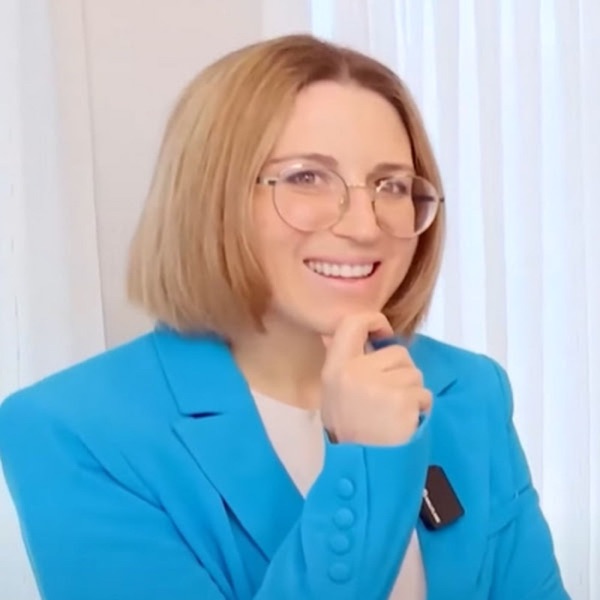
Welcome to in-depth conversations on Hasidism, Judaism, NYC, culture, education, religion and more! This podcast is hosted by popular Youtuber Frieda Vizel, who has been studying the Hasidic community for more than ten years. This is the podcast version of the video conversations which are also published on Youtube. Please reach out with feedback. Here's the youtube channel if you prefer to see the host and guests! :) Become a supporter of this podcast: https://www.spreaker.com/podcast/the-frieda-vizel-podcast--5824414/support .
On the charts
Every published chart this podcast appears in, in the snapshot behind this page. Each one links to the chart it came off.
From the feed
The latest episodes published to this podcast’s own RSS feed. Titles and descriptions are the publisher’s.
video link to this interview: https://youtu.be/NtFI3NL4dFE?si=zOhqSNq6aijFxcc4 In September 2026, the Satmar community experienced a major historic event. After decades of the community being split into two rival factions, the two brothers who led the rival factions met again. But not just anywhere, but at the White House. After so much time of hurt and estrangement, the rabbis wished each other a sweet year before heading into the White House to meet with the president, Trump, and advocate on behalf of their Jewish community. This is a great time to look back at how this split happened and record some oral history. Yumi Lowy grew up Satmar and paid a lot of attention to the battles. These are his memories. As is the case with oral histories, other people will have other stories. I so look forward to more perspectives in the comments. Follow Yumi Lowy on Instagram here: https://www.instagram.com/yumilowy/ For more on the early battles in Kiryas Joel, watch my interview with lawyer Michael Sussman: https://youtu.be/jcz0xmkm10s My interview with Hasidic reporter Joseph Kornbluh: https://youtu.be/4MPf67ftXME My reflections before the Trump visit: https://youtu.be/_UjXlnOVdug Reb Aaron Teitelbaum and AI: https://youtu.be/vUhamjWR_vA Become a supporter of this podcast: https://www.spreaker.com/podcast/the-frieda-vizel-podcast--5824414/support .
Video link to this podcast: https://youtu.be/_UjXlnOVdug In September 2026, news broke that Hasidic Rabbis will meet with president Trump. This was revealed when the Satmar Rabbi Aaron Teitelbaum stepped up to his congregation on Shabbos and pre-emptively told his community that although he accepted an invite to sit with the president, he doesn't want the teenage boys to get too into it and excited about it. In this video, I unpack, from my own personal experience, what I think motivated the speech, what I think motivates the visit, and a little context on the Hasidic community's relationship to America. To watch the full video of my maroon binders, click here: https://youtu.be/ZRhOovJLcBY Some other thoughts on politics - here about NYC mayor Mamdani: https://youtu.be/FMgh3_O13Hg My interview with Hasidic reporter Jacob Kornbluh who covers the Mamdani beat https://youtu.be/4MPf67ftXME A conversation with a Satmar woman (Pearl!) about the dynasty: https://youtu.be/tPiKqDCtyIo 0:00 Personal reflection 2:58 Rabbi's address to students 8:23 Analyzing the visit 11:28 Political controversy 12:21 Historical context 14:17 Personal intersections Become a supporter of this podcast: https://www.spreaker.com/podcast/the-frieda-vizel-podcast--5824414/support .
Video link to this interview: https://youtu.be/Yy4Tzw-UAUc Become a supporter of this podcast: https://www.spreaker.com/podcast/the-frieda-vizel-podcast--5824414/support .
Video link to this interview: https://youtu.be/vEkKjydfG3g The Hasidic village of Kiryas Joel is an unusual community in the state of New York. It's all Hasidic, very insular. It is shaped around the Satmar Hasidic code of behavior which includes speaking Yiddish, strict gender roles, and insularity from secular society. The community is so gendered that growing up male versus growing up female are completely different experiences. I, as this channel host, have shared much about the female experience. However, there is little I know about the male experience. Through my network of people from Kiryas Joel, I recently got to know Shia Friedman - who is a rare example of someone from Kiryas Joel who is willing to talk on my channel on the record. We sat down to chat, primarily to understand his life as a male who grew up Hasidic. Obviously, Shia's story reflects only Shia's experience, but it can give us some insights just as my experience gives us some insight as well. We talk about the school day of Hasidic boys, the relationship to teachers, the expectations of learning an extreme amount, the lack of English and secular education, attitudes towards women, marriage rituals, and stepping out of the box. I think there's a lot that's covered in this brief episode, and I so look forward to your thoughts. Shia's instagram is: https://www.instagram.com/shia__friedman/ My instagram is: https://www.instagram.com/friedavizel/ Check out some of my other videos on Kiryas Joel: What it was like for me to grow up in Kiryas Joel https://youtu.be/uHu_17N9GdE My response to the Tyler Oliviera video on Kiryas Joel https://youtu.be/ZlWRN4jo-CA Interview with lawyer Michael Sussman on the early years of kiryas joel https://youtu.be/jcz0xmkm10s Interview with Fradel Neuman who comes from Kiryas Joel https://youtu.be/HoTzWaF7dU8 Become a supporter of this podcast: https://www.spreaker.com/podcast/the-frieda-vizel-podcast--5824414/support .
Video link to this episode: https://youtu.be/vUhamjWR_vA In this video, I provide a translation and analysis of a powerful Yiddish speech by the Grand Rabbi of the Satmar Hasidic sect, Rabbi Aaron Teitelbaum. He addresses what he describes as the "new Satan" threatening today's generation: Artificial Intelligence. I offer a unique context as someone who grew up in the community. I share personal stories, including a poignant encounter at my son's opsherin, to illustrate the complex relationship between Hasidic leadership, tradition, and the relentless march of technology. In this video, we explore: -The Rabbi's Warning: How AI is viewed as a "mutation" of past technological temptations like computers and smartphones. -The "Kosher Phone" Dilemma: Why even filtered devices are now seen as gateways to unsupervised access to the world. -Cultural Preservation: The community's ingenious and sometimes desperate tactics for balancing modern necessity with spiritual isolation. -A Personal Journey: I reflect on how the internet changed my own life and why I find the Rabbi’s cautionary stance more logical than many might expect. Timestamps: 00:00 Introduction: My background and the significance of the speech 01:18 Personal story: Meeting Rabbi Aaron Teitelbaum 08:24 The Hasidic community’s "dance" with technology 11:52 The Recording Begins: The "Flaming Speech" against the new Satan 17:09 Why AI is seen as a mutating evil inclination 21:05 The history of Hasidic solutions: Filters and bans 25:22 The "woe to us" dilemma: Why the Rabbi chose to speak out 30:25 How AI chatbots are accessed via kosher phone numbers 33:50 My reflections: Is the Rabbi’s warning extreme or insightful? Join the conversation: How do you think we should manage the influence of AI on children and vulnerable communities? Does the Hasidic approach offer any lessons for the secular world, or is it too extreme? Share your thoughts in the comments below. Become a supporter of this podcast: https://www.spreaker.com/podcast/the-frieda-vizel-podcast--5824414/support .
Video link to this episode: https://youtu.be/mW6PTwWUVAU Melissa Weisz grew up in Hasidic, Yiddish-speaking Boro Park and left the fold well before the OTD phenomenon became famous. I believe she left the fold before me, and I'm of the old timers now! I have been waiting for the opportunity to share her story with my viewers. Here, we finally get Melissa's story live. Please come if you would like to see this live and ask questions. It will also be available for view later. Follow Melissa on her socials! https://www.instagram.com/melissaweisz/ https://melissamalkyweisz.com/ Here is the full, unedited livestream: https://youtube.com/live/j16Dlc5iRGo Here's a trailer to this interview: https://youtube.com/shorts/oiWlef1AHVk?feature=share Become a supporter of this podcast: https://www.spreaker.com/podcast/the-frieda-vizel-podcast--5824414/support .
Video link: https://youtu.be/xBBW-b4yNfw Gita got married, like many Hasidic Williamsburg girls did. In an arranged match, when she was not yet twenty. Her marriage lasted until death did them part. Decades together, seven children, forty grandchildren, and about as many great-grandchildren. What does it mean for a woman of such a traditional, pious world to lose her husband, the backbone of her life and family? Gita is a story of resilience, everlasting love, and the language to express it all through food. From her shabbos morning coffee on the porch, from where she watches young families, to her choice to have peanut butter bread for shabbos lunch, to her refusal to let her kids cook for her, she remains fiercely independent, deeply traditional, and eternally devoted to her family through food. In a world where tradition is lived through food, Gita shares her family tradition of eating Rakot Crumpli: packed potatoes. A Hungarian food of sliced potatoes and eggs, with heaps of "dairy goodies" - cottage cheese, sour cream, and lots of butter. Join Gita and me for a day in her home of cooking Rakot Crumpli and learning about her life and world as a widow in the Hasidic community. About her struggles with chronic illness and how she lives life fully despite her mobility issues and need to get around with a Rollator. Her resilience and love for life is inspiring, her fashionista side is envy-inducing. Most of all, she laughs and makes you laugh. She's alone but not lonely. This is my second time with Gita. My first visit was an interview about her life story which you can watch here: https://youtu.be/2saQ0LEwZXQ ~~ Filmed by me. How did I do? Do you prefer professional videography or more intimate home made filming? ~~ Edited by the wonderful Lee Kupac https://readymag.website/u3245558506/6471652/ I've interviewed the cooking influencer Lovina Zook: https://youtu.be/GHF0lQS2CHs Check out another story of an inspiring widow from Williamsburg, Tova Schiff: https://youtu.be/O2eglqRL5n4 Check out Mr Klein's shop where you can buy Rakot Crumpli https://youtube.com/shorts/KHnzQ5l674s?feature=share Become a supporter of this podcast: https://www.spreaker.com/podcast/the-frieda-vizel-podcast--5824414/support .
Video link to this interview: https://youtu.be/LV99eySK-24 Fifteen years after their marriage was arranged, a couple reflects on their lives together. They met once for forty minutes and then got married a year later, without any contact during the engagement. Are they happily married? In hindsight, what do they take away from their way of having met? 🔗 Follow Brachi and Avi on instagram: https://www.instagram.com/brachif/ 🔗 Brachi's Shabbos table decor business is here: https://hod-hadar.com/ 🔗 Hod Hadar Instagram: https://www.instagram.com/hod_hadar_/ Did you enjoy this interview? Watch some of my others: 🌟 Eli's story: https://youtu.be/SggvtB586Gk 🌟 Pessy's story: https://youtu.be/7CBHWJwmAJI 🌟 Gita's story: https://youtu.be/xBBW-b4yNfw 🌟 Melissa Weisz's story: https://youtube.com/live/j16Dlc5iRGo Edited by Lee Kupac / https://www.instagram.com/alice.kpc As always, my interviews are available as podcasts wherever you get your podcasts. Thank you for supporting my work!! Become a supporter of this podcast: https://www.spreaker.com/podcast/the-frieda-vizel-podcast--5824414/support .
Link to video version of this interview: https://youtu.be/7CBHWJwmAJI Many people know Pessy from her popular Yiddish comedy videos, where she lovingly and hilariously captures the world of Hasidic women. She was one of the first creators to bring that world to social media through a female lens, and her sharp observations and humor have earned her a devoted following. But behind the comedy is a remarkable personal story. Pessy grew up in a Hasidic family in Monsey and spent much of her childhood carrying responsibilities that no child should have to carry. As the oldest sister, she watched her family struggle through the challenges surrounding her younger sister and felt an overwhelming need to hold everything together. She learned early on that being "good" and "perfect" seemed to be the safest way to survive difficult circumstances. In our conversation, Pessy speaks with extraordinary honesty about family, faith, rejection, and the pressure she felt to meet everyone's expectations. She shares how religion became a source of comfort, how she entered marriage determined to be the perfect wife, and how she concealed her own struggles because she didn't want to burden the people she loved. What makes Pessy's story so powerful is not simply what happened to her, but the way she reflects on it. She brings insight, humor, and compassion to experiences that could easily have left her bitter. Her story touches on themes that are deeply personal and yet almost universal: the desire to be accepted, the weight of responsibility, the loneliness of feeling misunderstood, and the long journey toward self-acceptance. Pessy's story is, in many ways, everyone's story. I hope you'll watch this conversation with kindness and an open heart. You can find Pessy on Instagram: https://www.instagram.com/pessyunstressing/ You might also enjoy some of my other interviews with women from the Yiddish-speaking Hasidic community: Melissa Weisz https://youtube.com/live/j16Dlc5iRGo Fradel Neuman https://youtu.be/HoTzWaF7dU8 Sara Braun https://youtu.be/1E54wVSn-wM Gita Katz https://youtu.be/2saQ0LEwZXQ As always, my interviews are also available in audio-only form wherever you get your podcasts. And thank you especially to my channel members for helping make these conversations possible. Become a supporter of this podcast: https://www.spreaker.com/podcast/the-frieda-vizel-podcast--5824414/support .
Video link to this episode: https://youtu.be/ixZOxV5BuCI Eddy Portnoy is back by popular demand, after our wonderful discussion on the history of Yiddish language. Eddy is the exhibit curator at YIVO Institute for Jewish Research and does amazing Yiddish/Jewish curations. Today’s subject is juicy but educational, eye-opening, and enlightening. We are diving into the shocking and largely forgotten story of the National Desertion Bureau, a real organization founded in New York in 1911 to track down runaway Jewish husbands who abandoned their wives and children during the great wave of Jewish immigration from Eastern Europe to North America. For more on this below. Here are some links: -My previous interview with Eddy: https://youtu.be/tq8y3KkAWTk?si=-KdfW3UJBkiMdrh_ -The Yivo Exhibit: https://www.yivo.org/National-Desertion-Bureau -📘 THE BOOK ON THIS: Wives without Husbands: Marriage, Desertion, and Welfare in New York, 1900–1935 by Anna R. Igra https://amzn.to/4tGvhbZ Popular stereotypes about Jewish husbands tend to be flattering: loyal, hardworking, stable, family-oriented. Which is exactly why so many people have never heard of this dark social crisis that unfolded inside immigrant Jewish communities during the early 20th century. Behind the romanticized image of the immigrant success story was another reality entirely: crushing poverty, overcrowded tenements, fractured families, emotional collapse, and men disappearing without a trace. The problem became so widespread that Yiddish newspapers like the legendary The Forward published daily columns called “The Gallery of Missing Husbands,” complete with mugshots and descriptions of men who vanished and left their families destitute. There were even Lower East Side psychics who specialized in helping women locate missing husbands. From 1905 through the 1960s, the National Desertion Bureau investigated more than 18,000 cases, working with courts, police departments, charities, and governments to track down deserters, force support payments, and sometimes even jail offenders. The surviving files read like tragic little novellas filled with betrayal, desperation, ruined finances, abandoned children, and impossible choices made during an era of massive upheaval. The archives at YIVO Institute for Jewish Research contain roughly 17,000 surviving case files from the Bureau, many of which formed the basis for the exhibition *Runaway Husbands, Desperate Families: The Story of the National Desertion Bureau*, curated by Eddy himself. In this episode, Eddy walks us through this extraordinary hidden chapter of Jewish history and helps unpack what these stories reveal about immigration, masculinity, poverty, shame, survival, and the fragile reality behind nostalgic immigrant mythology. Before we begin, I want to thank those of you who are channel members and help make this work possible. Members get early access to videos before they are released publicly. I deeply appreciate all of you, members, subscribers, commenters, and everyone who participates in these conversations and helps keep this channel alive. Become a supporter of this podcast: https://www.spreaker.com/podcast/the-frieda-vizel-podcast--5824414/support .
Video link to this conversation: https://youtu.be/KCS9vAundms How do you tell the history of Jews in Poland? Why is there so much debate about this from Polish people? I ask the curator of the Polin museum about her work at the crux of this debate: when telling the story of Polish Jewish history for the museum. Watch part 1 for Barbara's life story here: https://youtu.be/xXqmG4rI-sE Become a supporter of this podcast: https://www.spreaker.com/podcast/the-frieda-vizel-podcast--5824414/support .
Video link: https://youtu.be/qdQi26lBQ7Q Today I have the great honor and pleasure of speaking with Barbara Kirshenblatt-Gimblett, a renowned scholar of Jewish culture, folklore, and performance studies. She is best known for her work exploring how Jewish history and heritage are presented in museums and public culture, and she served as the chief curator of the core exhibition at the POLIN Museum of the History of Polish Jews, the landmark institution that tells the thousand-year history of Jews in Poland. Barbara's own story, and her relationship with her father, is part of the Polish Jewish story. For many years, her father shared memories of his life in Poland with his Canadian-born daughter. Later, during a period of depression, he began illustrating those memories in a remarkable series of paintings. Those paintings became the foundation for a book Barbara created, preserving both his experiences and a vanished world. Please check out part 2 where we talk about Barbara's work in Poland as the chief curator of the Polin musuem. https://youtu.be/KCS9vAundms Become a supporter of this podcast: https://www.spreaker.com/podcast/the-frieda-vizel-podcast--5824414/support .
Video link to this episode: https://youtu.be/gwCyNjr2vU0 Today I am talking to Doran from the channel @TheEasyWayDMS about philosophical subjects. What is antisemitism? How does it form and change? What are the guises it comes in? In a world in which there's so much muddled dialogue about antisemitism, I thought it was important to have a nuanced, thoughtful conversation. I invite your comments and thoughts. For more on this subject, see these videos: Everyone is talking about Jews: https://youtu.be/A1aOTCsYQfM My experience with antisemitism as a Jewish content creator: https://youtube.com/live/IZuSqgQGDBU Antisemitic attack in the UK with Izzy Posen https://youtu.be/IfWm5mlQRwg He lived through the Bondi Beach attack: https://youtu.be/css7bPGITTE Also, check out my conversation with Doran for his channel. https://youtu.be/utFUQCFnqdc?si=UEUJJjqYDNKhdoie Become a supporter of this podcast: https://www.spreaker.com/podcast/the-frieda-vizel-podcast--5824414/support .
Video link to this conversation: https://youtu.be/uQ8YqHA_id8 📸 Videography: Upperdeck Film / https://www.instagram.com/upperdeck_film/ ✂️ Edited: Lee Kupac / @mayo.nap 👰 Wedding footage: Shmilly Feldman / https://www.instagram.com/chasidish_lifter/ More content with Pearl: https://youtube.com/playlist?list=PLhW2QoO54ycylVdMte0xOgmKWkyksKzyv&si=hOy-eozSCg2cWErr Become a supporter of this podcast: https://www.spreaker.com/podcast/the-frieda-vizel-podcast--5824414/support .
Video link to this monologue: https://youtu.be/A1aOTCsYQfM Become a supporter of this podcast: https://www.spreaker.com/podcast/the-frieda-vizel-podcast--5824414/support .
Video link to this conversation: https://youtu.be/92Q4LAxh_Ug A year ago, Pearl sparked one of the most heated discussions on this channel. As a Satmar Hasidic woman, she shared her views on the Holocaust, anti-Semitism, Israel, and Zionism—views that many viewers strongly disagreed with. The response was intense. In this conversation, I sit down with Pearl again and ask her how she feels about the backlash, whether she regrets speaking so openly, and why she continues to stand by her beliefs. This interview is not about agreeing or disagreeing. It is an opportunity to hear, in Pearl's own words, how a deeply religious Hasidic woman understands Jewish history, suffering, faith, anti-Semitism, and the role of Israel in the modern world. Whatever your perspective, I hope this conversation helps illuminate a worldview that is rarely heard and often misunderstood. As always, please keep the discussion respectful. You can find many of my other podcasts with Pearl on podcast apps or on Youtube through this playlist: https://www.youtube.com/playlist?list=PLhW2QoO54ycylVdMte0xOgmKWkyksKzyv Become a supporter of this podcast: https://www.spreaker.com/podcast/the-frieda-vizel-podcast--5824414/support .
Link to video version of this episode: https://youtu.be/aeVekOqP7-Y The tables have turned! The wonderful, renowned Orthodox Jewish podcaster Dovid Bashevkin, host of 18forty, who interviewed me for his podcast, returned the favor and joined me for a candid conversation about the inside-outside perspectives. He inside, I outside, together we have an interest in the same thing from different angles. Bashevkin is one of the most thoughtful voices in the Orthodox Jewish world, for a wide-ranging conversation about faith, doubt, Shabbos, Jewish identity, community, America, Israel, assimilation, spirituality, and what it means to build a meaningful Jewish life in 2026. What makes this conversation especially interesting to me is that Dovid and I approach many of the same questions from different locations. He speaks from deep inside Orthodox communal life; I often speak from the margins, or from outside looking in. And yet we share a fascination with how people search for meaning, belonging, transcendence, and authenticity. Links: • Dovid Bashevkin on Twitter/X: [@DBashIdeas](https://x.com/DBashIdeas?utm_source=chatgpt.com) • 18Forty podcast: [18Forty](https://18forty.org/podcasts/?utm_source=chatgpt.com) • My appearance on his podcast: [My conversation with Dovid Bashevkin on 18Forty](https://www.youtube.com/watch?v=GEaI-Paltfc&t=1s&utm_source=chatgpt.com) We talked about: • why he created the 18Forty podcast • the “institutional scaffolding” of modern Jewish life • why younger Jews are restless even inside successful communities • Shabbos as both beautiful and difficult • assimilation, identity, and the pressure to “earn” love • celebrity culture and existential longing • the future of American Orthodoxy • why so many young Orthodox Jews are drawn to Israel • cultural translation between Jewish worlds • gum as contraband in Hasidic childhoods 😭 Thank you to all channel members, subscribers, viewers, and commenters who make these conversations possible. Frieda Become a supporter of this podcast: https://www.spreaker.com/podcast/the-frieda-vizel-podcast--5824414/support .
Video link to this interview: https://youtu.be/fV8LeAiQQe8 Join us for an insightful conversation with Dr. Yossi David, a leading researcher in social biases, migration trauma, and media influence. We delve into how leaving insular communities mirrors migration challenges, the impact of fiction and AI on perception, and the importance of trust and skepticism in society today. Key topics discussed: -The psychological challenges faced by individuals leaving ultra-Orthodox communities, compared to immigration trauma -Language barriers and cultural transitions when integrating into secular society -The influence of fiction, media, and AI technologies on shaping perceptions and biases -Trust in science versus authority and the role of scientific methodology in building credibility -The importance of a society that balances trust and skepticism for healthy self-correction -Strategies for raising awareness about fiction, misinformation, and fake content -Personal experiences of transition, identity, and resilience amid societal change -The role of education in developing critical thinking from a young age -The significance of physical challenges and community support in personal transformation Research that inspired this conversation: 📄 “The Search for Meaning and Belonging After Leaving a High-Cost Religion” PDF: https://app.luminpdf.com/viewer/698b43ca5896b082df3e537b Journal link: https://www.tandfonline.com/doi/full/10.1080/10508619.2025.2553407#abstract Former Haredi? Consider participating in Yossi’s current research: 📝 2026 Annual Survey for Former Haredi Individuals https://bgupsych.eu.qualtrics.com/jfe/form/SV_elMDRXhMsMVr23c Follow me: Instagram / X / TikTok: @FriedaVizel Become a supporter of this podcast: https://www.spreaker.com/podcast/the-frieda-vizel-podcast--5824414/support .
Video version of this episode: https://youtu.be/vUl5DjWhCBk Lovina's personal story: https://youtu.be/GHF0lQS2CHs Former Swartzentruber Amish teacher Lovina Zook takes us inside the world of Amish education, sharing detailed insights into what a typical school day looks like in one of America's most closed communities. From the one-room schoolhouse structure to the daily routines, strict dress codes, and teaching methods, Lovina offers a rare glimpse into this traditional education system. Lovina speaks with genuine enthusiasm about her experiences as both a student and teacher in the Amish school system, which she describes as the highlight of her teenage years. She explains the challenges of 5 a.m. mornings, preparing breakfast and lunches for siblings, and the deep bonds formed in the close-knit classroom environment. This video is for anyone interested in closed subcultures, sociology, and understanding how traditional communities maintain their way of life through education. Lovina's firsthand account provides an authentic look at the simplicity, discipline, and community connection that define Amish schooling. Follow Lovina Zook: 🎥 YouTube: https://www.youtube.com/@lovina_zook 📸 Instagram: https://www.instagram.com/lovina_zook/ 🎵 TikTok: https://www.tiktok.com/@lovina_zook 🌐 Website & Cookbook: https://socialsbylovina.com/ More of my Amish content: 📺 Interview with Martha Ross: https://youtu.be/teadpfXWCO4 📺 Academic perspective with Steven Nolt: https://youtu.be/5OnDYM2jymk 📺 Ex-Amish man on tour: https://youtube.com/shorts/x_qOijQpPnY 📺 Hasidic and Amish together: https://youtu.be/fAp1QPGNb5w Become a supporter of this podcast: https://www.spreaker.com/podcast/the-frieda-vizel-podcast--5824414/support .
Link to the video version of this episode: https://youtu.be/GHF0lQS2CHs Lovina Zook, a former Swartzentruber Amish woman who left her community at age 18 with only $24 to her name. Lovina shares her compelling story of growing up in one of the strictest Amish settlements, without electricity, running water, or any exposure to technology, where she raised her 12 younger siblings as the oldest girl. She opens up about the difficult decision to leave her family and community behind to pursue a different life, and the challenges of adapting to the modern world. Today, Lovina has built a following of millions, sharing authentic Amish cooking and baking recipes while educating people about her former way of life. Her story is one of courage, sacrifice, and resilience. Follow Lovina Zook: 🎥 YouTube: https://www.youtube.com/@lovina_zook 📸 Instagram: https://www.instagram.com/lovina_zook/ 🎵 TikTok: https://www.tiktok.com/@lovina_zook 🌐 Website & Cookbook: https://socialsbylovina.com/ More of my Amish content: 📺 Interview with Martha Ross: https://youtu.be/teadpfXWCO4 📺 Academic perspective with Steven Nolt: https://youtu.be/5OnDYM2jymk 📺 Ex-Amish man on tour: https://youtube.com/shorts/x_qOijQpPnY 📺 Hasidic and Amish together: https://youtu.be/fAp1QPGNb5w Become a supporter of this podcast: https://www.spreaker.com/podcast/the-frieda-vizel-podcast--5824414/support .
Ranking source
Apple Podcasts rankings via the Mato Topic Intelligence Platform.
Observed September 18, 2026. Cached outside the daily freshness window; the positions keep the date they were taken on.
Apple and Apple Podcasts are trademarks of Apple Inc., registered in the U.S. and other countries.
Pairs with
Bring this source into Mato to read its transferable patterns, then turn them into an original show for your own audience.