Mato just raised pre-seed Read more

Podcast charts
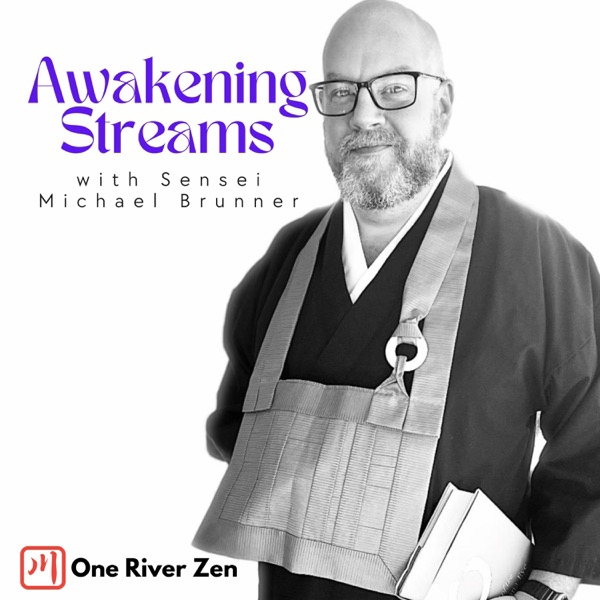
Published by Sensei Michael Brunner, One River Zen
Awakening Streams features Dharma talks and Zen reflections from Sensei Michael Brunner of One River Zen Center in Ottawa, Illinois. Each episode explores the living practice of Zen Buddhism through classic Zen koans, teachings from the Shōyōroku and Mumonkan, and direct encounters with everyday life. Discover how awakening flows through every obstacle, every act of compassion, and every moment of wonder. 🌐 Learn more: https://www.oneriverzen.org
On the charts
Every published chart this podcast appears in, in the snapshot behind this page. Each one links to the chart it came off.
From the feed
The latest episodes published to this podcast’s own RSS feed. Titles and descriptions are the publisher’s.
Stop Trying to Fix Yourself: Zen and the Freedom of Not Knowing In this episode of Awakening Streams , Sensei Michael Brunner takes up Case 45 of the Book of Equanimity, “The Sutra of Complete Awakening.” The case offers a striking set of instructions: do not give rise to deluded thoughts, do not try to extinguish delusion when it appears, do not add discriminating knowledge, and do not turn reality itself into something to grasp. We often come to practice hoping that meditation will make us more certain, more composed, and less troubled by difficult thoughts and emotions. Zen points somewhere else. Practice invites us to stop dividing ourselves into the person we are and the person we think we should become. Michael explores Great Doubt , the practice of Maintain Wonder , and two memorable Chinese stories: Chaos, who is “improved” to death by well-meaning friends, and the master axman capable of removing a speck of mud from another person’s nose without touching the skin. The teaching is simple: perhaps there is less to fix than we imagine. In this episode: Book of Equanimity / Book of Serenity, Case 45 The Sutra of Complete Awakening Delusion and discriminating mind Great Doubt and uncertainty Zazen and direct experience The story of Chaos (Hundun) “The mud’s already gone. Put down the ax.” Faith in Mind ( Shinjinmei ) Maintaining wonder in everyday life Learn more about One River Zen: https://oneriverzen.org 🪷 Awakening Streams: The One River Zen Podcast Teachings and reflections with Sensei Michael Brunner (Sōen) of One River Zen Center , 121 E Prospect St, Ottawa IL 61350. 🌐 Learn more & join practice: https://www.oneriverzen.org 🎧 Listen to more episodes: Awakening Streams Podcast 🙏 Support the Sangha: https://www.oneriverzen.org/donate #SenseiMichaelBrunner #MichaelBrunnerOttawa #OneRiverZen #ZenKoan #ZenPodcast #OttawaIL #SotoZen
Enter Zen from There What if grief, uncertainty, longing, and doubt are not obstacles to Zen practice, but the very places where practice begins? In this episode, Sensei Michael Brunner explores Case 81 of the Shōyōroku , “Gensha Comes to the Province,” and the teaching, “Enter Zen from there.” We often imagine that spiritual practice begins when our circumstances improve, our minds become quieter, or we finally understand what we are supposed to be doing. Zen offers a different invitation. Practice begins with the life that is already here. Through the story of Gensha, the sound of a bubbling brook, and the simple gesture of raising the corner of a robe, Sensei Michael examines how the past and future are encountered within the present moment. He reflects on the ways we cling to what is pleasurable, resist what is painful, and divide our lives into what we want to preserve and what we would rather cast away. When we stop standing apart from our experience, grief, anxiety, memory, joy, and uncertainty can all become entrances into intimacy, compassion, and awakening. Wherever your life is unfolding, enter Zen from there . In This Episode Why Zen practice does not require ideal circumstances How grief, doubt, and uncertainty become entrances into practice Gensha’s awakening and the direct intimacy of experience What it means to encounter the past and future in the present Why clinging to pleasure and resisting pain create suffering How koan practice moves beyond intellectual understanding The relationship between nonseparation and compassion What it means to become the medicine required by the present moment The Koan Master Gensha arrived at Hōden Province and was received with many kinds of entertainment. The next day he asked Venerable Shōtō, “Where did all of yesterday’s festivities go?” At this, Shōtō lifted a corner of his robe. Gensha remarked, “There’s no relation between them at all.” About Sensei Michael Brunner Sensei Michael Brunner is a Buddhist priest and the Abbot of One River Zen, a Zen Buddhist community based in Ottawa, Illinois, offering both in-person and online opportunities for practice. He graduated from the University of Michigan with a Bachelor of Arts in Philosophy with High Honors. He was later invited to Emory University’s Candler School of Theology as a Divinity Scholar, where he continued his theological and interreligious education. Sensei Michael’s teaching brings Zen out of the realm of abstract philosophy and into the immediacy of ordinary life. Through meditation, koan practice, retreats, classes, and Dharma talks, he invites students to meet grief, relationships, creativity, work, uncertainty, and suffering as expressions of the Way itself. His teaching is guided by the Three Transformative Touchstones of the Eternal Spring Order: Maintain wonder. Include everything. Transform suffering. Practice with Sensei Michael Zen is not something we merely read about or understand intellectually. It is a living practice that unfolds through meditation, relationship, inquiry, and the circumstances of everyday life. Sensei Michael welcomes both beginning and experienced practitioners to study with One River Zen through weekly meditation, Dharma talks, koan study, classes, retreats, and individual practice guidance. No previous experience with Zen or meditation is required. Whether you are seeking a steadier meditation practice, a deeper understanding of Zen, or a way to meet suffering and uncertainty with greater clarity and compassion, you are invited to begin exactly where you are. Enter Zen from there. Learn more about One River Zen: https://oneriverzen.org Explore opportunities to practice and study with Sensei Michael: https://oneriverzen.org/zen-buddhist 🪷 Awakening Streams: The One River Zen Podcast Teachings and reflections with Sensei Michael Brunner (Sōen) of One River Zen Center , 121 E Prospect St, Ottawa IL 61350. 🌐 Learn more & join practice: https://www.oneriverzen.org 🎧 Listen to more episodes: Awakening Streams Podcast 🙏 Support the Sangha: https://www.oneriverzen.org/donate #SenseiMichaelBrunner #MichaelBrunnerOttawa #OneRiverZen #ZenKoan #ZenPodcast #OttawaIL #SotoZen
Episode Notes: David Hume’s Zen Series: Awakening Streams Teacher: Sensei Michael Brunner (Sōen) Location: One River Zen | Ottawa, Illinois Title: Escaping the "Faint Copies" of Reality | Mumonkan Case 19 Episode Summary Are we living in the vivid, forceful reality of the present, or are we stuck in the "faint copies" of our own minds? In this episode, Sensei Michael Brunner explores the intersection of 18th-century Western Enlightenment philosophy and 13th-century Japanese Zen. Drawing on the radical empiricism of David Hume , Sensei Brunner identifies a "glitch" in the human operating system: our habit of prioritizing conceptual shorthand (ideas) over direct, raw experience (impressions). By weaving Hume’s skepticism with the Four Reliances and the classic Mumonkan Case 19 , this teisho offers a diagnostic tool for the "shadowboxing" of the discursive mind and an invitation to return to the Ordinary Mind . Key Highlights The "Glitch" in the Operating System: How David Hume’s distinction between impressions (vivid reality) and ideas (faint memories) mirrors the Zen struggle on the cushion. The Four Reliances: A calibration of the spiritual compass. Why we must rely on meaning over words and the definitive over the provisional. Shadowboxing with the Mind: Understanding why trying to "think" our way to enlightenment is like a dog running in its sleep—busy, but ultimately going nowhere. Ordinary Mind is the Way: A deep dive into Mumonkan Case 19 . Why Nansen tells Joshu that "knowing is delusion" and how "not-knowing" leads to intimacy with reality. The Scaffold vs. The Reality: Moving beyond the "Buddhistic notions" and dusty tomes to find the blooming, eternal spring of direct experience. Featured Quote "We listen to the inner critic and miss the vivid, forceful reality that is always present right here and right now. We turn practice into a laboratory of faint copies, compressing raw experience into stale narratives: good sit, bad sit, good practitioner, bad practitioner. Hume warns us that these are just shadows." Scriptural & Philosophical References David Hume: A Treatise of Human Nature (Impressions vs. Ideas) The Four Reliances: ( Catuḥpratisaraṇa ) The Mumonkan (The Gateless Barrier): Case 19, "Ordinary Mind is the Way" Dōgen Zenji: Contemporary studies of the Shōbōgenzō About One River Zen One River Zen is a center for rigorous Dharma study and direct realization located in Ottawa, Illinois . Under the guidance of Sensei Michael Brunner , the Sangha bridges ancient Soto Zen lineage with contemporary intellectual inquiry. Our mission is to provide a "scaffold" for practitioners to reach the direct reality of Buddha-nature in the modern world. Connect with us: Website: oneriverzen.org Join the Sangha: Weekly sittings, study groups, and sesshins. Support the Podcast: oneriverzen.org/donate Keywords: Zen Philosophy, David Hume, Mumonkan Case 19, Ordinary Mind, Michael Brunner, One River Zen, Soto Zen, Mindfulness, Radical Empiricism, Ottawa Illinois Zen 🪷 Awakening Streams: The One River Zen Podcast Teachings and reflections with Sensei Michael Brunner (Sōen) of One River Zen Center , 121 E Prospect St, Ottawa IL 61350. 🌐 Learn more & join practice: https://www.oneriverzen.org 🎧 Listen to more episodes: Awakening Streams Podcast 🙏 Support the Sangha: https://www.oneriverzen.org/donate #SenseiMichaelBrunner #MichaelBrunnerOttawa #OneRiverZen #ZenKoan #ZenPodcast #OttawaIL #SotoZen
Right and Wrong — The Zen Koan of Mayoku Thumping His Staff Book of Equanimity (Shōyōroku), Case 16 With Sensei Michael Brunner — One River Zen In this episode of Awakening Streams , Sensei Michael Brunner explores the Zen koan “Mayoku Thumps His Staff,” Case 16 of the Book of Equanimity . The story appears simple: Mayoku performs the same gesture before two different Zen masters. One responds “right.” The other responds “wrong.” The question is not which master is correct — but what this reveals about our tendency to interpret life through fixed ideas. This teaching examines how easily the mind replaces direct experience with shorthand: right and wrong, good and bad, success and failure. Zen practice invites us to release those conceptual filters and respond directly to the living circumstances of our lives. Rather than solving the koan as a puzzle, Sensei Brunner shows how it exposes the way we cling to judgments and inherited narratives. When those stories fall away, a deeper responsiveness — what Zen calls wisdom — becomes available. Recorded at One River Zen in Ottawa, Illinois , this teishō connects a classic Zen koan with the ordinary challenges of daily life. Topics in this Episode • The Zen koan Mayoku Thumps His Staff • Book of Equanimity (Shōyōroku), Case 16 • How the mind creates right and wrong • Conceptual thinking vs. direct experience • The danger of borrowed understanding in spiritual practice • Seeing through judgments and mental shorthand • Responding to life with clarity and wisdom Practice with One River Zen One River Zen offers Soto Zen meditation practice, Dharma study, and Zen training in Ottawa, Illinois. Practitioners from outside the area may also train online. Schedule an introductory meeting with Sensei Michael Brunner: https://outlook.office.com/bookwithme/user/8bdd737a26734dbf94c8e7021f9136d9@oneriverzen.org?anonymous&ismsaljsauthenabled&ep=plink Learn more: https://oneriverzen.org Daily Zen teachings: https://oneriverzen.org/daily-zen Awakening Streams Podcast Awakening Streams shares Zen teachings, koan reflections, and conversations on practice with Sensei Michael Brunner of One River Zen . Each episode explores how classical Zen teachings illuminate the challenges of modern life. 🪷 Awakening Streams: The One River Zen Podcast Teachings and reflections with Sensei Michael Brunner (Sōen) of One River Zen Center , 121 E Prospect St, Ottawa IL 61350. 🌐 Learn more & join practice: https://www.oneriverzen.org 🎧 Listen to more episodes: Awakening Streams Podcast 🙏 Support the Sangha: https://www.oneriverzen.org/donate #SenseiMichaelBrunner #MichaelBrunnerOttawa #OneRiverZen #ZenKoan #ZenPodcast #OttawaIL #SotoZen
Ungan Sweeps the Ground — The Second Moon and the Problem of Effort Book of Equanimity (Shoyoroku), Case 21 With Sensei Sōen Michael Brunner Recorded at One River Zen (Ottawa, Illinois) The Case Attention! As Ungan was sweeping the ground, Dogo said, “You’re hard at it!” Ungan replied, “You should know there’s one who isn’t hard at it!” Dogo said, “So, is there a second moon?” Ungan held up the broom saying, “Which moon is this?” Dogo desisted. Regarding this, Gensha remarked, “Indeed, this is the second moon.” Ummon also said, “The butler watches the maid politely.” In This Episode In this teishō, Sensei Sōen Michael Brunner explores one of the most subtle dynamics in Zen practice: the split between activity and commentary. How ordinary activity becomes self-conscious effort The moment identity forms around striving What Zen calls the “second moon” Why spiritual self-improvement can reinforce duality The difference between immersion and evaluation How intention functions without becoming self-centered Why “just keep sweeping” is not passivity This talk examines how commentary quietly replaces functioning. When Dogo says, “You’re hard at it,” heaven and hell separate—not because sweeping changes, but because narration enters the field. Ungan’s response points beyond both effort and non-effort, yet the trap remains: if there is “one who isn’t hard at it,” has a second self appeared? Gensha’s and Ummon’s remarks sharpen the point. Even subtle spiritual refinement can become a second moon—an observer watching itself practice. Key Themes Activity vs. identity Commentary as subtle duality The “board on your shoulder” metaphor Bodhisattva intention vs. spiritual self-making Dogo’s desisting as embodied response Mara and the 108 distractions Returning to functioning Practice Reflection Where does commentary replace action in your own life? When you are working, are you working—or evaluating yourself working? When you are practicing, are you practicing—or narrating the one who practices? The koan does not eliminate effort. It exposes the tightening around effort. Just keep sweeping. About the Teacher Sensei Sōen Michael Brunner is the founding teacher of One River Zen in Ottawa, Illinois. Through teishō, koan study, and daily practice, he emphasizes direct experience, embodied insight, and the transformation of suffering in everyday life. 🪷 Awakening Streams: The One River Zen Podcast Teachings and reflections with Sensei Michael Brunner (Sōen) of One River Zen Center , 121 E Prospect St, Ottawa IL 61350. 🌐 Learn more & join practice: https://www.oneriverzen.org 🎧 Listen to more episodes: Awakening Streams Podcast 🙏 Support the Sangha: https://www.oneriverzen.org/donate #SenseiMichaelBrunner #MichaelBrunnerOttawa #OneRiverZen #ZenKoan #ZenPodcast #OttawaIL #SotoZen
Daitsu Chishō — Mumonkan Case 9 In this episode of Awakening Streams , Sensei Sōen Michael Brunner offers a Zen teishō on Mumonkan Case 9, “Daitsu Chishō.” The koan presents a striking paradox: Daitsu Chishō Buddha sat in meditation for ten kalpas, yet did not attain Buddhahood. The monk’s question— why not? —reveals a deeply rooted assumption about practice, effort, time, and spiritual arrival. The teishō opens by naming a common experience in Zen practice. When life feels reactive, misaligned, or difficult, we assume something essential is missing. We take up practice with sincerity—sitting, studying, meeting in dokusan, working with koans—often carrying a quiet belief that if we practice long enough or purify ourselves enough, something will finally click. Awakening is imagined as a future result, produced over time. Turning to the case, Sensei Sōen examines how this assumption shapes the monk’s confusion. Ten kalpas—an unimaginably long span of time—should be more than sufficient if Buddhahood were something attained through effort. Rather than correcting the amount of time, Priest Jō of Kōyō steps completely outside the framework of cause, effect, and spiritual progress. His response— “Because he is a non-attained Buddha” —reorients the entire question. The teishō explores how the name Daitsu Chishō itself points beyond a personal narrative. Daitsu (“pervading everywhere”) and Chishō (“wisdom”) describe not an individual accomplishment, but the nature of reality itself: a wisdom already complete, already functioning, and never absent. From this essential point of view, Buddhahood is not something produced by practice or time, even though wholehearted practice remains vital and necessary. Drawing on classical Zen teaching and lived examples, Sensei Sōen points to how reality responds immediately and completely, without deliberation or attainment. Life itself answers—before thought, before explanation, before spiritual achievement. What obscures this is not a lack of effort, but the assumption that awakening must arrive later, under different conditions. As the talk unfolds, the structure of attainment begins to collapse. Questions and answers lose their footing. The context of the koan shifts from abstract doctrine to lived life itself—work, relationships, the body, and time unfolding as it is. The non-attained Buddha is revealed not as a failure, but as the expression of enlightenment that has never needed to be acquired. The teishō concludes by returning the koan to the listener. If nothing was ever missing, what does practice mean now? The case does not offer an answer to think through, but an invitation to see directly—by letting go of how awakening is supposed to look and allowing it to manifest exactly where one stands. Key Themes Mumonkan (Gateless Gate), Case 9 Daitsu Chishō and the non-attained Buddha Practice and the assumption of spiritual arrival Time, effort, and the illusion of progress Buddhahood as function, not achievement Koan practice as lived encounter Letting go of how awakening “should” appear About Awakening Streams Awakening Streams is the Zen teaching podcast of One River Zen , a Soto Zen practice community based in Ottawa, Illinois. The podcast features teishō, koan teachings, and reflections grounded in classical Zen and everyday practice. 🔹 Learn more: https://oneriverzen.org 🔹 Teaching archive: https://oneriverzen.org/daily-zen 🪷 Awakening Streams: The One River Zen Podcast Teachings and reflections with Sensei Michael Brunner (Sōen) of One River Zen Center , 121 E Prospect St, Ottawa IL 61350. 🌐 Learn more & join practice: https://www.oneriverzen.org 🎧 Listen to more episodes: Awakening Streams Podcast 🙏 Support the Sangha: https://www.oneriverzen.org/donate #SenseiMichaelBrunner #MichaelBrunnerOttawa #OneRiverZen #ZenKoan #ZenPodcast #OttawaIL #SotoZen
Keichū Makes Carts — Mumonkan Case 8 In this episode of Awakening Streams , Sensei Soen Michael Brunner offers a Zen teishō on Mumonkan Case 8, “Ketshū Makes Carts.” This koan from the Gateless Gate raises a deceptively simple question: when the wheels and axle are removed, what is made clear about the cart—and what is revealed about our own lives and practice? The teishō opens by addressing a common mistake in practice and daily life: confusing foreground and background. We privilege explanation, judgment, and conceptual understanding while losing contact with direct, lived experience. Sensei Sōen explores how this reversal happens moment by moment—how labeling, evaluating, and interpreting quietly replace intimacy with what is actually present. Turning to the case itself, the talk examines why Gettan’s question resists conceptual resolution. Rather than negating the cart or dissolving it into abstraction, the koan points to function . Without "wheels" and "axle", nothing "rolls", nothing "carries", nothing "works". But, what fails is not existence, but our idea of how something should function. This distinction becomes central to understanding the verse and Mumon’s commentary. Drawing on dokusan encounters and everyday examples, the teishō shows how concepts—even subtle or “correct” ones—can immobilize practice. Presence itself is examined carefully, not as something to be possessed or stabilized, but as an activity that must remain alive and responsive. The “active wheel” described in the verse moves freely in all directions, collapsing the distance between self and other, practice and life. Mumon’s commentary—likening realization to a shooting star and spiritual activity to catching lightning—is explored not as poetic imagery, but as a description of immediacy and function. When conceptual separation drops away, nothing is excluded and practice is no longer confined to formal settings or special states. The episode concludes by returning the question to the listener. What happens when expectations fall apart? When the cart of our assumptions no longer holds together, how do we respond? The koan is not answered for us; it must be met directly through practice and lived engagement. Key Themes Mumonkan (Gateless Gate), Case 8 Keichū and the meaning of function Foreground and background in Zen practice Conceptual thinking vs. direct experience The “active wheel” and movement in all directions Presence as activity, not possession Koan practice in everyday life About Awakening Streams Awakening Streams is the Zen teaching podcast of One River Zen , a Soto Zen practice community based in Ottawa, Illinois. The podcast features teishō, koan teachings, and reflections grounded in classical Zen and lived practice. 🔹 Learn more about One River Zen: https://oneriverzen.org 🔹 Zen teachings & archive: https://oneriverzen.org/daily-zen 🪷 Awakening Streams: The One River Zen Podcast Teachings and reflections with Sensei Michael Brunner (Sōen) of One River Zen Center , 121 E Prospect St, Ottawa IL 61350. 🌐 Learn more & join practice: https://www.oneriverzen.org 🎧 Listen to more episodes: Awakening Streams Podcast 🙏 Support the Sangha: https://www.oneriverzen.org/donate #SenseiMichaelBrunner #MichaelBrunnerOttawa #OneRiverZen #ZenKoan #ZenPodcast #OttawaIL #SotoZen
The 200-Millisecond Gap: Free Will, Karma, and Zen with Sensei Michael Brunner (One River Zen) In this episode, Sensei Michael Brunner explores how ancient Zen practice and modern neuroscience converge on the same insight: we often begin to act before we consciously decide. Drawing on Benjamin Libet’s famous readiness-potential experiments, Sartre’s account of prereflective consciousness, and the Zen kōan Chinyu and the Rice Pail– 碧巌録 HEKIGANROKU (BLUE CLIFF RECORD) Case 74 , this teaching reveals how karmic momentum moves through the body before thought arises — and how Zen practice opens a brief but powerful space of freedom. This is the heart of awakening in everyday life: not controlling experience, but learning how to interrupt habitual reactions and allow wiser action to emerge. Key Themes Free will and the brain Benjamin Libet and “free won’t” Karma and karmic momentum Sartre’s prereflective self Blue Cliff Record, Case 74 Chinyu and embodied action Zen practice in daily life About the Teacher Sensei Michael Brunner is a transmitted Sōtō Zen priest and the founder and guiding teacher of One River Zen , a Zen Buddhist community in Ottawa, Illinois offering daily meditation, retreats, and Dharma study grounded in classical Zen and contemporary life. Learn more at oneriverzen.org 🪷 Awakening Streams: The One River Zen Podcast Teachings and reflections with Sensei Michael Brunner (Sōen) of One River Zen Center , 121 E Prospect St, Ottawa IL 61350. 🌐 Learn more & join practice: https://www.oneriverzen.org 🎧 Listen to more episodes: Awakening Streams Podcast 🙏 Support the Sangha: https://www.oneriverzen.org/donate #SenseiMichaelBrunner #MichaelBrunnerOttawa #OneRiverZen #ZenKoan #ZenPodcast #OttawaIL #SotoZen
Episode Notes Primary Text: Emperor Dōkō’s Cap — Shōyōroku , Case 97 Core Theme: Awakening is not achieved through improvement or performance, but revealed when self-seriousness drops away. Key Teaching Points Zen practice often becomes another form of identity management: spiritual roles, competence, insight, and authority. The kōan stages a meeting between political power and spiritual authority—and dissolves both through an ordinary, unguarded gesture. Emperor Dōkō’s simple act of pulling down his hat strings reveals Buddha-nature precisely because it is unperformed. True freedom in Zen is not becoming something new, but ceasing to protect an imagined self. Koan Insight The emperor’s “treasure” is not insight he possesses, but what appears when he forgets who he is supposed to be. Master Kōke does not challenge or correct the emperor; he invites direct demonstration. Awakening here is mutual recognition, not victory or defeat. Sutra Connection Parable of the hidden jewel from the Lotus Sutra : We live as though lacking, despite already carrying what we seek. Nothing changes except the story we believe about ourselves. The jewel represents inherent completeness, not earned attainment. Practice Implications Notice where practice becomes performance. Observe how self-protection hardens identity and drains joy. Experiment with dropping the act in small, human moments. Let spontaneity, play, and ordinary gestures reveal what is already present. Closing Reflection Buddha-nature is not solemn or staged. Awakening moves, laughs, stumbles, and keeps going. The invitation is simple: stop pretending and see what remains. 🪷 Awakening Streams: The One River Zen Podcast Teachings and reflections with Sensei Michael Brunner (Sōen) of One River Zen Center , 121 E Prospect St, Ottawa IL 61350. 🌐 Learn more & join practice: https://www.oneriverzen.org 🎧 Listen to more episodes: Awakening Streams Podcast 🙏 Support the Sangha: https://www.oneriverzen.org/donate #SenseiMichaelBrunner #MichaelBrunnerOttawa #OneRiverZen #ZenKoan #ZenPodcast #OttawaIL #SotoZen
🎧 Episode Notes: The Garuda Trap Title: The Garuda Trap: How to Master Karmic Momentum and Sustain Presence Speaker: Sensei Michael Brunner (Founder, One River Zen, Ottawa, IL) Summary: What happens to your hard-won peace the moment you step off the cushion and back into your life? In this essential Zen talk, Sensei Michael Brunner dives into the perennial struggle of maintaining clarity against the immediate pull of habit energy. Using the compelling imagery of Case 44 of the Shōyōroku (Kōyō’s Garuda Bird) , Sensei Michael reveals the Garuda Trap : that instantaneous surge of karmic consciousness that seizes the Dragon (our true, calm nature) the moment it "leaves the ocean" of direct experience. Learn to distinguish between the "imperial order of presence" and the "general's order of strategy," and discover a powerful, non-avoidant method for working skillfully with your reactive patterns. Stop being the "blind turtle pinned under Mount Sumeru" and learn how to make friends with the inner scoundrel to sustain authentic presence in your everyday world. Key Concepts & Metaphors: The Ocean (Dragon King): Your natural domain ; the calm, steady depth of your true nature, or original mind. The practice is to stay home in direct experience (body, breath, sensation). The Garuda/Falcon: Karmic Momentum or Karmic Consciousness . The instantaneous surge of thought forms and old habits that seize you. The trap is sprung the moment the "head sticks out"—so drop back in immediately . The Balcony Test: Identifying the edge where your peaceful presence meets your old habits. A place of revelation, not punishment. Blind Turtle under Sumeru: A warning against repeating painful, habitual patterns. Do not repeat the pattern. Imperial Order vs. General's Order: The Imperial Order is the stillness of presence . The General's Order is reaction and strategy. Stay in the Imperial Order; stop chasing the General. Core Insight: Skillful Action The practice is not about eliminating karma, but working skillfully with it. Make Friends with the Inner Scoundrel: Meet all facets of yourself (the aloof one, the avoidant one) from presence. The Bullfighter Analogy: Don't avoid the "bull" (karma), and don't run into it. Work nimbly with it. The Practice: If an old pattern surges, look at it carefully. Engage it, but not from your reactive self. Drop back into the body, into the breath, into direct sensation. Connect with One River Zen: Sensei Michael Brunner is the Abbot and founding teacher of One River Zen in Ottawa, Illinois. Website: oneriverzen.org Location: 121 E Prospect Ave, Ottawa, IL 🪷 Awakening Streams: The One River Zen Podcast Teachings and reflections with Sensei Michael Brunner (Sōen) of One River Zen Center , 121 E Prospect St, Ottawa IL 61350. 🌐 Learn more & join practice: https://www.oneriverzen.org 🎧 Listen to more episodes: Awakening Streams Podcast 🙏 Support the Sangha: https://www.oneriverzen.org/donate #SenseiMichaelBrunner #MichaelBrunnerOttawa #OneRiverZen #ZenKoan #ZenPodcast #OttawaIL #SotoZen
🎧 Awakening Streams Episode Notes Title: ZEN KOAN: The 2 Secrets of True Compassion | Sensei Michael Brunner Teacher: Sensei Sōen Michael Brunner, Sōtō Zen Buddhist Priest (Lineage: Dainin Katagiri Roshi through Rev. Dr. Sojun Diane Martin Roshi). Community: One River Zen, Ottawa, Illinois. — CORE TEACHING: Throughout the Body This talk, given by Sensei Michael Brunner, challenges the idea that Zen practice is limited to the cushion. He connects the deepest spiritual teachings to the tangible work of One River Zen's community missions, Karuna Pantry and the soon-to-open David’s Clubhouse in Ottawa, Illinois . Dōgen's Teaching: Sensei Brunner grounds the talk in Dōgen's famous quote: "To study the Buddha Way is to study the self. To study the self is to forget the self. To forget the self is to be actualized by the ten thousand things ." The practice is about being a true person, not a perfected image of a Buddhist. The Koan of Spontaneity: We explore Shōyōroku, Case 54: Ungan’s Great Compassionate One . The Koan uses the image of Avalokiteśvara (Bodhisattva of Great Compassion) to ask how boundless compassion functions. Dōgo’s Pointer: Dōgo likens it to "a man who reaches behind him at night to search for his pillow." This is spontaneous, intuitive action, free of thought or strategy. The Critical Difference: The key is the subtle yet profound difference between two phrases: Ungan's Partial View: "All over the body are hands and eyes." (Implies compassion is something "I" do or apply as a tool—80% there). Dōgo's Complete View: " Throughout the body are hands and eyes ." (Implies compassion is what this life is —the unobstructed functioning of original nature . It is not applied; it is simply how life operates when the self-story is not in the way). The Final Invitation: The talk concludes with the understanding that "supernatural" functioning is simply reality without the distortion of the ego. The true Koan for the listener is: "How will you spend the very real currency you possess with your next breath—this currency that is your life?" — Connect with Sensei Michael Brunner: Website: brunnerzen.org Organization: oneriverzen.org 🪷 Awakening Streams: The One River Zen Podcast Teachings and reflections with Sensei Michael Brunner (Sōen) of One River Zen Center , 121 E Prospect St, Ottawa IL 61350. 🌐 Learn more & join practice: https://www.oneriverzen.org 🎧 Listen to more episodes: Awakening Streams Podcast 🙏 Support the Sangha: https://www.oneriverzen.org/donate #SenseiMichaelBrunner #MichaelBrunnerOttawa #OneRiverZen #ZenKoan #ZenPodcast #OttawaIL #SotoZen
In this episode, Sensei Michael Brunner of One River Zen Center in Ottawa, Illinois explores Shōyōroku Case 19 — Ummon’s Mount Sumeru , a profound Zen koan on how we meet the obstacles of the mind. When a monk asks, “When not producing a single thought, is there any fault or not?” Ummon replies, “Mount Sumeru.” What does it mean to encounter life’s difficulties as the mountain itself rather than something to climb over or escape? Sensei Michael unpacks this question through the lens of the Three Transformative Touchstones — maintaining wonder, including everything, and transforming suffering. Each offers a way of seeing how awakening arises through, not apart from, the very conditions of our lives. 🪷 Taught by: Sensei Michael Brunner 🏯 From: One River Zen Center | 121 E Prospect St, Ottawa IL 61350 🌐 Learn more: https://www.oneriverzen.org 🙏 Support the Sangha: https://www.oneriverzen.org/donate Keywords / Tags: Sensei Michael Brunner Ottawa | One River Zen | Ummon Mount Sumeru | Shōyōroku 19 | Zen koan | Zen Buddhism | Sōtō Zen | Dharma Talk | Zen Teaching | Sōen Michael Brunner | Ottawa IL 🪷 Awakening Streams: The One River Zen Podcast Teachings and reflections with Sensei Michael Brunner (Sōen) of One River Zen Center , 121 E Prospect St, Ottawa IL 61350. 🌐 Learn more & join practice: https://www.oneriverzen.org 🎧 Listen to more episodes: Awakening Streams Podcast 🙏 Support the Sangha: https://www.oneriverzen.org/donate #SenseiMichaelBrunner #MichaelBrunnerOttawa #OneRiverZen #ZenKoan #ZenPodcast #OttawaIL #SotoZen
Zen Kōan on Ego and Original Nature — Mountains, Rivers, and the True Will with Sensei Sōen Michael Brunner, Abbot of One River Zen (Ottawa, Illinois) When every movement of the heart leans toward I want or I don’t want, how do we know what direction is true? In this Dharma talk, Sensei Sōen Michael Brunner turns to the final case of the Book of Equanimity — Rōya’s Mountains and Rivers — to explore how ego, will, and awakening unfold in daily life. Through the unlikely pairing of Aleister Crowley’s dictum “Do what thou wilt shall be the whole of the Law” and John the Baptist’s “He must increase, I must decrease,” Sensei reveals how Zen transcends both self-assertion and self-erasure. This kōan becomes a living invitation to see the original nature that breathes through mountains, rivers, thoughts, and every ordinary moment. 💠 Recorded live at One River Zen , a Soto Zen Buddhist temple rooted in the lineage of Dainin Katagiri Roshi . 🎧 Learn more, view upcoming retreats, or join practice at www.oneriverzen.org. 🪷 Awakening Streams: The One River Zen Podcast Teachings and reflections with Sensei Michael Brunner (Sōen) of One River Zen Center , 121 E Prospect St, Ottawa IL 61350. 🌐 Learn more & join practice: https://www.oneriverzen.org 🎧 Listen to more episodes: Awakening Streams Podcast 🙏 Support the Sangha: https://www.oneriverzen.org/donate #SenseiMichaelBrunner #MichaelBrunnerOttawa #OneRiverZen #ZenKoan #ZenPodcast #OttawaIL #SotoZen
In this talk Sensei Michael Brunner turns to Case 17 of the Shōyōroku — Hōren’s Hair’s-Breadth. The koan pivots on a single line from the Shin Jin Mei : “If there’s even a hair’s-breadth of difference, heaven and earth are clearly separated.” Rather than analyzing the line, Sensei shows how this “hair” is born in the instant we prefer, resist, explain, or try to understand. The moment we step back from what is happening and make an observer, heaven and earth fly apart. The exchange between Hōgen and Shuzan becomes a mirror for our own practice: Hōgen questions, Shuzan repeats, Hōgen presses, Shuzan answers “I am just this,” and the line is spoken again — the same words, but now alive. The closing bow seals their intimacy. Sensei points to how this same movement appears in our zazen, relationships, fear, frustration, and aspiration; how even a fly landing on the scale can tilt the whole heart; and how the work is not to fix the tilt but to see the tilting mind clearly, without measuring or interference. This episode asks the listener to locate the hair’s-breadth in their own life and to entrust the mind before division — allowing heaven and earth to bow together in the very act of seeing. 🪷 Awakening Streams: The One River Zen Podcast Teachings and reflections with Sensei Michael Brunner (Sōen) of One River Zen Center , 121 E Prospect St, Ottawa IL 61350. 🌐 Learn more & join practice: https://www.oneriverzen.org 🎧 Listen to more episodes: Awakening Streams Podcast 🙏 Support the Sangha: https://www.oneriverzen.org/donate #SenseiMichaelBrunner #MichaelBrunnerOttawa #OneRiverZen #ZenKoan #ZenPodcast #OttawaIL #SotoZen
In the final talk of this four-part series, Sensei Michael Brunner concludes his exploration of Sekitō Kisen’s Song of the Grass-Roof Hermitage — the poem that traces the building, opening, and dissolving of the hermit’s mind of practice. Having built the hut, opened it to vastness, and rested in stillness, the hermit now turns the light inward and returns to what was never apart. This is the completion of the circle — the end of seeking, the recognition that practice and enlightenment are not two. Through Sekitō’s closing verses, Sensei reflects on the humility of not-knowing , the intimacy of self-forgetfulness, and the quiet joy of living freely within the very conditions we once tried to escape. In this episode: – Turning the light to shine within – The return to simplicity and ordinariness – The end of striving and the fullness of now – The undying person in the hut – The dissolution of host and guest Recorded live during sesshin at One River Zen , this talk completes the Postcards from Sesshin series — reminding us that awakening is not found elsewhere, but right here in the skin bag of our own fleeting life. Sekitō Kisen — Song of the Grass-Roof Hermitage I’ve built a grass hut where there’s nothing of value. After eating, I relax and enjoy a nap. When it was completed, fresh weeds appeared. Now it’s been lived in—and it’s covered with weeds. The person in the hut lives here calmly, Not stuck to inside, outside, or in between. Places worldly people live, he doesn’t live. Realms worldly people love, he doesn’t love. Though the hut is small, it includes the entire world. In ten square feet, an old man illumines forms and their nature. A great vehicle Bodhisattva trusts without doubt. The middling or lowly can’t help wondering; Will this hut perish or not? Perishable or not, the original master is present, Not dwelling south or north, east or west. Firmly based on steadiness, it can’t be surpassed. A shining window below the green pines— Jade palaces or vermilion towers can’t compare. Just sitting with head covered, all things are at rest. Thus, this mountain monk doesn’t understand at all. Living here, he no longer works to get free. Who would proudly arrange seats, trying to entice guests? Turn around the light to shine within, Then just return. The vast inconceivable source can’t be faced or turned away from. Meet the ancestral teachers; be familiar with their instructions. Bind grasses to build a hut and don’t give up. Let go of hundreds of years and relax completely. Open your hands and walk, innocent. Thousands of words, myriad interpretations, Are only to free you from obstructions. If you want to know the undying person in the hut, Don’t separate from this skin bag here and now. 🪷 Learn more: https://oneriverzen.org #Zen #DharmaTalk #SekitoKisen #SongOfTheGrassRoofHermitage #MichaelBrunner #OneRiverZen #SotoZen #Zazen #AwakeningStreams #Sesshin #GrassRoofHut #TurningTheLightWithin #NotKnowing #Freedom #NonDuality #Fushiryo #Awakening #Stillness 🪷 Awakening Streams: The One River Zen Podcast Teachings and reflections with Sensei Michael Brunner (Sōen) of One River Zen Center , 121 E Prospect St, Ottawa IL 61350. 🌐 Learn more & join practice: https://www.oneriverzen.org 🎧 Listen to more episodes: Awakening Streams Podcast 🙏 Support the Sangha: https://www.oneriverzen.org/donate #SenseiMichaelBrunner #MichaelBrunnerOttawa #OneRiverZen #ZenKoan #ZenPodcast #OttawaIL #SotoZen
In the third talk of this four-part series, Sensei Michael Brunner turns to the stillness at the heart of Sekitō Kisen’s Song of the Grass-Roof Hermitage . Having built the hut and opened it to the vastness of the world, the hermit now abides within it — steady, simple, and free. From here, Sekitō speaks of the life that remains after awakening: a life of ordinariness, quiet joy, and deep compassion. Through verses such as “Firmly based on steadiness, it can’t be surpassed” and “Just sitting with head covered, all things are at rest,” Sensei explores the humility of not-knowing , the luminous beauty of sufficiency, and the natural freedom that arises when we stop striving to be free. In this episode: – Stability and ease as the ground of compassion – The shining window beneath the green pines – Not-knowing ( fushiryo ) as the heart of intimacy – Living freely within delusion – The host and guest returning to oneness Recorded live during sesshin at One River Zen , this talk invites us to rest in simplicity — to sit, breathe, and allow life to express itself completely through us. Sekitō Kisen — Song of the Grass-Roof Hermitage I’ve built a grass hut where there’s nothing of value. After eating, I relax and enjoy a nap. When it was completed, fresh weeds appeared. Now it’s been lived in—and it’s covered with weeds. The person in the hut lives here calmly, Not stuck to inside, outside, or in between. Places worldly people live, he doesn’t live. Realms worldly people love, he doesn’t love. Though the hut is small, it includes the entire world. In ten square feet, an old man illumines forms and their nature. A great vehicle Bodhisattva trusts without doubt. The middling or lowly can’t help wondering; Will this hut perish or not? Perishable or not, the original master is present, Not dwelling south or north, east or west. Firmly based on steadiness, it can’t be surpassed. A shining window below the green pines— Jade palaces or vermilion towers can’t compare. Just sitting with head covered, all things are at rest. Thus, this mountain monk doesn’t understand at all. Living here, he no longer works to get free. Who would proudly arrange seats, trying to entice guests? Turn around the light to shine within, Then just return. The vast inconceivable source can’t be faced or turned away from. Meet the ancestral teachers; be familiar with their instructions. Bind grasses to build a hut and don’t give up. Let go of hundreds of years and relax completely. Open your hands and walk, innocent. Thousands of words, myriad interpretations, Are only to free you from obstructions. If you want to know the undying person in the hut, Don’t separate from this skin bag here and now. 🪷 Learn more: https://oneriverzen.org 🎧 Awakening Streams: Teachings from One River Zen #Zen #DharmaTalk #SekitoKisen #SongOfTheGrassRoofHermitage #MichaelBrunner #OneRiverZen #SotoZen #Zazen #AwakeningStreams #Stillness #NotKnowing #Fushiryo #Sesshin #GrassRoofHut #Embodiment #Dogen #Awakening 🪷 Awakening Streams: The One River Zen Podcast Teachings and reflections with Sensei Michael Brunner (Sōen) of One River Zen Center , 121 E Prospect St, Ottawa IL 61350. 🌐 Learn more & join practice: https://www.oneriverzen.org 🎧 Listen to more episodes: Awakening Streams Podcast 🙏 Support the Sangha: https://www.oneriverzen.org/donate #SenseiMichaelBrunner #MichaelBrunnerOttawa #OneRiverZen #ZenKoan #ZenPodcast #OttawaIL #SotoZen
In the second talk of this four-part series, Sensei Michael Brunner continues his exploration of Sekitō Kisen’s Song of the Grass-Roof Hermitage , turning to the widening vision of the awakened hermit. Where Part One built the hut — the dwelling of simplicity — Part Two opens its doors. The small hut now contains the entire world. The hermit’s heart, once enclosed by self and circumstance, dissolves into vastness. Through Sekitō’s verses, Sensei explores how realization naturally unfolds — how renunciation becomes inclusion, how separation softens into compassion, and how the whole world can dwell within a ten-foot space. In this episode: – The hut as a metaphor for boundless mind – Dwelling in vastness while living simply – The difference between worldly love and awakened love – Letting the weeds grow as a form of practice – Living in freedom where nothing is outside the Way Recorded live during sesshin at One River Zen , this talk invites listeners to recognize that the true hermitage is not built apart from the world, but realized through it — in every sound, every breath, every fleeting moment of life. Sekitō Kisen — Song of the Grass-Roof Hermitage I’ve built a grass hut where there’s nothing of value. After eating, I relax and enjoy a nap. When it was completed, fresh weeds appeared. Now it’s been lived in—and it’s covered with weeds. The person in the hut lives here calmly, Not stuck to inside, outside, or in between. Places worldly people live, he doesn’t live. Realms worldly people love, he doesn’t love. Though the hut is small, it includes the entire world. In ten square feet, an old man illumines forms and their nature. A great vehicle Bodhisattva trusts without doubt. The middling or lowly can’t help wondering; Will this hut perish or not? Perishable or not, the original master is present, Not dwelling south or north, east or west. Firmly based on steadiness, it can’t be surpassed. A shining window below the green pines— Jade palaces or vermilion towers can’t compare. Just sitting with head covered, all things are at rest. Thus, this mountain monk doesn’t understand at all. Living here, he no longer works to get free. Who would proudly arrange seats, trying to entice guests? Turn around the light to shine within, Then just return. The vast inconceivable source can’t be faced or turned away from. Meet the ancestral teachers; be familiar with their instructions. Bind grasses to build a hut and don’t give up. Let go of hundreds of years and relax completely. Open your hands and walk, innocent. Thousands of words, myriad interpretations, Are only to free you from obstructions. If you want to know the undying person in the hut, Don’t separate from this skin bag here and now. 🪷 Learn more: https://oneriverzen.org #Zen #DharmaTalk #SekitoKisen #SongOfTheGrassRoofHermitage #MichaelBrunner #OneRiverZen #SotoZen #Zazen #AwakeningStreams #Compassion #NonDuality #GrassRoofHut #Stillness #Sesshin #Awakening 🪷 Awakening Streams: The One River Zen Podcast Teachings and reflections with Sensei Michael Brunner (Sōen) of One River Zen Center , 121 E Prospect St, Ottawa IL 61350. 🌐 Learn more & join practice: https://www.oneriverzen.org 🎧 Listen to more episodes: Awakening Streams Podcast 🙏 Support the Sangha: https://www.oneriverzen.org/donate #SenseiMichaelBrunner #MichaelBrunnerOttawa #OneRiverZen #ZenKoan #ZenPodcast #OttawaIL #SotoZen
In the opening talk of this four-part series, Sensei Michael Brunner introduces Sekitō Kisen’s Song of the Grass-Roof Hermitage — a timeless Zen poem about dwelling freely in the world just as it is. Sekitō’s first line, “I’ve built a grass hut where there’s nothing of value,” becomes a gateway into the mind of practice — simple, transparent, and unbound. In this episode: – Who Sekitō Kisen was and why his teaching endures – The meaning of the “grass hut” as the dwelling of awareness – How simplicity reveals true abundance – Letting go of the stories we build around permanence and worth – Living where there’s nothing to defend Recorded live during sesshin at One River Zen , this talk begins the journey through Sekitō’s poem — a path from building, to dwelling, to awakening in the very heart of impermanence. Sekitō Kisen — Song of the Grass-Roof Hermitage I’ve built a grass hut where there’s nothing of value. After eating, I relax and enjoy a nap. When it was completed, fresh weeds appeared. Now it’s been lived in—and it’s covered with weeds. The person in the hut lives here calmly, Not stuck to inside, outside, or in between. Places worldly people live, he doesn’t live. Realms worldly people love, he doesn’t love. Though the hut is small, it includes the entire world. In ten square feet, an old man illumines forms and their nature. A great vehicle Bodhisattva trusts without doubt. The middling or lowly can’t help wondering; Will this hut perish or not? Perishable or not, the original master is present, Not dwelling south or north, east or west. Firmly based on steadiness, it can’t be surpassed. A shining window below the green pines— Jade palaces or vermilion towers can’t compare. Just sitting with head covered, all things are at rest. Thus, this mountain monk doesn’t understand at all. Living here, he no longer works to get free. Who would proudly arrange seats, trying to entice guests? Turn around the light to shine within, Then just return. The vast inconceivable source can’t be faced or turned away from. Meet the ancestral teachers; be familiar with their instructions. Bind grasses to build a hut and don’t give up. Let go of hundreds of years and relax completely. Open your hands and walk, innocent. Thousands of words, myriad interpretations, Are only to free you from obstructions. If you want to know the undying person in the hut, Don’t separate from this skin bag here and now. 🪷 Learn more: https://oneriverzen.org 🎧 Awakening Streams: Teachings from One River Zen #Zen #DharmaTalk #SekitoKisen #SongOfTheGrassRoofHermitage #MichaelBrunner #OneRiverZen #SotoZen #Zazen #AwakeningStreams #Simplicity #Impermanence #GrassRoofHut #Dharma 🪷 Awakening Streams: The One River Zen Podcast Teachings and reflections with Sensei Michael Brunner (Sōen) of One River Zen Center , 121 E Prospect St, Ottawa IL 61350. 🌐 Learn more & join practice: https://www.oneriverzen.org 🎧 Listen to more episodes: Awakening Streams Podcast 🙏 Support the Sangha: https://www.oneriverzen.org/donate #SenseiMichaelBrunner #MichaelBrunnerOttawa #OneRiverZen #ZenKoan #ZenPodcast #OttawaIL #SotoZen
In this opening talk for the Ango Practice Period, Sensei Sōen Michael Brunner explores Hyakujo’s Fox (Mumonkan Case 2), one of Zen’s most mysterious and instructive koans. When a monk once answered that “the enlightened person does not fall under cause and effect,” he was reborn as a fox for 500 lifetimes. Through this story, Sensei examines how easily we misunderstand karma—as punishment, fate, or escape—and how true freedom is found by meeting life exactly as it is. This talk invites listeners to stop seeking freedom elsewhere, to step fully into their circumstances, and to discover that cause and effect are not chains, but the living fabric of awakening itself. 🪶 Themes explored: Karma and the creative law of cause and effect The illusion of spiritual escape Meeting life directly as the field of practice Freedom within ordinary circumstances Listen, reflect, and join us in practice at OneRiverZen.org 🪷 Awakening Streams: The One River Zen Podcast Teachings and reflections with Sensei Michael Brunner (Sōen) of One River Zen Center , 121 E Prospect St, Ottawa IL 61350. 🌐 Learn more & join practice: https://www.oneriverzen.org 🎧 Listen to more episodes: Awakening Streams Podcast 🙏 Support the Sangha: https://www.oneriverzen.org/donate #SenseiMichaelBrunner #MichaelBrunnerOttawa #OneRiverZen #ZenKoan #ZenPodcast #OttawaIL #SotoZen
🔔 Overview In this Dharma talk, Sensei Sōen Michael Brunner takes us deep into the Platform Sūtra and the legendary verse contest between Jinshū and Daikan Enō. Through vivid storytelling and lived insight, Sensei explores how the desire to “polish the mirror” of the self can subtly undermine our realization of Buddha Nature. The talk is both grounded and profound, moving from a humorous account of a temple bat rescue to the core question that still echoes through Zen halls today: “Where did you get this dust?” 🧘 Key Themes The story of Daikan Enō and the Sixth Ancestor transmission Jinshū’s verse and the trap of self-perfection Why true Zen practice dissolves form, hierarchy, and ambition The nature of awakening as already complete Practice as everyday life: pounding rice, catching bats, being present 📿 Practice With Us Join our meditation community: 🕣 Monday–Friday at 6:30 AM CT 🌙 Wednesday Evening at 6:00 PM CT 🌅 Saturday Morning at 9:00 AM CT 💻 https://oneriverzen.org Everyone is welcome—no experience needed. 🙏 Support the Teachings If you find these talks meaningful, consider sharing with a friend or leaving a review to help others discover One River Zen. 🔗 Stay Connected 🌐 Website: https://oneriverzen.org 📷 Instagram: @oneriverzen 🪷 Awakening Streams: The One River Zen Podcast Teachings and reflections with Sensei Michael Brunner (Sōen) of One River Zen Center , 121 E Prospect St, Ottawa IL 61350. 🌐 Learn more & join practice: https://www.oneriverzen.org 🎧 Listen to more episodes: Awakening Streams Podcast 🙏 Support the Sangha: https://www.oneriverzen.org/donate #SenseiMichaelBrunner #MichaelBrunnerOttawa #OneRiverZen #ZenKoan #ZenPodcast #OttawaIL #SotoZen
Ranking source
Apple Podcasts rankings via the Mato Topic Intelligence Platform.
Observed September 20, 2026.
Apple and Apple Podcasts are trademarks of Apple Inc., registered in the U.S. and other countries.
Pairs with
Bring this source into Mato to read its transferable patterns, then turn them into an original show for your own audience.