Mato just raised pre-seed Read more

Podcast charts
Published by WWNO & WRKF
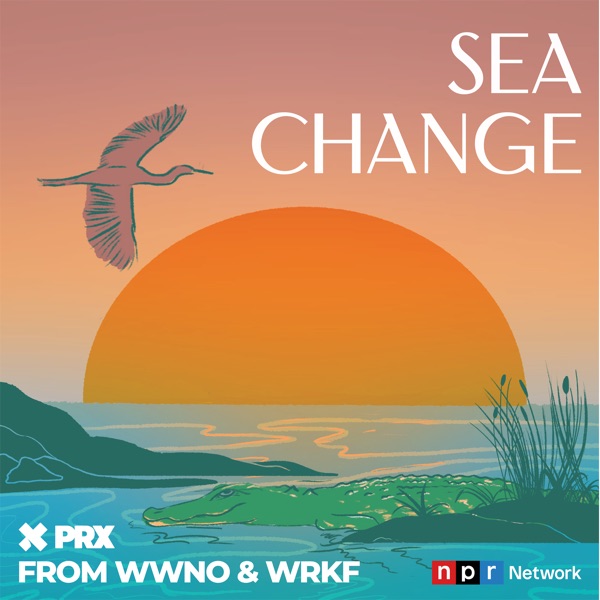
Living on the coast means living on the front lines of a rapidly changing planet. And as climate change transforms our coasts, that will transform our world. Every two weeks, we bring you stories that illuminate, inspire, and sometimes enrage, as we dive deep into the environmental issues facing coastal communities on the Gulf Coast and beyond. We have a lot to save, and we have a lot of solutions. Join us as we investigate and celebrate life on a changing coast. It’s time to talk about a Sea Change. Based in New Orleans, Sea Change is a production of WWNO New Orleans Public Radio and WRKF Baton Rouge Public Radio. Sea Change is a part of the NPR Podcast Network and is distributed by PRX. Hosted by Carlyle Calhoun. Our theme song is by Jon Batiste. Sea Change is made possible with major support provided by The Gulf Research Program of the National Academies of Sciences, Engineering, and Medicine and The Water Collaborative. The Coastal Desk is supported by the Walton Family Foundation, the Greater New Orleans Foundation, and the Meraux Foundation.
On the charts
Every published chart this podcast appears in, in the snapshot behind this page. Each one links to the chart it came off.
From the feed
The latest episodes published to this podcast’s own RSS feed. Titles and descriptions are the publisher’s.
What does it take to bring a seabird back from the brink—and can we keep it there? We travel from a rocky island of Maine to a tiny restored island in coastal Louisiana to learn the astonishing comeback stories of two beloved birds, puffins and pelicans. This is a hopeful story about how innovative ideas can save wildlife — and asks whether that's enough in a rapidly changing world. CREDITS This episode was reported by Katelyn Harrop and Michael McEwan and hosted by Executive Producer Carlyle Calhoun. Eve Abrams edited the pelicans story. The puffins story was edited by Carlyle Calhoun. The episode was fact-checked by Philip Kiefer with help from Shruti Gautam. Sound design by Rebecca Nolan and our theme music is by Jon Batiste. Sea Change is made possible with major support from the Gulf Research Program of the National Academy of Sciences, Engineering, and Medicine. WWNO’s Coastal Desk is supported by the Walton Family Foundation, the Meraux Foundation, and the Greater New Orleans Foundation.
Throughout the Western history of conservation, protecting nature has often meant removing people. It's what happened during the creation of many of America's national parks. But what if protecting nature didn't have to mean displacing the people who call it home? That's the question that brings us to Culatra, a small fishing island off Portugal's southern coast, and one of the country's seven natural wonders. For decades, the Portuguese government saw only one way to save the fragile lagoon surrounding Culatra: kick out the residents. This episode follows one woman's decades-long fight for her island — and the unlikely alliance she built along the way with the very scientists once sent to evict her. CREDITS This episode was reported and produced by Geert Vlieger . Sound design also by Geert. Johanna Zorn edited the episode with help from Executive Producer Carlyle Calhoun. Fado was performed on acoustic guitar by Ricardo Martins and Cláudio Sousa. All other music in the episode is composed and produced by Geert. Sea Change’s theme music is by Jon Batiste. Archival tape from Cristiano Guerreiro. Production of this episode was made possible with support from the Walden Collective and Sciaena , and funding from the European Union’s Big Green Project. One brief update: Valentina Munoz is now in Lisbon and is no longer working for the NGO, but hopes to continue working on community-based ocean protection programs. Sea Change is a WWNO and WRKF production. We are part of the NPR Podcast Network and distributed by PRX. And to help others find our podcast, please share this episode with a friend! Sea Change is made possible with major support from the Gulf Research Program of the National Academy of Sciences, Engineering, and Medicine. WWNO’s Coastal Desk is supported by the Walton Family Foundation, the Meraux Foundation, and the Greater New Orleans Foundation.
Neil McQueen learned to surf as a Texas teenager, and it changed his life – eventually pulling him away from a career as a plastics engineer and into the fight to save the very waters that shaped him. Thanks to the way ocean currents loop through the Gulf, the Texas coast collects roughly 10 times more plastic debris than any other Gulf state, much of it spilling from the massive petrochemical complex that lines its shores. In this episode of Sea Change, reporter Avery Thompson follows Neil from the surf off Mustang Island to the halls of the Texas Capitol to witness a personal reckoning with the plastics economy that helped build modern Texas—and one man’s determination to leave the ocean better than he found it. To learn more about the citizen-led science project tracking pre-production plastics, called nurdles, check out the Nurdle Patrol. And for more about the Surfrider Foundation's work on the Texas coast, click here. CREDITS This episode was reported by Texas-based reporter Avery Thompson. It was edited by Carlyle Calhoun and Eve Abrams, with additional help from Johanna Zorn, Eva Tesfaye, and Michael McEwan. Carlyle Calhoun is the executive producer. Our theme music is by Jon Batiste, and sound design by Dennis Funk with help from Avery Thompson. Sea Change is a WWNO and WRKF production. We are part of the NPR Podcast Network and distributed by PRX. Sea Change is made possible with major support from the Gulf Research Program of the National Academy of Sciences, Engineering, and Medicine. WWNO’s Coastal Desk is supported by the Walton Family Foundation, the Meraux Foundation, and the Greater New Orleans Foundation.
In the Netherlands, water has always been both a threat and a triumph. A quarter of the country lies below sea level, and for centuries the Dutch have engineered their way to safety. It’s a place not unlike New Orleans: a delta shaped by risk, resilience, and the belief that with enough ingenuity, water can be controlled. But as sea levels rise, that centuries-old confidence is beginning to crack. In this episode of Sea Change, reporter Jonathan Groubert takes us to the Netherlands to explore a relationship in turmoil. From floating farms to visions of entire cities on water, the Dutch are beginning to rethink everything they thought they knew. The question is no longer how to win the war against water—but whether it’s time to learn how to live with it.
This is part 3 of our three-part series about elements. And today is a biggie: carbon. When we hear about carbon, it's usually about its role in heating up the planet. And while that's an absolutely critical part of the story, the story of this most miraculous of substances is so much larger. We talk to Peter Brannen, author of The Story of CO2 is the Story of Everything, about how carbon has always been central to just about every major turning point in the history of life on Earth...including why life is here in the first place. CREDITS This episode is hosted by Executive Producer Carlyle Calhoun. Editing help from Eva Tesfaye and Jack Rodolico. Our theme music is by Jon Batiste, and our sound design by Dennis Funk. Sea Change is a WWNO and WRKF production. We are part of the NPR Podcast Network and distributed by PRX. Sea Change is made possible with major support from the Gulf Research Program of the National Academy of Sciences, Engineering, and Medicine. WWNO’s Coastal Desk is supported by the Walton Family Foundation, the Meraux Foundation, and the Greater New Orleans Foundation.
This is part 2 of our 3-part series about elements. Last time we met nitrogen, today, it’s partner in crime and in life – phosphorus. WLRN Environment Editor Jenny Staletovich has gotten to know the main character of this story pretty well after reporting on the environment in South Florida for more than a dozen years. Bone Valley in Central Florida has quietly fed the world’s hunger for phosphorus, even as its waters, in particular the Everglades, suffer from the fallout. In this episode, you'll meet fishing captains turned environmental crusaders, hear about Guano Wars fought over this "Devil's Element," and learn how some are figuring out how to fix our phosphorus paradox. CREDITS WLRN Environment Editor Jenny Staletovich reported this story. The episode was hosted by Executive Producer Carlyle Calhoun. This episode was edited by Eve Abrams. Editing help from Carlyle Calhoun, Michael McEwan, Ryan Vasquez, Alana Schrieber, and Eva Tesfaye. Sound design by Dennis Funk, and our theme music is by John Batiste. Sea Change is a WWNO and WRKF production. We're a part of the NPR Podcast Network and distributed by PRX. Sea Change is made possible with major support from the Gulf Research Program of the National Academy of Sciences, Engineering, and Medicine. WWNO's Coastal Desk is supported by the Walton Family Foundation, the Meraux Foundation, and the Greater New Orleans Foundation.
In this three-part series, we’re giving some of the most misunderstood characters on the periodic table a fuller story. We dive into the fascinating double lives of these elements that are both the makers and unmakers of our world. In part one, reporter Olga Loginova travels to Cape Cod to meet nitrogen. In this episode: we trudge through the marsh, avoid great white sharks, and find out how we harnessed the power of nitrogen, why that power turned against us, and what we can do about it. CREDITS This episode was hosted by Carlyle Calhoun and Olga Loginova. Olga also reported the story. This story was edited by Jack Rodolico. Editing help from me, Eve Abrams, and Michael McEwan. The episode was fact-checked by Philip Kiefer. Sound design by Dennis Funk, and our theme music is by John Batiste. I'm the executive producer. Sea Change is a WWNO and WRKF production. We're a part of the NPR Podcast Network and distributed by PRX. And to help others find our podcast, hit subscribe wherever you get your podcasts. Sea Change is made possible with major support from the Gulf Research Program of the National Academy of Sciences, Engineering, and Medicine. WWNO's Coastal Desk is supported by the Walton Family Foundation, the Meraux Foundation, and the Greater New Orleans Foundation. We'll be back with another element in two weeks.
Want to feel better? Get unstuck? Be inspired? Remake the world? Then this episode is for you. We talk with Katherine Wilkinson, author of the book Climate Wayfinding , and Colette Pichon Battle, lawyer and co-founder of Taproot Earth, about finding our way through the climate crisis. To read more about Climate Wayfinding, or order a copy of the book, click here. This episode was hosted by Carlyle Calhoun and Eva Tesfaye. Eva conducted the interview. Sound design by Kirk Kohnen, and our theme music is by Jon Batiste. Sea Change is a WWNO and WRKF production. We're a part of the NPR Podcast Network and distributed by PRX. To help others find our podcast, hit Subscribe wherever you get your podcasts. Sea Change is made possible with major support from the Gulf Research Program of the National Academy of Sciences, Engineering, and Medicine. WWNO's Coastal Desk is supported by the Walton Family Foundation, the Meraux Foundation, and the Greater New Orleans Foundation.
Why are fishermen being arrested in Louisiana? An epic battle over "Sportsman's Paradise" is being waged on Louisiana's water. This is a story about public rights and private power colliding. As more and more of Louisiana’s coast disappears underwater, the state’s two most powerful and iconic forces – fishing and fossil fuels – are waging war over who owns the drowned land. Check out a print version of this story in Southlands Magazine. Read and subscribe here . Want to dive even deeper into the legal issues surrounding this story? Beginning with how private ownership of wetlands traces back to the Swamp Land Grant Acts in the 1800s? Then check out property law scholar John Lovett's legal paper. This episode was hosted and reported by Sea Change's executive producer, Carlyle Calhoun. The episode was edited by Eve Abrams. Additional help from Johanna Zorn, Drew Hawkins, Eva Tesfaye, and Michael McEwan. The episode was fact-checked by Philip Kiefer. Sound design by Dennis Funk, and our theme music is by Jon Batiste. Sea Change is a WWNO and WRKF production. We are part of the NPR Podcast Network and distributed by PRX. Sea Change is made possible with major support from the Gulf Research Program of the National Academy of Sciences, Engineering, and Medicine. WWNO’s Coastal Desk is supported by the Walton Family Foundation, the Meraux Foundation, and the Greater New Orleans Foundation.
Carlos Rafael immigrated to the US from Portugal as a teenager, and over the years, built one of the country’s largest commercial fishing operations from scratch. Carlos owned the biggest fleet of boats in the most valuable fishing port in America. He became known as the Codfather. But it all came crashing down in a federal sting. Who is Carlos Rafael? Depending on who you ask, he's either a villain who robbed the ocean or a kind of folk hero who stood up for fishermen. Today, we’re bringing you the first episode of Catching the Codfather from our friends at GBH News. It’s often said that the U.S. has the most sustainable fisheries in the world. Laws have been designed to prevent overfishing, rebuild stocks, and protect a shared public resource. But, for the people living inside that system, it can feel very different. And that tension isn’t unique to New England. Along the Gulf Coast, we often hear from shrimpers, oystermen, and anglers who say they’re being regulated out of a way of life. At the same time, we know what’s at stake if those rules fail. So where is the line? Catching the Codfather doesn’t offer easy answers. Instead, it tells a story about power, policy, and the complicated reality of managing a shared resource. Listen to the rest of the series, Catching the Codfather, wherever you get your podcasts. The series is part of an ongoing documentary feed from GBH News called The Big Dig. This episode of Sea Change Live was hosted by executive producer Carlyle Calhoun. Our theme music is by Jon Batiste. This episode was reported by Ian Coss. Sea Change is a WWNO and WRKF production. We are part of the NPR Podcast Network and distributed by PRX. Sea Change is made possible with major support from the Gulf Research Program of the National Academy of Sciences, Engineering, and Medicine. WWNO’s Coastal Desk is supported by the Walton Family Foundation, the Meraux Foundation, and the Greater New Orleans Foundation.
Two years ago, we investigated the Liquified Natural Gas export build out on the Gulf Coast. We followed those exports around the world from Louisiana to Germany to Japan to unravel the story of LNG. But that story isn’t over. Today, host Carlyle Calhoun returns to LNG with Gulf States Newsroom reporter Drew Hawkins. They talk about how people in Southwest Louisiana are still being impacted by this build out, how LNG exports are affecting your electricity bills and what the war in Iran means for this industry. “Carbon Coast” is part one of our three part series about LNG called “All Gassed Up,” reported and produced by Halle Parker and Carlyle Calhoun. You can listen to parts two and three by searching for “All Gassed Up” in our feed. CREDITS This episode of Sea Change was Carlyle Calhoun and Drew Hawkins. Our theme music is by John Batiste, and our sound designer is Kurt Kohnen. Carlyle Calhoun is the executive producer. Sea Change is a WWNO and WRKF production. We're a part of the NPR Podcast Network and distributed by PRX. Sea Change is made possible with major support from the Gulf Research Program of the National Academy of Sciences Engineering and Medicine. WWNO’s Coastal Desk is supported by the Walton Family Foundation, the Miro Foundation, and the Greater New Orleans Foundation.
We’re in the beginning of spring bird migration here on the Gulf Coast, which means warblers, vireos, orioles, and thrushes coming through as they make their way up North. Around 2 billion birds make landfall along our coast from March to May after crossing the Gulf of Mexico. But even after the high-stakes crossing of open water, their next leg of the journey is no less perilous. In this episode, our friends from Up From Dust tell us a story about a phenomenon threatening birds on their long flights, and we learn how we can all do our part to help them on their journeys. To hear more from Up From Dust, click here . CREDITS This episode of Sea Change Live was hosted by Eva Tesfaye. Our executive producer is Carlyle Calhoun. Sound design by Kurt Kohnen, and our theme music is by Jon Batiste. This episode was reported by Up From Dust Host Celia Llopis-Jepsen. Sea Change is a WWNO and WRKF production. We are part of the NPR Podcast Network and distributed by PRX. Sea Change is made possible with major support from the Gulf Research Program of the National Academy of Sciences, Engineering, and Medicine. WWNO’s Coastal Desk is supported by the Walton Family Foundation, the Meraux Foundation, and the Greater New Orleans Foundation.
Sea Change travels to the Walter Anderson Museum of Art in Ocean Springs, Mississippi, for a lively live panel discussion about the future of seafood. For more than a century, the Gulf seafood industry has shaped towns, cultures, and identities along the coast. Yet, if you talk to almost anyone who works on the water, they’ll tell you the Gulf seafood story has changed more in the last 30 years than the hundred years before that. If you care about what’s on your plate, what happens to this coast, or what kind of future we’re leaving to the next generation of fishers and eaters, you’re in the right place. CREDITS This episode of Sea Change Live was hosted by Executive Producer Carlyle Calhoun. Eva Tesfaye edited the episode. Sound design by Kurt Kohnen. Live music performed by Grits and Greens. We’d like to thank the Walter Anderson Museum of Art, Eagle Point Oyster Company, Holy Ground Oyster Company, Grits and Greens, and the panelists Ryan Bradley, Matthew Mayfield, Boyce Upholt, and Alex Perry. Sea Change is a WWNO and WRKF production. We are part of the NPR Podcast Network and distributed by PRX. Sea Change is made possible with major support from the Gulf Research Program of the National Academy of Sciences, Engineering, and Medicine. WWNO’s Coastal Desk is supported by the Walton Family Foundation, the Meraux Foundation, and the Greater New Orleans Foundation.
Artificial reefs have been credited with supporting fisheries, protecting rare species, and attracting tourists that boost the economy. But, of course, like any story about the environment, it gets complicated both here in the Gulf and on Cambodia’s coast. If you'd like to know more about Alabama's booming artificial reef program, check out this article from Irina Zhorov. EPISODE CREDITS This episode was hosted by Executive Producer Carlyle Calhoun and reported by Eva Tesfaye and Leila Goldstein. The episode was edited by Johanna Zorn, with additional help from Rosemary Westwood, Michael McEwan, and Aubri Juhasz. The episode was fact-checked by Michael McEwan. Sound design by Kurt Kohnen. Our theme music is by Jon Batiste. Sea Change is a WWNO and WRKF production. We are part of the NPR Podcast Network and distributed by PRX. Sea Change is made possible with major support from the Gulf Research Program of the National Academy of Sciences, Engineering, and Medicine. WWNO’s Coastal Desk is supported by the Walton Family Foundation, the Meraux Foundation, and the Greater New Orleans Foundation.
For the fourth and final episode of our collaboration with Wetlands Radio, a series about coastal restoration: ways we can all help repair our coast. So...what does a bottle of Two Buck Chuck and slinging back oysters have to do with building land? Find out how one man's trash transforms into coastal treasures. And then, to close out the series on coastal restoration, we learn about the crown jewel of Louisiana science: a research project that exemplifies how everything is connected. EPISODE CREDITS This episode was hosted by Executive Producer Carlyle Calhoun and Wetlands Radio producer Eve Abrams. Wetlands Radio is produced by Eve Abrams and funded by BTNEP, the Barataria Terrebonne National Estuary Program through the Environmental Protection Agency's National Estuary Program. To hear Wetlands Radio episodes in their entirety, visit btnep.org . Sea Change is a WWNO and WRKF production. We are part of the NPR Podcast Network and distributed by PRX. Sea Change is made possible with major support from the Gulf Research Program of the National Academy of Sciences, Engineering, and Medicine. Sea Change is also supported by the Water Collaborative of Greater New Orleans. WWNO’s Coastal Desk is supported by the Walton Family Foundation, the Meraux Foundation, and the Greater New Orleans Foundation.
Oil and gas canals. You’ve likely heard about the canals—tens of thousands of them, ever-widening, shredding the wetlands. The canals are what some scientists say is Louisiana’s major cause of land loss. In Part 3 of our collaboration with Wetlands Radio, we explore the impact of canals, why industry has gotten away with the damage, and what's being done about it now. And then, what does it actually look like for Big Oil to clean up after itself? We bring you an interview about the current, controversial lawsuits aiming to hold the oil and gas industry accountable for the ways they’ve altered the landscape. EPISODE CREDITS This episode was hosted by Executive Producer Carlyle Calhoun and Wetlands Radio producer Eve Abrams. Wetlands Radio is produced by Eve Abrams and funded by BTNEP, the Barataria Terrebonne National Estuary Program through the Environmental Protection Agency's National Estuary Program. To hear Wetlands Radio episodes in their entirety, visit btnep.org . Sea Change is a WWNO and WRKF production. We are part of the NPR Podcast Network and distributed by PRX. Sea Change is made possible with major support from the Gulf Research Program of the National Academy of Sciences, Engineering, and Medicine. Sea Change is also supported by the Water Collaborative of Greater New Orleans. WWNO’s Coastal Desk is supported by the Walton Family Foundation, the Meraux Foundation, and the Greater New Orleans Foundation.
The media is full of stories about the coastal land loss crisis in Louisiana, dire predictions of climate change and sea level rise, and polarizing accounts of controversial projects. What's less known is that Louisiana is really good at something. A world leader, in fact. When it comes to coastal restoration, some say Louisiana is number one. Because project by project, Louisiana is piecing this ragged shoreline back together. Over the next four episodes of Sea Change, we're going to feature Wetlands Radio . The series is a deep dive into Louisiana's coast - both how it came to be imperiled and also the incredible things a mighty group of people is doing to fight land loss. In part 2, we’re going to talk about building land, a vital part of coastal restoration, and often a very controversial one. We get into the thorny politics of human-led land building projects, but first, we look at how the river builds land when left to its own devices. A process many are trying to imitate. EPISODE CREDITS This episode was hosted by Executive Producer Carlyle Calhoun and Wetlands Radio producer Eve Abrams. Wetlands Radio is produced by Eve Abrams and funded by BTNEP, the Barataria Terrebonne National Estuary Program through the Environmental Protection Agency's National Estuary Program. To hear Wetlands Radio episodes in their entirety, visit btnep.org . Sea Change is a WWNO and WRKF production. We are part of the NPR Podcast Network and distributed by PRX. Sea Change is made possible with major support from the Gulf Research Program of the National Academy of Sciences, Engineering, and Medicine. Sea Change is also supported by the Water Collaborative of Greater New Orleans. WWNO’s Coastal Desk is supported by the Walton Family Foundation, the Meraux Foundation, and the Greater New Orleans Foundation.
Louisiana is a world leader in coastal restoration. Many would even say number one. The media is full of stories about the coastal land loss crisis in Louisiana, the dire predictions of climate change and sea level rise, and polarizing accounts of controversial projects, but what is also true is that Louisiana is making tremendous strides piecing this ragged shoreline back together little by little. Over the next four episodes of Sea Change, we're going to feature Wetlands Radio . The series is a deep dive into Louisiana's coast - both how it came to be imperiled and also, the incredible things a mighty group of people are doing to fight land loss. In part one, how did we get here? From deep geology, to efforts to control the Mississippi River, to the boom days of oil and gas, we discover the backstory that led to the start of coastal restoration. EPISODE CREDITS This episode was hosted by Executive Producer Carlyle Calhoun and Wetlands Radio producer Eve Abrams. Wetlands Radio is produced by Eve Abrams and funded by BTNEP, the Barataria Terrebonne National Estuary Program through the Environmental Protection Agency's National Estuary Program. To hear Wetlands Radio episodes in their entirety, visit btnep.org . Sea Change is a WWNO and WRKF production. We are part of the NPR Podcast Network and distributed by PRX. Sea Change is made possible with major support from the Gulf Research Program of the National Academy of Sciences, Engineering, and Medicine. Sea Change is also supported by the Water Collaborative of Greater New Orleans. WWNO’s Coastal Desk is supported by the Walton Family Foundation, the Meraux Foundation, and the Greater New Orleans Foundation.
The amazing science behind understanding mysterious but critical ocean currents. And specifically, understanding the current in our backyard, the Gulf’s Loop Current. We talk with scientists leading a huge multi-country research collaboration that is going to great lengths and depths to understand the especially unknown Loop Current. We talk about how currents connect us, how they are basically a thermostat for the globe, and why, more than ever before, we need to understand them. EPISODE CREDITS This episode was hosted by executive producer Carlyle Calhoun. Our theme music is by Jon Batiste, and our sound designer is Emily Jankowski. Scientists featured in this episode are paleo oceanographer Audrey Morley from the University of Galway, oceanographer Amy Bower from the Woods Hole Oceanographic Institution, oceanographer Steve DiMarco from Texas A&M, and oceanographer Scott Glenn from Rutgers University. Sea Change is a WWNO and WRKF production. We are part of the NPR Podcast Network and distributed by PRX. Sea Change is made possible with major support from the Gulf Research Program of the National Academy of Sciences, Engineering, and Medicine. Sea Change is also supported by the Water Collaborative of Greater New Orleans. WWNO’s Coastal Desk is supported by the Walton Family Foundation, the Meraux Foundation, and the Greater New Orleans Foundation.
This is part 2 of a 2-part series exploring the future of farming seafood in the Gulf. We know this: demand for seafood is soaring. We won't be able to sustainably meet that demand from wild-caught fisheries. And there’s a growing global movement to farm more and more of our seafood. The Gulf is one of the LAST places in the world where there is still a major wild oyster harvest. Lately, though, that harvest…is in trouble. In this episode, we ask: What can the downfall and resurrection of the oyster tell us about a future of farming the ocean? EPISODE CREDITS This series is produced in partnership with the Food and Environment Reporting Network. This episode was hosted by Carlyle Calhoun and Boyce Upholt. Boyce also reported this episode. Editing by Jack Rodolico. Carlyle Calhoun is the executive producer. The episode was fact-checked by Garrett Hazelwood. Our theme music is by Jon Batiste, and our sound designer is Emily Jankowski. Sea Change is a WWNO and WRKF production. We are part of the NPR Podcast Network and distributed by PRX. Sea Change is made possible with major support from the Gulf Research Program of the National Academy of Sciences, Engineering, and Medicine. Sea Change is also supported by the Water Collaborative of Greater New Orleans. WWNO’s Coastal Desk is supported by the Walton Family Foundation, the Meraux Foundation, and the Greater New Orleans Foundation.
Ranking source
Apple Podcasts rankings via the Mato Topic Intelligence Platform.
Observed September 20, 2026. Cached outside the daily freshness window; the positions keep the date they were taken on.
Apple and Apple Podcasts are trademarks of Apple Inc., registered in the U.S. and other countries.
Pairs with
Bring this source into Mato to read its transferable patterns, then turn them into an original show for your own audience.