Mato just raised pre-seed Read more

Podcast charts
Published by Anna Hartman
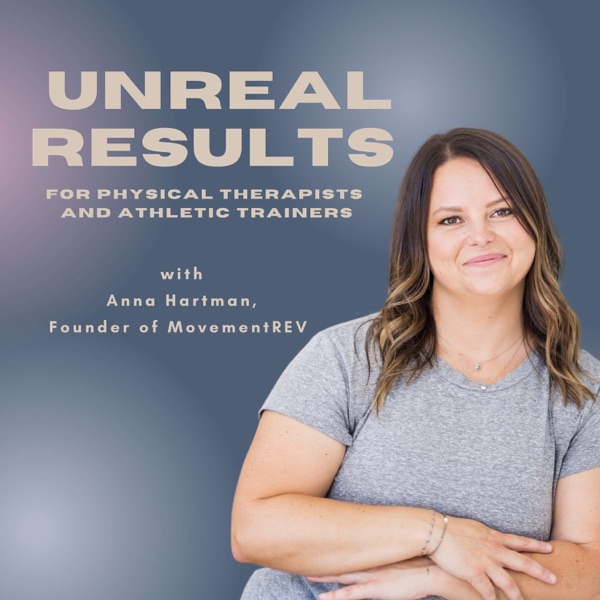
The Unreal Results podcast helps physical therapists and certified athletic trainers feel confident and get better outcomes for their clients by teaching about the influence of the viscera organs and the nervous system on human movement, pain, and injury. Explore how a visceral and neural-based lens of view can provide a new perspective to performance-based physical therapy, athletic training, and sports medicine.
On the charts
Every published chart this podcast appears in, in the snapshot behind this page. Each one links to the chart it came off.
The Mato Topic Intelligence Platform does not report this podcast as charting in a published category in this snapshot.
From the feed
The latest episodes published to this podcast’s own RSS feed. Titles and descriptions are the publisher’s.
Sciatica comes from the sciatic nerve, right… Right? This episode of the Unreal Results podcast was inspired by a recent conversation with a friend of mine who had self-diagnosed herself with sciatica. And while sciatica is often given as a diagnosis, it’s actually more of a description of symptoms than anything else. In this episode, you’ll hear how I actually think through sciatica and why those symptoms can have very different drivers beyond the sciatic nerve or lumbar spine. In This Episode, You’ll Learn: How to differentiate between several potential drivers of sciatica-like symptoms Where visceral, peripheral neurovascular, and CNS influences fit into your assessment How I use the symptom presentation and the LTAP® to narrow down the potential driver Odds are high that someone with sciatica symptoms is going to walk into your practice. This episode will give you a more connected framework for thinking through what to assess and ultimately, what to treat. Resources & Links Mentioned In This Episode: Get on the waitlist for the next cohort of the online LTAP® Level 1 course Ep. 9: Left Side Sciatica or Right Side Shoulder Pain? Ep. 27: Sciatica Secrets Ep. 48: Small Intestine and Mesenteric Roots Ep. 157: The Visceral Connection to Musculoskeletal Pain Check out the Swelling Reduction Protocol Course Here! Learn the LTAP® In-Person in one of my upcoming courses The Missing Link in Orthopedic Rehab: 2-part virtual training Learn how ONE change to your assessment can get your clients better results, faster. 📅 Sept 22nd + Sept 24th, 2026 ⏰ 12 pm – 1:30 pm PT ONLY $97 FOR A LIMITED TIME (REG. $197)- ENROLL NOW ================================================= Watch the podcast on YouTube and subscribe ! Join the MovementREV email list to stay up to date on the Unreal Results Podcast and MovementREV education. Be social and follow me: Instagram | Facebook | Twitter | YouTube
Get on the waitlist for the next cohort of the online LTAP® Level 1 course In this episode of the Unreal Results podcast, I share some thoughts sparked by the Tactical Strength Coach Annual Training around building trust, getting people out of pain, and improving movement. I unpack what actually builds trust with your clients and why getting results is such an important piece of that relationship. I also challenge the common approach of using movement to correct movement and explore why understanding why the body is moving that way can completely change where you start treatment. In This Episode, You’ll Learn: The three things I believe create trust between practitioners and clients How a better assessment can improve both your outcomes and your confidence as a practitioner Why where you start treatment may matter more than the treatment tool you choose If you want your clients to trust you, you have to be able to help them get results. But getting better results might require changing the way you think about the problem in the first place. Resources & Links Mentioned In This Episode: Get on the waitlist for the next cohort of the online LTAP® Level 1 course Get on the waitlist for the REVitalize Mentorship (2026-2027) Ep. 125: You're Already Treating The Viscera... You Just Don't Know It Check out the Swelling Reduction Protocol Course Here! Learn the LTAP® In-Person in one of my upcoming courses The Missing Link in Orthopedic Rehab: 2-part virtual training Learn how ONE change to your assessment can get your clients better results, faster. 📅 Sept 22nd + Sept 24th, 2026 ⏰ 12 pm – 1:30 pm PT ONLY $97 FOR A LIMITED TIME (REG. $197)- ENROLL NOW ================================================= Watch the podcast on YouTube and subscribe ! Join the MovementREV email list to stay up to date on the Unreal Results Podcast and MovementREV education. Be social and follow me: Instagram | Facebook | Twitter | YouTube
In this episode of the Unreal Results podcast, I share a personal story about a massage experience that sparked a much bigger conversation about clinical decision-making, practitioner ego, and why the lower leg deserves far more attention than it typically gets. I unpack the anatomy of the calf, the role of fluid congestion, nerve entrapment, and compartmental relationships. I also walk through the exact sequence I use to assess and treat the lower leg in my clients. In This Episode, You'll Learn: Why lower leg congestion can influence pain, mobility, and treatment outcomes The key anatomical regions I assess before doing deep tissue calf work How I sequence lower leg treatment to improve lymphatic, venous, and neural function A practical framework for combining patient priorities with assessment findings This episode is a reminder that assessment should guide treatment, not habit, routine, or practitioner preference, and will challenge you to think differently about both the information your clients give you and the information their bodies are trying to communicate. Resources & Links Mentioned In This Episode: Ep. 3: Swelling Reduction Protocol That Works Like Magic Ep. 8: Unlocking The Fibula Ep. 14: The Stories We Tell: A Lesson From My Compartment Syndrome Ep. 18: Lessons From My Back Surgery - Part 1 Ep. 19: Lessons From Back Surgery - Part 2 Ep. 20: Reflexive Core Stability: Lessons From My Back Surgery - Part 3 Ep. 25: The Peripheral Heart Ep. 37: Swelling Protocol Update Ep. 47: Always Check The Distal Pulses Ep. 53: Shin Splints: Beyond Overtraining & Rest - Complete Guide Ep. 138: The Link Between Potassium and Shin Splints Ep. 149: Rethinking the Popliteus in Knee Rehab Check out the Swelling Reduction Protocol Course Here! Learn the LTAP® In-Person in one of my upcoming courses The Missing Link in Orthopedic Rehab: 2-part virtual training Learn how ONE change to your assessment can get your clients better results, faster. 📅 Sept 22nd + Sept 24th, 2026 ⏰ 12 pm – 1:30 pm PT ONLY $97 FOR A LIMITED TIME (REG. $197)- ENROLL NOW ================================================= Watch the podcast on YouTube and subscribe ! Join the MovementREV email list to stay up to date on the Unreal Results Podcast and MovementREV education. Be social and follow me: Instagram | Facebook | Twitter | YouTube
In this episode of the Unreal Results podcast, I had a chat with my good friend and colleague, Missy Bunch, on an Instagram live to unpack one of my favorite shoulder assessment clues: the armpit. We explore how scapular upward rotation, serratus anterior function, and glenohumeral hypermobility all influence what you see and feel during shoulder assessment. You’ll hear why many people appear to have full shoulder range of motion while quietly borrowing mobility from the wrong place, how serratus anterior dysfunction can hide in plain sight, and what happens when those compensations are left unchecked for years. In This Episode, You’ll Learn: Why a missing armpit can be a sign of poor scapular upward rotation The relationship between the scapula, serratus anterior, and glenohumeral joint mechanics How to assess scapular upward rotation and identify common compensations A simple exercise I use to retrain scapular mechanics and improve upward rotation The shoulder rarely works in isolation, and this episode will help you better assess shoulder function while understanding how small changes in scapular mechanics can create significant differences in long-term outcomes. Resources & Links Mentioned In This Episode: Ep. 16: Why The Shoulder Comes Last Ep. 17: A New Picture Of Shoulder Mechanics Ep. 69: Why Your Shoulder Treatments Might Not Be Enough Ep. 140: Why Acute Shoulder Pain Isn’t Always a Shoulder Problem Ep. 159: Long Thoracic Nerve Palsy: Anatomy, Assessment & Recovery Save 50% on my course - Never Treat The Shoulder First (use code ARMPIT or ARMPITS) Save 50% on my course w/ Missy - The Nerve Workshop (use code ARMPIT or ARMPITS) Learn the LTAP® In-Person in one of my upcoming courses The Missing Link in Orthopedic Rehab: 2-part virtual training Learn how ONE change to your assessment can get your clients better results, faster. 📅 Sept 22nd + Sept 24th, 2026 ⏰ 12 pm – 1:30 pm PT ONLY $97 FOR A LIMITED TIME (REG. $197)- ENROLL NOW ================================================= Watch the podcast on YouTube and subscribe ! Join the MovementREV email list to stay up to date on the Unreal Results Podcast and MovementREV education. Be social and follow me: Instagram | Facebook | Twitter | YouTube
In this episode of the Unreal Results podcast, I share the case of a Navy SEAL candidate with severe scapular winging and progressive serratus anterior paralysis after months of failed treatment. I walk through the anatomy of the long thoracic nerve and serratus anterior in detail, including the entrapment sites, fascial relationships, and neural connections that can completely change how you assess and treat these cases. I also share how integrating neural manipulation, visceral treatment, mobility work, and targeted strengthening helped this athlete regain function far faster than expected. In This Episode, You’ll Learn: The most common entrapment locations for the long thoracic nerve and why they matter clinically How cervical compression, thoracic outlet mechanics, and breathing patterns may contribute to scapular winging Why upward rotation mobility is just as important as strengthening in serratus anterior rehab Practical strategies for restoring upward rotation strength, scapular control, and thoracic mobility This case is a great example of why treating the body as a whole organism instead of isolating a single muscle or diagnosis can completely change clinical outcomes. Resources & Links Mentioned In This Episode: Ep. 99: Navigating The Complex Case Of Diaphragm Paralysis My Online Course I Mentioned - The Nerve Workshop with Missy Bunch and Anna Hartman My Online Shoulder Course - Never Treat The Shoulder First Learn the LTAP® In-Person in one of my upcoming courses The Missing Link in Orthopedic Rehab: 2-part virtual training Learn how ONE change to your assessment can get your clients better results, faster. 📅 Sept 22nd + Sept 24th, 2026 ⏰ 12 pm – 1:30 pm PT ONLY $97 FOR A LIMITED TIME (REG. $197)- ENROLL NOW ================================================= Watch the podcast on YouTube and subscribe ! Join the MovementREV email list to stay up to date on the Unreal Results Podcast and MovementREV education. Be social and follow me: Instagram | Facebook | Twitter | YouTube
In this episode of the Unreal Results podcast, I unpack the anatomical and pressure-based relationships between the liver, abdominal cavity, and pelvic floor through both a clinical case study and a deep dive into visceral anatomy. I share how restoring liver mobility changed a client’s stress incontinence, core function, breathing mechanics, and lower body mobility. You’ll also hear why understanding pressure gradients and visceral relationships can completely shift the way you assess and treat the body. In This Episode, You’ll Hear: How pelvic floor dysfunction is influenced by ribcage position, breathing mechanics, and abdominal pressure A detailed breakdown of the liver’s anatomical connections to the diaphragm, abdominal wall, bladder, and pelvic floor How visceral dysfunction can alter hip rotation, core control, and breathing mechanics Practical ways to assess objective orthopedic changes when treating visceral or pelvic complaints If you’ve been treating pelvic floor dysfunction, core instability, or movement limitations without considering the visceral system, this episode may completely change the way you think about human movement and function. Resources & Links Mentioned In This Episode: Ep. 58: The Whole Organism Approach w/ Nicole Cozean Ep. 150: A Clinical Case Study in Sacral Pain & Index of Suspicion Fit + Fueled Life Podcast: Ep. 334 - What Your Injuries Are Trying to Tell You After 40 (& Why You’re Not Healing) Pelvic PT Rising Podcast - Beyond The Obvious: An Interview with Anna Hartman Learn the LTAP® In-Person in one of my upcoming courses The Missing Link in Orthopedic Rehab: 2-part virtual training Learn how ONE change to your assessment can get your clients better results, faster. 📅 Sept 22nd + Sept 24th, 2026 ⏰ 12 pm – 1:30 pm PT ONLY $97 FOR A LIMITED TIME (REG. $197)- ENROLL NOW ================================================= Watch the podcast on YouTube and subscribe ! Join the MovementREV email list to stay up to date on the Unreal Results Podcast and MovementREV education. Be social and follow me: Instagram | Facebook | Twitter | YouTube
In this episode of the Unreal Results podcast, I unpack the relationship between the viscera, the nervous system, and the musculoskeletal system and why understanding this connection can completely change your clinical outcomes. I walk you through the physiology behind visceral referred pain, how the spine and organs influence each other, and how to start integrating this into your assessment and treatment approach without overcomplicating your process. In This Episode, You’ll Hear: How visceral organs create referred pain through shared neural pathways The difference between visceral referral and viscerosomatic reflexes Why common pain presentations (low back, shoulder, pelvic) may not be musculoskeletal in origin How to use spinal levels and anatomy to guide more effective treatment This episode is about expanding your lens so you’re not just treating symptoms, but understanding what’s driving them. Resources & Links Mentioned In This Episode: Get my Visceral Referrals Cheat Sheet HERE Ep. 125: You're Already Treating The Viscera... You Just Don't Know It Book I Mentioned - From Manual Evaluation to General Diagnosis: Assessing Patient Information before Hands-On Treatment by Alain Croibier * Learn the LTAP® In-Person in one of my upcoming courses *This link is an Amazon affiliate link, meaning I earn a commission from any qualifying purchases that you make The Missing Link in Orthopedic Rehab: 2-part virtual training Learn how ONE change to your assessment can get your clients better results, faster. 📅 Sept 22nd + Sept 24th, 2026 ⏰ 12 pm – 1:30 pm PT ONLY $97 FOR A LIMITED TIME (REG. $197)- ENROLL NOW ================================================= Watch the podcast on YouTube and subscribe ! Join the MovementREV email list to stay up to date on the Unreal Results Podcast and MovementREV education. Be social and follow me: Instagram | Facebook | Twitter | YouTube
Have you ever finished an exam on a client and had no way to recreate their symptoms? In this episode of the Unreal Results podcast, I walk you through a real clinical case that challenged the traditional biomechanical lens. On paper, this athlete had a clear diagnosis and had already done all the “right” things (mobility work, strengthening, injections) yet the issue kept coming back. I walk you through my full assessment process, from orthopedic test, the LTAP®, and general listening, and why the body ultimately led me somewhere completely unexpected. In This Episode, You’ll Hear: Why a “normal” biomechanical exam doesn’t always mean nothing is wrong How to think beyond local tissue when symptoms don’t match the presentation What central nervous system protection patterns can look like clinically How sequencing your treatment changes outcomes If you had this client and didn’t have other assessments such as the LTAP®, I’d love for you to send me a message letting me know what you would have done! Resources & Links Mentioned In This Episode: Join the Online Spring LTAP® Level 1 2026 cohort Ep. 149: Rethinking the Popliteus in Knee Rehab Ep. 150: A Clinical Case Study in Sacral Pain & Index of Suspicion Learn the LTAP® In-Person in one of my upcoming courses The Missing Link in Orthopedic Rehab: 2-part virtual training Learn how ONE change to your assessment can get your clients better results, faster. 📅 Sept 22nd + Sept 24th, 2026 ⏰ 12 pm – 1:30 pm PT ONLY $97 FOR A LIMITED TIME (REG. $197)- ENROLL NOW ================================================= Watch the podcast on YouTube and subscribe ! Join the MovementREV email list to stay up to date on the Unreal Results Podcast and MovementREV education. Be social and follow me: Instagram | Facebook | Twitter | YouTube
In this episode of the Unreal Results podcast, I zoom out and explore how movement, manual therapy, physiology, nutrition, and daily inputs all influence visceral health and nervous system function. I break down the concept of container vs. contents, why movement is never “just mechanical,” and how frequency of inputs often matters more than intensity. In This Episode, You’ll Hear: The “container vs. contents” framework for understanding treatment Why movement is one of the most powerful (and overlooked) visceral tools How small, frequent inputs reshape nervous system resilience How assessment guides precision without overcomplicating care This is a simple, practical way to start integrating a more whole organism approach into your daily work and treatments. Resources & Links Mentioned In This Episode: Ep. 12: Rest Posture vs. Stretching vs. Mobility Ep. 40: Healing and Wellness: Remade Ep. 91: Diaphragm Details That Unlock Thoracic Mobility Ep. 122: Spinal Mobility Is The Most Underrated Tool In Your Practice Ep. 125: You're Already Treating The Viscera... You Just Don't Know It Blog Post: Rest Postures Exercise Video: Scalp Massage Learn the LTAP® In-Person in one of my upcoming courses The Missing Link in Orthopedic Rehab: 2-part virtual training Learn how ONE change to your assessment can get your clients better results, faster. 📅 Sept 22nd + Sept 24th, 2026 ⏰ 12 pm – 1:30 pm PT ONLY $97 FOR A LIMITED TIME (REG. $197)- ENROLL NOW ================================================= Watch the podcast on YouTube and subscribe ! Join the MovementREV email list to stay up to date on the Unreal Results Podcast and MovementREV education. Be social and follow me: Instagram | Facebook | Twitter | YouTube
In this bonus episode of the Unreal Results Podcast, Anna sits down with LTAP® Level 1 alum Nicole Bulow, a physical therapist specializing in sports medicine and pelvic health. Nicole shares her journey integrating LTAP® into her clinical practice and how it became the catalyst not only for improving patient outcomes but also for successfully rebuilding her business from scratch after relocating to a new town simply by delivering results that stand out in an industry often accustomed to slow or inconsistent progress. With 15+ years of experience and a strong background in manual therapy and pelvic health, Nicole was already a skilled clinician. But like many, she found herself hitting plateaus, repeating the same treatments, chasing symptoms, and knowing there was something deeper she was missing. This conversation explores what happens when you finally have a system that shows you where to start. They dive into: Why repeated treatments (like ankle mobility or soft tissue work) often signal you’re missing the root cause How LTAP® improves efficiency and helps clinicians get results faster The connection between protective patterns, the nervous system, and chronic dysfunction Integrating pelvic health, sports medicine, and whole-organism assessment Why patients are willing to travel and pay when results actually stick Using LTAP® to identify when something deeper or medical is going on How better outcomes directly translate to business growth and sustainability Resources & Links Learn more about LTAP® Level 1 (Spring Cohort) Connect with Nicole Bulow The Missing Link in Orthopedic Rehab: 2-part virtual training Learn how ONE change to your assessment can get your clients better results, faster. 📅 Sept 22nd + Sept 24th, 2026 ⏰ 12 pm – 1:30 pm PT ONLY $97 FOR A LIMITED TIME (REG. $197)- ENROLL NOW ================================================= Watch the podcast on YouTube and subscribe ! Join the MovementREV email list to stay up to date on the Unreal Results Podcast and MovementREV education. Be social and follow me: Instagram | Facebook | Twitter | YouTube
You don’t need more tools. You need a way to know when and where to use them. And when you finally stop trying to figure it all out… That’s when everything starts to click. In this bonus episode of the Unreal Results Podcast, Anna sits down with LTAP® Level 1 alum Jillian Egan, a massage therapist, Pilates instructor, and movement practitioner based in Los Angeles. Jillian shares her evolution from traditional massage therapy into a more integrated, whole-organism approach, and how discovering LTAP® completely shifted how she assesses, treats, and understands the human body. With a background in dance, movement, and manual therapy, she had already built a strong foundation but was still missing a clear system to guide where to start treatment and why. This conversation explores what happens when you stop chasing symptoms and start listening to the body. They dive into: - Why having more techniques isn’t the problem and what actually is - How LTAP® gave Jillian a clear, repeatable assessment to guide treatment - Integrating the nervous system and viscera into manual therapy and movement work - The shift from “figuring it out” to letting the body lead -Why results should change quickly—and what it means when they don’t - Using clinical patterns to identify when something deeper (or medical) is going on - How this work improves both patient outcomes and practitioner sustainability Jillian also shares powerful clinical examples—from resolving shoulder pain through visceral work to identifying cases that required medical referral—highlighting how this approach leads to both better results and better decision-making. Beyond technique, this episode speaks to something deeper: the personal shift that happens when you let go of needing to be the expert and instead become someone who truly listens. Resources & Links Learn more about LTAP® Level 1 (Spring Cohort) Connect with Jillian Egan The Missing Link in Orthopedic Rehab: 2-part virtual training Learn how ONE change to your assessment can get your clients better results, faster. 📅 Sept 22nd + Sept 24th, 2026 ⏰ 12 pm – 1:30 pm PT ONLY $97 FOR A LIMITED TIME (REG. $197)- ENROLL NOW ================================================= Watch the podcast on YouTube and subscribe ! Join the MovementREV email list to stay up to date on the Unreal Results Podcast and MovementREV education. Be social and follow me: Instagram | Facebook | Twitter | YouTube
In this bonus episode of the Unreal Results Podcast, Anna sits down with LTAP® Level 1 alum Storm Baynes-Ryan, a physiotherapist based in rural New Zealand. This conversation offers a real-world look at what it means to practice from a whole-organism lens, especially in complex, resource-limited environments. Storm shares how she integrates the LTAP® (Locator Test Assessment Protocol®) across multiple settings, from community care and medical centers to her own in-person and online practice. Despite a full life running a farm, raising four children, and managing multiple jobs, she breaks down how she implemented the LTAP® in a way that was both realistic and transformative. They dive into: How LTAP® changed Storm’s ability to quickly identify where to start treatment Applying a whole-organism approach across diverse patient populations Using LTAP® effectively in both in-person and virtual care Why results should change quickly and what it means when they don’t How integrating the nervous system and viscera creates more consistent, lasting outcomes The role of pattern recognition, clinical reasoning, and trusting the body’s signals This episode is especially valuable for clinicians who feel like something is missing in their current model, those getting decent results, but not consistent ones. It’s a grounded, honest conversation about clinical growth, navigating uncertainty, and what becomes possible when you truly learn how to listen to the body. Resources & Links Learn more about LTAP® Level 1 (Spring Cohort) Connect with Storm Baynes-Ryan Previous episode featuring Storm The Missing Link in Orthopedic Rehab: 2-part virtual training Learn how ONE change to your assessment can get your clients better results, faster. 📅 Sept 22nd + Sept 24th, 2026 ⏰ 12 pm – 1:30 pm PT ONLY $97 FOR A LIMITED TIME (REG. $197)- ENROLL NOW ================================================= Watch the podcast on YouTube and subscribe ! Join the MovementREV email list to stay up to date on the Unreal Results Podcast and MovementREV education. Be social and follow me: Instagram | Facebook | Twitter | YouTube
In this episode of the Unreal Results podcast, I reflect on a theme that keeps showing up across my teaching, my Revitalized mentorship, and my own clinical work: repetition and review. I share how teaching the same concepts over and over has sharpened my clarity, why seasoned clinicians often don’t need more techniques, and how refining your assessment lens changes everything about your results. In This Episode, You’ll Hear: Why assessment clarity matters more than adding new treatment tools How repetition and review accelerate clinical reasoning and confidence The key question to ask when your assessment feels unclear How to build confidence by refining what you already do If you’re ready to improve your outcomes by refining, not expanding, your approach, I’d love to have you inside the LTAP® Level 1 course. Resources & Links Mentioned In This Episode: Join the Online Spring LTAP® Level 1 2026 cohort Ep. 2: MovementREV Philosophy and Methodology Ep. 60: LTAP® Core Beliefs Join The MovementRev Newsletter Learn the LTAP® In-Person in one of my upcoming courses The Missing Link in Orthopedic Rehab: 2-part virtual training Learn how ONE change to your assessment can get your clients better results, faster. 📅 Sept 22nd + Sept 24th, 2026 ⏰ 12 pm – 1:30 pm PT ONLY $97 FOR A LIMITED TIME (REG. $197)- ENROLL NOW ================================================= Watch the podcast on YouTube and subscribe ! Join the MovementREV email list to stay up to date on the Unreal Results Podcast and MovementREV education. Be social and follow me: Instagram | Facebook | Twitter | YouTube
In this episode of the Unreal Results podcast, I walk through a recent clinical case of mine involving a Navy SEAL BUD/S candidate who came in with persistent “back pain.” Once he pointed more specifically to the sacrum, the case immediately changed direction and led us down a very different path involving visceral drivers, kidney irritation, and neurovascular patterns. I share how location-specific questioning, structured assessment, and developing a strong index of suspicion can uncover connections between the viscera, nervous system, and musculoskeletal system that are easy to miss. In this episode, you’ll hear: • Why sacral pain should immediately shift your clinical questioning • How kidney and urogenital organ irritation can refer pain to the sacrum and knee • How tools like the LTAP® fit into broader clinical reasoning and assessment • Why asking the right questions can completely change the direction of treatment If you’re a health or movement professional interested in improving your diagnostic thinking and getting better outcomes with complex cases, this episode will help you refine how you assess presentations that don’t follow the usual patterns. Resources & Links Mentioned In This Episode: Ep. 45: The Kidneys - Visceral Connections To Movement Ep. 49: Pain On The Sacrum Ep. 147: Why Expectations Shape Clinical Outcomes Kidney Regen Session Learn the LTAP® In-Person in one of my upcoming courses The Missing Link in Orthopedic Rehab: 2-part virtual training Learn how ONE change to your assessment can get your clients better results, faster. 📅 Sept 22nd + Sept 24th, 2026 ⏰ 12 pm – 1:30 pm PT ONLY $97 FOR A LIMITED TIME (REG. $197)- ENROLL NOW ================================================= Watch the podcast on YouTube and subscribe ! Join the MovementREV email list to stay up to date on the Unreal Results Podcast and MovementREV education. Be social and follow me: Instagram | Facebook | Twitter | YouTube
In this episode of the Unreal Results podcast, I explore the anatomy and clinical significance of the popliteus — the small, often overlooked muscle that unlocks the knee and why it may be a missing link in lateral knee pain, shin splints, post-surgical inhibition, and chronic joint irritation. I share reflections from my own ACL-deficient knee during an 8 week plyometric intensive and how restoring dynamic confidence changed not just my performance, but my joint symptoms. We’ll also explore how the popliteus interfaces with the fibula, meniscus, joint capsule, and even the SI joint and why treating it in isolation rarely creates lasting change. In this episode, you’ll learn: Why the popliteus is central to unlocking knee flexion in closed-chain movement Why this muscle becomes hypertonic after injury and why releasing it isn’t enough How posterior capsule, fibular motion, and meniscal connections influence knee pain Practical ways to combine manual therapy and yielding plyometrics for better outcomes If you’ve ever wondered why the popliteus keeps “tightening back up,” this episode will help you understand what it’s protecting and how to work with it instead of against it. Resources & Links Mentioned In This Episode: Ep. 8: Unlocking The Fibula Ep. 21: Easily Restore Knee Extension After Injury or Surgery Ep. 25: The Peripheral Heart Ep. 78: Easily Restore Knee Flexion After Injury or Surgery Ep. 79: The Deeper Impact of Plyometrics w/ Matt McInnes Watson Ep. 138: The Link Between Potassium and Shin Splints Squat Warmup Video Tutorial to Improve Knee Flexion Video Book I Mentioned: New Manual Articular Approach: Lower Extremity by Jean-Pierre Barral & Alain Croibier Sign Up For A Barral Institute Course (Tell them Anna Hartman sent you!) Learn the LTAP® In-Person in one of my upcoming courses The Missing Link in Orthopedic Rehab: 2-part virtual training Learn how ONE change to your assessment can get your clients better results, faster. 📅 Sept 22nd + Sept 24th, 2026 ⏰ 12 pm – 1:30 pm PT ONLY $97 FOR A LIMITED TIME (REG. $197)- ENROLL NOW ================================================= Watch the podcast on YouTube and subscribe ! Join the MovementREV email list to stay up to date on the Unreal Results Podcast and MovementREV education. Be social and follow me: Instagram | Facebook | Twitter | YouTube
In this episode of the Unreal Results podcast, I discuss the spiral fascial line not as something to memorize, but as a lens to better understand human movement and efficiency. You’ll hear how the spiral line influenced the name MovementREV, how it shows up repeatedly in LTAP® findings, and why freeing up rotation can transform gait, balance, and efficiency. In this episode, you’ll hear: What the spiral line actually connects and why it matters clinically How the spiral line supports gait and whole-body efficiency How pelvic floor and diaphragm stiffness limit spiral expression I hope this episode helps you recognize the spiral line and rotation as a foundational movement pattern, one that can clarify recurring clinical findings and elevate your outcomes with greater precision. Resources & Links Mentioned In This Episode: Episode 8: Unlocking The Fibula Episode 26: Sartorius B.I.G. Episode 44: Using Weight Shifting To Improve Movement Patterns Episode 73: The Sartorius: It's More Powerful Than You Think Episode 145: 5 Treatment Areas That Consistently Improve Outcomes Learn the LTAP® In-Person in one of my upcoming courses The Missing Link in Orthopedic Rehab: 2-part virtual training Learn how ONE change to your assessment can get your clients better results, faster. 📅 Sept 22nd + Sept 24th, 2026 ⏰ 12 pm – 1:30 pm PT ONLY $97 FOR A LIMITED TIME (REG. $197)- ENROLL NOW ================================================= Watch the podcast on YouTube and subscribe ! Join the MovementREV email list to stay up to date on the Unreal Results Podcast and MovementREV education. Be social and follow me: Instagram | Facebook | Twitter | YouTube
In this episode of the Unreal Results podcast, I share a candid look at expectations in clinical practice, especially after learning a new framework like the LTAP®. I break down why early wins can create unrealistic internal pressure, how I think about my 1-3 session benchmark, and why managing patient expectations is often the missing piece in overcoming imposter syndrome. I also walk through a real case example of a Navy SEAL BUD/S candidate to show how I decide when to adjust the plan, refer out, or stay the course. In this episode, you’ll hear: What “guaranteeing results” really means and what it doesn’t Why mismatching assessment precision with treatment precision can worsen outcomes How expectations (yours vs. your patient’s) shape confidence and results The six questions that dramatically improve clarity, buy-in, and clinical direction If you’re a clinician who wants better results without burning yourself out or second-guessing every session, this episode will sharpen your reasoning and steady your confidence. Resources & Links Mentioned In This Episode: Ep. 119: Guaranteeing Results... Until You Can't Ep. 125: You're Already Treating The Viscera... You Just Don't Know It Ep. 126: How Many Sessions Do Clients Really Need? Ep. 131: Raising The Bar On Patient Outcomes Learn the LTAP® In-Person in one of my upcoming courses The Missing Link in Orthopedic Rehab: 2-part virtual training Learn how ONE change to your assessment can get your clients better results, faster. 📅 Sept 22nd + Sept 24th, 2026 ⏰ 12 pm – 1:30 pm PT ONLY $97 FOR A LIMITED TIME (REG. $197)- ENROLL NOW ================================================= Watch the podcast on YouTube and subscribe ! Join the MovementREV email list to stay up to date on the Unreal Results Podcast and MovementREV education. Be social and follow me: Instagram | Facebook | Twitter | YouTube
In this episode of the Unreal Results podcast, I explore why the femoral neck can be uniquely resistant to change and why this often has less to do with exercise selection and more to do with blood flow and neurovascular entrapment. A simple case study question opens into a deeper look at pelvic anatomy, vascular supply, and how circulation drives bone remodeling. I break down the arterial anatomy of the hip, identify common neurovascular entrapment sites that limit blood flow to the femoral neck, & explain why checking distal pulses may be the assessment you’re missing. I also unpack the relationship between pelvic floor tone & inhibited blood flow to the hip joint and how addressing it can change femoral neck response. Resources & Links Mentioned In This Episode: Ep. 9: Left Side Sciatica or Right Side Shoulder Pain? Ep. 75: The Colon Connection Info from the handout I mentioned - Femoral Neck Vascular Anatomy: Hip Joint Anatomy Article (pages 7-8) & Blood Supply to Head of Femur (slides 2-7) - Vascular Entrapment Areas: Iliopectineal ligament and inguinal ligament, pectins/iliopsoas, quadratus femoris, sartorius, proximal rectus femoris - General Pelvic Congestion: Episode 49 - Pain on the Sacrum - Practical Treatment Area: Hip Flexor Release & Obturator Canal - Practical Treatment Area: Posterior Inferior Pelvic floor Mobility - Practical Treatment Area: Obturator nerve glide - Practical Treatment Area: Adductor hiatus / distal sartorius soft tissue mobilization - decompression with flexible cup or self massage - Practical Treatment Area: Hip Medial Glide - Practical Treatment Area: Prone supported frog stretch Tools To Support These Treatments - Soft Ball for Self-Massage * & Flexible Cups * Learn the LTAP® In-Person in one of my upcoming courses *This link is an Amazon affiliate link, meaning I earn a commission from any qualifying purchases that you make The Missing Link in Orthopedic Rehab: 2-part virtual training Learn how ONE change to your assessment can get your clients better results, faster. 📅 Sept 22nd + Sept 24th, 2026 ⏰ 12 pm – 1:30 pm PT ONLY $97 FOR A LIMITED TIME (REG. $197)- ENROLL NOW ================================================= Watch the podcast on YouTube and subscribe ! Join the MovementREV email list to stay up to date on the Unreal Results Podcast and MovementREV education. Be social and follow me: Instagram | Facebook | Twitter | YouTube
After more than 20 years in practice, I’ve noticed there are certain treatment areas that consistently create change across a wide range of complaints. The key isn’t the technique but understanding why these areas matter and when to address them. In this episode of the Unreal Results podcast, I share five treatment regions I find myself coming back to again and again across elite athletes, Navy SEAL candidates, and complex cases. These are high-payoff regions that consistently influence the body as a whole when addressed with intention. In this episode, you’ll learn: How nerve pathways and fascial relationships explain why these areas matter far beyond local pain Why sequencing matters more than the tool you’re using How to apply these concepts without overcomplicating your sessions This episode isn’t about adding more techniques, it’s about sharpening your ability to recognize the areas that matter most in each session. Resources & Links Mentioned In This Episode: Episode 9: Left Side Sciatica or Right Side Shoulder Pain? Episode 26: Sartorius B.I.G. Episode 28: The Power Of The Trigeminal Nerve Episode 70: How The Trigeminal Nerve Could Supercharge Your Practice Episode 73: The Sartorius: It's More Powerful Than You Think Episode 86: Decoding The Nervous System For Health Pros Episode 142: The Most Overlooked Skill In Clinical Practice Treatment Video: Superior Gluteal Nerve Glide Treatment Video: Manual Technique For Superior Gluteal Nerve Treatment Video: Neural Manipulation Technique For Superior Gluteal Nerve Online Course: Go-To Treatments For The Viscera & Nervous System Learn the LTAP® In-Person in one of my upcoming courses The Missing Link in Orthopedic Rehab: 2-part virtual training Learn how ONE change to your assessment can get your clients better results, faster. 📅 Sept 22nd + Sept 24th, 2026 ⏰ 12 pm – 1:30 pm PT ONLY $97 FOR A LIMITED TIME (REG. $197)- ENROLL NOW ================================================= Watch the podcast on YouTube and subscribe ! Join the MovementREV email list to stay up to date on the Unreal Results Podcast and MovementREV education. Be social and follow me: Instagram | Facebook | Twitter | YouTube
In this final episode of the year on the Unreal Results podcast, I step away from case studies and techniques to share what I’ve been learning through my own health journey over the past year. I reflect on how lived experience shapes clinical intuition, why pressure and fluid dynamics matter far beyond the musculoskeletal system, and how these lessons are influencing the way I move, treat, and teach heading into 2026. In this episode, you’ll hear: How changes in pressure and fluid flow can influence neural health and perception Why your own body experiences can sharpen your clinical reasoning and empathy How nervous system regulation and pacing impact long-term outcomes for you and your clients This episode is an invitation to pause, notice what your own body has been teaching you, and let that inform how you move forward in practice and in life. Resources & Links Mentioned In This Episode: Episode 1: My Mom's Cancer Diagnosis Changed My Whole Approach to Sports Healthcare Episode 35: Tongue Twister Episode 36: Listening To The Body Episode 42: The Fundamental Attribution Error and Why You May be the Problem, Not Your Client Episode 66: Ego-Free Healing: Learning A New Paradigm In Patient Care Episode 88: Stop Thinking and Start Feeling Episode 89: The Pink Eye Chronicles Episode 142: The Most Overlooked Skill In Clinical Practice Learn the LTAP® In-Person in one of my upcoming courses The Missing Link in Orthopedic Rehab: 2-part virtual training Learn how ONE change to your assessment can get your clients better results, faster. 📅 Sept 22nd + Sept 24th, 2026 ⏰ 12 pm – 1:30 pm PT ONLY $97 FOR A LIMITED TIME (REG. $197)- ENROLL NOW ================================================= Watch the podcast on YouTube and subscribe ! Join the MovementREV email list to stay up to date on the Unreal Results Podcast and MovementREV education. Be social and follow me: Instagram | Facebook | Twitter | YouTube
Ranking source
Apple Podcasts rankings via the Mato Topic Intelligence Platform.
Observed September 18, 2026. Cached outside the daily freshness window; the positions keep the date they were taken on.
Apple and Apple Podcasts are trademarks of Apple Inc., registered in the U.S. and other countries.
Pairs with
Bring this source into Mato to read its transferable patterns, then turn them into an original show for your own audience.