Mato just raised pre-seed Read more

Podcast charts
Published by Human Content
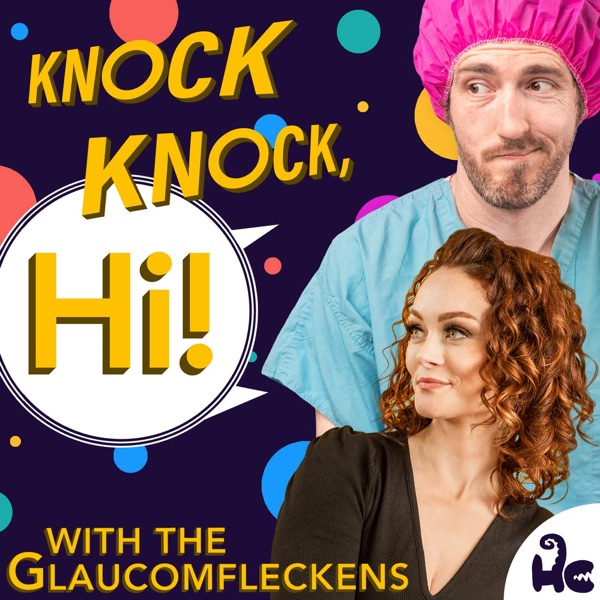
"Knock Knock, Hi! with the Glaucomfleckens" dives into the highs, lows, and WTFs of healthcare. Whether you're in the medical field, live with a healthcare worker, or broke your arm once and are still paying off your medical bills, this is a must-listen. Join Will and Kristin Flanary (aka the Glaucomfleckens) for candid chats with leading healthcare voices like Dr. Mike and Surgeon General Dr. Vivek Murthy. Discover fun facts about eyeballs, hear relatable stories from medical training, and sneak a peek into the U.S. health insurance industry (spoiler alert: it's not great!). We'll share our own perspectives of being a patient or family member experiencing the healthcare system. And, of course, we explore the question on everyone's minds: "Why has Dr. Glaucomflecken never had his eyes dilated?" Combining science with humor and a dash of snark, we unpack the human side of healthcare.
On the charts
Every published chart this podcast appears in, in the snapshot behind this page. Each one links to the chart it came off.
From the feed
The latest episodes published to this podcast’s own RSS feed. Titles and descriptions are the publisher’s.
Welcome back to Knock Knock Eye, my one-stop shop for all things eyeball related. This week I'm taking a quick break from corporate practice of medicine talk (just this once, I promise) to dig into a mailbag question from a listener named Gina, who fainted during a routine gonioscopy exam. We get into what a vasovagal reaction is, why the eye seems to be such a common trigger for fainting, and what you can actually do in the moment to keep your blood pressure from tanking. From there I go into the oculocardiac reflex, which is a genuinely wild phenomenon where manipulating the muscles around your eye can drop your heart rate enough to cause cardiac arrest, plus how it shows up clinically when someone has a trapped eye muscle from an orbital fracture. As always, send me your hospital horror stories, and also your hospital success stories, at knockknockhi@human-content.com. Takeaways: Passing out during an eye exam is usually a vasovagal reaction, not a sign anything went wrong. Clenching your muscles while breathing slowly and calmly can help prevent a fainting spell if you know you're prone to one. The oculocardiac reflex is a real drop in heart rate triggered by pulling on the eye muscles, and in rare cases it can lead to cardiac arrest. A sudden heart rate drop when a patient looks up can signal a trapped eye muscle from an orbital fracture. Persistent dry, itchy eyes could actually be Demodex blepharitis rather than simple dryness. — To Get Tickets to Wife & Death: You can visit Glaucomflecken.com/live We want to hear YOUR stories (and medical puns)! Shoot us an email and say hi! knockknockhi@human-content.com Can’t get enough of us? Shucks. You can support the show on Patreon for early episode access, exclusive bonus shows, livestream hangouts, and much more! – http://www.patreon.com/glaucomflecken Also, be sure to check out the newsletter: https://glaucomflecken.com/glauc-to-me/ If you are interested in buying a book from one of our guests, check them all out here: https://www.amazon.com/shop/dr.glaucomflecken If you want more information on models I use: Anatomy Warehouse provides for the best, crafting custom anatomical products, medical simulation kits and presentation models that create a lasting educational impact. For more information go to Anatomy Warehouse DOT com. Link: https://anatomywarehouse.com/?aff=14 Plus for 15% off use code: Glaucomflecken15 As a proud FIGS Ambassador, visit https://WearFIGS.com and use code DrGFIRSTFIGS to shop, stay updated on new launches, and learn more about FIGS advocacy projects. Check out FIGS on social platforms: @wearfigs -- A friendly reminder from the G’s and Tarsus: If you want to learn more about Demodex Blepharitis, making an appointment with your eye doctor for an eyelid exam can help you know for sure. Visit http://www.EyelidCheck.com for more information. Produced by Human Content Learn more about your ad choices. Visit megaphone.fm/adchoices
This week we go down a bit of an emotional rabbit hole, starting with a Mad Men clip about nostalgia. This leads to us reading some genuinely fascinating research on nostalgia; why it exists, what it does to our brains, and why it might actually be an evolutionary survival mechanism. We talk about looking back at old photos of our kids, why parenthood memories tend to get rosier over time, and whether millennials are uniquely nostalgic given everything we've lived through. Then we get back to more medical Spanish lessons with phrases sent in by listeners. I butcher "pupilas" more times than I'd like to admit, learn how to say cataracts and retinal detachment, and Kristin gently points out that maybe I should learn the Spanish alphabet before continuing to just wing it phrase by phrase. Takeaways: Nostalgia isn't just a pleasant feeling, research suggests it can reduce our perception of pain and help regulate emotional and psychological stress. Consumption of nostalgia-inducing media tends to increase during times of crisis or uncertainty, as seen during the COVID-19 pandemic. Memory naturally tends to filter out the harder parts of past experiences, especially around parenthood, which researchers believe may serve an evolutionary purpose. Nostalgia activates brain regions associated with self-reflection, autobiographical memory, emotional regulation, and reward processing. Millennials may experience heightened nostalgia in part because major formative life events, like 9/11, the 2008 financial crash, and the pandemic, repeatedly disrupted a sense of stability. — To Get Tickets to Wife & Death: You can visit Glaucomflecken.com/live We want to hear YOUR stories (and medical puns)! Shoot us an email and say hi! knockknockhi@human-content.com Can’t get enough of us? Shucks. You can support the show on Patreon for early episode access, exclusive bonus shows, livestream hangouts, and much more! – http://www.patreon.com/glaucomflecken Also, be sure to check out the newsletter: https://glaucomflecken.com/glauc-to-me/ If you are interested in buying a book from one of our guests, check them all out here: https://www.amazon.com/shop/dr.glaucomflecken If you want more information on models I use: Anatomy Warehouse provides for the best, crafting custom anatomical products, medical simulation kits and presentation models that create a lasting educational impact. For more information go to Anatomy Warehouse DOT com. Link: https://anatomywarehouse.com/?aff=14 Plus for 15% off use code: Glaucomflecken15 As a proud FIGS Ambassador, visit https://WearFIGS.com and use code DrGFIRSTFIGS to shop, stay updated on new launches, and learn more about FIGS advocacy projects. Check out FIGS on social platforms: @wearfigs -- A friendly reminder from the G’s and Tarsus: If you want to learn more about Demodex Blepharitis, making an appointment with your eye doctor for an eyelid exam can help you know for sure. Visit http://www.EyelidCheck.com for more information. To get your Henson Razor go to hensonshaving.com/knockknockhi and use code knockknockhi to receive 100 blades for free with the purchase of a razor. Produced by Human Content Learn more about your ad choices. Visit megaphone.fm/adchoices
So last episode I made the case that medical student research should be banned, and I clearly touched a nerve. I got flooded with angry messages arguing against me, and honestly, I expected some backlash since it was a genuinely spicy take. But I want to be clear, I was being facetious, obviously nobody's going to actually ban med student research. What I actually want to unpack this episode is why this topic clearly struck such a nerve, and what's really driving the explosion in med student publications. I walk through some new data, including a study that found roughly a quarter of recent ophthalmology journal articles may contain AI-generated text, and another from Yale showing a real gap between the publications applicants claim on their residency applications and what's actually verifiable in PubMed. I also get into Goodhart's Law, the idea that when a measure becomes a target, it stops being a good measure, and how that applies perfectly to what's happened since Step One went pass-fail. I share some thoughts on what might actually help, including capping how many publications students can list, and I make it clear I'm not trying to lead some crusade here, I just think this conversation needed to happen. Takeaways: Since Step One became pass-fail, medical students have shifted their focus to research output as a differentiator, and reported publication numbers have risen sharply as a result. A recent study found that roughly 26% of ophthalmology journal abstracts and 22% of commentaries screened in 2025 scored as likely containing AI-generated text. A Yale-affiliated study found that applicants to ophthalmology residency claimed an average of 4.9 publications, while only 2.4 were actually verifiable in PubMed. Goodhart's Law suggests that once a measure like publication count becomes a target used for residency selection, it stops accurately reflecting research quality or applicant ability. Starting with the 2027 application cycle, the AAMC is renaming the ERAS publications field to "scholarly works" in an attempt to shift emphasis from quantity to quality. To Get Tickets to Wife & Death: You can visit Glaucomflecken.com/live We want to hear YOUR stories (and medical puns)! Shoot us an email and say hi! knockknockhi@human-content.com Can’t get enough of us? Shucks. You can support the show on Patreon for early episode access, exclusive bonus shows, livestream hangouts, and much more! – http://www.patreon.com/glaucomflecken Also, be sure to check out the newsletter: https://glaucomflecken.com/glauc-to-me/ If you are interested in buying a book from one of our guests, check them all out here: https://www.amazon.com/shop/dr.glaucomflecken If you want more information on models I use: Anatomy Warehouse provides for the best, crafting custom anatomical products, medical simulation kits and presentation models that create a lasting educational impact. For more information go to Anatomy Warehouse DOT com. Link: https://anatomywarehouse.com/?aff=14 Plus for 15% off use code: Glaucomflecken15 As a proud FIGS Ambassador, visit https://WearFIGS.com and use code DrGFIRSTFIGS to shop, stay updated on new launches, and learn more about FIGS advocacy projects. Check out FIGS on social platforms: @wearfigs -- A friendly reminder from the G’s and Tarsus: If you want to learn more about Demodex Blepharitis, making an appointment with your eye doctor for an eyelid exam can help you know for sure. Visit http://www.EyelidCheck.com for more information. Head to http://www.cozyearth.com and use my code KNOCKKNOCK for an exclusive 20% off. Produced by Human Content Learn more about your ad choices. Visit megaphone.fm/adchoices
This week we start by discussing our daughter's summer geometry crash course, and I forgot how much I hate proofs. I also tell the story of getting stuck at the Salt Lake airport with the Portland Thorns professional soccer team, which hit me with a wave of nostalgia for my old Ultimate Frisbee team days, followed by Kristin's late-night ladder saga trying to fix a chirping smoke detector on our vaulted ceiling while I was useless from the airport. Then we get into something a little more serious: the whole Hank Green AI situation, where he admitted to using ChatGPT to help write video scripts and got a wave of backlash from his own audience. I get into my personal line in the sand with AI, which is that I don't want it anywhere near my creative work, and we touch on something Hank said that I hadn't really considered before: that interacting with LLMs might be giving people unhealthy dopamine hits. We talk about where this all might be headed, why creativity feels different from other tech advancements, and why I think this whole AI conversation deserves more nuance than a 60-second hot take. Takeaways: Interacting with LLMs may trigger dopamine responses similar to social interaction, which could make them more habit-forming than people realize. AI tools can be genuinely useful for research and administrative tasks, but using them to generate creative content removes the human decision-making that gives creative work its meaning. The backlash Hank Green received for using AI in his video scripts sparked a broader conversation about where the line should be drawn between helpful tool and creative shortcut. Historically, people have expressed similar fears and backlash toward new technologies, from the printing press to photography to typing, though AI raises unique concerns around creative authorship. AI models are trained on human-created content, so widespread reliance on AI to create that content going forward could gradually dilute the human originality models depend on. — To Get Tickets to Wife & Death: You can visit Glaucomflecken.com/live We want to hear YOUR stories (and medical puns)! Shoot us an email and say hi! knockknockhi@human-content.com Can’t get enough of us? Shucks. You can support the show on Patreon for early episode access, exclusive bonus shows, livestream hangouts, and much more! – http://www.patreon.com/glaucomflecken Also, be sure to check out the newsletter: https://glaucomflecken.com/glauc-to-me/ If you are interested in buying a book from one of our guests, check them all out here: https://www.amazon.com/shop/dr.glaucomflecken If you want more information on models I use: Anatomy Warehouse provides for the best, crafting custom anatomical products, medical simulation kits and presentation models that create a lasting educational impact. For more information go to Anatomy Warehouse DOT com. Link: https://anatomywarehouse.com/?aff=14 Plus for 15% off use code: Glaucomflecken15 As a proud FIGS Ambassador, visit https://WearFIGS.com and use code DrGFIRSTFIGS to shop, stay updated on new launches, and learn more about FIGS advocacy projects. Check out FIGS on social platforms: @wearfigs -- A friendly reminder from the G’s and Tarsus: If you want to learn more about Demodex Blepharitis, making an appointment with your eye doctor for an eyelid exam can help you know for sure. Visit http://www.EyelidCheck.com for more information. Head to http://www.cozyearth.com and use my code KNOCKKNOCK for an exclusive 20% off. Produced by Human Content Learn more about your ad choices. Visit megaphone.fm/adchoices
I just wrapped my second call week of the year, and honestly, getting older has made overnight pages so much harder than they used to be. At 30 I could wake up from a dead sleep and immediately have a coherent medical conversation, and now, ten years later, I basically have to be walked through who I am and what hospital I'm even at before I can function. I also tell the story of getting completely lost in a big Portland hospital after hours, which honestly just confirms the stereotype that ophthalmologists get lost in hospitals. Then I get into something a lot more serious: my latest deep dive into hospital administrations behaving badly, this time at Asante Rogue Regional Medical Center in Medford, Oregon. Nine neonatologists, an incredibly stable, highly skilled group who'd been building this NICU program for two decades, were told in January they were being let go, with shifting and frankly contradictory explanations from the hospital. I walk through the timeline, including the hospital's decision to bring in a private equity-backed locums staffing company, a VP's misleading public comments about the firing, and the deleted panel video that followed once I called it out. I explain why I keep making these videos, even when people ask what the point is, because these decisions affect real patients, and communities deserve to know why their care is changing. Takeaways: Turns out being a doctor and getting woken up at 3 AM hits different in your 40s than it did in your 30s. Asante Rogue Regional Medical Center fired all nine of its neonatologists in January despite the group having no departures since 2021 and meeting national quality benchmarks. The hospital's stated reasons for the firings shifted over time and were contradicted by a hospital VP's own public comments about ongoing retirements. Locum staffing companies are typically meant to bridge short-term staffing gaps, not replace an entire well-functioning department, and often cost hospitals significantly more per hour than the doctors they're replacing. Physicians who raise patient safety concerns internally can face professional and legal pressure that discourages them from speaking publicly, even after losing their jobs. To Get Tickets to Wife & Death: You can visit Glaucomflecken.com/live We want to hear YOUR stories (and medical puns)! Shoot us an email and say hi! knockknockhi@human-content.com Can’t get enough of us? Shucks. You can support the show on Patreon for early episode access, exclusive bonus shows, livestream hangouts, and much more! – http://www.patreon.com/glaucomflecken Also, be sure to check out the newsletter: https://glaucomflecken.com/glauc-to-me/ If you are interested in buying a book from one of our guests, check them all out here: https://www.amazon.com/shop/dr.glaucomflecken If you want more information on models I use: Anatomy Warehouse provides for the best, crafting custom anatomical products, medical simulation kits and presentation models that create a lasting educational impact. For more information go to Anatomy Warehouse DOT com. Link: https://anatomywarehouse.com/?aff=14 Plus for 15% off use code: Glaucomflecken15 As a proud FIGS Ambassador, visit https://WearFIGS.com and use code DrGFIRSTFIGS to shop, stay updated on new launches, and learn more about FIGS advocacy projects. Check out FIGS on social platforms: @wearfigs -- A friendly reminder from the G’s and Tarsus: If you want to learn more about Demodex Blepharitis, making an appointment with your eye doctor for an eyelid exam can help you know for sure. Visit http://www.EyelidCheck.com for more information. Head to http://www.cozyearth.com and use my code KNOCKKNOCK for an exclusive 20% off. Produced by Human Content Learn more about your ad choices. Visit megaphone.fm/adchoices
This week Kristin and I get into "Ozempic face," which has been all over social media, and I break down what's actually happening medically when people lose facial fat quickly on GLP-1 medications. Kristin gets grossed out the moment I bring up orbital fat, so we go down a whole rabbit hole about fat pads, blepharoplasty, and why your eyes need that squishy cushion behind them. I also share something newer in ophthalmology: GLP-1 medications are now considered a rare but real risk factor for a type of vision loss called ischemic optic neuropathy. Then we get into a story from a Cake concert I took our kids to while Kristin was out of town, where our teenage daughter and her friend somehow knew every word to a Black Sabbath cover better than half the adults in the crowd (genuine proud dad moment). After the break, I keep working on my medical Spanish with more phrases sent in by a listener, and Kristin does her best to correct my pronunciation. Takeaways: "Ozempic face" refers to the hollowing and sagging that can happen when someone loses facial fat quickly on GLP-1 medications, it's a side effect of rapid fat loss, not a direct effect of the drug itself. Facial fat loss on GLP-1s can also affect the fat pad behind the eye, which may contribute to a more sunken appearance around the eyes. GLP-1 medications are now considered a risk factor for ischemic optic neuropathy, a rare condition involving reduced blood flow to the optic nerve, though the overall risk remains very low. Orbital fat plays an important structural role in cushioning and supporting the eye, and its loss or migration can contribute to changes like under-eye bags or a sunken appearance. Learning key medical Spanish phrases, even imperfectly, can help physicians communicate more effectively with Spanish-speaking patients. — To Get Tickets to Wife & Death: You can visit Glaucomflecken.com/live We want to hear YOUR stories (and medical puns)! Shoot us an email and say hi! knockknockhi@human-content.com Can’t get enough of us? Shucks. You can support the show on Patreon for early episode access, exclusive bonus shows, livestream hangouts, and much more! – http://www.patreon.com/glaucomflecken Also, be sure to check out the newsletter: https://glaucomflecken.com/glauc-to-me/ If you are interested in buying a book from one of our guests, check them all out here: https://www.amazon.com/shop/dr.glaucomflecken If you want more information on models I use: Anatomy Warehouse provides for the best, crafting custom anatomical products, medical simulation kits and presentation models that create a lasting educational impact. For more information go to Anatomy Warehouse DOT com. Link: https://anatomywarehouse.com/?aff=14 Plus for 15% off use code: Glaucomflecken15 As a proud FIGS Ambassador, visit https://WearFIGS.com and use code DrGFIRSTFIGS to shop, stay updated on new launches, and learn more about FIGS advocacy projects. Check out FIGS on social platforms: @wearfigs -- A friendly reminder from the G’s and Tarsus: If you want to learn more about Demodex Blepharitis, making an appointment with your eye doctor for an eyelid exam can help you know for sure. Visit http://www.EyelidCheck.com for more information. To get your Henson Razor go to hensonshaving.com/knockknockhi and use code knockknockhi to receive 100 blades for free with the purchase of a razor. Produced by Human Content Learn more about your ad choices. Visit megaphone.fm/adchoices
I've got a love-hate relationship with research, and this week I finally get into why. I'll read a study, I'll watch a talk, I genuinely enjoy learning about it, but performing research myself has never been my thing, and I get into the whole story of how I ended up doing it in med school anyway purely to check a box. Then I break down the newest NRMP match data, and the numbers are insane. We're talking applicants matching into ortho and neurosurgery with over a hundred research experiences and dozens of publications, and I explain why I think this whole system has turned into a predatory arms race that has very little to do with becoming a good doctor. After that, I get back to some actual eyeball content. I dig into a fascinating study out of Portugal on wind instrument musicians and their eye pressure, and it turns out playing high-resistance instruments like trumpet, oboe, and French horn can cause real spikes in intraocular pressure, potentially even mimicking a condition called normal pressure glaucoma. I walk through some of the older research on this topic too, and honestly, it's the first time in ten years of practicing ophthalmology that I've even heard about it. If you're a serious wind player, this one's worth a listen. Takeaways: The number of research experiences, abstracts, and publications reported by matched medical residency applicants has climbed to levels that go far beyond what's needed to become a good clinician. Doing research as a medical student is not a requirement for becoming a skilled doctor. Wind instrument players, especially those using high-resistance instruments like trumpet, oboe, and French horn, can experience measurable spikes in intraocular pressure while playing. Chronic pressure spikes in musicians could potentially be misdiagnosed as normal pressure glaucoma if a patient's musical background isn't factored into their history. Professional musicians who play high-resistance instruments at a high level may benefit from routine glaucoma screening. To Get Tickets to Wife & Death: You can visit Glaucomflecken.com/live We want to hear YOUR stories (and medical puns)! Shoot us an email and say hi! knockknockhi@human-content.com Can’t get enough of us? Shucks. You can support the show on Patreon for early episode access, exclusive bonus shows, livestream hangouts, and much more! – http://www.patreon.com/glaucomflecken Also, be sure to check out the newsletter: https://glaucomflecken.com/glauc-to-me/ If you are interested in buying a book from one of our guests, check them all out here: https://www.amazon.com/shop/dr.glaucomflecken If you want more information on models I use: Anatomy Warehouse provides for the best, crafting custom anatomical products, medical simulation kits and presentation models that create a lasting educational impact. For more information go to Anatomy Warehouse DOT com. Link: https://anatomywarehouse.com/?aff=14 Plus for 15% off use code: Glaucomflecken15 As a proud FIGS Ambassador, visit https://WearFIGS.com and use code DrGFIRSTFIGS to shop, stay updated on new launches, and learn more about FIGS advocacy projects. Check out FIGS on social platforms: @wearfigs -- A friendly reminder from the G’s and Tarsus: If you want to learn more about Demodex Blepharitis, making an appointment with your eye doctor for an eyelid exam can help you know for sure. Visit http://www.EyelidCheck.com for more information. Produced by Human Content Learn more about your ad choices. Visit megaphone.fm/adchoices
This week Kristin and I start off with something I've been wanting to work on for a while, my medical Spanish, because we're opening up a new location and I want to actually be able to communicate with my Spanish-speaking patients. Kristin was a Spanish major, so she helps me practice phrases sent in by a Spanish-speaking listener named Gabe, and let's just say it does not go great. Then I give Kristin a real update on my acting class, which has become my midlife crisis hobby of choice after bouldering nearly took out my elbow and beekeeping felt like too much commitment (and too much risk of me acidentally killing a bunch of bees). What I didn't expect going in was how much I needed something that has absolutely nothing to do with healthcare. Something else I really wasn't expecting: making actual friends who have nothing to do with our kids, which apparently is possible even after 30. If you're looking for a sign to take that random class you've been thinking about, this is it. Takeaways: Trying a hobby that's completely unrelated to your career, especially in healthcare, gives you a real mental break and can be genuinely good for your well-being. It is possible to make genuine new friendships after 30, even ones that have nothing to do with your kids' friends' parents. Learning common medical Spanish phrases, even imperfectly, can help doctors better communicate with and care for their Spanish-speaking patients. Learning a brand-new skill later in life, and simply being bad at it for a while, can be a rewarding experience on its own. Shared proximity and shared experience, like being in a class together, are two of the biggest drivers of forming new friendships as an adult. — To Get Tickets to Wife & Death: You can visit Glaucomflecken.com/live We want to hear YOUR stories (and medical puns)! Shoot us an email and say hi! knockknockhi@human-content.com Can’t get enough of us? Shucks. You can support the show on Patreon for early episode access, exclusive bonus shows, livestream hangouts, and much more! – http://www.patreon.com/glaucomflecken Also, be sure to check out the newsletter: https://glaucomflecken.com/glauc-to-me/ If you are interested in buying a book from one of our guests, check them all out here: https://www.amazon.com/shop/dr.glaucomflecken If you want more information on models I use: Anatomy Warehouse provides for the best, crafting custom anatomical products, medical simulation kits and presentation models that create a lasting educational impact. For more information go to Anatomy Warehouse DOT com. Link: https://anatomywarehouse.com/?aff=14 Plus for 15% off use code: Glaucomflecken15 As a proud FIGS Ambassador, visit https://WearFIGS.com and use code DrGFIRSTFIGS to shop, stay updated on new launches, and learn more about FIGS advocacy projects. Check out FIGS on social platforms: @wearfigs -- A friendly reminder from the G’s and Tarsus: If you want to learn more about Demodex Blepharitis, making an appointment with your eye doctor for an eyelid exam can help you know for sure. Visit http://www.EyelidCheck.com for more information. Head to http://www.cozyearth.com and use my code KNOCKKNOCK for an exclusive 20% off. Produced by Human Content Learn more about your ad choices. Visit megaphone.fm/adchoices
I wanted to start this one off talking about Sydney Towle, a 26 year old TikToker who documented her stage four cholangiocarcinoma diagnosis with so much humor and honesty that it genuinely impacted me, even though I never knew her in real life. Her passing hit hard, and it brought back a lot of what I went through with my own testicular cancer diagnoses at 26 and again at 31. I talk about how isolating it is to get a cancer diagnosis as a young adult, how most of the research and attention goes to kids and older adults, and how organizations like First Descents helped me find my people when I needed them most. Then I get into some actual eyeball stuff, because that's still what this show is for. I break down a fascinating case out of Ireland, the country's first ever transorbital neuroendoscopic surgery, where surgeons went through the eye socket to remove a meningioma pressing on the orbit. I get into how that surgery works, why the orbit is basically an obstacle course of tiny structures, and why neurosurgery always takes precedence when ophthalmology, ENT, and neurosurgery are all in the room together. I also can't resist going down a history rabbit hole on ice pick lobotomies, which were done through the eye socket, and I even throw in a random fact about the Bayeux Tapestry and a king who allegedly took an arrow straight to the eye. Takeaways: Young adult cancer patients often feel isolated because most cancer research and support resources target children or older adults. Organizations like First Descents and Stupid Cancer exist specifically to connect young adults facing cancer with a supportive community. Ireland's first transorbital neuroendoscopic surgery used the eye socket as a pathway to remove a brain tumor pressing on the orbit. Neurosurgery typically takes precedence in multidisciplinary trauma cases because saving a patient's life comes before preserving their vision. Ice pick lobotomies, performed through the eye socket, were still being done as recently as 1960. To Get Tickets to Wife & Death: You can visit Glaucomflecken.com/live We want to hear YOUR stories (and medical puns)! Shoot us an email and say hi! knockknockhi@human-content.com Can’t get enough of us? Shucks. You can support the show on Patreon for early episode access, exclusive bonus shows, livestream hangouts, and much more! – http://www.patreon.com/glaucomflecken Also, be sure to check out the newsletter: https://glaucomflecken.com/glauc-to-me/ If you are interested in buying a book from one of our guests, check them all out here: https://www.amazon.com/shop/dr.glaucomflecken If you want more information on models I use: Anatomy Warehouse provides for the best, crafting custom anatomical products, medical simulation kits and presentation models that create a lasting educational impact. For more information go to Anatomy Warehouse DOT com. Link: https://anatomywarehouse.com/?aff=14 Plus for 15% off use code: Glaucomflecken15 -- A friendly reminder from the G’s and Tarsus: If you want to learn more about Demodex Blepharitis, making an appointment with your eye doctor for an eyelid exam can help you know for sure. Visit http://www.EyelidCheck.com for more information. Head to http://www.cozyearth.com and use my code KNOCKKNOCK for an exclusive 20% off. Produced by Human Content Learn more about your ad choices. Visit megaphone.fm/adchoices
This week Kristin and I sit down with Matthew Zachary and Jen Singer, two cancer survivors who between them have basically seen every corner of the American healthcare system and lived to write a book about it. Matt founded Stupid Cancer, the organization that essentially created the young adult cancer advocacy space out of nothing back in 2007, and I can personally attest to how much that work has meant to people like me. Jen's journey started with her own aggressive lymphoma diagnosis and years of side effects that followed her long after she was declared "cancer-free." Together they wrote We The Patients: Understanding, Navigating, and Surviving America's Healthcare Nightmare, and we get into all of it: the history of how we got here, why claim denials are basically a business model, and why so few people ever bother to appeal. What I loved about this conversation is that it's somehow both infuriating and genuinely funny, which is exactly what Matt and Jen were going for with the book. We talk about the idea of patients organizing as a political voting bloc the way the NRA does, why transparency (or the total lack of it) is doing so much damage, and why blaming doctors is often just a distraction from the real problem upstream. We also cover some lighter stuff, how Matt and Jen actually met, whether writing a book together nearly ended their friendship, and yes, I finally got to answer where the name Jimothy came from. Takeaways: Matt Zachary founded Stupid Cancer in 2007, effectively creating the young adult cancer advocacy space that didn't exist before him. Only about 2% of insurance claim denials are ever appealed, even though roughly 80% of appeals eventually get overturned. Jen Singer's aggressive lymphoma went undiagnosed for eight months because her symptoms were dismissed as normal fatigue from being a busy mom. Matt and Jen argue that healthcare denial and delay isn't a system failure, it's the business model working exactly as designed. They believe patients need to organize as a political voting bloc, similar to how the NRA operates, to force real legislative change. — Want more Matthew Zachary and Jen Singer? @TheMatthewZachary @justdxguides https://wethepatients.org To Get Tickets to Wife & Death: You can visit Glaucomflecken.com/live We want to hear YOUR stories (and medical puns)! Shoot us an email and say hi! knockknockhi@human-content.com Can’t get enough of us? Shucks. You can support the show on Patreon for early episode access, exclusive bonus shows, livestream hangouts, and much more! – http://www.patreon.com/glaucomflecken Also, be sure to check out the newsletter: https://glaucomflecken.com/glauc-to-me/ If you are interested in buying a book from one of our guests, check them all out here: https://www.amazon.com/shop/dr.glaucomflecken If you want more information on models I use: Anatomy Warehouse provides for the best, crafting custom anatomical products, medical simulation kits and presentation models that create a lasting educational impact. For more information go to Anatomy Warehouse DOT com. Link: https://anatomywarehouse.com/?aff=14 Plus for 15% off use code: Glaucomflecken15 -- A friendly reminder from the G’s and Tarsus: If you want to learn more about Demodex Blepharitis, making an appointment with your eye doctor for an eyelid exam can help you know for sure. Visit http://www.EyelidCheck.com for more information. To get your Henson Razor go to hensonshaving.com/knockknockhi and use code knockknockhi to receive 100 blades for free with the purchase of a razor. Produced by Human Content Learn more about your ad choices. Visit megaphone.fm/adchoices
I've got something serious to get off my chest this week. It's about how Kristin gets treated in the comments section of our own YouTube clips. A recent clip from our episode with Rana Awdish set me off; Kristin talked about the "God complex" in medicine and what happens when patients don't fit neatly into the box the system has for them. The response from some corners of the internet was exactly the kind of misogynistic, dismissive nonsense that proves her point. So I'm laying out two things I will not tolerate: comments about her appearance or her right to be here, and anyone downplaying her experience as my wife, my business partner, and a co-survivor of my own medical trauma. Kristin has been by my side through two cancer diagnoses and a cardiac arrest. She did the compressions that kept me alive. She's lived the healthcare system from the outside in a way I never could from the inside, and that perspective matters. I explain in this episode why Glaucomflecken couldn't exist without her. Takeaways: I will not tolerate misogynistic comments or attacks on Kristin's appearance in our comments section. Kristin is an equal part of Glaucomflecken, not someone riding my coattails. Kristin's view of medicine's "God complex" comes directly from real experiences, including being barred from information and support during my hospitalizations. Medical trauma affects family members and caregivers, not just patients, which is the core of the co-survivorship conversation. I'd rather lose viewers who disrespect Kristin than keep an audience that won't respect her. To Get Tickets to Wife & Death: You can visit Glaucomflecken.com/live We want to hear YOUR stories (and medical puns)! Shoot us an email and say hi! knockknockhi@human-content.com Can’t get enough of us? Shucks. You can support the show on Patreon for early episode access, exclusive bonus shows, livestream hangouts, and much more! – http://www.patreon.com/glaucomflecken Also, be sure to check out the newsletter: https://glaucomflecken.com/glauc-to-me/ If you are interested in buying a book from one of our guests, check them all out here: https://www.amazon.com/shop/dr.glaucomflecken If you want more information on models I use: Anatomy Warehouse provides for the best, crafting custom anatomical products, medical simulation kits and presentation models that create a lasting educational impact. For more information go to Anatomy Warehouse DOT com. Link: https://anatomywarehouse.com/?aff=14 Plus for 15% off use code: Glaucomflecken15 -- A friendly reminder from the G’s and Tarsus: If you want to learn more about Demodex Blepharitis, making an appointment with your eye doctor for an eyelid exam can help you know for sure. Visit http://www.EyelidCheck.com for more information. Produced by Human Content Learn more about your ad choices. Visit megaphone.fm/adchoices
We start with Kristin's ever-escalating sleep setup, my childhood bedtime prayer that explicitly included the possibility of dying in my sleep every night from ages zero to eighteen, and the fact that I then did actually die in my sleep, which, in retrospect, really should have been a tell. The midlife crisis hobby conversation covers mountain biking, beekeeping, Bob Ross-style painting, and acting class, which I have already signed up for and fully expect to enjoy. We also invent CampDash, a concierge service that sets up and takes down your campsite so that tent camping becomes something a normal family can do without spending an entire weekend in misery. Someone else needs to run it. The second half is a real one about surgeon personalities, specifically, the thing a TikTok surgeon pointed out that I think actually matters: what gets missed in all the characterizations of surgeon ego and God complex is the constant, pervasive worry that surrounds every case. The operating room is the only time all of that goes away, which is why surgeons "just want to operate", it's not arrogance, it's peace. I'm an ophthalmologist doing 12 cases a day, so I operate on a different scale than a neurosurgeon doing one eight-hour case, but I still have particular things I need exactly right: bed height, head position, the scrub tech anticipating my next move. I talk through how surgical complications require the kind of mentorship that nobody trains you for, and how one of the most humanizing videos I ever made came directly from that experience. Takeaways: Surgeon personalities aren't just ego. They're largely driven by pre- and post-op worry Surgical complications are inevitable and the mental recovery from them is something medicine barely addresses Ophthalmology surgery occupies a different psychological space than high-stakes surgical specialties Making adult friends in your 40s is legitimately hard Bedtime prayers that include the possibility of dying in your sleep probably shouldn't be a nightly ritual for children — To Get Tickets to Wife & Death: You can visit Glaucomflecken.com/live We want to hear YOUR stories (and medical puns)! Shoot us an email and say hi! knockknockhi@human-content.com Can’t get enough of us? Shucks. You can support the show on Patreon for early episode access, exclusive bonus shows, livestream hangouts, and much more! – http://www.patreon.com/glaucomflecken Also, be sure to check out the newsletter: https://glaucomflecken.com/glauc-to-me/ If you are interested in buying a book from one of our guests, check them all out here: https://www.amazon.com/shop/dr.glaucomflecken If you want more information on models I use: Anatomy Warehouse provides for the best, crafting custom anatomical products, medical simulation kits and presentation models that create a lasting educational impact. For more information go to Anatomy Warehouse DOT com. Link: https://anatomywarehouse.com/?aff=14 Plus for 15% off use code: Glaucomflecken15 -- A friendly reminder from the G’s and Tarsus: If you want to learn more about Demodex Blepharitis, making an appointment with your eye doctor for an eyelid exam can help you know for sure. Visit http://www.EyelidCheck.com for more information. Head to http://www.cozyearth.com and use my code KNOCKKNOCK for an exclusive 20% off. Produced by Human Content Learn more about your ad choices. Visit megaphone.fm/adchoices
Dr. Oz's proposed 2027 CMS rules dropped, and I've been waiting all week to get into them. The push toward value-based care and Accountable Care Organizations continues, but the headline for anyone in private practice is the multiple procedure cut: if you bill an E&M code and a procedure on the same day, Medicare now pays 100% for the more expensive service and only 50% for the other, regardless of modifiers, regardless of whether they're for two totally separate problems. That is a direct assault on independent practices, and every commercial insurer will follow Medicare's lead. There's one small win. Mandating real-time electronic prior authorization across Medicare Advantage, Medicaid, and ACA marketplace plans One head-scratcher...Medicaid work requirements of 80 hours per month starting January 2027, which I suspect will land squarely on physicians' documentation burden. Also, everyone say it with me: physician compensation is 10% of U.S. healthcare expenditure. After the break, medical malpractice for ophthalmologists. A colleague just came out of a settlement, and it got me looking at the top drivers of ophthalmology lawsuits: cataract surgery complications, missed or delayed retinal detachments, glaucoma management failures, and post-op infections. The uncomfortable truth: the only way to avoid surgical complications is to not operate, and sometimes even perfect communication and documentation don't stop a lawsuit. But they help. Takeaways: The proposed 2027 CMS rules would pay only 50% for a second same-day service when an E&M visit is billed alongside a procedure, regardless of modifier, effectively a major reimbursement cut that will hit independent private practices hardest and be adopted by commercial insurers Physician compensation accounts for just 10% of total U.S. healthcare expenditure, yet Medicare physician reimbursement is cut nearly every year while hospital and insurer reimbursement continues to rise The 2027 rules push physicians further toward Accountable Care Organizations and value-based care, favoring large health systems and insurers over independent physician-owned practices, with one bright spot: mandatory real-time electronic prior authorization across Medicare Advantage, Medicaid, and ACA plans The top ophthalmology malpractice risks are cataract surgery complications (posterior capsule tears, retained lens fragments, unfulfilled patient expectations), missed or delayed retinal detachment diagnosis, glaucoma management failures (insufficient IOP monitoring), and post-op infections Per OMIC, the three biggest drivers of ophthalmology claims are documentation deficiencies, communication gaps, and technical performance, about 60% of claims involve surgical execution errors, and diligent documentation, brutally honest informed consent, and strong physician-patient rapport are the biggest mitigators To Get Tickets to Wife & Death: You can visit Glaucomflecken.com/live We want to hear YOUR stories (and medical puns)! Shoot us an email and say hi! knockknockhi@human-content.com Can’t get enough of us? Shucks. You can support the show on Patreon for early episode access, exclusive bonus shows, livestream hangouts, and much more! – http://www.patreon.com/glaucomflecken Also, be sure to check out the newsletter: https://glaucomflecken.com/glauc-to-me/ If you are interested in buying a book from one of our guests, check them all out here: https://www.amazon.com/shop/dr.glaucomflecken If you want more information on models I use: Anatomy Warehouse provides for the best, crafting custom anatomical products, medical simulation kits and presentation models that create a lasting educational impact. For more information go to Anatomy Warehouse DOT com. Link: https://anatomywarehouse.com/?aff=14 Plus for 15% off use code: Glaucomflecken15 -- A friendly reminder from the G’s and Tarsus: If you want to learn more about Demodex Blepharitis, making an appointment with your eye doctor for an eyelid exam can help you know for sure. Visit http://www.EyelidCheck.com for more information. Produced by Human Content Learn more about your ad choices. Visit megaphone.fm/adchoices
Dr. Rana Awdish is one of those rare humans who can speak from both sides of the hospital bed with complete authority, and somehow make you feel understood in the process. She's a critical care physician whose first book, In Shock, is a landmark medical memoir about becoming critically ill on the last day of her fellowship in her own ICU and it was one of the books that helped Kristin make sense of her own co-survivor experience after my cardiac arrest. Rana's new book is Aftershock: Learning to Reinhabit My Body After Illness, and it picks up where In Shock left off: not the dramatic part, but the harder part, the years of PTSD, the process of learning to trust her own body again, and the realization that medicine doesn't own healing. We talk about her experience of being repeatedly hospitalized in her own ICU, the embodiment work she had to do to unlearn what medical training takes from you, and the specific, extraordinary moment when she was sitting at her window watching snow that looked like dividing cells and understood, with total certainty, that she had cancer, before any test confirmed it. She then tried to schedule her own surgery before the pathology came back. The biopsy came back positive. Her body was right. Kristin asks us both the question I've been avoiding: is humor a deflection? I can't fully say it isn't. There's a pretty direct line between making a wearable defibrillator comedy video the moment I got home from the hospital and not having fully processed what happened. Rana's concept of "externalizing", putting difficult things outside yourself so they live somewhere other than inside your body, maps uncomfortably well onto what I do. We also get into interoception (a new word for me, as Kristin noted with zero surprise), moral injury, and what Rana would tell healthcare professionals who reflexively dismiss patients who say they know something is wrong. She's a professor at two medical schools, and the line I keep thinking about is this: "There's so much in our training that causes us to believe we have to have the answer or we have no value." This is one you'll want to sit with for a bit. I'm still sitting with it. Takeaways: Medicine doesn't own healing. Humor and creativity can be externalizations as much as they are healing Interoception, the nervous system's awareness of internal body states, is real, measurable science, not woo Living with a foreshortened sense of the future is a predictable and poorly-addressed consequence of surviving critical illness Physicians are trained to function without physical or emotional needs, and the deprogramming required to reconnect with their own bodies is real and difficult — To Get Tickets to Wife & Death: You can visit Glaucomflecken.com/live We want to hear YOUR stories (and medical puns)! Shoot us an email and say hi! knockknockhi@human-content.com Can’t get enough of us? Shucks. You can support the show on Patreon for early episode access, exclusive bonus shows, livestream hangouts, and much more! – http://www.patreon.com/glaucomflecken Also, be sure to check out the newsletter: https://glaucomflecken.com/glauc-to-me/ If you are interested in buying a book from one of our guests, check them all out here: https://www.amazon.com/shop/dr.glaucomflecken If you want more information on models I use: Anatomy Warehouse provides for the best, crafting custom anatomical products, medical simulation kits and presentation models that create a lasting educational impact. For more information go to Anatomy Warehouse DOT com. Link: https://anatomywarehouse.com/?aff=14 Plus for 15% off use code: Glaucomflecken15 -- A friendly reminder from the G’s and Tarsus: If you want to learn more about Demodex Blepharitis, making an appointment with your eye doctor for an eyelid exam can help you know for sure. Visit http://www.EyelidCheck.com for more information. Produced by Human Content Learn more about your ad choices. Visit megaphone.fm/adchoices
Two topics today. First, unionization, which is having a real moment in healthcare. Banner Health's hospitalists just formed the largest physician union in Arizona. The Brigham and Women's nurses recently held the largest one-day strike in Massachusetts history. I get into why physicians are so far behind on this, historically we've been independent, and you can't unionize as a practice owner or contractor, and why we're catching up now that companies like Apollo MD, Sound Physicians, SCP Health, and even Optum are employing us. After the break, another eye drop recall. This one is a big one. 2.5 million bottles of prednisolone from Lupin Pharmaceuticals recalled after a foreign substance was found. Prednisolone is one of the most commonly prescribed drops in ophthalmology and standard after cataract surgery, so this one is going to be felt. Takeaways: Physician unionization is accelerating: Banner Health's hospitalists just formed Arizona's largest physician union, and the Brigham and Women's nurses recently held the largest one-day strike in Massachusetts history Physicians have lagged nurses on unionization because they were historically independent, practice owners and contractors can't unionize, but as more doctors become W2 employees of health systems, private equity groups, and corporations like UnitedHealthcare (the country's largest employer of physicians), unions become both viable and appealing SCP Health's move to hire displaced Valley Health emergency physicians as 1099 contractors has multiple downstream effects, no benefits obligations for the company, and no legal path to unionization for those doctors Lupin Pharmaceuticals is recalling 2.5 million bottles of generic prednisolone eye drops after a foreign substance was found; prednisolone is one of the most commonly prescribed post-cataract drops in ophthalmology, so a shortage could disrupt post-op inflammation control Instead of intra-healthcare-worker infighting, Will's ask is radical transparency from hospitals, actual prices, actual reimbursement rates, actual margins, actual payer contracts, so everyone can see where the money is really going before accepting the argument that one group's raise costs another its own To Get Tickets to Wife & Death: You can visit Glaucomflecken.com/live We want to hear YOUR stories (and medical puns)! Shoot us an email and say hi! knockknockhi@human-content.com Can’t get enough of us? Shucks. You can support the show on Patreon for early episode access, exclusive bonus shows, livestream hangouts, and much more! – http://www.patreon.com/glaucomflecken Also, be sure to check out the newsletter: https://glaucomflecken.com/glauc-to-me/ If you are interested in buying a book from one of our guests, check them all out here: https://www.amazon.com/shop/dr.glaucomflecken If you want more information on models I use: Anatomy Warehouse provides for the best, crafting custom anatomical products, medical simulation kits and presentation models that create a lasting educational impact. For more information go to Anatomy Warehouse DOT com. Link: https://anatomywarehouse.com/?aff=14 Plus for 15% off use code: Glaucomflecken15 -- A friendly reminder from the G’s and Tarsus: If you want to learn more about Demodex Blepharitis, making an appointment with your eye doctor for an eyelid exam can help you know for sure. Visit http://www.EyelidCheck.com for more information. Head to http://www.cozyearth.com and use my code KNOCKKNOCK for an exclusive 20% off. Produced by Human Content Learn more about your ad choices. Visit megaphone.fm/adchoices
Sharon McMahon, America's government teacher, author of the number one New York Times bestseller The Small and the Mighty, and one of the most effective science communicators working right now, just on the government side joins us today. She makes the case for what types of people should run for office. The bulk of our conversation is about something I see constantly in healthcare comments: learned helplessness, the feeling that the system is too broken and too big and too entrenched to ever get better. Sharon's reframe is the one I needed to hear, this is not a volcano, it's a human-constructed system, and the abolitionists and the suffragists and the civil rights organizers all felt exactly as hopeless as we do, and they kept working anyway. We get into the Overton window, the range of what's currently politically possible, and why universal healthcare isn't in it federally right now, but state-by-state Medicaid expansion absolutely is, and why states function as "democracy laboratories" that can shift the national window over time. Sharon walks me through how to actually get a meeting with your representative, why joining your state medical society or specialty organization matters more than being one annoyed person on the internet, and how Emily Calandrelli got a federal law passed protecting nursing mothers at airport security just by having a big platform and a specific senator. We also cover the filibuster, the Electoral College (winner-take-all was never in the Constitution), the National Popular Vote Interstate Compact, gerrymandering's embarrassing etymological origin, and Great Lakes shipping facts that Sharon would absolutely use to fill 24 hours on the Senate floor. My government teacher was a football coach. I am now remediated. Takeaways: Learned helplessness is the biggest obstacle to healthcare reform. The Overton window explains why federal universal healthcare feels impossible right now, but state-level progress doesn't . The most effective way to get a meeting with your representative is to call their district office, not their DC office. Joining a professional advocacy organization multiplies your impact dramatically. The filibuster is a Senate-only procedural rule that started as an accident. — Want more Sharon McMahon? @sharonsaysso http://www.thepreamble.com http://www.sharonmcmahon.com To Get Tickets to Wife & Death: You can visit Glaucomflecken.com/live We want to hear YOUR stories (and medical puns)! Shoot us an email and say hi! knockknockhi@human-content.com Can’t get enough of us? Shucks. You can support the show on Patreon for early episode access, exclusive bonus shows, livestream hangouts, and much more! – http://www.patreon.com/glaucomflecken Also, be sure to check out the newsletter: https://glaucomflecken.com/glauc-to-me/ If you are interested in buying a book from one of our guests, check them all out here: https://www.amazon.com/shop/dr.glaucomflecken If you want more information on models I use: Anatomy Warehouse provides for the best, crafting custom anatomical products, medical simulation kits and presentation models that create a lasting educational impact. For more information go to Anatomy Warehouse DOT com. Link: https://anatomywarehouse.com/?aff=14 Plus for 15% off use code: Glaucomflecken15 -- A friendly reminder from the G’s and Tarsus: If you want to learn more about Demodex Blepharitis, making an appointment with your eye doctor for an eyelid exam can help you know for sure. Visit http://www.EyelidCheck.com for more information. Head to http://www.cozyearth.com and use my code KNOCKKNOCK for an exclusive 20% off. Produced by Human Content Learn more about your ad choices. Visit megaphone.fm/adchoices
I almost finished my July 4th call week. Good news! Portland did not blow its face off this year. No open globes, no eyelid lacerations, no thermal injuries, no sclopetaria. Bad news: a Friday holiday means every unanswered call from every patient at every one of our offices lands on the on-call doctor, and I earned every one of them. I walk through three cases. First, a cataract surgery my partner had to abort mid-procedure because the patient had six clock hours of zonule laxity. I explain what zonules actually do, why pseudoexfoliation ruins your day, and how a viscoelastic-driven pressure spike at 1 AM sent me to clinic to "burp the wound" instead of shipping the patient to the ED. Second, an inpatient consult for suspected optic disc swelling, and why nobody outside ophthalmology reliably examines an optic nerve. Third, the classic infectious disease vs. ophthalmology debate: does every asymptomatic patient with candidemia need a dilated eye exam? IDSA 2016 says yes. The American Academy of Ophthalmology says no. I'll tell you where I actually land and why I still show up anyway. Also: my full case for licensing fireworks rather than banning them, and a little pushback on the once-a-year concern for veterans and dogs. Live shows coming up in Boston and at the Lebanon Opera House in September. Takeaways: Zonule laxity, loose or broken suspensory fibers that hold the natural lens in place, can force a cataract surgeon to abort mid-procedure and refer to a retina specialist for a safer staged approach; pseudoexfoliation is one of the most common causes The viscoelastic gels used during cataract surgery can plug the eye's drainage system and cause an IOP spike that lasts up to 72 hours; oral Diamox is standard, but if the patient can't keep it down, options are IV Diamox in the ED or manually burping the wound in clinic Ophthalmologists are effectively the only clinicians reliably trained and equipped to examine the optic nerve, which is why hospitalist consults for suspected disc swelling should be treated as a normal part of the job, not an imposition The IDSA (2016) recommends dilated exams for all non-neutropenic candidemia patients within one week of diagnosis; the American Academy of Ophthalmology recommends against routine screening in asymptomatic patients. Practical approach for 2026: consult ophthalmology for any candidemia patient with visual symptoms (floaters, blurriness, pain, flashes) or who can't reliably report symptoms (intubated, delirious); asymptomatic reliable patients likely don't need routine screening To Get Tickets to Wife & Death: You can visit Glaucomflecken.com/live We want to hear YOUR stories (and medical puns)! Shoot us an email and say hi! knockknockhi@human-content.com Can’t get enough of us? Shucks. You can support the show on Patreon for early episode access, exclusive bonus shows, livestream hangouts, and much more! – http://www.patreon.com/glaucomflecken Also, be sure to check out the newsletter: https://glaucomflecken.com/glauc-to-me/ If you are interested in buying a book from one of our guests, check them all out here: https://www.amazon.com/shop/dr.glaucomflecken If you want more information on models I use: Anatomy Warehouse provides for the best, crafting custom anatomical products, medical simulation kits and presentation models that create a lasting educational impact. For more information go to Anatomy Warehouse DOT com. Link: https://anatomywarehouse.com/?aff=14 Plus for 15% off use code: Glaucomflecken15 -- A friendly reminder from the G’s and Tarsus: If you want to learn more about Demodex Blepharitis, making an appointment with your eye doctor for an eyelid exam can help you know for sure. Visit http://www.EyelidCheck.com for more information. Produced by Human Content Learn more about your ad choices. Visit megaphone.fm/adchoices
It's just the two of us this week, which means we bounce between Star Wars, ageism in medicine, Mark Cuban's healthcare policy ideas, and the spleen. Kristin sent me a video about the Bajau people of Southeast Asia, a group of divers from Indonesia and the Philippines who have genetically evolved spleens that are 50% larger than average, which they use as an oxygen reservoir to dive 70 meters and hold their breath for up to 13 minutes, and look, I'm not saying I was wrong about the spleen, but I'm being forced to acknowledge it might have one useful function. We also talk about the 72-year-old medical school graduate who is now heading into a family medicine residency and the baffling ageist backlash she received from people who apparently think someone "stole a spot", in family medicine, where programs regularly can't fill their positions. She earned it, full stop. We get into Mark Cuban's argument that free medical school tied to service requirements could help fix the primary care shortage, I think he's closer to right than I initially gave him credit for, but the downstream problems are thornier than they look, and the direct primary care model, which makes a lot of happy doctors but probably has a selection bias problem. We also go deep on spleen physiology because Kristin is my heckler and this is the bit now: splenic lacerations, splenules, Howell-Jolly bodies in the blood post-splenectomy, and why losing your spleen means you really, genuinely need to be vaccinated against pneumococcus, meningococcus, and Haemophilus influenzae type b. Also, I had mono in college, did not follow the no-contact-sports instructions, and I only survived because Kristin wasn't around yet to enforce anything. She has since made up for lost time. Takeaways: The Bajau people of Southeast Asia have genetically evolved larger spleens. A 72-year-old woman earning her medical degree and entering family medicine isn't taking anyone's spot Free medical school tied to service requirements is a more interesting idea than pure loan forgiveness Losing your spleen significantly raises your infection risk from encapsulated bacteria Direct primary care attracts genuinely enthusiastic physicians, but that may partly reflect selection bias — To Get Tickets to Wife & Death: You can visit Glaucomflecken.com/live We want to hear YOUR stories (and medical puns)! Shoot us an email and say hi! knockknockhi@human-content.com Can’t get enough of us? Shucks. You can support the show on Patreon for early episode access, exclusive bonus shows, livestream hangouts, and much more! – http://www.patreon.com/glaucomflecken Also, be sure to check out the newsletter: https://glaucomflecken.com/glauc-to-me/ If you are interested in buying a book from one of our guests, check them all out here: https://www.amazon.com/shop/dr.glaucomflecken If you want more information on models I use: Anatomy Warehouse provides for the best, crafting custom anatomical products, medical simulation kits and presentation models that create a lasting educational impact. For more information go to Anatomy Warehouse DOT com. Link: https://anatomywarehouse.com/?aff=14 Plus for 15% off use code: Glaucomflecken15 -- A friendly reminder from the G’s and Tarsus: If you want to learn more about Demodex Blepharitis, making an appointment with your eye doctor for an eyelid exam can help you know for sure. Visit http://www.EyelidCheck.com for more information. Produced by Human Content Learn more about your ad choices. Visit megaphone.fm/adchoices
Today's main event: how a physician-owned practice negotiates with UnitedHealthcare. UHC is notorious for raising premiums 20 to 30% while offering physician reimbursement bumps of about 1%. I walk through exactly how we push back at Eye Health Northwest, phone messages that spell out the math, letters to patients, and yes, taking the contract to the brink when we have to. This works because we're large and physician-owned, which is why I make the case for other independents to consider joining forces locally instead of selling to private equity or chasing the Sound Physicians model. After the break, a quick "don't do that" tip, and some actual advice for the residents and interns who just started on July 1. Takeaways: UnitedHealthcare consistently reimburses below other commercial payers, often raising premiums 20 to 30% while offering physician reimbursement increases as low as 1%, the ability to push back depends heavily on practice size and market share Eye Health Northwest formed 40 years ago when three independent practices merged, creating the scale needed to stay physician-owned, avoid private equity, and negotiate meaningfully with big insurers, a model Will recommends for other independents willing to stay local The most effective renegotiation tactic is patient transparency: phone messages, letters, and clear math about premium hikes versus reimbursement stagnation motivate patients to pressure the payer directly, which is what ultimately gets big insurers to blink Covering an entire long-weekend call solo across all practice sites is a very different animal than typical private-practice call, Will openly acknowledges that private-practice ophthalmologists have lost perspective compared to residency call at a level one trauma center Advice for new residents: check vision before consulting ophthalmology, stay humble, listen to patients before the system beats it out of you, protect a few minutes a week for something completely outside medicine, and invest heavily in your co-residents — no one else will fully understand what you're going through To Get Tickets to Wife & Death: You can visit Glaucomflecken.com/live We want to hear YOUR stories (and medical puns)! Shoot us an email and say hi! knockknockhi@human-content.com Can’t get enough of us? Shucks. You can support the show on Patreon for early episode access, exclusive bonus shows, livestream hangouts, and much more! – http://www.patreon.com/glaucomflecken Also, be sure to check out the newsletter: https://glaucomflecken.com/glauc-to-me/ If you are interested in buying a book from one of our guests, check them all out here: https://www.amazon.com/shop/dr.glaucomflecken If you want more information on models I use: Anatomy Warehouse provides for the best, crafting custom anatomical products, medical simulation kits and presentation models that create a lasting educational impact. For more information go to Anatomy Warehouse DOT com. Link: https://anatomywarehouse.com/?aff=14 Plus for 15% off use code: Glaucomflecken15 -- A friendly reminder from the G’s and Tarsus: If you want to learn more about Demodex Blepharitis, making an appointment with your eye doctor for an eyelid exam can help you know for sure. Visit http://www.EyelidCheck.com for more information. Head to http://www.cozyearth.com and use my code KNOCKKNOCK for an exclusive 20% off. Produced by Human Content Learn more about your ad choices. Visit megaphone.fm/adchoices
This week we're joined by Kendra Cunningham and Kayla Messana, sisters and co-hosts of the podcast Flatlined and Fine, and their stories are almost impossible to believe. Kayla was 31, healthy, three kids, husband just back from deployment, when she woke him up with agonal breathing in the middle of the night. He dragged her to the floor, did CPR for 10 minutes, and she was shocked twice by an AED before going on to have cardiac arrest approximately eight more times in the next 24 hours. Four years later, she's been shocked by her ICD three additional times and still has no clear diagnosis. Then, a few years after Kayla's event, Kendra had her own cardiac arrest while awake and feeding her newborn twins, told her husband she was about to faint, and was gone within seconds, saved by a man whose only CPR training was a few American Heart Association videos he'd watched before their first child was born. Kristin and I swap notes with them on everything: what it's like to wake up in an ICU with no memory of what happened, how you explain cardiac arrest to kids who are five, six, and eight years old, the psychological weight of an idiopathic diagnosis that gives you no answers and no closure, and the very real experience of being a 31-year-old in a cardiology waiting room surrounded by people forty years older than you. We also get into the insurance disaster of a $15,000 whole exome sequencing test that Blue Cross Anthem denied, why Kendra couldn't pick up her newborn twins for months after her ICD surgery, and why I was cleared to perform eye surgery but not allowed to drive for six months. I also get publicly shamed for not having plugged in my ICD data transmitter in two years. It's earned. Takeaways: Cardiac arrest in young, healthy adults often has no identifiable cause. CPR saves lives even when the person doing it is terrified and untrained. The co-survivor experience is its own separate, underserved story. Young cardiac arrest survivors often get inadequate guidance from the healthcare system. Being shocked by an ICD is traumatic and disruptive in ways that don't get talked about enough. — Want more Kendra Cunningham and Kayla Messana? @flatlined.and.fine on Instagram Flatlined and Fine on Spotify: https://open.spotify.com/show/2nRXIK5OvgAv2CXKvCwrQu?si=eHV4s_CZTQyLAXLvf7A14A&nd=1&dlsi=359ec698e7c64c90 To Get Tickets to Wife & Death: You can visit Glaucomflecken.com/live We want to hear YOUR stories (and medical puns)! Shoot us an email and say hi! knockknockhi@human-content.com Can’t get enough of us? Shucks. You can support the show on Patreon for early episode access, exclusive bonus shows, livestream hangouts, and much more! – http://www.patreon.com/glaucomflecken Also, be sure to check out the newsletter: https://glaucomflecken.com/glauc-to-me/ If you are interested in buying a book from one of our guests, check them all out here: https://www.amazon.com/shop/dr.glaucomflecken If you want more information on models I use: Anatomy Warehouse provides for the best, crafting custom anatomical products, medical simulation kits and presentation models that create a lasting educational impact. For more information go to Anatomy Warehouse DOT com. Link: https://anatomywarehouse.com/?aff=14 Plus for 15% off use code: Glaucomflecken15 -- A friendly reminder from the G’s and Tarsus: If you want to learn more about Demodex Blepharitis, making an appointment with your eye doctor for an eyelid exam can help you know for sure. Visit http://www.EyelidCheck.com for more information. Head to http://www.cozyearth.com and use my code KNOCKKNOCK for an exclusive 20% off. Produced by Human Content Learn more about your ad choices. Visit megaphone.fm/adchoices
Ranking source
Apple Podcasts rankings via the Mato Topic Intelligence Platform.
Observed September 17, 2026. Cached outside the daily freshness window; the positions keep the date they were taken on.
Apple and Apple Podcasts are trademarks of Apple Inc., registered in the U.S. and other countries.
Pairs with
Bring this source into Mato to read its transferable patterns, then turn them into an original show for your own audience.