Mato just raised pre-seed Read more

Podcast charts
Published by Leanne Woehlke
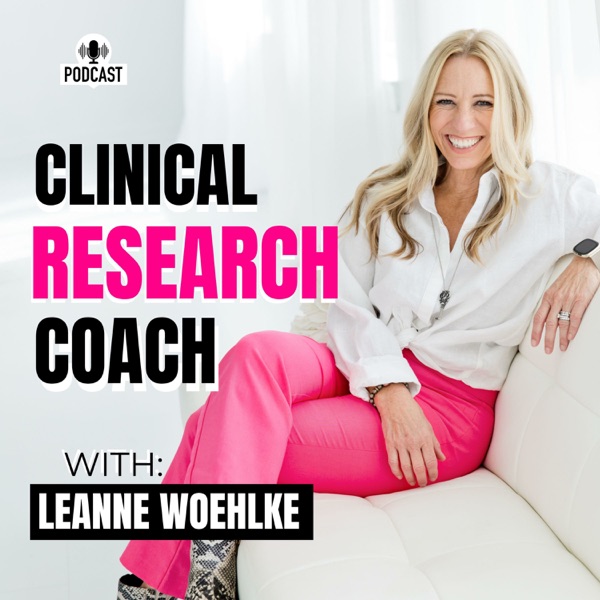
The Clinical Research Coach Podcast bridges conversations between industry, thought leaders and patients. We have vulnerable and real conversations with the goal of impacting the industry in meaningful ways.
On the charts
Every published chart this podcast appears in, in the snapshot behind this page. Each one links to the chart it came off.
The Mato Topic Intelligence Platform does not report this podcast as charting in a published category in this snapshot.
From the feed
The latest episodes published to this podcast’s own RSS feed. Titles and descriptions are the publisher’s.
What happens after a patient expresses interest in a clinical trial? In this episode, Leanne talks with Daniel Johnson, Commercial VP at OpenClinica, about the “leaky bucket” of patient recruitment and why so many potential participants fall through the cracks between initial interest and enrollment. Daniel shares how OpenClinica’s StudyHub connects recruitment, lead management, patient engagement, and electronic data capture into a more streamlined experience. They also discuss the role of automation, analytics, personalized communication, and the future potential of AI to help study teams stay connected with patients. The conversation reinforces an important point: successful recruitment is not just about generating leads. It is about helping patients feel informed, supported, and valued throughout the journey. Enjoy this episode! More about Daniel Johnson: Daniel Johnson is the Commercial Vice President at OpenClinica, where he leads the company's commercial strategy across sales, customer success, and go-to-market execution. Since joining BuildClinical in 2023 and helping lead its integration into OpenClinica, Daniel has focused on helping research organizations improve participant recruitment, clinical trial operations, and study execution. His experience spans customer success, commercial leadership, and operational execution, with a passion for connecting technology to the real-world challenges faced by sponsors, CROs, and academic research teams. Today, he is focused on expanding adoption of solutions like Study Hub and helping research organizations run more efficient, connected clinical trials. To connect with Daniel on LinkedIn: https://www.linkedin.com/in/daniel-johnson19/ To learn more about OpenClinica: https://www.linkedin.com/company/openclinica/ https://www.openclinica.com/
In this episode of The Clinical Research Coach, host Leanne Woehlke sits down with Angela Radcliffe for a powerful conversation about empathy, innovation, and why the future of clinical research must remain deeply human. Angela shares the personal experiences that shaped her passion for healthcare and clinical research, including the profound impact clinical trials had on her own family. Together, Leanne and Angela explore how the industry can embrace AI and emerging technologies without losing the trust, compassion, and human connection patients need most. From patient experience and purpose-driven leadership to the balance between technology and empathy, this episode is a reminder that innovation works best when it serves people first. If you care about the future of clinical research, patient trust, and keeping humanity at the center of healthcare innovation, this conversation is one you won’t want to miss. Learn More: About Angela: Angela Radcliffe is a dynamic speaker, best-selling author, and impact influencer who advocates for teaching children (ages 8-14) health, data and AI literacy to provide them with the necessary skills and knowledge to thrive in a data-driven world. She’s the author of “Quantum Kids Guardians of AI”, an activity book that introduces elementary and middle school students to AI fundamentals through seven engaging missions. The book weaves concepts like neural networks, large language models, data ethics, and prompt engineering into relatable stories about school, social media, and robotics. It empowers young readers to: - Apply AI knowledge to homework and hobbies- Navigate Internet safety - Understand technology's role in addressing societal challenges- Make informed decisions about health and personal data protection.With 20+ years of experience, Angela drives progress in medical research, healthcare marketing, and healthcare data and artificial intelligence. She understands the intricate interplay of trust, value, and risk in unleashing power from petabytes of data. Frequently at the helm of global endeavors, including as Head of Digital Performance Improvement and Innovation for Research and Early Development IT, Head of Enterprise Digital Strategy Innovation, and Head of Enterprise Data Governance at Bristol Myers Squibb, she's orchestrated transitions from molecular concepts to market-ready solutions and from boardroom strategies to tangible implementations that transform customers into champions. Over the years, Angela has worked closely with thousands of patients participating in clinical trials, partnered seamlessly with tech luminaries and stood shoulder-to-shoulder with industry peers with a single focus: pushing, often pulling, clinical research and healthcare forward. Angela’s compelling thought leadership combines technical insights on AI’s growing impact with her personal stories of overcoming adversity. Her experiences such as growing up poor, leaving an abusive spouse, losing her 21-year-old brother to an undiagnosed heart condition, and raising a neurodivergent daughter fuel her mission to advance health, data and AI literacy. This unique background and her stellar communications and interpersonal skills make her a sought-after speaker for podcasts and with life sciences, patient education, mental health, data privacy, teacher and parent organizations. Connect with Angela Radcliffe on LinkedIn: https://www.linkedin.com/in/angela-radcliffe-2560256/ Angela's Website: https://intelligenceapplied.ai/ Angela's Books: The Five Laws of Applied Intelligence: Why Your Humanity Is Your Superpower and How to Use It to Win in a World of Machines Quantum Kids Guardians of AI: Story Quest and Activity Book
In this episode of The Clinical Research Coach , Leanne sits down with Lindsey Wahlstrom to explore how one family’s experience with rare disease is helping reshape conversations around pediatric care, patient advocacy, and human-centered healthcare. Lindsey shares the story of her daughter Rona, a joyful and science-loving child diagnosed with acquired aplastic anemia at five years old. What began as Rona’s dream of creating a YouTube show called “Rona’s Rockin’ Fun Lab” evolved into Rona's Fun Lab, a mission-driven initiative focused on improving the experience of children and families navigating serious illness. Together, Leanne and Lindsey discuss the realities caregivers face behind hospital doors, from navigating complex medical decisions in the middle of the night to becoming fierce advocates for loved ones during the most vulnerable moments. Lindsey also shares how her background in clinical research shaped her role as what hospital residents jokingly called a “momatologist,” a parent who quickly became an expert in her child’s condition and care. This conversation explores grief, resilience, trauma, healing, and the importance of balancing breakthroughs in treatment with breakthroughs in joy, compassion, and human connection. It is a powerful reminder that patients and caregivers are not just participants in healthcare. They are people deserving of dignity, understanding, and meaningful moments along the way. Listeners will walk away inspired to think differently about patient care, communication, advocacy, and what it truly means to humanize healthcare. For more information: Lindsey Wahlstrom , Momatologist, works at the intersection of medical research, caregiving, and meaning-making. After more than a decade supporting patient engagement across 200+ clinical trials, Lindsey’s understanding of success in healthcare was radically reshaped when her daughter, Rona, was diagnosed with and died from a rare disease in 2023. She is the co-founder and Chief Momatologist of Rona’s FUN LAB, a nonprofit supporting critically ill children and the teams who care for them, alongside her ongoing work in patient engagement and research. Her work challenges how we define outcomes — and what it truly means to help. https://www.linkedin.com/in/lindseywahlstrom/ Rona's Fun Lab: https://www.ronasfunlab.org/ Rona's Fun Lab on YouTube: https://www.youtube.com/@RonasFUNLAB Instagram: @Ronasfunlab Lindsey will be speaking at TedX Mt Hood on May 16th, 2026. Check back for a link to her talk.
In this episode, Leanne Woehlke sits down with Dr. Anastasia Christianson, a seasoned pharmaceutical leader with over 30 years of experience across major companies including AstraZeneca, Bristol Myers Squibb, and Johnson & Johnson. Now a consultant and advisor to emerging innovators, Anastasia shares a grounded perspective on the evolving role of AI in life sciences. The conversation moves beyond AI hype to practical application, emphasizing that while AI is already improving operational efficiency across drug discovery and clinical trials, its greatest potential lies in unlocking innovation, surfacing insights hidden within complex datasets that humans alone cannot easily detect. A central theme is the need to address systemic bottlenecks in clinical trials holistically rather than incrementally. Anastasia highlights how optimizing one step often shifts inefficiencies downstream, advocating instead for end-to-end transformation. The discussion explores persistent challenges in patient recruitment, including site bias, limited access to diverse populations, and underutilized direct-to-patient strategies. Leanne and Anastasia also examine the importance of patient-centric design, ensuring trials are accessible, understandable, and engaging to improve retention and outcomes. They discuss the promise of AI-enabled solutions such as virtual waiting rooms, decentralized trials, and multi-trial matching systems that could dramatically improve the patient experience. The episode closes with insights for entrepreneurs entering the AI healthcare space, stressing the importance of data integrity, bias mitigation, validation, and clear market positioning. Ultimately, Anastasia frames AI as a potential “universal equalizer” in healthcare, if implemented responsibly, ethically, and with the right data foundation. To learn more about Dr Anastasia Christianson: https://www.linkedin.com/in/anastasiac/
In this episode of The Clinical Research Coach , host Leanne Woehlke sits down with Alen Hadzic , Founder and CEO of CT Scan , to explore how data, digital advertising, and AI are reshaping the way patients are enrolled into clinical trials. Coming from a background in consulting, marketing strategy, and lead generation, Alen brings a fresh lens to one of the industry’s most persistent challenges— patient recruitment and enrollment . Rather than relying on traditional recruitment models, his company has developed a methodology called Predictive Enrollment Engineering , designed to calculate and optimize cost-per-enrollment using real-world advertising data. Alen shares how CT Scan’s patent-pending AI platform, Dyno AI , analyzes millions of dollars in digital advertising performance across dozens of clinical research projects to model enrollment funnels—from ad engagement and qualification to phone contact, eligibility, and final enrollment. During the conversation, Leanne and Alen discuss: Why traditional patient recruitment models often fail to deliver results The hidden friction points that cause patients to drop out of the enrollment funnel How digital advertising can be used to measure and optimize patient interest The importance of rapid follow-up and human engagement in improving response rates How CT Scan achieves a 65% phone answer rate through immediate outreach and optimized workflows Why focusing on cost per enrollment—not cost per lead—changes the entire recruitment strategy Alen also shares his unconventional journey into the clinical trials industry—from early exposure to research through his physician father to a career in consulting and entrepreneurship that ultimately led him to rethink how clinical trials approach patient enrollment. If clinical trial recruitment has ever felt unpredictable, inefficient, or frustrating, this episode offers a data-driven perspective on how AI, marketing science, and operational discipline could transform enrollment into a measurable and predictable process. Tune in to learn how predictive modeling and digital marketing principles may help bring new optimism to clinical trial enrollment. Alen Hadzic is a healthcare technology entrepreneur focused on bringing predictability and operational rigor to clinical trial enrollment. He is the Founder and CEO of CT SCAN™, a company developing systems to remove uncertainty from patient recruitment by engineering enrollment as a measurable process rather than a marketing outcome. His work centers on Predictive Enrollment Engineering™, a methodology that models each stage of the patient journey, from initial awareness through screening and enrollment, using probability-based performance metrics. The company’s patent-pending enrollment technology, DYNO Ai™, analyzes operational and advertising data to forecast cost-per-enrollment and reduce study timelines. Hadzic holds a graduate degree from Columbia University and completed a Master’s in Innovation and Entrepreneurship at Vlerick Business School, a top-ranked European program in the field. His background combines business strategy, systems thinking, and applied analytics in clinical research operations. Outside of his professional work, he is an active musician who records and performs his own material, playing guitar, drums, and vocals. He approaches both technology and music with a similar philosophy: structured systems can create reliable outcomes, but creativity determines how far those outcomes can be pushed.
In this episode of the Clinical Research Coach, I sit down with Ella Balasa, a cystic fibrosis patient advocate whose lived experience is shaping how our industry understands trust, transparency, and meaningful patient engagement. Diagnosed in infancy with cystic fibrosis, a progressive genetic lung disease, Ella has spent her life navigating hospital systems, breakthrough therapies, and clinical trials — not as an abstract participant, but as someone whose health and future depend on research progress. Along the way, she has become a powerful voice for improving how industry partners with patients. In this conversation, Ella shares what sponsors, sites, and biotech leaders often overlook: * Patient experience is never one-size-fits-all — even within the same diagnosis. * Patients learn about trials through trusted networks, not just databases or digital ads. * Transparency builds confidence and drives long-term participation in research. * Dropout affects more than timelines — it influences trust and future enrollment decisions. * Technology should support patients, but never replace human connection. Ella’s perspective challenges us to think beyond enrollment metrics and toward something deeper: relational trust. Because sustainable progress in clinical research depends on listening to patients as individuals, partners, and experts in their own lives. To learn more about Ella: Https:/ellabalasa.com
In this episode of Clinical Research Coach , host Leanne Woehlke sits down with Dr. Rohan Lall for a candid, thought-provoking conversation on what it truly takes to modernize clinical research—without losing sight of patients, providers, or purpose. Dr. Lall brings a rare dual perspective as a practicing physician and clinical research leader, offering firsthand insight into the structural, cultural, and operational challenges that slow progress across trials today. Together, Leanne and Dr. Lall explore how clinical research must evolve to better reflect real-world care, rebuild trust with patients, and support sites and investigators who are stretched thin. In this episode, you’ll hear about: Why many clinical trials still feel disconnected from everyday clinical care—and how to close that gap The growing tension between protocol complexity and patient participation What physicians actually need to stay engaged in research long-term How trust, communication, and operational empathy impact enrollment and retention Where technology helps—and where human connection remains irreplaceable Dr. Lall’s vision for a more sustainable, clinician-friendly, patient-ready research ecosystem This conversation is a must-listen for sponsors, CROs, sites, and innovators who believe the future of clinical research depends not just on better technology, but on better alignment between medicine, operations, and the lived experience of patients. Rohan Lall, MD M Health FarviewUniversity of Minnesota Medical Center Spine Surgery / Neurosurgery/ Chief Medical Officer SynerFuse BIO: Dr Rohan R. Lall is a neurosurgeon in Edina, Minnesota and is affiliated withmultiple hospitals in the area, including M Health FairviewUniversity of Minnesota Medical Center and M Health FairviewSouthdale Hospital . He received his medical degree from University of Chicago Division of the Biological Sciences The Pritzker School of Medicine. He has expertise in treating spinalfusion, spinal stenosis and spondylosis, among other conditions Dr Lall is a former investigator of the SynerFuse Proof of Concept trial and pioneered the e-TLIF procedure He performed the world’s firstsolo SynerFuse e-TLIF procedure as well as the first 2-level procedure. SynerFuse®e-TLIF™ procedure, a ULE™ Therapy (Ultra Low Energy), is used to addresschronic low back and leg pain for spinal fusion patients. Dr Lall specializes in robotic and minimally invasive surgery, complex spinal surgery, brain for brain and spinal tumors and skullbase surgery/ pituitary tumor surgery. He has been a leader in robotic spinal surgery and actively involved in the development of new technologies in spine surgery. The Innovative procedure integrates conventional spinal surgery techniques with targeted nerve stimulation to address chronic back pain at its source. These nerve stimulators fundamentallyalter the nerve’s ability to transmit pain signals to the brain. The innovative implant allows patients to control nerve stimulation via smartphone, with early trial participants reporting significant pain reduction and improved quality of life without opioid dependence.
In this powerful and eye-opening conversation, Leanne Woehlke sits down with Dr. Ruchir Gupta , a double board-certified pain specialist and founder of Mountain View Headache and Spine Institute, to explore the evolving world of chronic pain treatment and clinical research . Dr. Gupta shares his journey from anesthesiology into chronic pain medicine and research, highlighting why traditional approaches often fail and how emerging therapies like ketamine infusions and stem cell treatments offer new hope. Together, they discuss the importance of changing the language around "experimental" medicine, improving access to clinical trials, and educating patients and physicians about cutting-edge but underutilized treatments . They also tackle: The broken incentives in insurance-driven medicine How to ethically introduce new treatments to patients The power of AI and EMRs in revolutionizing clinical trial recruitment Rebuilding trust in the medical system through transparency and education This episode is a must-listen for healthcare professionals, clinical researchers, and patients seeking alternatives to outdated treatments and a deeper understanding of how clinical research can drive real change in patient care. Dr Ruchir Gupta: Dr. Ruchir Gupta is a board-certified pain specialist and anesthesiologist with advanced training in chronic pain management from the Mayo Clinic’s Alix School of Medicine in Arizona. A New York native, he completed medical school at Upstate Medical University in Syracuse and his anesthesiology residency at New York Medical College – St. Vincent’s Hospital in Manhattan. With over 20 peer-reviewed publications and two medical textbooks to his name, Dr. Gupta blends cutting-edge Western medicine with holistic, nature-based therapies. His areas of expertise include interventional pain management, IV infusion therapy, bone marrow concentrate procedures, and regenerative orthopedics. Dr. Gupta is a member of several leading professional societies, including the American Society of Pain and Neuroscience and the American Headache Society. He currently practices in Mesa and Phoenix, Arizona, where he is also part of the elite Regenexx network of interventional orthopedic physicians. To connect with Dr Gupta: LinkedIn: https://www.linkedin.com/in/ruchir-gupta-3187326b/ https://mountainviewheadacheandspine.com/
In this episode of The Clinical Research Coach , host Leanne Woehlke sits down with Dr. Sarah Matt, MD, MBA , a surgeon, health technologist, and author who is redefining what it means to deliver care without borders. From the operating room to advising health tech startups, Dr. Matt brings a rare dual perspective, grounded in both clinical compassion and digital innovation. Together, Leanne and Sarah explore how technology can expand access, reduce friction, and humanize care across communities, from urban hospitals to rural nursing homes. Dr. Matt also shares insights from her upcoming book, The Borderless Healthcare Revolution: The Definitive Guide to Breaking Geographic Barriers Through Technology , launching December 11, 2025 . The book offers real-world playbooks, “next-shift wins,” and frameworks for healthcare leaders, clinicians, and researchers to design systems that truly work for everyone. In this conversation, they discuss: Why technology must serve real people, not just innovation for its own sake How to align incentives across hospitals, CROs, and trial sponsors to improve access and retention The five pillars of healthcare access: geographic, digital, financial, cultural, and trust How empathy, design thinking, and AI can restore the human side of medicine Why solving burnout requires fixing systems, not just supporting individuals The future of robotics, decentralized trials, and telemedicine as tools for equity Through real stories and practical insights, Dr. Matt reminds us that the next wave of healthcare transformation will not be about new tools, but about how we use them to rebuild trust, equity, and connection. Tune in to discover how Dr. Sarah Matt is leading a movement where care travels at the speed of need and healthcare knows no borders. To learn more about Dr. Sarah Matt: https://www.drsarahmatt.com/ To pre-order The Borderless Healthcare Revolution: https://www.drsarahmatt.com/book#OrderBook
What does it take to bring cutting-edge research to new populations—and new continents? In this episode of The Clinical Research Coach , Leanne sits down with Julio Martinez-Clark , CEO of bioaccess® , to talk about why Latin America—especially Colombia—is becoming a prime destination for clinical trials. Julio shares insights into navigating regulatory pathways, building trusted networks, and designing trials that are both scientifically rigorous and locally relevant. Whether you're exploring new geographies or simply curious about how patient-centric research is evolving globally, this conversation will broaden your perspective. To Learn More: Julio Martinez Clark: https://www.linkedin.com/in/juliomartinezclark/ bioaccess https://www.bioaccessla.com/
In this episode of The Clinical Research Coach , host Leanne Woehlke sits down with trailblazer Nasha Fitter —tech entrepreneur, rare disease advocate, and co-founder of both the FOXG1 Research Foundation and Citizen Health . After Nasha’s daughter was diagnosed with FOXG1 syndrome, an ultra-rare neurological disorder, her world shifted. Instead of accepting the limitations of the current research landscape, she took action- building a foundation, galvanizing the scientific community, and redefining what’s possible for families facing rare disease. What began as a grassroots foundation now drives innovative drug development, redefines data collection, and challenges the status quo in drug development. In this conversation, Nasha shares: How a small, determined parent community raised $10M and launched a gene therapy program Why traditional research models fail rare disease patients—and how to fix them The power of patient-owned data and how platforms like Citizen Health are transforming access and insights How to build empathy for families navigating special needs What pharma gets wrong (and right) in working with advocacy groups Her vision for a precision medicine future—starting with ultra-rare This is a story about courage, creativity, and a more inclusive, patient-driven future of medicine. Nasha’s bold vision and action oriented approach will leave you inspired and hopeful. To Find Out More: Nasha Fitter https://www.linkedin.com/in/nashafitter/ FOXG1 Research Foundation: https://www.foxg1research.org/ Citizen Health: https://www.citizen.health/
In this heartfelt episode, we sit down with Katie Diaz, Managing Partner of the Dan Diaz Biotech Breakfast Club. Katie shares the deeply personal story of her father, Dan Diaz, whose ALS diagnosis changed the course of her life- and inspired her to continue the work he started. Together we explore the importance of empathy, the emotional layers of navigating a rare disease and how Katie transformed grief into advocacy, mission and action. Enjoy! To Learn More: Katherine (Diaz) Harakel The Dan Diaz Biotech Breakfast Club: https://thedandiazbiotechbreakfastclub.godaddysites.com/
In this powerful episode of The Clinical Research Coach , we sit down with Kay Kays — a 30-year pancreatic cancer survivor and passionate patient advocate. Kay’s story is nothing short of extraordinary. Diagnosed with one of the most challenging cancers to treat, she not only defied the odds but has spent the last three decades using her voice to push for better patient access to clinical trials. With her signature honesty and infectious energy, Kay shares why she believes clinical trials should be the appetizer — not the dessert — in the treatment journey. We talk survivorship, advocacy, and the urgent need to change how patients are introduced to research as a care option. Whether you’re in clinical research, oncology, or simply need a dose of inspiration, this conversation is not to be missed. To learn more about Kay Kays: https://www.linkedin.com/in/kay-kays-2a993649/
In this episode of The Clinical Research Coach , host Leanne Woehlke sits down with Robert Goldman , Head of Clinical Operations at Contraline , a company pioneering innovation in reproductive health. Robert is a true industry disruptor, challenging traditional clinical trial models by integrating AI, decentralized trial frameworks, and real-time data analytics to accelerate timelines and improve patient outcomes. Robert shares his journey into clinical research, the challenges he’s faced while introducing disruptive models, and his vision for the future of clinical operations. He also offers practical advice for clinical leaders looking to embrace innovation and transform the patient experience. If you’re ready to explore how technology and human-centered design are shaping the future of clinical trials, this is an episode you don’t want to miss! To learn more: Robert Goldman is the Head of Clinical Trail Operations at Contraline as well as the Founder of ALCOA Consulting. https://www.linkedin.com/in/robert-s-goldman-358b0868/
In this episode of The Clinical Research Coach , host Leanne Woehlke sits down with Stacy Martin , who shares her journey of entering a clinical trial. Stacy talks about her mother’s stage 4 uterine cancer diagnosis, which led to genetic testing that revealed a hereditary mutation called CDH1 . This mutation increased the likelihood of cancer in Stacy and her siblings. Stacy describes the moment she discovered she was CDH1 positive , the challenges she faced afterward, and the lessons she learned through the clinical trial process. No longer having a stomach, Stacy has to eat more frequently to keep her energy up. Becoming a "professional snacker" led her to turn her newfound snacking habit into a business and Seahorse Snacks was born. Seahorse Snacks makes healthy delicious roasted nuts with unique and unusual flavors. To Connect with Stacy: Stacy Martin Stacy@seahorsesnacks.com Linked In: https://www.linkedin.com/in/stacy-martin-461b33a/ Seahorse Snacks: https://seahorsesnacks.com/ Instagram: @seahorse_snacks TikTok: @seahorse_snacks
In this episode of The Clinical Research Coach , Leanne Woehlke sits down with Wessam Sonbol, CEO of Delve Health, to explore the evolving world of clinical trials. Wessam shares his personal experience as a clinical trial participant and offers insights on helping people navigate the process—especially those with limited access to technology. They discuss the power of decentralized trials, wearables, strategies for engaging underrepresented populations, concierge services and why truly understanding patients is key to making research more accessible and effective. Enjoy! To learn more: Wessam Sonbol https://www.linkedin.com/in/wsonbol/ Delve Health: https://www.linkedin.com/company/delve-health/ https://delvehealth.com/
In this episode of The Clinical Research Coach , recorded live at SCOPE, host Leanne Woehlke sits down with Or Shaked , MD-MPH, Medical Research Lead at Briya, to explore the transformative role of real-world data (RWD) and real-world evidence (RWE) in clinical trials. They discuss how RWD is reshaping trial design, improving patient recruitment, and enhancing the overall efficiency of research. Or shares insights on the latest advancements, the challenges of integrating real-world evidence, and what the future holds for decentralized trials. This episode offers valuable perspectives on the evolving landscape of clinical trials. Tune in for an insightful conversation on how data-driven innovation is driving better outcomes in research and patient care! To connect with Or Shaked, MD-MPH: https://www.linkedin.com/in/orshakedd/ To learn more about Briya: https://briya.com/
In this special live episode recorded at SCOPE , host Leanne Woehlke sits down with Kate Shaw , CEO of Innovative Trials , to explore the evolving landscape of patient recruitment and retention in clinical research. We discuss some of the age old issues in the industry and share insights on the biggest challenges sites and sponsors face today. Whether you're a clinical research professional, a site leader, or simply passionate about advancing patient-centric trials, this episode is packed with expert insights and actionable takeaways. 🎧 Tune in now to hear the latest from the frontlines of clinical trial innovation—recorded live at SCOPE! To connect with Kate Shaw, CEO of Innovative Trials: https://www.linkedin.com/in/kate-shaw-250a8a6/?originalSubdomain=uk https://innovativetrials.com/
In this episode of The Clinical Research Coach Podcast , recorded live at SCOPE 2025, we welcome Jeff James , CEO of Wilmington Health and CEO and Co-Founder of Innovo Research. Jeff is a nationally recognized leader in healthcare transformation. With a wealth of experience in physician leadership, accountable care, and clinical research integration, Jeff shares insights on how healthcare organizations can align incentives, improve patient outcomes, and drive innovation in clinical trials. As the leader of Physician Healthcare Collaborative (PHC)—one of the top-performing Medicare ACOs—Jeff has firsthand experience navigating the complexities of value-based care and integrating research into clinical practice. In this episode we discuss: ✅ The role of clinical research in modern healthcare ✅ How value-based care is reshaping patient outcomes ✅ Strategies for aligning providers, payers, and researchers ✅ The future of healthcare innovation and leadership Enjoy! To learn more: Jeff James: Linked In: https://www.linkedin.com/in/jeff-james-9a0b9b3/ Innovo Research: https://www.innovoresearch.com/ Wilmington Health: https://www.wilmingtonhealth.com/
In this deeply personal episode, Michelle courageously shares her experience participating in a clinical trial to determine if she carries the genetic marker for Alzheimer’s disease. With raw honesty, she walks us through the emotional rollercoaster of making the decision, the testing process, and the weight of knowing—or not knowing—what her future may hold. Through her story, we explore the power of clinical research, the fears and hopes that come with genetic testing, and the importance of advocacy in Alzheimer’s awareness. Whether you're considering participating in a trial, have a loved one affected by Alzheimer’s, or simply want to hear an inspiring story of resilience, this episode is for you. Tune in as Michelle opens up about her journey, reminding us that vulnerability is strength—and knowledge is power. To protect Michelle's privacy, we are not sharing her full name or identifying details.
Ranking source
Apple Podcasts rankings via the Mato Topic Intelligence Platform.
Observed September 12, 2026. Cached outside the daily freshness window; the positions keep the date they were taken on.
Apple and Apple Podcasts are trademarks of Apple Inc., registered in the U.S. and other countries.
Pairs with
Bring this source into Mato to read its transferable patterns, then turn them into an original show for your own audience.