Mato just raised pre-seed Read more

Podcast charts
Published by Full Plate by Abbie Attwood
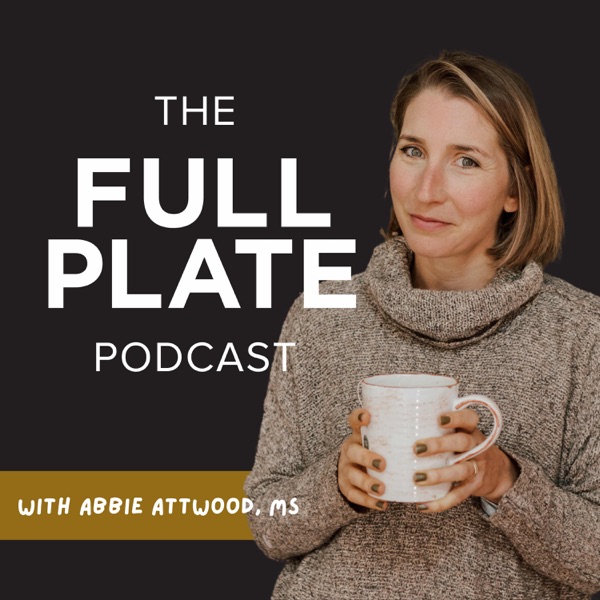
Full Plate is a podcast about healing from diet culture, creating peace with food, reclaiming body autonomy and trust, and taking a weight-inclusive approach to our well-being. Each week, Abbie interviews guests or answers listener questions that explore our relationship to food and our bodies. Abbie is an anti-diet nutritionist with a master’s in nutrition and integrative health. She is also the founder and owner of Abbie Attwood Wellness, a virtual private practice dedicated to weight-inclusive care, food freedom, body image healing, and dismantling diet culture. Find Full Plate on Instagram @fullplate.podcast Abbie is @abbieattwoodwellness This show is ad-free and listener-supported. For bonus episodes and more content, join us on Patreon: http://www.patreon.com/fullplate abbieattwoodwellness.substack.com
On the charts
Every published chart this podcast appears in, in the snapshot behind this page. Each one links to the chart it came off.
From the feed
The latest episodes published to this podcast’s own RSS feed. Titles and descriptions are the publisher’s.
GLP-1 medications like Ozempic, Wegovy, Mounjaro, and Zepbound have gone from relatively niche diabetes medications to one of the biggest (and most controversial) stories in health and wellness. As you may have noticed, I’ve taken a bit of a hiatus from the podcast the past couple of months while I’ve been recovering from a SCAD heart attack. Today, I'm back with a brand new conversation about weight loss drugs with Ragen Chastain, a researcher, writer, speaker, and board-certified patient advocate who has spent more than 20 years examining the intersections of weight science, weight stigma, and healthcare. She brings a research- and statistics-informed perspective to a conversation that is often dominated by pharmaceutical marketing, influencer anecdotes, and very simplified claims about what these medications do. We do a deep dive into GLP-1 medications, weight loss, food noise, hunger, weight stigma, and what we actually know about the safety and long-term effects of these drugs. In this episode, we get into: * Ragen’s journey from dieting and doing her own literature review to becoming a researcher and advocate in the weight-inclusive healthcare space * What we know about the failure of long-term weight-loss interventions * Weight-inclusive healthcare and why it shouldn’t depend on whether we believe people can or cannot lose weight * How GLP-1 medications work, including their effects on blood sugar, gut motility, digestion, and hunger * The difference between diabetes dosing and the higher doses used for weight loss * What “food noise” actually means (and what it doesn’t mean) * How diet culture and restriction can affect hunger and thoughts about food * The medicalization of hunger * Why the same symptoms can be interpreted and treated differently depending on the size of the person experiencing them * Weight stigma in healthcare and the assumption that weight loss is the answer to an enormous range of health concerns * What we know and don’t know about the long-term safety of GLP-1 medications * Why research on a medication at one dose cannot automatically answer questions about that medication at another dose * Study dropout and what can get lost when we look only at headlines, abstracts, and conclusions * Conflicts of interest in pharmaceutical research * Concerns about the quality and transparency of long-term safety data * What happens when medications designed to suppress hunger are used in people whose bodies are otherwise regulating blood sugar normally This is part one of the conversation. In part two (releasing next week) we’ll dig further into weight regain, body composition, how GLP-1 research is presented to the public, the explosion of claims that these medications can treat everything from cardiovascular disease to mental health concerns, pharmaceutical influence on healthcare providers, and what you can actually do when a doctor recommends a GLP-1. Apply for Abbie’s Group Membership: If you're looking for community and continued learning, apply for Abbie's monthly membership: https://www.abbieattwoodwellness.com/circle-monthly-group . We meet every other Thursday, and have a private online space for ongoing conversations between sessions. Enjoying this podcast? Please support the show on Substack for bonus episodes, community engagement, and access to "Ask Abbie" at abbieattwoodwellness.substack.com/subscribe Find more resources from Ragen: Substack: https://weightandhealthcare.substack.com/ Instagram: https://www.instagram.com/ragenchastain/?hl=en This is a public episode. If you'd like to discuss this with other subscribers or get access to bonus episodes, visit abbieattwoodwellness.substack.com/subscribe
What does it mean to live in a body that doesn’t always do what you wish it would? A body that’s unpredictable, maybe in pain, maybe exhausted — a body shaped by chronic illness, disability, or medical trauma? This week on the podcast, I’m revisiting an episode with the deeply compassionate Dr. Jennifer Caspari , a psychologist who specializes in health psychology and lives with cerebral palsy. Her personal and professional wisdom come together in such a powerful way — this conversation felt like a breath of fresh air in a world that so often asks us to override, fix, or fight our bodies. We talk about what it means to be in relationship with your body when it doesn’t feel like it’s on your side — and how to cultivate self-compassion, presence, and joy even in the midst of that. (Her new book is a beautiful read, by the way). Jen shares her own story — how she came into therapy, what it’s like navigating the world in a disabled body, and the mindset shifts that have helped her most during painful or difficult seasons. We explore: * How societal body image pressure intersects with disability and illness * Why we don’t have to wait for symptoms to go away in order to start living * The role of values-based living and gentle courage in hard moments * Practical strategies for coping with chronic pain * What it really means to practice radical acceptance * Why chronic illness often involves grief — of function, identity, possibility * Navigating relationships and communicating needs with loved ones * Finding agency, even when so much feels out of your control * Living fully with a body that’s chronically ill — and maybe always will be Support the show: Enjoying this podcast? Please support the show on Substack for bonus episodes, community engagement, and access to "Ask Abbie" at abbieattwoodwellness.substack.com/subscribe Apply for Abbie’s Group Membership: If you're looking for support, live sessions, community, and continued learning, apply for Abbie's monthly membership: https://www.abbieattwoodwellness.com/circle-monthly-group Social media: Find the show on Instagram: @fullplate.podcast Find Abbie on Instagram: @abbieattwoodwellness Podcast Cover Photography by Anya McInroy This podcast is ad-free and made possible by paid subscribers on Substack. Subscribe HERE . This is a public episode. If you'd like to discuss this with other subscribers or get access to bonus episodes, visit abbieattwoodwellness.substack.com/subscribe
This is a free preview of a paid episode. To hear more, visit abbieattwoodwellness.substack.com https://abbieattwoodwellness.substack.com/subscribe Today's episode is a bit different than usual. I'm sharing (solo) a bit about where I've been, what's been going on with my health, and what it all means for this podcast. To listen, upgrade to paid right here . Paid subscribers get access to all bonus content -- including the full archive of paywalled podcast episodes and newsletters. In the episode, I get into: - what happened (the heart attack, the hospital stay, and how my husband and family played a role) - trusting your body even in the middle of a crisis - the ways a medical condition overlaps with diet culture - holding space for how unique everyone's experience with a health condition is, even when it's the same diagnosis - the emotional impact of a life-threatening experience - leaning into rest as a radical act of self-care, and how hard that can be in our culture - where I'm finding the capacity for understanding and patience with my body, and where I'm not - what this means for the podcast and my business Thank you so muxh for supporting me -- both as a person, and as an independent writer / producer. It means the world.
Abbie is joined by the incredible Monika Ostroff, executive director of MEDA, clinician, author, and person with lived experience of both anorexia and DID — for one of the most illuminating conversations the show has ever had. This one will change the way you think about survival, the body, and what healing actually asks of us. In this episode: - What dissociative identity disorder (DID) actually is — and how it's almost nothing like what you've seen in media - Why DID is far more common than most people realize, and why diagnosis takes so long - The striking overlap between DID and eating disorders, and what that tells us about both - How eating disorders function as a trauma response — and why that framing matters for recovery - What it means to approach an eating disorder with compassion rather than shame - The clinical and personal complexity of treating multiple eating disorder presentations within one system - Why the "control freak" narrative around eating disorders misses the point entirely - Monica's own lived experience with anorexia, DID, and what recovery has looked like - The single piece of wisdom that reoriented Monica's entire relationship with herself About Monika: Monika Ostroff, LICSW, CEDS-S is the Executive Director of the Multi-Service Eating Disorders Association, Inc (MEDA). She has over 25 years of experience in the field of eating disorders. Prior to leading MEDA, she directed several residential, partial hospital and intensive outpatient eating disorder programs in addition to having owned a thriving private practice. Practicing from a trauma informed, social justice and staunchly HAES® aligned lens, Monika is a dedicated ally and strong advocate working to ensure access to equitable, compassionate, and affirming care for all. Find Monika: Healing My Parts on Substack, Instagram, and podcast Support the show: Enjoying this podcast? Please support the show on Substack for bonus episodes, community engagement, and access to "Ask Abbie" at abbieattwoodwellness.substack.com/subscribe Apply for Abbie’s Group Membership: Already been at this anti-diet culture thing for a while, but want community and continued learning? Apply for Abbie's monthly membership: https://www.abbieattwoodwellness.com/circle-monthly-group Find the show on Instagram: @fullplate.podcast Find Abbie on Instagram: @abbieattwoodwellness This is a public episode. If you'd like to discuss this with other subscribers or get access to bonus episodes, visit abbieattwoodwellness.substack.com/subscribe
I'm joined by DK Ciccone — comprehensively certified Pilates instructor, pain reprocessing therapy practitioner, and author of You're Meant to Move — for a conversation that is both deeply personal and clinically rich. We talk about what chronic pain actually is, why so many people have been dismissed or mislabeled, and what it looks like to rebuild a relationship with movement that isn't driven by fear, punishment, or diet culture. This was originally a paid episode. Consider upgrading to a paid subscription to keep Full Plate going: https://abbieattwoodwellness.substack.com/subscribe In this episode: DK's journey with chronic pain and her past as a dancerHow chronic pain forms and why the pain is real even in the absence of ongoing tissue damage The nervous system science behind pain sensitization — and why catastrophizing physically amplifies pain Kinesiophobia: the fear of movement that develops after chronic pain, and how to work through it Somatic tracking and pain reprocessing therapy as tools for understanding pain signalsHow to explore the difference between pain and discomfort DK's "refuge and reach" framework for rebuilding a movement practice incrementally Exploring functional movement versus "exercise"The research debunking weight loss as a solution for chronic pain Why restriction and dieting actually increase chronic pain risk — and the clinical evidence behind it How trauma and disconnection from the body compound the chronic pain experience What embodied movement looks like when you're coming back from years of diet culture messaging About DK Ciccone: Dana Karen ("DK") Ciccone is a comprehensively certified Pilates instructor who helps people in pain improve strength, mobility, and well-being in a weight-neutral environment. She is trained in pain reprocessing therapy through the Pain Psychology Center and is the founder of Movement Remedies, a chronic pain–focused Pilates studio and movement coaching business. Her book, You're Meant to Move: A Guide to Conquering Chronic Pain, Increasing Stress Resilience, and Reclaiming an Active Life , was released in December 2023. Support the show: Enjoying this podcast? Please support the show on Substack for bonus episodes, community engagement, and access to "Ask Abbie" at abbieattwoodwellness.substack.com/subscribe Apply for Abbie’s Group Membership: Already been at this anti-diet culture thing for a while, but want community and continued learning? Apply for Abbie's monthly membership: https://www.abbieattwoodwellness.com/circle-monthly-group Social media: Find the show on Instagram: @fullplate.podcast Find Abbie on Instagram: @abbieattwoodwellness This is a public episode. If you'd like to discuss this with other subscribers or get access to bonus episodes, visit abbieattwoodwellness.substack.com/subscribe
This week's episode is one I have been so excited to share. I'm joined by two brilliant, generous, and deeply thoughtful guests — writer, educator, and body liberation advocate Chrissy King, and creative and founder Claire — who have co-created the Child-Free Coven, a community and mutual aid space for people who are child-free, by choice or by circumstance. In this episode: *What the word “childfree” actually means — and why Chrissy and Claire are actively reclaiming it *Why being childfree is not anti-child, and the James Baldwin quote at the center of their community *Chrissy’s story: ending a marriage, being the first woman in her lineage to have this choice, and what liberation actually feels like *Claire’s story: knowing from her early teens, navigating a partner’s uncertainty, and how 25 years of undiagnosed endometriosis is inextricably linked to her childfree journey *The things people say to childfree women and what to make of them *The connection between body liberation and the childfree experience *Race, reproductive justice, and how this conversation is profoundly different depending on who you are *The political moment we’re in — bodily autonomy, forced birth, and what history tells us about these tactics *What it means to pour your love, attention, and energy into the world without motherhood as the vehicle *The difference between grief and regret *What Chrissy means when she says she wanted more than “fine” Resources: Find The Childfree Coven on Substack and Instagram Chrissy’s book: The Body Liberation Project Claire on Instagram and Chrissy on Instagram Rachel Cargill / Rich Auntie Supreme Resmaa Menakem, My Grandmother’s Hands Tricia Hersey / Rest is Resistance Support the show: Enjoying this podcast? Please support the show on Substack for bonus episodes, community engagement, and access to "Ask Abbie" at abbieattwoodwellness.substack.com/subscribe Apply for Abbie’s Group Membership: https://www.abbieattwoodwellness.com/circle-monthly-group Find the show on Instagram: @fullplate.podcast Find Abbie on Instagram: @abbieattwoodwellness This is a public episode. If you'd like to discuss this with other subscribers or get access to bonus episodes, visit abbieattwoodwellness.substack.com/subscribe
This is a free preview of a paid episode. To hear more, visit abbieattwoodwellness.substack.com This is part two of my conversation with Kate Zigrang, founder of Viva Voce — and this is where everything shifts. To hear it: abbieattwoodwellness.substack.com/subscribe We left off last week with Kate at a turning point: an OCD diagnosis, a doctor who finally told her the truth about her health, and something beginning to loosen. This episode is about what came next — the harder, slower, more relational work of actually stepping out of diet culture after a lifetime inside it. We cover: * Going no contact with her parents — the decision, the grief, and what space it created * The complicated dynamic with her mom: over-apologizing, enmeshment, and why leaving felt both impossible and necessary * The slow, specific work of separating her own body from her mother's — learning to look at herself without dread * Religious deconstruction happening simultaneously with the body acceptance work and the mental health work — all three threads unraveling at once * The Manhattan pants incident — eighteen months of traveling the world, unable to find a single pair of pants in her size anywhere in New York City, and the rage that became a turning point * What Viva Voce actually is — a marketplace vetting brands for ethics, sustainability, and genuine size inclusivity * Why she insists on carrying straight and plus sizes in the same space * The pop-up strategy — and why she's bringing it to smaller cities on purpose * A data project collecting real body measurements to understand how clothes could actually be made better * Why belonging is at the center of every decision she makes — and what that looks like in practice This episode is for paid subscribers. If you'd like access to this conversation and the full archive, you can subscribe here: abbieattwoodwellness.substack.com/subscribe Find Kate and Viva Voce at vivavoce.live and on Instagram @ vivavoce.live Support the show: Enjoying this podcast? Please support the show on Substack for bonus episodes, community engagement, and access to "Ask Abbie" at abbieattwoodwellness.substack.com/subscribe Apply for Abbie’s Group Membership: Already been at this anti-diet culture thing for a while, but want community and continued learning? Apply for Abbie's monthly membership: https://www.abbieattwoodwellness.com/circle-monthly-group Find the show on Instagram: @fullplate.podcast Find Abbie on Instagram: @abbieattwoodwellness Podcast Cover Photography by Anya McInroy Podcast Editing by Brian Walters
Kate Zigrang is an advocate, entrepreneur, impact investor, and the founder of Viva Voce — a size-inclusive fashion marketplace and community rooted in body justice. But before we get to what she's built, we go back to where it all started. In this first part of a two-episode conversation, Kate takes us through her personal history with her body — from watching her mom navigate the world in a larger body and absorbing the shame that surrounded her, to puberty changing her own body in ways she wasn't prepared for, to a disordered relationship with food that developed in her late teens and went unnamed for years. We also get into her OCD diagnosis at 31 — more than a decade after onset — and what it meant to finally have language for what her brain had been doing all along. This is a conversation about the things diet culture teaches us before we're old enough to question them, and what it actually takes to unlearn them. We talk about: *Growing up watching her mom be treated as a problem to be fixed, and inheriting that shame before she had words for it *How her body changed at puberty while she was already carrying that inherited weight *The food rules in her home growing up, the restriction and binge cycle they created, and how it planted seeds for a disordered relationship with food *Moving away from home at 21, marriage, pregnancy, and her body changing again in ways that felt out of her control *The wellness journey — naturopathic doctors, juice cleanses, a month-long juice fast, and crying in the shower *Getting an OCD diagnosis at 31 and finally understanding what her brain had been doing since she was a teenager *A doctor who told her, simply, that she was healthy — and how much that cracked open *Finding Maintenance Phase, Aubrey Gordon, and Fearing the Black Body by Sabrina Strings, and what it meant to finally have the research match what she'd lived Find Kate and Viva Voce at vivavoce.live and on Instagram @ vivavoce.live . Books mentioned: What We Don't Talk About When We Talk About Fat by Aubrey Gordon; Fearing the Black Body by Sabrina Strings Get 40% off of your Hungryroot order with code abbie40 Support the show: Enjoying this podcast? Please support the show on Substack for bonus episodes, community engagement, and access to "Ask Abbie" at abbieattwoodwellness.substack.com/subscribe Apply for Abbie’s Group Membership: Already been at this anti-diet culture thing for a while, but want community and continued learning? Apply for Abbie's monthly membership: https://www.abbieattwoodwellness.com/circle-monthly-group Find the show on Instagram: @fullplate.podcast Find Abbie on Instagram: @abbieattwoodwellness Podcast Cover Photography by Anya McInroy Podcast Editing by Brian Walters This podcast is ad-free and support comes from your support on Substack. Subscribe HERE . This is a public episode. If you'd like to discuss this with other subscribers or get access to bonus episodes, visit abbieattwoodwellness.substack.com/subscribe
This is a free preview of a paid episode. To hear more, visit abbieattwoodwellness.substack.com Abbie sits down with Dana Colthart, LCSW, a therapist specializing in OCD and eating disorders, to explore one of the most under-diagnosed and misunderstood overlaps in mental health. From intrusive thoughts to diet culture to why you can’t logic your way into recovery, this conversation explores what's truly driving our fears, our coping strategies, and the compulsions holding us back. The first part of this episode is free for everyone. Paid subscribers can hear the entire conversation. You can upgrade here: https://abbieattwoodwellness.substack.com/subscribe In this episode: * Why OCD is so much more than hand-washing and organization — and what it actually looks like * The key difference between OCD and generalized anxiety disorder, and why misdiagnosis is so common * How the OCD cycle works: the obsession, the compulsion, the temporary relief, and why that relief is the trap * What reassurance-seeking is, why it counts as a compulsion, and how it shows up in relationships with food and body image * Pure-O OCD — when the compulsions are entirely mental, and why this goes undiagnosed so often * Taboo and shameful intrusive thoughts: why the people most disturbed by a thought are almost never the ones who’d act on it * What ego-dystonic versus ego-syntonic means, and why that distinction matters in disentangling OCD from eating disorders * How diet culture functions like a mass OCD delivery system — rules, rituals, fear, and relief that never quite arrives * Why clinicians treating eating disorders are often the only voice in a client’s life saying “you don’t have to do this” — and how hard that is * The particular cruelty of food and body-related intrusive thoughts in a world that confirms them everywhere * How OCD and eating disorders mimic each other, overlap, and take turns — and what that seesaw can look like in recovery * What ERP (Exposure and Response Prevention) actually is and why the discomfort is the point * Why your brain watches your actions, not your words — and what that means for recovery * The systemic piece: how disordered behaviors get praised in some bodies and diagnosed in others * What to do if you’re recognizing yourself in this episode but aren’t ready to call a therapist yet About Dana: Dana Colthart, LCSW, is the clinical director of Clear Light Therapy, a boutique practice based in Englewood, New Jersey. She provides evidence based treatment for OCD, anxiety disorders, and eating disorders, blending Exposure and Response Prevention, Acceptance and Commitment Therapy, and integrative mind body approaches. Dana is also a Certified Eating Disorder Specialist. Support the show: Enjoying this podcast? Please support the show on Substack for bonus episodes, community engagement, and access to "Ask Abbie" at abbieattwoodwellness.substack.com/subscribe Apply for Abbie’s Group Membership: Already been at this anti-diet culture thing for a while, but want community and continued learning? Apply for Abbie's monthly membership: https://www.abbieattwoodwellness.com/circle-monthly-group Find the show on Instagram: @fullplate.podcast Find Abbie on Instagram: @abbieattwoodwellness Podcast Cover Photography by Anya McInroy Podcast Editing by Brian Walters This podcast is ad-free and support comes from your support on Substack. Subscribe HERE .
Abbie speaks with Anna Maltby — health journalist, personal trainer, and author of the How to Move newsletter — for a conversation that pulls back the curtain on the fitness industry. At the heart of this episode is: what does look like to rebuild a relationship with movement that isn’t rooted in shrinking, earning food, or “fixing” your body? They talk about how fitness media manufactures insecurity to sell us solutions, what people are unlearning when they come to weight-neutral movement, why decoupling exercise from aesthetics can temporarily leave people unmotivated (and what to do about that), and why your squat is probably fine. Tune in for more on: * The “body as business card” problem in fitness and nutrition * How magazine cover lines were engineered to exploit seasonal body insecurities * Anna’s origin story: from Eat This Not That to anti-diet fitness journalism * The Refinery29 moment that changed everything (shoutout to Kelsey Miller’s Anti-Diet Project column) * What people are unlearning: trusting their bodies, eating before workouts, modifications that aren’t lesser * Why losing aesthetic motivation can feel like losing all motivation, and how to find intrinsic intentions * The importance of where you are in recovery before reintroducing movement * How to experiment with movement without judging yourself on the first try * The “you’re doing it wrong” trend and why it’s harmful even in anti-diet spaces * Body diversity and squat mechanics (yes, really) For more from Anna: https://howtomove.substack.com/ https://www.instagram.com/howannamoves/ Support the show: Enjoying this podcast? Please support the show on Substack for bonus episodes, community engagement, and access to "Ask Abbie" at abbieattwoodwellness.substack.com/subscribe Apply for Abbie’s Group Membership: Already been at this anti-diet culture thing for a while, but want community and continued learning? Apply for Abbie's monthly membership: https://www.abbieattwoodwellness.com/circle-monthly-group Social media: Find the show on Instagram: @fullplate.podcast Find Abbie on Instagram: @abbieattwoodwellness This is a public episode. If you'd like to discuss this with other subscribers or get access to bonus episodes, visit abbieattwoodwellness.substack.com/subscribe
Body image researcher and Rutgers University psychology professor Dr. Charlotte Markey is back for a second time on the podcast. She has spent nearly three decades researching body image, and has written books for tweens, teens, boys, girls, and adults. We get into so much …including: * Body image as relational: how environment and relationships shape how we feel in our bodies * The father dynamic, achievement culture, and how a critical home environment affects girls * Biohacking and wellness culture as diet culture in disguise * What happens when food gets moralized into good and bad * Parents disparaging their own bodies and how it lands on daughters * Body dissatisfaction across racial, cultural and socioeconomic backgrounds * Puberty: why normalizing it matters and why the conversation needs to extend beyond adolescence * How diet culture exploits women’s hormonal life stages * Whether there is a critical window for body image intervention * Social media’s impact on body shame and how to learn media literacy for critical thinking and protection * Body diversity and why the bodies we’re sold are not achievable for most people * The protein obsession in wellness culture and why it’s concerning in adolescents * What to do when your daughter is already struggling * How parents can audit their own relationship with food and body in service of their kids Charlotte Markey, Ph.D., is a world-leading expert in body image research, having studied body image and eating behavior for nearly three decades. She is passionate about understanding what makes us feel good about our bodies and helping people to develop a healthy body image and relationship with food. Charlotte is an experienced book author, research scientist, clinician, speaker, and psychology professor at Rutgers University, Camden.Her books: https://www.thebodyimagebook.com/ Instagram: https://www.instagram.com/char_markey Substack: https://drcharlottemarkey.substack.com/ Find Full Plate on Instagram: https://www.instagram.com/fullplate.podcast/ Find Abbie on Instagram: https://www.instagram.com/abbieattwoodwellness/ Subscribe to the newsletter: https://abbieattwoodwellness.substack.com/ Listen to the first episode with Dr. Charlotte Markey Full Plate by Abbie Attwood is a reader-supported publication. To receive special posts, bonus episodes, and support this work, consider becoming paid subscriber . This is a public episode. If you'd like to discuss this with other subscribers or get access to bonus episodes, visit abbieattwoodwellness.substack.com/subscribe
This is a free preview of a paid episode. To hear more, visit abbieattwoodwellness.substack.com Abbie answers a listener question about one of the most complicated intersections: dating (relationships) and diet culture — especially when you're carrying a history of body shame, disordered eating, and the ongoing, nonlinear work of recovery. Elizabeth, a listener in her early 30s, writes in about the men she keeps encountering on the apps — the gym-obsessed ones, the salad-only ones — and asks a question that cuts to the heart of it: is this my gut, or is this fear? What you'll hear: *Why "too sensitive" isn't a useful frame — and what to ask instead *Safety and self-worth as the foundation of dating in recovery *Learning to trust your intuition when diet culture has distorted it *When to share your mental health history (and when you don't have to) *The difference between a trigger and something to work through *Revisiting your dating app parameters — and the biases built into them *Abbie's own experience navigating ED recovery while dating Then Jeb, Abbie's husband, joins for an unplanned conversation about what it was actually like when they met — both carrying things they weren't sure how to share. *What happened when Jeb disclosed his sobriety on a rooftop, early on *Why vulnerability can work as a filter, not just a risk *What Jeb was looking for in a partner when he was newly out of treatment *The moment Abbie knew he was someone she could be with through hard things This episode is ultimately about openness — what it costs, what it protects, and what becomes possible when you find someone willing to meet you there. This is a BONUS episode for paid subscribers on Substack. To hear it, upgrade here: https://abbieattwoodwellness.substack.com/subscribe
There’s a lot of noise right now around GLP-1 medications—conflicting advice, emotional stories, and a cultural shift that feels hard to name. Abbie sits down with Virgie Tovar—author, activist, and leading voice on weight stigma—to slow things down and ask a deeper question: what is actually happening here? They talk about how GLP-1s work, how they’re being marketed, what ethics have to do with this, and why so many people are feeling confused, overwhelmed, and even destabilized—especially those with a history of dieting or eating disorders. As you listen, please remember: this episode zooms out and looks at the big picture and the culture around these medications. Body autonomy is not up for debate. Tune in for more on: What GLP-1s are—and how they drive appetite suppression and restriction Is this really “new”? (dieting, weight loss, and long-term outcomes) The marketing machine: confusion and co-opting body positivity The concept of “food noise” Virgie’s brilliant perspective on the big picture and why this feels so intense right now Weight stigma vs. the promise of empowerment Hunger explained: objective vs. subjective Is there true “peace with food” through this medication? The cultural shift: weight loss as expectation, not choice The business behind it all: profit, scalability, and the GLP-1 “gold rush” The core ethical question: is intentional starvation, at an industry and cultural level, ever justified? Staying grounded: navigating conversations, protecting recovery, and finding support This episode is available for free for everyone. To support the show, please consider upgrading to paid on Substack for bonus episodes, community engagement, and access to "Ask Abbie" at abbieattwoodwellness.substack.com/subscribe Virgie Tovar is a plus-size Latina author, lecturer, and leading expert on weight-based discrimination and body image with over a decade of experience. She is the founder of Body Image Reset, an AI app for people struggling with GLP-1 ad overwhelm. Tovar is a contributor for Forbes.com where she covers the plus-size market and how to end weight discrimination at work, and she's the host of GLP-1 Truth Serum, a podcast dedicated to asking critical health questions about the current explosion in injectable weight-loss medications. Resources mentioned: Virgie's Substack - https://virgietovar.substack.com/ Abbie’s episode on the Minnesota Starvation Study GLP-1 Overwhelm App - http://www.glp1overwhelm.com The Body Positive Journal by Virgie Tovar You Have the Right to Remain Fat by Virgie Tovar GLP-1 Truth Serum Podcast: https://virgietovar.substack.com/podcast This is a public episode. If you'd like to discuss this with other subscribers or get access to bonus episodes, visit abbieattwoodwellness.substack.com/subscribe
This is a free preview of a paid episode. To hear more, visit abbieattwoodwellness.substack.com Today's episode is available in full for paid subscribers. You can upgrade right here . Thank you so much for your support! This is Part 2 of my conversation with Leslie Schilling, and we get into the harder, thornier stuff—the cultural forces that make all of this so difficult to navigate, and the clinical tools Leslie uses to help people find their way through. We cover: — What weight suppression actually means, and why it has nothing to do with body size — The physical toll of even "light" under-eating, and why it can feel like it's working until it suddenly isn't — GLP-1 medications, informed consent, and what most prescribers aren't telling their patients — The way exercise intersects with GLP-1s and why being told to work out more while your hunger cues are suppressed is a problem — Muscle loss, sarcopenia, and why fueling your body matters more as you age — RED-S and why it's not just for elite athletes — "Weaponized compassion" and the way diet culture and the medical system dress up restriction as care — How belonging and community drive so many of our behaviors around food, movement, and medication — Body grief and the real, valid loss that comes with a changing body — Why lowering the bar is not giving up This episode is available in full for paid subscribers. Upgrade here to listen to the whole thing. Part 1 is free and available wherever you listen to podcasts. Find Leslie: Instagram: @LeslieSchilling Website: leslieschilling.com Find Full Plate: Instagram: @fullplate.podcast Substack: abbieattwoodwellness.substack.com About Leslie: Leslie Schilling, MA, RDN, CSCS, CEDS-C, owns a Las Vegas-based private practice specializing in nutrition counseling for disordered eating and performance nutrition for professional athletes, performers, and military personnel. In her more than 20 years in the fields of sport nutrition, eating disorders, and strength and conditioning, Leslie has served in many settings, including as a performance nutrition consultant for Cirque du Soleil and the NBA, and as an expert contributor to U.S. News & World Report. One of her favorite things to do is support registered dietitians, coaches, and other professionals working at the intersection of eating disorders and sport through professional supervision and mentorship in the Dietitian Development Hub Mighty Network Community. Check out Leslie’s latest book, Feed Yourself, about how diet culture shows up in our safest places, which is available anywhere books are sold. Support the show: Enjoying this podcast? Please support the show on Substack for bonus episodes, community engagement, and access to "Ask Abbie" at abbieattwoodwellness.substack.com/subscribe Apply for Abbie’s Group Membership: Already been at this anti-diet culture thing for a while, but want community and continued learning? Apply for Abbie's monthly membership: https://www.abbieattwoodwellness.com/circle-monthly-group
In today’s episode, I chat with Leslie Schilling, a registered dietitian who specializes in working with athletes and disordered eating, about what it looks like when our relationship with exercise is no longer healthy . We get into so much , including: - what exercise dependence actually means (and why it’s often missed) - why it’s not about quantity—but compulsion, rigidity, and fear - the overlap between exercise dependence and eating disorders - signs your relationship with exercise might need support - why rest days can feel so distressing - exercise as a coping mechanism for anxiety, stress, and discomfort - the subtle difference between: “I want to move” vs. “I have to move” - how body image, food rules, and weight concerns drive compulsive movement - why most people are under-fueling (even when they don’t realize it) - “if you fuel it, you can do it”—and what happens when you don’t About Leslie: Leslie Schilling, MA, RDN, CSCS, CEDS-C, owns a Las Vegas-based private practice specializing in nutrition counseling for disordered eating and performance nutrition for professional athletes, performers, and military personnel. In her more than 20 years in the fields of sport nutrition, eating disorders, and strength and conditioning, Leslie has served in many settings, including as a performance nutrition consultant for Cirque du Soleil and the NBA, and as an expert contributor to U.S. News & World Report. One of her favorite things to do is support registered dietitians, coaches, and other professionals working at the intersection of eating disorders and sport through professional supervision and mentorship in the Dietitian Development Hub Mighty Network Community. Check out Leslie’s latest book, Feed Yourself, about how diet culture shows up in our safest places, which is available anywhere books are sold. Find more on Leslie: https://www.instagram.com/leslieschilling https://schillingnutrition.com/ https://a.co/d/0blRJV9z Support the show: Enjoying this podcast? Please support the show on Substack for bonus episodes, community engagement, and access to "Ask Abbie" at abbieattwoodwellness.substack.com/subscribe Apply for Abbie’s Group Membership: Already been at this anti-diet culture thing for a while, but want community and continued learning? Apply for Abbie's monthly membership: https://www.abbieattwoodwellness.com/circle-monthly-group Social media: Find the show on Instagram: @fullplate.podcast Find Abbie on Instagram: @abbieattwoodwellness Support comes from your support on Substack. Subscribe HERE . This is a public episode. If you'd like to discuss this with other subscribers or get access to bonus episodes, visit abbieattwoodwellness.substack.com/subscribe
This is a free preview of a paid episode. To hear more, visit abbieattwoodwellness.substack.com Abbie is joined by Shannon Kopp, founder of SoulPaws Recovery Project, to explore the role of the human-animal connection in recovery from eating disorders, substance use, trauma, and mental health challenges. Shannon shares her personal experience with bulimia, depression, and loss—and how her relationships with animals became a turning point in her healing. They also talk about the science behind why animals can help regulate the nervous system and support emotional healing in ways that traditional approaches sometimes can’t. This conversation is a deeper look at connection, safety, and what it actually takes to access healing. Tune in for more on: - Shannon’s recovery from bulimia and depression—and how animals became a turning point- Why shame keeps people stuck (even when they’re in therapy)- The frustrating gap between knowing what to do and being able to do it- How animals help regulate the nervous system and create a sense of safety- Why healing requires connection—not just behavior change or control- Powerful moments with Buster and Bella, and what they reveal about healing- How animals interrupt panic, dissociation, and harmful coping patterns- The neuroscience behind calm → connect → heal and why it matters- What SoulPaws Healing Circles are and how they support recovery- How the human-animal bond can build trust, connection, and access to healing- Simple ways to incorporate your own animal into grounding and recovery About Shannon: Shannon Kopp (she/her) is the founder and Executive Director of SoulPaws® Recovery Project, a 501(c)(3) nonprofit that unleashes the healing power of the human-animal connection to support individuals recovering from eating disorders, substance use disorders, and other regulatory challenges. She is also the best-selling author of Pound for Pound: A Story of One Woman’s Recovery and the Shelter Dogs Who Loved Her Back to Life and a national speaker on mental health, eating disorders, and animal-assisted healing. Her work has been featured in PEOPLE , NPR, CNN, Women’s Health , and Psychology Today . Support the show: Enjoying this podcast? Please support the show on Substack for bonus episodes, community engagement, and access to "Ask Abbie" at abbieattwoodwellness.substack.com/subscribe Apply for Abbie’s Group Membership: Already been at this anti-diet culture thing for a while, but want community and continued learning? Apply for Abbie's monthly membership: https://www.abbieattwoodwellness.com/circle-monthly-group Find the show on Instagram: @fullplate.podcast Find Abbie on Instagram: @abbieattwoodwellness This podcast is ad-free and support comes from your support on Substack. Subscribe HERE .
Abbie is joined by adolescent medicine specialist Dr. Lauren Hartman to talk about what it really means to care for kids in a culture obsessed with shrinking them. They explore the rise in eating disorders among younger children, the sneaky evolution of diet culture into “wellness,” and the complicated, high-stakes reality of GLP-1 medications in adolescence. At its heart, this conversation is about protecting kids from shame — and helping parents trust their instincts. In this episode, we discuss: * What adolescent medicine actually is — and why ages 10–25 (and even younger) require specialized, developmentally informed care * The moment that shifted Lauren away from weight-centric medicine * Why disordered eating is on the rise in young kids * How diet culture has become more insidious under the branding of “health,” “wellness,” and “longevity” * Early red flags parents can look for * The impact of social media on both girls and boys — from protein obsession to muscle dysmorphia * What happens when doctors dismiss parental concerns because a child’s BMI is “normal” * A nuanced conversation about GLP-1 medications in adolescents * How to repair harm — whether you’re a parent, provider, or educator This is a conversation about growth — literal and emotional. About letting kids develop in bodies that are allowed to change. And about building systems of care that prioritize safety over stigma. Dr. Hartman's book: https://www.aspengroveayam.com/copy-of-presentations-publications Dr. Hartman is double board certified in Adolescent Medicine and Pediatrics. She is known for her patient-centered approach, and has dedicated her career to supporting teens, young adults, and their loved ones as they navigate adolescence. She aims to focus on the strengths in every patient and nurture a sense of hope to help support them to live their most fulfilling and healthy lives. She has held numerous leadership positions, including the chair of adolescent medicine at Kaiser Permanente for Northern California, the director of the pediatric eating disorder program in the East Bay, and served as the West Coast Medical Director at Equip. She also helped create programs and held leadership positions in multidisciplinary programs for gender expansive youth and pediatric autonomic disorders. With more than a decade of dedicated practice, she has honed her skills in the specialized field of adolescent medicine, particularly in the realm of eating disorders in the hospital, outpatient and virtual settings. Support the show: Enjoying this podcast? Please support the show on Substack for bonus episodes, community engagement, and access to "Ask Abbie" at abbieattwoodwellness.substack.com/subscribe Apply for Abbie’s Group Membership: Already been at this anti-diet culture thing for a while, but want community and continued learning? Apply for Abbie's monthly membership: https://www.abbieattwoodwellness.com/circle-monthly-group Social media: Find the show on Instagram: @fullplate.podcast Find Abbie on Instagram: @abbieattwoodwellness Podcast Cover Photography by Anya McInroy Podcast Editing by Brian Walters This podcast is ad-free and support comes from your support on Substack. Subscribe HERE . This is a public episode. If you'd like to discuss this with other subscribers or get access to bonus episodes, visit abbieattwoodwellness.substack.com/subscribe
This is a free preview of a paid episode. To hear more, visit abbieattwoodwellness.substack.com How do our attachment styles shape our relationship with food, body image, and disordered eating? In this episode, I’m joined by therapists Vanessa and Kate to explore the powerful connection between attachment theory and eating behaviors—why food can feel like safety, control, or comfort, and how early relationships influence the way we cope today. If you’ve ever wondered why your patterns with food feel so hard to change, this conversation will help you understand them with more clarity and compassion. In this episode, we cover: *What attachment theory is and the four main patterns: secure, anxious, avoidant, and disorganized *How attachment patterns are linked to disordered eating and body image struggles *Looking as food behaviors through the lens of seeking safety and regulation *The difference between comfort-seeking and numbing (and why both can show up in any eating pattern) *How relationships and family dynamics can trigger changes in eating behaviors *The impact of diet culture, GLP-1 medications, and social media on body image and food choices *Why “rupture and repair” is essential for healing your relationship with food and your body *Practical ways to build a more secure, compassionate relationship with eating Support the show: Enjoying this podcast? Please support the show on Substack for bonus episodes, community engagement, and access to "Ask Abbie" at abbieattwoodwellness.substack.com/subscribe Apply for Abbie’s Group Membership: Already been at this anti-diet culture thing for a while, but want community and continued learning? Apply for Abbie's monthly membership: https://www.abbieattwoodwellness.com/circle-monthly-group Social media: Find the show on Instagram: @fullplate.podcast Find Abbie on Instagram: @abbieattwoodwellness Find Kate & Vanessa on Instagram: instagram.com/calmcounselingatx/ Vanessa Scaringi is a licensed psychologist based in Austin, Texas, working with adolescents, young adults, and adults. Through individual, group, and family therapy, she helps clients build self-awareness and recognize patterns that may be getting in the way of the life they want. Her work centers on creating a safe, collaborative space to explore difficult experiences, while integrating insight-oriented and evidence-based approaches to support meaningful, lasting change. Kathryn Garland is a licensed clinical social worker, supervisor, and certified eating disorder specialist. Her approach is collaborative and grounded in curiosity and trust, integrating psychoanalytic, relational, and mindfulness-based frameworks. She works with adolescents, adults, and couples navigating anxiety, depression, trauma, identity, disordered eating, body image concerns, and chronic illness. Her experience spans foster care, community mental health, college counseling, and eating disorder treatment, including leading an adolescent intensive outpatient program.Her work focuses on helping clients move through barriers, navigate transitions, and create meaningful, lasting change. Podcast Cover Photography by Anya McInroy Podcast Editing by Brian Walters This podcast is ad-free and support comes from your support on Substack. Subscribe HERE .
Perfectionism shows up in how we see our bodies, measure our health, and define our worth. This week, I’m bringing back a listener favorite—my conversation with Dr. Lisa Folden , who is a physical therapist, anti-diet coach, and weight-inclusive movement practitioner. At its core, this episode is about how breaking free from perfectionism allows us to reclaim joy in our bodies, relationships, work, and yes—our lives. We get into so much, including: * Growing up as a “role model” and shedding that identity * What research really says about weight, joint pain, diabetes, and intentional weight-loss * Navigating disordered eating as a Black woman and why underdiagnosis is common * Rebuilding a joyful, intuitive relationship with movement * Letting go of the perfectionism trap and showing up authentically * How health providers can approach shifting from weight-centric to weight-inclusive care If you’ve ever felt your worth is tied to your body or achievements, this conversation is full of science, compassion, and practical tools to help you move with freedom and joy. Find Lisa on IG: https://www.instagram.com/healthyphit/ Find the show on IG: @fullplate.podcast Find Abbie on IG: @abbieattwoodwellness Support the show: Enjoying this podcast? Please support the show on Substack for bonus episodes, community engagement, and access to "Ask Abbie" at abbieattwoodwellness.substack.com/subscribe Apply for Abbie’s Group Membership: Already been at this anti-diet culture thing for a while, but want community and continued learning? Apply for Abbie's monthly membership: https://www.abbieattwoodwellness.com/circle-monthly-group Podcast Cover Photography by Anya McInroy Podcast Editing by Brian Walters This podcast is ad-free and support comes from your support on Substack. Subscribe HERE . This is a public episode. If you'd like to discuss this with other subscribers or get access to bonus episodes, visit abbieattwoodwellness.substack.com/subscribe
This is a free preview of a paid episode. To hear more, visit abbieattwoodwellness.substack.com In this bonus episode, Abbie is joined by her husband Jeb (nearly a decade sober) to respond to a listener question: Is healing actually worth how hard it feels? It's a listener favorite, vulnerable conversation about the messy middle of recovery — from dieting, disordered eating, addiction, and the coping mechanisms that once kept us afloat. Some of the topics discussed: Why recovery often feels harder before it feels better The short-term relief vs. long-term cost of coping mechanisms How dieting and addiction share similar roots (shame, fear, inadequacy, belonging) Personal examples from Abbie and Jeb and pieces of their stories Physical vs. emotional discomfort in recovery — and how to tell the difference The power of community (and why healing in isolation is so much harder) Small, quiet “wins” that signal real healing Why “dabbling” in restriction tends to snowball Privilege, barriers to recovery, and the realities of healing in this world Here is the question that inspired this episode: Hi Abbie, I’ve been recovering from decades of dieting and disordered eating. I’m completely on board with doing this work for myself, for my kids. I recognize now - many thanks to you - how much of my life has been wasted on trying to control my body. But I’m struggling, and many days I have these thoughts of: is this harder than just continuing to diet and restrict? I’m uncomfortable, I feel stressed and anxious, and it’s hard to cope with the body changes. I just feel defeated in many ways. I know I don’t want to go back, but at the same time, healing is feeling so hard. I am hoping you’ll have some advice for where to go from here. Your podcast has meant so much to me and my daughter. Thank you. Alex Support the show: Enjoying this podcast? Please support the show on Substack for bonus episodes, community engagement, and access to "Ask Abbie" at abbieattwoodwellness.substack.com/subscribe Apply for Abbie’s Group Membership: Already been at this anti-diet culture thing for a while, but want community and continued learning? Apply for Abbie's monthly membership: https://www.abbieattwoodwellness.com/circle-monthly-group Social media: Find the show on Instagram: @fullplate.podcast Find Abbie on Instagram: @abbieattwoodwellness Podcast Cover Photography by Anya McInroy Podcast Editing by Brian Walters This podcast is ad-free and support comes from your support on Substack. Subscribe HERE .
Ranking source
Apple Podcasts rankings via the Mato Topic Intelligence Platform.
Observed September 20, 2026.
Apple and Apple Podcasts are trademarks of Apple Inc., registered in the U.S. and other countries.
Pairs with
Bring this source into Mato to read its transferable patterns, then turn them into an original show for your own audience.