Mato just raised pre-seed Read more

Podcast charts
Published by Yolanda Canny
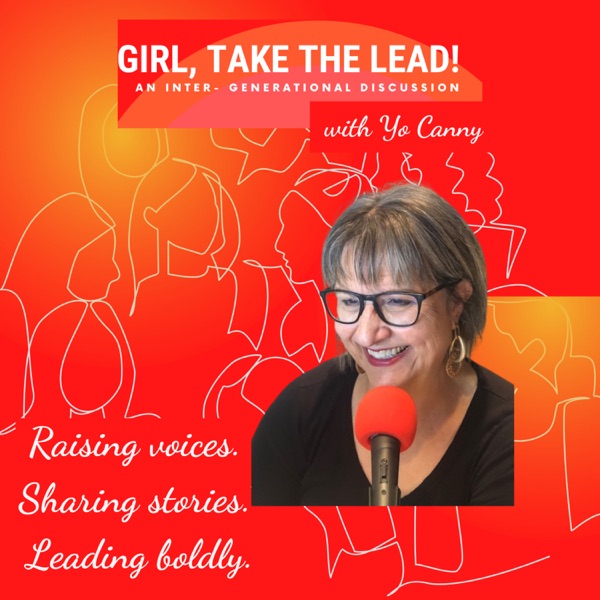
Each week we explore Womanhood and Leadership with the goal to question the status quo and challenge our thinking so we celebrate every woman as a leader. Our episodes will interview leaders in the field, meet authors, explore books on the subject, hear inspiring stories, or talk with organizations leading the charge for women to lead. We’ll look at the different topics from different generational perspectives as my daughters, a Millennial and a Gen Z, will join me, a Boomer, from time to time. We hope to make you laugh and leave inspired as you hear our voices on this very important topic.
On the charts
Every published chart this podcast appears in, in the snapshot behind this page. Each one links to the chart it came off.
The Mato Topic Intelligence Platform does not report this podcast as charting in a published category in this snapshot.
From the feed
The latest episodes published to this podcast’s own RSS feed. Titles and descriptions are the publisher’s.
What if forgiveness isn't about forgetting what hurt us—but learning how to carry that hurt differently? We're often told to forgive and forget. Let it go. Move on. Be the bigger person. But what happens when an old hurt comes back to visit? Does that mean we haven't forgiven? Or could it simply be part of being human? In this Sound Bite episode of Girl, Take the Lead! , host Yo Canny explores these questions following her conversation with Australian author Alfina Lofaro about her book, Love Deliberately . Alfina shared an observation that stayed with Yo: Forgiving before we're ready can actually create more resentment. That sparked a personal reflection on what forgiveness might look like when we stop treating it as something we should do and begin approaching it with curiosity and compassion. Yo isn't offering a formula or claiming to have all the answers. She's sharing questions she's exploring in her own life—and inviting listeners to explore them, too. In This Sound Bite, We Explore: Why forgiveness doesn't necessarily mean forgetting. What happens when old hurts return, even after we think we've moved forward. How acknowledging our feelings may be more helpful than pushing them away. The beliefs and stories we carry about what happened to us. A promise to ourselves: not to use what hurt us to hurt someone else—or ourselves. How practices like tapping, breathing, and journaling can help us make room for difficult feelings. How painful experiences may eventually make room for greater understanding, boundaries, and compassion. A Thought to Consider Perhaps forgiveness isn't about never feeling hurt again. Perhaps it's about learning to care for ourselves when the hurt returns. And remembering that a visitor doesn't necessarily have to move in. Reflection Questions Is there an old hurt that still comes back to visit you? When it does, do you allow yourself to feel it—or do you push it away? What would it look like to promise yourself that you won't use that hurt to hurt someone else—or yourself? There's no need to rush toward an answer. Perhaps curiosity is enough for now. Listen to the Conversation That Inspired This Sound Bite Love Deliberately: Can Our Differences Bring Us Closer? | Alfina Lofaro Watch the full conversation: https://youtu.be/7U8KLRa3HL0 Alfina and Yo explore how our beliefs, values, and past experiences shape our relationships—and how curiosity can help us navigate differences with greater understanding. Connect with Alfina Lofaro Buy her book, Love Deliberately : https://www.amazon.com.au/Love-Deliberately-How-Less-Relationships/dp/1764198514 Website: https://www.alfinalofaro.com/ Free Relationship Quiz: https://alfina.systeme.io/relationship-quiz Instagram: Search Alfina Lofaro Coming Up Next In our next episode, Yo welcomes Isha Julka, founder of The Emboldened Voice, to explore why even accomplished women can feel they still have something to prove—and what happens when we begin leading from our own authority rather than seeking approval. Connect with Girl, Take the Lead! Website and episodes: https://girltaketheleadpod.com/ YouTube: @GirlTaketheLead Instagram: @yocanny LinkedIn: Yo Canny Facebook Group: Girl, Take the Lead! Listen inward. Lead outward. And remember, healing doesn't mean forgetting what hurt us. It means learning that the hurt no longer has to lead us.
What if the very differences that frustrate us in our relationships could actually help us grow closer? In this episode of Girl, Take the Lead! , Yo Canny welcomes Alfina Lofaro, Australian author, coach, educator, and kinesiology practitioner, to explore what it means to love deliberately. Drawing on her book, Love Deliberately , Alfina shares how our beliefs, values, and past experiences influence the way we connect with others—and why understanding our differences can strengthen our relationships rather than divide us. From romantic partnerships to family, friendships, and even our relationship with ourselves, this conversation invites us to replace judgment with curiosity and become more intentional about how we show up. In this episode, we explore: Why differences don't have to create conflict—and how they can deepen connection. The importance of shared values, even when our personalities and approaches differ. How unconscious beliefs and past experiences shape relationship patterns. Why curiosity can be more helpful than judgment when someone sees things differently. What forgiveness really means—and why forgiving before we're ready can sometimes create resentment. How shifting from "I should" to "I get to" can change our experience of everyday life. There's even a little conversation about loading the dishwasher differently—and what those small moments can teach us about acceptance! Three Takeaways Differences can create connection, not just conflict. We don't have to think or behave alike to build meaningful relationships. Respect and curiosity help us understand one another. Awareness creates choices. Recognizing the beliefs and patterns we carry gives us an opportunity to respond differently. Relationships are something we can keep learning. Curiosity, communication, and forgiveness are practices we can develop throughout our lives. About Alfina Lofaro Raised in a large Italian migrant family in regional Australia, Alfina developed an early fascination with human relationships and the ways people communicate and navigate differences. Today, as an author, coach, educator, and kinesiology practitioner, she helps people better understand themselves and create more conscious, meaningful connections. Her book, Love Deliberately , explores how greater awareness, curiosity, and intentional choices can transform our relationships. Connect with Alfina Website: https://www.alfinalofaro.com/ Buy Love Deliberately : https://www.amazon.com.au/Love-Deliberately-How-Less-Relationships/dp/1764198514 Free Relationship Quiz: https://alfina.systeme.io/relationship-quiz Instagram: Search Alfina Lofaro Coming Up on Girl, Take the Lead! In our next Sound Bite, Yo continues exploring a question inspired by this conversation: "Forgiveness — What Is It Really, and How Do We Get There?" What happens when old hurt comes back to visit? Can we acknowledge our feelings without allowing them to define us? And how might forgiveness become an act of compassion toward ourselves? Connect with Girl, Take the Lead! Website and episodes: https://girltaketheleadpod.com/ YouTube: @GirlTaketheLead Instagram: @yocanny LinkedIn: Yo Canny Facebook Group: Girl, Take the Lead! Listen inward. Lead outward.
What if the fear of getting something wrong isn't really about the mistake—but about how someone else might react? Have you ever avoided a difficult conversation because you were afraid someone might get angry, feel disappointed, or misunderstand you? And have you ever discovered that keeping the peace by staying silent didn't actually create peace at all? In this Sound Bite from Girl, Take the Lead! , Yo reflects on a powerful insight from her conversation with Tayyaba Jordan in Episode 332: the connection between intuition, instinct, and self-trust. Drawing on her own experiences, Yo explores how early lessons about anger and conflict can shape the way we communicate as adults. Sometimes, what began as a way to protect ourselves becomes a pattern of avoiding difficult conversations, stuffing down feelings, and eventually expressing them in ways we never intended. But what if there's another way? Yo shares how compassionate curiosity helped her move from avoiding conflict to engaging with others from a place of genuine understanding. And along the way, she discovered something important: Self-trust doesn't necessarily mean knowing what to say or getting everything right. It may mean trusting ourselves to handle what comes next. In This Sound Bite, We Explore: Why the fear of getting something wrong may actually be a fear of anger, disappointment, or disapproval. How childhood experiences can shape our adult responses to conflict. Why avoiding difficult conversations doesn't always create peace. The difference between trusting ourselves, trusting another person, and trusting a relationship. How compassionate curiosity can open the door to more meaningful conversations. Why we don't have to control someone else's reaction to trust ourselves. How making mistakes, pausing, and repairing can be part of building self-trust. Three Questions to Consider What am I really afraid will happen if I speak up? What would compassionate curiosity look like here? What if I trusted myself to handle whatever comes next? A Thought to Take With You Perhaps self-trust isn't about certainty. Perhaps it's about knowing we can remain connected to ourselves even when things don't go exactly as planned. I don't have to get everything right to trust myself. I can be curious. I can be imperfect. And I can handle more than I once believed. Episodes That Connect Episode 332 — Tayyaba Jordan: Are You Living as Yourself? The Tension Between Belonging & Authenticity Tayyaba explores the relationship between belonging, authenticity, intuition, and self-trust—and what happens when we begin listening to ourselves rather than relying on outside validation. Coming Next — Alfina Lofaro: Love Deliberately: Can Our Differences Bring Us Closer? Australian author and coach Alfina Lofaro joins Yo to explore how our values, beliefs, and past experiences shape our relationships. Together, they discuss how compassionate curiosity, respect, and flexibility can help us navigate differences without needing to make someone else wrong. And yes, even loading the dishwasher can offer a lesson in relationships! Connect with Girl, Take the Lead! Website: https://girltaketheleadpod.com YouTube: @GirlTaketheLead Instagram: @yocanny LinkedIn: Yo Canny Facebook Group: Girl, Take the Lead! Listen inward. Lead outward. #GirlTakeTheLead #SoundBite #SelfTrust #CompassionateCuriosity #EmotionalIntelligence #PersonalGrowth #WomenInLeadership #Authenticity
What if the person you've worked so hard to become isn't quite the person you really are? We all want to belong. But what happens when fitting in means hiding parts of ourselves, quieting our voices, or living according to someone else's expectations? In this episode of Girl, Take the Lead! , Yo welcomes Tayyaba Jordan , peak performance coach and founder of Lead Like a Human , for a thoughtful conversation about belonging, authenticity, intuition, and self-trust. Growing up in a predominantly white community in Essex, England, with South Asian heritage, Tayyaba became curious about what it meant to be "normal." That early experience of navigating different identities sparked a lifelong interest in understanding people, their behaviors, and the ways our environments shape who we become. After spending 20 years as a television set designer, Tayyaba transitioned into coaching. For the past decade, she's worked with senior leaders, helping them navigate the pressures of success while reconnecting with their values, creativity, and sense of self. In This Episode, We Explore: Belonging vs. authenticity: What happens when fitting in comes at the expense of being ourselves? The meaning of "normal": How our upbringing, cultural experiences, and environments shape our expectations. Self-silencing: Why we sometimes hold back our opinions, needs, or ideas to maintain acceptance. Success vs. fulfillment: Why achieving what we're supposed to want doesn't always leave us feeling satisfied. Creativity and possibility: How fear, expectations, and the need for approval can limit our choices. Intuition, instinct, and self-trust: What changes when we stop looking outside ourselves for every answer? Small changes, meaningful shifts: Why authenticity doesn't necessarily mean starting over. Advice to our younger selves: Tayyaba reflects on what she would tell her 20-something self today. Three Questions Worth Asking Ourselves During the conversation, Tayyaba offers three deceptively simple questions: Do you know what you want out of life? Do you know what direction you're heading in? Are you happy? They invite us to consider whether we're living intentionally—or simply following a path that once seemed expected of us. A Few Takeaways Belonging doesn't have to mean becoming someone else. Authenticity doesn't require changing everything. Self-trust can help us find our way. About Tayyaba Jordan Tayyaba Jordan is a peak performance and leadership coach and founder of Lead Like a Human . With a background spanning two decades in television set design and more than ten years coaching senior leaders, she brings a creative, human-centered perspective to leadership and personal development. Her work focuses on helping individuals reconnect with themselves, challenge limiting expectations, and create greater alignment between who they are and how they live and lead. Connect with Tayyaba: Instagram: @tayyaba_jordan LinkedIn: Tayyaba Jordan Hashtags: #LeadLikeAHuman #AlignedMethod Coming Next on Girl, Take the Lead! In Sound Bite #334, "Self-Trust: What If I Get It Wrong?" , Yo reflects on a question inspired by this conversation: What happens when our fear of getting something wrong—or disappointing someone—keeps us from speaking up? We'll explore how old fears can shape our responses, why avoiding conflict doesn't always create peace, and how compassionate curiosity can help us begin trusting ourselves in difficult conversations. Connect with Girl, Take the Lead! Website: https://girltaketheleadpod.com YouTube: @GirlTaketheLead Instagram: @yocanny LinkedIn: Yo Canny Facebook Group: Girl, Take the Lead! Listen to more conversations and Sound Bites wherever you enjoy your podcasts. Listen inward. Lead outward. #GirlTakeTheLead #TayyabaJordan #Authenticity #Belonging #SelfTrust #WomenInLeadership #LeadLikeAHuman #AlignedMethod
Have you ever resisted being strategic because it felt like you weren't being true to yourself? I have. For much of my 42-year corporate marketing career, I believed that playing the game meant compromising my authenticity. I didn't want to flatter someone, accommodate an ego, or behave in ways that didn't feel like me. But what if I was confusing strategy with inauthenticity? This Sound Bite was inspired by my recent conversation with James Dakin, author of How to Stop Taking Sh t From Insecure Men*, and his insights about influence, power, and the choices available to us when we're dismissed or underestimated. I'm reflecting on some moments from my own career when I couldn't see the moves available to me—including advice from my friend Nurit, a conversation with a former manager named Randy, and the responses I sometimes didn't find until years later. Using backgammon as a metaphor, we'll explore what it means to recognize the game we're in without losing ourselves in the process. Some questions we'll consider: Can I change my approach without changing who I am? Am I confusing being strategic with being inauthentic? What's on the board in front of me right now—and what move haven't I considered? And when might leaving the game be the most authentic move of all? Because playing the game doesn't necessarily mean staying in the game. And perhaps authenticity isn't about refusing to make a move. It's about choosing one that aligns with who we are. Related episode: Inside the Insecure Male Ego: What Women Need to Know with James Dakin Watch or listen: https://youtu.be/2jobK7bpe0Q Connect with Girl, Take the Lead! Website: Girl, Take the Lead! on Podcastpage YouTube: @GirlTaketheLead Instagram: @yocanny LinkedIn: Yo Canny Facebook Group: Girl, Take the Lead! Listen inward. Lead outward.
Have you ever walked away from an interaction wondering: Why didn’t I say something? Why am I questioning myself? Why did I end up managing his feelings when I was the one who was hurt? In this episode of Girl, Take the Lead! , I’m joined by James Dakin—leadership transformation specialist, behavioural coach, speaker, and now international #1 bestselling author of How to Stop Taking Sh t From Insecure Men*. Within 24 hours of publication, James’s book reached #1 in Leadership in the U.S. and #1 in Career Advancement and Professional Development in the U.K.—a response that suggests this conversation is touching something women are ready to talk about. And James brings an unusual perspective to it. Years ago, a former partner said 21 words that changed the direction of his life: “I hope our daughter never grows up to meet a man like you and I hope our son never grows up to be one.” James had to confront the fact that he had become the kind of insecure man so many women spend their lives navigating. Today, he gives us an insider’s glimpse into what may be happening when women are dismissed, talked over, underestimated, belittled—or find themselves making smaller and smaller choices just to keep the peace. But this isn’t about excusing bad behavior. And it isn’t about making women responsible for fixing men. It’s about understanding the dynamic so we have more choices about how we respond. In this conversation, we explore: James’s Five Steps to Freedom: self-awareness and self-acceptance, confidence, presence, influence, and freedom Why what looks like a confidence problem may actually be an adaptation to the environment around us How women can learn to “play small” without even realizing they’re doing it What may be happening inside the insecure male ego when a woman speaks up, disagrees, or challenges the status quo The difference between influence and manipulation Why understanding “the game” doesn’t mean we approve of the game James’s approach to Change Without Confrontation Practical language we can use when we're dismissed or challenged instead of immediately defending ourselves Why women are not responsible for fixing insecure men The difference between being liked and being respected Why our bodies may register a slight before our minds can even put words around what happened And James’s powerful reminder that we haven’t lost our power—we may simply have stopped using it One thought to take with you James also shares a simple strategy that stayed with me: rather than immediately defending yourself when someone makes a diminishing statement, get curious. Ask them to explain. Ask for the evidence. Let them do the work of examining what they just said. Sometimes power isn’t having the perfect comeback. Sometimes it’s recognizing that we have more than one move available to us. You haven’t lost your power. There may have been times when you didn’t use it. Times when you buried it. Times when you adapted to the people or systems around you. But it was still there. And as James reminds us, our worth was never something we needed to prove in the first place. About James Dakin James Dakin is a leadership transformation specialist, behavioural coach, author and speaker with more than 30 years of experience helping people change how they see themselves and what they believe is possible. His new book, How to Stop Taking Sh t From Insecure Men*, is an international #1 bestseller. Connect with James Website: jamesdakin.co.uk Special page for Girl, Take the Lead! listeners: jamesdakin.co.uk/yolanda Substack: jamesdakin.substack.com LinkedIn: James Dakin Connect with Girl, Take the Lead! Website: Girl, Take the Lead! Listen page: Find all episodes of Girl, Take the Lead! YouTube: @GirlTaketheLead Instagram: @yocanny LinkedIn: Yo Canny Facebook Group: Girl, Take the Lead!
What if hurry isn’t just about having too much to do? What if it’s an old pattern connected to how we learned to measure our worth? In my recent conversation with Bree Katulak, we talked about redefining success and what Bree calls our “invisible scorecard” — the measures we may have inherited without consciously choosing them. One of Bree’s shifts really stayed with me: Productivity → Presence Because even five years into my post-corporate life, with grown daughters and much more control over my own time, I still catch myself hurrying. So I started asking: Why? In this Sound Bite, I follow my own hurry pattern a little more deeply — from the adrenaline rush of getting things done to the exhaustion that can follow, and the uncomfortable connection I began to see between productivity, importance, and worth. And then there’s what can happen when we finally run out of energy and someone asks us for just one more thing: Can’t you see I’m tired? Can’t you see I need to rest? But had I actually told them? That led to the question that stopped me in my tracks: Am I expecting someone to read my mind? We’ll explore: Why old patterns can remain long after our circumstances change The hidden equation that can connect busyness, importance, and worth Why the adrenaline of hurry can feel good — until it doesn’t How exhaustion can turn into resentment when we haven’t voiced what we need What Leslie Becker’s simple “Gotcha” has taught me about catching a pattern without judging myself Why other people’s hurried energy can leave us exhausted, too What Scott O’Neil’s phrase “Be where your feet are” helped me understand about presence How my friend Deedee plans and juggles the timing of her tasks so she doesn’t create unnecessary hurry Why noticing the pattern gives us something the pattern itself doesn’t: a choice When hurry shows up, I’m learning to ask: Do I actually need to hurry right now? Do I need to make a request? Do I need to say no? Am I expecting someone to read my mind? Maybe the opposite of hurry isn’t simply slowing down. Maybe it’s staying. Listen to the conversation that inspired this Sound Bite Episode 330: What If Achievement Isn’t Enough? Let’s Redefine Success with Bree Katulak ▶️ YouTube: https://youtu.be/iJMr-NfmUYI Coming Next We’ll continue exploring old patterns with international #1 bestselling author James Dakin , author of the provocative new book How to Stop Taking Sh t from Insecure Men*. We’ll look at some rules many women may recognize: Smile. Be agreeable. Don’t make a fuss. Keep the peace. And what can happen when we stop shrinking, reclaim our voice, set boundaries, and stand in our truth without becoming someone we’re not. A few questions to take with you What old pattern is still ready to spring into action for you — even though you may not need it anymore? Where are your feet right now — and is the rest of you there with them? And maybe the mic-drop question: Am I expecting someone to read my mind? 🌐 www.girltaketheleadpod.com 🎧 www.girltaketheleadpod.com/listen ▶️ YouTube: @GirlTaketheLead 📸 Instagram: @yocanny 💼 LinkedIn: Yo Canny 📘 Facebook Group: Girl, Take the Lead!
What happens when you achieve the thing you thought would make you feel successful…and it doesn’t? Bree Katulak knows that feeling. A seasoned executive, CPA, entrepreneur, and host of the Unstoppable You podcast, Bree built a career that included CFO, CEO, and President roles. When she reached the C-suite, she expected the moment to feel different — almost as if “confetti was going to fall from the sky.” Instead, she found herself asking: Is this it? That question began a journey of examining how she had defined success — and how much of that definition had actually been inherited from other people. In this conversation, Bree and I explore what she calls the “invisible scorecard” : the external measures we can unconsciously use to determine whether we're succeeding — achievement, status, productivity, money, competition, and what other people think of us. For Bree, redefining that scorecard has meant shifting: Winning → Wholeness Status → Self-trust Productivity → Presence We talk about why achievement can become connected to worthiness, the pressure to constantly be doing, and how difficult it can be to simply “be where your feet are.” I share how, even five years into my post-corporate life, I can still catch myself hurrying as though there isn't enough time — even when I'm the one deciding how to spend it. Bree shares that presence is something she is still practicing, too. Because redefining success isn't necessarily something we do once. It may be something we keep choosing. In this episode, we explore: Bree’s “invisible scorecard” and the definitions of success we inherit Why reaching a major career milestone didn't feel the way she expected How achievement can become tangled up with worthiness Moving from winning to wholeness, status to self-trust, and productivity to presence Why being busy can become part of our identity The “masks” we wear to meet other people's expectations How our core values can help us create a more personal definition of success Trusting ourselves enough to choose a different path Bree also answers my favorite question: What would you tell your 20-something self today? Her answer: Trust your instincts and believe in who you are. About Bree Katulak Bree Katulak is a seasoned executive, CPA, entrepreneur, and host of the Unstoppable You podcast. With a career spanning CFO, CEO, and President roles, Bree has led organizations through transformation, growth, and strategic change. After years of chasing the next milestone, she began questioning what success really meant. Today, through Unstoppable Momentum and her podcast, she helps leaders and ambitious women challenge traditional definitions of success, reconnect with what matters most, and build lives and careers aligned with who they truly are. Her message: Success isn’t about winning the game everyone expects you to play. It’s about having the courage to define your own. Connect with Bree 🌐 BreeKatulak.com 🎙️ Unstoppable You — Spotify, Apple Podcasts & YouTube 📸 Instagram: @momof4kaddies 📘 Facebook: Bree Katulak 💼 LinkedIn: Bree Katulak, CPA ▶️ YouTube: Unstoppable You 🏢 RenoSys Corporation Mentioned in this episode 📖 Be Where Your Feet Are by Scott O’Neil Connect with Girl, Take the Lead! 🌐 www.girltaketheleadpod.com 🎧 www.girltaketheleadpod.com/listen ▶️ YouTube: @GirlTaketheLead 📸 Instagram: @yocanny 💼 LinkedIn: Yo Canny 📘 Facebook Group: Girl, Take the Lead! What invisible scorecard might you still be using to measure your success?
What happens when someone you love crosses a threshold—and suddenly you realize you’re standing at one, too? My husband is making a career pivot, looking for more balance and choice in how he spends his time. Five years ago, I stood at a similar threshold after leaving a 42-year corporate career. I knew what I was leaving, but not what I would find on the other side. Eventually, podcasting, art, new rhythms, and a new sense of identity became part of the life I built. Now it’s his turn to discover what comes next. But his transition has raised another question for me: What will his change mean for us? Because change doesn’t always happen directly to us. Sometimes it enters through someone we love. A partner changes careers. A child begins a new chapter. A parent needs more from us. A friend moves away. Their life changes—and the landscape of ours changes, too. This Threshold also led me to something I’ve noticed in myself and other women: caring can sometimes feel like an all-or-nothing proposition. If we care for someone else, we’re loving and generous. If we protect what we need, are we being selfish? What if that’s a false choice? What if love can make room for both? In This Episode We explore: Why someone else’s transition can become our threshold, too The uncertainty between one identity and whatever comes next Resisting the urge to solve someone else’s transition Caring for someone we love without losing ourselves Why self-care and generosity don’t have to be opposites How relationships evolve because the people within them keep evolving Why a strong “we” can hold two evolving “I’s” Questions Maybe the question isn’t simply: Who am I now? Or: Who are you now? Maybe sometimes life asks: Who are we now? And perhaps we discover the answer by living our way into what comes next. Has someone else’s change ever created a transition in your life? Is it difficult to make room for your needs while caring for someone you love? Where might you be treating care as an either/or choice? What could become possible if there were room for you, me, and us ? Reflection At the Threshold is a reflection series about the life transitions that quietly reshape us—and the unexpected gifts we discover as we walk through them. About At the Threshold 🌿 Explore the series: https://girltaketheleadpod.com/threshold Coming Next Next on Girl, Take the Lead! , I’m joined by Bree Katulak—executive, entrepreneur, TEDx speaker, and host of the Unstoppable You Podcast . We explore Bree’s “invisible scorecard,” the definitions of success we inherit, and what happens when reaching the milestone doesn’t feel the way we expected. We’ll talk about achievement and worthiness, the masks we wear, our core values, and moving from winning to wholeness, status to self-trust, and productivity to presence. Connect 🌐 https://girltaketheleadpod.com 🎧 https://girltaketheleadpod.com/listen 💌 https://girltaketheleadpod.com/newsletter 🛍️ https://girltaketheleadpod.com/shop Until next time... Listen inward. Lead outward. And remember... Sometimes when someone we love crosses a threshold, we discover we’re standing at one, too.
My daughters, Emma and Kiki, had one condition before agreeing to come back on Girl, Take the Lead! for our Slang Challenge rematch: It had to be FUN. That simple request got me thinking. Somewhere along the way, many of us learned to value working hard, being productive, getting things right and taking important things seriously. But where does fun fit? And have we sometimes become so focused on doing things well that we turn even the things we enjoy into another kind of work? In this Sound Bite, we're exploring fun as something deeply individual - something that might show up through laughter, art, crafting, sports, comedy, time with people we love, or simply being willing to look a little silly. Maybe fun gives us a chance to put down the need to perform. And maybe meaningful things can happen when we do. Questions I'm Thinking About What does fun look like for you? When are you most likely to laugh at yourself? Where has something you enjoy started to feel like work? What could you do simply because it's fun - with no expectation of being good at it? The Conversation That Inspired This Sound Bite Maybe every experience doesn't need to accomplish something. What if fun really is the point? 🎧 Episode 327 - The Slang Challenge Is Back: Can Mom Keep Up? My daughters Emma and Kiki return for a rematch of one of our earliest Girl, Take the Lead! episodes. There are new words, old words, Gen Alpha surprises and plenty of laughter. Coming Next - Threshold Next, we're returning to our Threshold series. Five years ago, I made a major career pivot. I had no idea podcasting and art would become part of what I discovered on the other side. Now my husband, Steve, is making a career pivot of his own, hopefully toward more balance. Which has me wondering: Who are we after a major life change? What will he discover? And what might his change mean for us? Yipes! That's where we'll go in our next Threshold episode. 🌐 www.girltaketheleadpod.com 🎧 www.girltaketheleadpod.com/listen ▶️ YouTube: @GirlTakeTheLead 📸 Instagram: @yocanny #Fun #PersonalGrowth #GirlTakeTheLead
When I asked my daughters, Emma and Kiki, if they’d come back to Girl, Take the Lead! , they had one request: It had to be FUN. Challenge accepted. Back in 2022, Emma, our Millennial, and Kiki, our Gen Zer, joined me for Episode 22, “The Slang Challenge: How Many Do You Know?” They tested their Boomer mom on Millennial and Gen Z slang, I tested them on Boomer slang - and let’s just say Mom had some catching up to do. More than 300 episodes later, we decided it was time for a rematch. This time there’s aura farming, canon events, rizz, crashing out - and a few Boomer terms thrown in for good measure. And I have to say... Mom does a little better this time. But somewhere between the guessing, teasing and laughing, we discover something none of us really expected: some of the slang Emma and Kiki are teaching me doesn’t even belong to their generations anymore. Gen Alpha has entered the chat. Suddenly, my daughters are beginning to experience what it feels like to hear a younger generation use words they don’t completely understand. Funny how that happens. Maybe that’s part of what makes conversations like this so much fun. Language changes. Generations change. We change. And staying curious about one another gives us another way to stay connected. We also continue one of my favorite Girl, Take the Lead! traditions and ask Emma and Kiki what they would tell their younger 20-something selves today. Their answers take our very silly conversation somewhere more meaningful - into relaxing, trusting ourselves, expressing what we really feel, and realizing we don’t have to make everyone happy. In This Episode, We Talk About: How slang travels across Millennial, Gen Z, Gen Alpha and Boomer generations Whether Mom has gotten any better since our first challenge The difference between something that slaps and food that’s smackin’ What happens when Millennials and Gen Z start hearing slang from a generation younger than they are What Emma and Kiki would tell their younger 20-something selves The Slang Challenge How many of these do you know? The younger-generation challenge for Mom: Aura Farming • Looks Maxing • Being Cooked • Cheugy • Canon Event • Rizz • Crash Out • Cap • Bet • Slap • Smackin’ Mom’s challenge for Emma & Kiki: Moo Juice • Aggro • Fink • Dish It Out • Loaded • Split More About Emma & Kiki Emma Canny - our Millennial Her career has taken her from paralegal work into contract and strategic sourcing roles in the tech world. Emma is also co-host of Booking Wild with Emma and Fran , where two book-loving friends talk about - you guessed it - books! She also shares her love of reading as @leatherboundgremlin on IG . And since our original Slang Challenge, Emma has gotten married - giving us a few new “canon events” to talk about! Kiki Canny - our Gen Zer After working in development and marketing for a nonprofit serving young people, Kiki moved into the tech world and landed what she calls her dream job. Her love of gaming, internet culture, creativity and all things a little spooky gives her a definite advantage in this Slang Challenge. And yes, she now has another very important member of the family: her dog, Chubbs. Play Along With Us Think you know Gen Z slang better than I do? Take the Gen Z Slang Quiz from wikiHow and see how you do. Then go back to where it all began: Episode 22 - The Slang Challenge: How Many Do You Know? One fun difference: back in 2022, Girl, Take the Lead! was audio only. This time, you get to see all three of us trying to figure each other out! Ways to Connect 🌐 Girl, Take the Lead! www.girltaketheleadpod.com 🎧 Listen wherever you get your podcasts: www.girltaketheleadpod.com/listen ▶️ YouTube: @GirlTaketheLead 📸 Instagram: Yo: @yocanny Emma: @leatherboundgremlin Kiki: @keeks.ters 💼 LinkedIn: Yo Canny Emma Canny Kiki Canny 📘 Facebook Group: Girl, Take the Lead! Coming Next Our next Sound Bite, I want to explore a different question: What if fun is the point?
What happens when we’re in conflict with someone who sees things very differently than we do? This Sound Bite (8:41) was inspired by Yo’s conversation with Charlotte Reed, who talked about approaching disagreement with grace—listening to people’s lived experiences and considering the possibility that they may believe they’re trying to do the right thing, too. That got Yo thinking about something she’s been exploring in her own life: Intention. It’s easy to say we have good intentions. But is intention enough? What if being intentional in conflict means becoming more aware of what matters to us, getting curious about what may matter to the other person, and then choosing actions that reflect our values? In this reflection, Yo explores: Why we naturally gravitate toward people who see the world as we do What happens when differences move to the center of a relationship The difference between intention and intentional action Whether we can respect someone’s intention without agreeing with their conclusion Why curiosity about the other person isn’t enough—we also need to examine ourselves The uncomfortable question: Do I want to understand—or do I want to win? A Question to Take With You Maybe good intentions aren’t enough. But perhaps they give us somewhere to begin. When I’m in conflict with someone, can I get curious about their intention while also getting clear about my own? Listen to the Conversation That Inspired This Sound Bite 🎧 Episode 325 — Leading with Grace: Making Space for Different Views with Charlotte Reed ▶️ Watch Episode 325 on YouTube Connect with Girl, Take the Lead! 🌐 Website: www.girltaketheleadpod.com 🎧 Listen: www.girltaketheleadpod.com/listen ▶️ YouTube: @GirlTaketheLead 📸 Instagram: @yocanny💼 LinkedIn: Yo Canny📘 Facebook Group: Girl, Take the Lead!
What happens when we step toward disagreement instead of away from it? In this episode of Girl, Take the Lead! , Yo talks with Charlotte Reed , a communications professional, community organizer, and candidate for Menlo Park City Council, District 4, in California. Charlotte’s path to public service grew from a lifelong commitment to service—and from seeing what can happen when neighbors who care deeply about their community begin talking past one another. During one particularly difficult City Council meeting, Charlotte found herself thinking: there has to be a better way. That experience helped move her toward running for office and toward a leadership approach grounded in listening, communication, and finding common ground. Charlotte shares how she approaches people whose views may be very different from her own. Rather than beginning with disagreement, she tries to remember that we each bring our own lived experiences, information, and values to a conversation. In this episode: The conversation explores what it means to lead with grace without expecting everyone to agree. We also talk about something Charlotte has learned from knocking on thousands of doors and talking with people throughout her community: Sometimes leadership is simply about showing up. How a commitment to service led Charlotte toward public office The connection between communication, storytelling, and leadership What she’s learned from talking with thousands of people in her community Listening and finding commonality when views differ Why showing up matters Hope, community, and rebuilding trust Separating outcomes from our worth Charlotte’s reminder: “What’s meant for you won’t miss you.” Why serious work still needs moments that make us laugh About Charlotte Reed: Charlotte combines a career in corporate communications with years of community service. She has led growth initiatives at multi-billion-dollar companies and has been a Junior League member for nearly a decade, helping build connections with elected officials and nonprofit partners around housing, food, and other community needs. She holds a BA in Public Relations and Strategic Communication from American University, with a minor in Spanish Language and a certificate in Spanish Translation, and is a 2026 graduate of the Emerge California political candidate training program. Connect with Charlotte 🌐 Website: charlotteformenlopark.com 💙 Campaign donations: Charlotte Reed campaign donation page 📸 Instagram: @thecharlottereed 💼 Facebook: Charlotte Reed ▶️ TikTok: @thecharlottereed 🧵 Threads: @thecharlottereed 🦋 Bluesky: Charlotte Reed This Week’s Sound Bite Charlotte’s approach to disagreement left Yo thinking about intention . What happens when we enter conflict curious about another person’s intention—and equally willing to examine our own? Conflict Resolution: Is Intention Enough? Connect with Girl, Take the Lead! 🌐 Website: www.girltaketheleadpod.com 🎧 Listen: www.girltaketheleadpod.com/listen ▶️ YouTube: @GirlTaketheLead 📸 Instagram: @yocanny💼 LinkedIn: Yo Canny📘 Facebook Group: Girl, Take the Lead!
What does it really mean to care for ourselves? This Sound Bite (9:17) was inspired by my recent conversation with Riana Malia , where we talked about love, identity, the patterns we carry, and what can happen when we get clear about who we are and what we want. I initially thought this reflection would be about loving ourselves . But the more I sat with it, the more I wondered whether loving ourselves and caring for ourselves are quite the same thing. We may love ourselves and still push through when we're tired. We may recognize what we need and still have trouble giving it to ourselves. We may be wonderful at caring for other people while finding it much harder to receive care—or even to accept where we are without immediately trying to fix or improve something. For me, that connects to my own patterns around achievement and to something I discovered when I took Riana's Extraordinary Love Index™ : my pattern was “She Carries.” I've spent much of my life being the person who figures things out, gets things done, and carries what needs carrying. Those qualities have served me well. But I'm beginning to wonder whether caring for ourselves sometimes asks something different of us. Before we can care for ourselves, perhaps we first have to pay attention to ourselves—and accept what we notice. In This Sound Bite, I Explore: The difference between loving ourselves and caring for ourselves How achievement can sometimes get in the way of care Why accepting where we are may need to come before trying to change it The messages and beliefs we may carry without realizing it How someone else's “no” can make us wonder about the voices we've begun carrying as our own Why care isn't always about doing what feels good What it can mean to allow someone else to care for us Learning to ask not “How do I fix this?” but “What do I need?” A Question to Consider Because caring for ourselves doesn't have to become one more thing to achieve. Maybe it begins with meeting ourselves where we are—with attention, acceptance, and kindness. What do I need right now—and can I accept that need without judging myself for having it? Mentioned in This Episode Episode 323: Clear the Story, Create the Life: Who Are You Becoming? with Riana Malia Take the Extraordinary Love Index™: https://www.taketheeli.com/ Connect with Riana Malia: Instagram: https://www.instagram.com/rianamalia/ Facebook: https://www.facebook.com/RianaMalia/ LinkedIn: https://www.linkedin.com/in/rianamalia/ YouTube: https://www.youtube.com/@rianamalia Coming Next Next time, I welcome a very special guest, Charlotte Reed . Charlotte brings together two worlds that don't always get talked about in the same conversation: a corporate career leading growth initiatives and years of community activism focused on needs including affordable housing, food, and essential provisions for individuals and families. We'll talk about leadership, community, and what she's learned about bringing together the people and priorities needed to create meaningful impact. She's a living example of bravery, courage, and inspiration—and I think you're going to enjoy meeting her. Connect with Girl, Take the Lead! Website: https://girltaketheleadpod.com YouTube: @GirlTakeTheLead LinkedIn: Yolanda “Yo” Canny Instagram: @girltaketheleadpod Facebook: Girl, Take the Lead! Pinterest: Girl, Take the Lead! 🎧 Listen wherever you enjoy podcasts.
What if understanding our patterns isn't the same as changing them? In this episode of Girl, Take the Lead! , I talk with Riana Malia , a Board-Certified Integrative Neurosomatic Practitioner and identity architect for high-achieving women. Riana's own journey—and the work that grew from it—invites us to look at the stories and patterns we carry, what can keep us repeating them even when we understand them, and the role clarity can play in creating something different. As Riana puts it: “We have to clear the story to create the life.” We explore her approach of Clear, Create, Claim and some deceptively simple questions: Who are you now? What do you want? And what happens when beliefs like I can't have it , I don't deserve it , I'm not worthy , or I'm too old make those questions difficult to answer? I also get a little vulnerable in this conversation. Before we recorded, I took Riana's Extraordinary Love Index™ , a 30-question assessment designed to identify patterns that may be influencing our relationships. My result? “She Carries.” That one landed. I've spent much of my life being the person who takes care of things, figures things out, and carries more than I probably need to. In This Episode, We Explore: Riana's personal journey and how it shaped the work she does today The difference between understanding a pattern and actually changing it Her Clear, Create, Claim framework Why getting clear about our values, desires, and non-negotiables matters The beliefs that can make it difficult to name what we really want The Extraordinary Love Index™ and my “She Carries” pattern Why high-achieving women may be particularly comfortable carrying and managing What it can mean to allow someone else to step forward Receiving care rather than always being the one providing it What Riana would tell her 20-something self today The Brave Butterfly card she chose and its connection to transformation Three Takeaways 1. Knowing our patterns isn't necessarily the same as changing them. Understanding where something came from and why we do what we do can be valuable—but awareness may be the beginning rather than the end of change. 2. Clarity matters. Before we can create something different, we have to allow ourselves to ask what we actually want—not what we think we should want, what we've learned to accept, or what we believe is available to us. 3. Being capable doesn't mean we have to carry everything. There can be strength in letting someone else step forward, allowing ourselves to receive rather than manage, and sometimes deciding that something doesn't need to be carried at all. About Riana Malia Riana Malia is a Board-Certified Integrative Neurosomatic Practitioner and identity architect for high-achieving women who have built extraordinary lives but are seeking love that matches them. She is the creator of The Extraordinary Love Method™ and the Extraordinary Love Index™ and has spent the past decade working with hundreds of clients. Riana has appeared on more than 100 podcasts and is the author of The Last Piece on Substack. Take the Extraordinary Love Index™ https://www.taketheeli.com/ Connect with Riana Instagram: https://www.instagram.com/rianamalia/ Facebook: https://www.facebook.com/RianaMalia/ LinkedIn: https://www.linkedin.com/in/rianamalia/ YouTube: https://www.youtube.com/@rianamalia Coming Next Our conversation left me thinking about one more question. We talk a lot about loving ourselves . But how well do we actually care for ourselves ? And what can make that difficult—especially when we're accustomed to achieving, carrying, fixing, and taking care of everyone else? That's where I'll go in the next Sound Bite: Caring for Ourselves: What Can Get in the Way? Connect with Girl, Take the Lead! Website: https://girltaketheleadpod.com YouTube: @GirlTakeTheLead LinkedIn: Yolanda “Yo” Canny Instagram: @girltaketheleadpod Facebook: Girl, Take the Lead! Pinterest: Girl, Take the Lead! 🎧 Listen wherever you enjoy podcasts.
What happens when someone says something about us—and before they’ve even finished speaking, we’re already preparing our defense? That’s not what I meant. That’s not what happened. You don’t understand. Defensiveness can show up quickly. We explain. We justify. We shut down. We counterattack. Or we become so focused on proving that we’re right that we stop listening. But what if defensiveness isn’t simply something we need to get rid of? What if it’s trying to tell us something? In this Sound Bite, inspired by my recent conversation with Kerry Siggins about hard conversations, feedback, and trust, I explore defensiveness through a different lens: not judgment, but curiosity. Our brains are designed to help protect us. And the things we perceive as threatening aren’t always physical. Feedback can bump up against our sense of competence, our intentions, our identity, our belonging—or an older story we carry about ourselves. That may be why a comment that seems relatively small can sometimes create such a big reaction. A Question to Consider Kerry offered a question in our conversation that got me thinking: Am I trying to be right—or am I willing to be curious? Because being curious doesn’t mean the other person is right. It doesn’t mean we have to accept everything someone says about us. And it doesn’t mean poorly delivered feedback suddenly becomes okay. It simply creates enough room for us to ask: Is there something here I can learn? This reflection also inspired the third Girl, Take the Lead! Reflection Panel: When DEFENSIVENESS shows up... PAUSE What am I protecting? Am I trying to be right? What can I learn? How do I want to respond? That last question matters. The PAUSE Because the goal isn’t to never feel defensive. The goal may be to notice when it happens—and create enough space between the feeling and our response to choose what comes next. Maybe we own something. Maybe we apologize. Maybe we ask another question. Maybe we clarify what we meant. Maybe we ask for time to process. And sometimes, after considering what we’ve heard, we may decide that the feedback simply doesn’t belong to us. Receiving feedback doesn’t require accepting all of it. It asks us to be willing to examine it. The Girl, Take the Lead! Reflection Panels are handmade reminders designed to help us pause, reflect, and get curious when familiar feelings or patterns show up. You can find the Reflection Panels and other handmade cards in the Girl, Take the Lead! shop: Girl, Take the Lead! Shop The next time defensiveness shows up, instead of judging it or immediately acting on it, what might happen if you ask: What is this trying to tell me? Listen to the Conversation That Inspired This Sound Bite 321. Hard Conversations: Clarity, Kindness, and Trust with Kerry Siggins Available on Girl, Take the Lead! wherever you enjoy podcasts. Connect with Girl, Take the Lead! Website: girltaketheleadpod.comYouTube: Girl, Take the Lead! LinkedIn: Yolanda “Yo” CannyInstagram: @girltaketheleadpodFacebook: Girl, Take the Lead! Pinterest: Girl, Take the Lead! Coming Next Next time, I’m joined by Riana Malia , an identity architect for high-achieving women who’ve built extraordinary lives—except for the thing they may want most: love that matches them. Riana is a Board-Certified Integrative Neurosomatic Practitioner and creator of the Extraordinary Love Method™ and Extraordinary Love Index™ . And yes—I took the Index myself. We’ll explore the patterns we may carry into love and relationships, what those patterns may be trying to protect, and what can happen when we begin to see them more clearly.
What makes a hard conversation so hard? Sometimes it’s what we need to say. Sometimes it’s what we’re afraid we’ll hear. And sometimes it’s the story we’ve already told ourselves about what will happen if we speak honestly. In this episode of Girl, Take the Lead! , I’m joined by Kerry Siggins , CEO of StoneAge and author of Talk with Trust: How to Own Feedback, Spark Growth, and Build Stronger Teams . And we begin the conversation a little differently—with three deep breaths. It’s a practice Kerry uses with her own team to help people become more present before stepping into the work ahead. And it turns out to be a fitting way to begin a conversation about feedback, trust, emotional reactions, and the courage it takes to say what needs to be said. Kerry shares her SHARES model for approaching difficult conversations with greater clarity, curiosity, and intention. We explore why trust is at the heart of meaningful feedback, why being direct and being kind aren’t opposites, and why we’re responsible for how we show up in a conversation—but not for controlling the other person’s response. We also talk about what happens when we’re on the receiving end of feedback. Kerry shares a painful experience when someone close to her told her she was “erratic” and difficult to work for. Her first reaction was anger. She wanted to defend herself. Instead, she gave herself time and eventually asked a powerful question: What can I own in this feedback? That question helped her separate the way the feedback was delivered from what might still be useful for her to hear. I share a difficult feedback experience from my own corporate career, and together Kerry and I look at what might have changed if curiosity had been part of that conversation. Throughout our discussion, we return to the power of the pause —giving ourselves space when we’re triggered rather than immediately defending, explaining, or reacting. Kerry challenges us to consider: Am I trying to be right—or accurate? Right—or curious? Right—or influential? Because hard conversations aren’t just workplace conversations. These skills matter with our partners, our children, our friends, our neighbors—and anyone with whom we want to build trust. In this episode, we explore: Why trust is at the heart of giving and receiving feedback Kerry’s SHARES framework for hard conversations Why clarity and kindness belong together The difference between describing behavior and judging someone personally What defensiveness may be trying to protect Why curiosity can change the direction of a difficult conversation How taking a pause can help us respond rather than react What we are—and aren’t—responsible for in another person’s reaction The often-overlooked consequences of not having the conversation Why feedback can still contain something useful even when it isn’t delivered well About Kerry Siggins In 2023, Kerry was named an EY Entrepreneur Of The Year and Colorado CEO of the Year. She is a speaker, podcast host, and contributor to Forbes and Entrepreneur . She is the author of The Ownership Mindset: A Handbook for Transforming Your Life and Leadership and Talk with Trust: How to Own Feedback, Spark Growth, and Build Stronger Teams . Connect with Kerry Website: kerrysiggins.comLinkedIn: Kerry SigginsYouTube: Kerry SigginsPodcast: The Kerry Siggins PodcastBooks: The Ownership Mindset and Talk with Trust Connect with Girl, Take the Lead! Website: girltaketheleadpod.comYouTube: Girl, Take the Lead! LinkedIn: Yolanda “Yo” CannyInstagram: @girltaketheleadpodFacebook: Girl, Take the Lead! Pinterest: Girl, Take the Lead! Listen to Girl, Take the Lead! wherever you enjoy podcasts. A question to consider Is there a conversation you’ve been avoiding—and what might be the cost of not having it?
Why can our own patterns be so difficult to see? You might think repetition would make them obvious. But what if repetition does the opposite—making our patterns feel so familiar that we stop noticing them? In this Sound Bite (12:56), Yo reflects on her recent conversation with Broadway actress, author, and success coach Leslie Becker about limiting beliefs and Leslie’s Gotcha Exercise. That conversation led Yo to wonder about the patterns that keep showing up in our lives. Maybe we keep taking responsibility for everything. Maybe we avoid asking for help. Maybe we say yes and then feel resentful. Maybe we become defensive when someone questions us. Each individual experience may have a perfectly reasonable explanation. But what happens when we stop looking at them separately and ask: What keeps repeating here? Yo explores how a recurring pattern may point us toward beliefs we haven't recognized yet—and how those beliefs and patterns can begin reinforcing one another. If I believe I have to take care of everything myself, I may not ask for help. Then I end up taking care of everything myself. And suddenly I have more evidence for the belief: See? I knew I couldn't depend on anyone. Round and round we go. In This Sound Bite: Why repetition can actually make our patterns harder to see How the circumstances can change while our roles, reactions, or emotions remain familiar The question: Who do I keep becoming when this happens? Why finding the belief underneath a pattern can take some digging How Yo uses journaling to move beneath the explanation or story she already knows Byron Katie’s invitation to question what we believe: Is it true? How beliefs and patterns may reinforce one another Why recognizing a pattern doesn't mean we've changed it How awareness can create enough space for a different choice Why compassionate curiosity may be more useful than judgment The quieter bravery involved in looking honestly at ourselves As Yo reflects: We can't question a belief we haven't found. And we can't change a pattern we can't see. Maybe the first step isn't asking ourselves what we need to change. Maybe it's simply becoming curious about what keeps showing up. A Question to Consider: What keeps repeating in your life—and what might it be asking you to see? Coming Next on Girl, Take the Lead! Yo’s next guest is Kerry Siggins, CEO of StoneAge and author of Talk with Trust: How to Own Feedback, Spark Growth, and Build Stronger Teams . Kerry and Yo explore feedback, trust, difficult conversations, and the courage it takes not only to say what needs to be said—but to hear it. Kerry also shares her SHARES model for navigating difficult conversations, while she and Yo consider another kind of pattern worth noticing: What happens inside us when feedback makes us defensive? Can we notice the reaction, pause, and stay in the conversation rather than protect ourselves from what we're hearing? Until then, remember: Leadership takes bravery—and sometimes bravery begins with seeing the patterns we've learned not to see.
What if bravery isn’t something you’re born with? What if it’s something you choose? In this episode of Girl, Take the Lead! , I’m joined by Broadway actress, bestselling author, success coach, and host of the Unstoppably Creative Podcast , Leslie Becker , for a conversation about the beliefs we carry—and the bravery it can take to question them. Leslie spent years believing she simply wasn’t brave. Her sister, she thought, had gotten the “brave gene.” She also loved acting but was afraid to claim it as a career, convinced she wasn’t good at auditions and unsure she could actually make a living doing what she loved. Eventually, she began to see those thoughts for what they were: beliefs, not facts. That opened up a conversation between us about the stories we tell ourselves, where those stories come from, and how easily they can become part of our identity without our even realizing it. Leslie uses the metaphor of a coat —a role or belief we put on because of our experiences, expectations, or what others have told us about who we are. We can wear that coat for so long that we forget to ask: Is this actually mine? Sometimes we have to walk down a path before we can recognize that it isn’t ours. And maybe that recognition is part of living a brave life. In this conversation, we explore: Why bravery may be a choice rather than a personality trait How limiting beliefs can quietly become part of our identity Leslie’s “Gotcha Exercise” for catching the conversations we repeatedly have with ourselves Why replacing an old belief requires practice—not a one-and-done affirmation How to ask, Where did this belief come from? Is it mine or someone else’s? Why transitions can force us to reconsider who we are now The bravery required to admit when a path no longer belongs to us Why creativity exists in all of us—even if we don’t consider ourselves “creative” How our creative gifts can find expression through art, business, problem-solving, performance, or simply the way we live What it means to become unstoppably creative , even when we’re scared And when I ask Leslie what she would tell her 20-something self, her answer brings us right back to where we began: You are way more brave than you realize you are. About Leslie Becker Leslie Becker is a Broadway actress of 25 years, bestselling author of The Organized Actor® , host of the Unstoppably Creative Podcast , and a top success coach for creatives. With a 30-year career in the industry, Leslie has consistently offered books, courses, coaching, and digital tools for actors and entrepreneurs while continuing her own unstoppably creative journey. Whether helping entrepreneurs grow their businesses or bringing bold, creative experiences to light, Leslie is a force to help others build a business and a life that is unapologetically their own. Connect with Leslie Website: https://lesliebecker.com The Organized Actor®: https://organizedactor.com Free Gotcha Exercise Guide: https://lesliebecker.com/landing/gotcha-exercise Instagram: https://instagram.com/thelesliebecker LinkedIn: https://www.linkedin.com/in/thelesliebecker/ Pinterest: https://www.pinterest.com/thelesliebecker YouTube / Unstoppably Creative: https://www.youtube.com/@unstoppablycreative Email: Leslie@LeslieBecker.com Leslie’s Upcoming Fetching Water Concert Leslie is continuing her own unstoppably creative journey with Fetching Water , a musical she wrote with collaborator Michael Hunsaker. On September 12 in Nashville , Leslie will present a 45-minute concert presentation of songs from the musical at Analog at the Hutton Hotel. Concert Information & Tickets: https://www.analognashville.com/events/nmtn-presents-the-first-stage-3/ Follow Fetching Water on Instagram: https://instagram.com/fetchingwaterthemusical Three Takeaways 1. Bravery isn’t necessarily something we have. It’s something we practice. 2. Not every belief we carry belongs to us. 3. Creativity doesn’t disappear just because we stop calling ourselves creative.
What makes a friendship meaningful? Is it how long it lasts? How often we talk? Or could the gift of friendship be something else entirely—the experience of knowing another person and allowing ourselves to be known? This Sound Bite was inspired by my recent conversation with my longtime friend Roz Sobel . Roz and I met almost 50 years ago through work. Later, when I moved across the country to New York knowing only one person, that person was Roz. And then life did what life does. Our paths changed. Careers changed. Families grew. There were times when our lives were closely connected and times when they weren't. And almost 50 years later, there we were—together again for a conversation on Girl, Take the Lead! It got me thinking about the gift of friendship. There's a certain knowing that comes from sharing a particular time in someone's life. A childhood friend knew something about the child we once were. A work friend may understand a chapter of our career few others could. Friends we meet while raising children, experiencing loss or navigating a transition can become witnesses to versions of ourselves that no one we meet today can ever fully know. There is love and care in that. But I wonder if many of us also carry a belief that a really good friendship is supposed to last forever. What if it doesn't? Maybe some friendships aren't meant to accompany us through every chapter. Maybe their gift was the chapter we shared. The love was still real. The care was still real. What we gave one another still mattered. And sometimes we receive another wonderful gift: Our paths cross again. This reflection also connects to something somatic nurse coach Lisa Ketcham-Hendrickson shared with us recently: “This is always home.” If we can learn to come home to ourselves, perhaps we don't need another person to stay forever in order to prove that our relationship mattered. Maybe friendship isn't something we're supposed to collect. Maybe it's something we're fortunate enough to experience—for a season, for decades, for a lifetime, or sometimes, more than once. A Question to Consider Who has known a part of you that no one else could quite know—and what gift from that friendship are you still carrying? The Conversation That Inspired This Sound Bite Ep. 317 — There’s So Much Life to Enjoy: Travel, Curiosity & Adventure with Roz Sobel Watch: https://youtu.be/phAJXqPPjpc More on Friendship If you'd like to explore friendship further, check out: Ep. 207 — Building Meaningful Friendships: Overcoming Loneliness and Finding Joy Ep. 134 — Friendship Realities: Fizzles, Changes, and Coping Strategies Ep. 131 — True to You: Embracing Authenticity in Friendships with NoorJehan Coming Next Broadway actress, bestselling author and success coach Leslie Becker joins us to explore bravery, limiting beliefs, transitions and creativity—including a question I've continued thinking about: What if bravery isn't a personality trait—but a choice? Connect with Girl, Take the Lead! 🎧 Listen wherever you enjoy podcasts ▶️ YouTube: @GirlTakeTheLead 🌐 Website: https://girltaketheleadpod.com 💬 Follow along on LinkedIn, Instagram, Facebook & Pinterest If this reflection resonated with you, please follow the show, share it with someone who might appreciate it, and leave a rating or review. It helps more people discover Girl, Take the Lead! #GirlTakeTheLead #Friendship #TheGiftOfFriendship #Connection #Relationships #PersonalGrowth
Ranking source
Apple Podcasts rankings via the Mato Topic Intelligence Platform.
Observed November 18, 2026. Cached outside the daily freshness window; the positions keep the date they were taken on.
Apple and Apple Podcasts are trademarks of Apple Inc., registered in the U.S. and other countries.
Pairs with
Bring this source into Mato to read its transferable patterns, then turn them into an original show for your own audience.