Mato just raised pre-seed Read more

Podcast charts
Published by Presented by Orgain
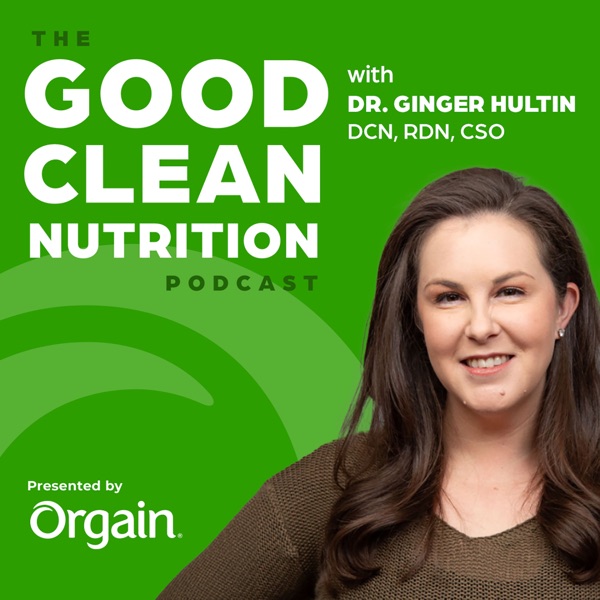
Stay in-the-know on the hottest trending topics in health and nutrition with The Good Clean Nutrition Podcast, presented by Orgain. Join Dr. Ginger Hultin, DCN, RDN, CSO, an integrative dietitian nutritionist, as she speaks with some of the most inspiring and passionate subject-matter experts in nutrition, health, and wellness. Each episode explores the science behind popular trends in nutrition and health, debunks common myths, and provides healthcare professionals and health-minded consumers with practical insights from trusted experts. Ginger Hultin is an integrative, clinical dietitian and cancer nutrition specialist who received her Doctorate in Clinical Nutrition from the University of North Florida. She received her master's degree from Bastyr University, where she currently serves as adjunct faculty teaching clinical nutrition. She has been in practice for over 10 years using a personalized, holistic nutrition approach. She runs a full-time virtual private practice, Ginger Hultin Nutrition where she helps clients with complex health problems improve their health thought nutrition. In addition to being the host of The Good Clean Nutrition Podcast, she is an author of two books, Anti-inflammatory Diet Meal Prep and the How to Eat to Beat Disease Cookbook. For show notes, transcripts, and more resources, visit http://healthcare.orgain.com/podcast . This podcast is for informational purposes only and is not intended to be medical advice. The material presented in this podcast, is not intended to be a substitute for professional medical advice, diagnosis, or treatment. You should seek the recommendation of a medical professional regarding a medical condition or treatment or before starting a new nutrition and/or health regimen. Orgain, LLC is providing these episodes on an "as is" basis and makes no representations or warranties of any kind with respect to the podcast episodes. Orgain, LLC nor any of its directors, employees or other representatives will be liable for damages arising out of or in connection with the use of this document. This is a comprehensive limitation of liability that applies to all damages of any kind, including (without limitation) compensatory, direct, indirect or consequential damages, loss of data, income or profit, loss of or damage to property and claims of third parties.
On the charts
Every published chart this podcast appears in, in the snapshot behind this page. Each one links to the chart it came off.
From the feed
The latest episodes published to this podcast’s own RSS feed. Titles and descriptions are the publisher’s.
Kids' nutrition conversations usually center on what a child eats, but perhaps the how, the why, and the when are even more important… In this episode, Dr. Ginger Hultin, MS, RDN, CSO, welcomes back Jennifer Anderson, MSPH, RDN, the registered dietitian behind Kids Eat in Color, for a conversation about children's eating behavior. Jennifer explains what actually counts as picky eating, how the label can stick to a child's identity, and what separates everyday selective eating from ARFID (avoidant/restrictive food intake disorder). She also makes the interesting case for focusing on hyper-palatable foods rather than the ultra-processed debate, and shares how you can decide whether a food headline deserves your attention. Tune in and walk away with practical language for the dinner table and a reminder that as a parent, you got this. In this episode, we’ll cover: [00:02:46] The biggest barrier families face with feeding right now [00:04:34] What picky eating actually means, and when it's something more [00:05:34] Why "picky eater" can become a child's identity [00:07:39] ARFID, screening tools, and advocating for your child [00:11:49] Hyperpalatable foods vs. the ultra-processed conversation [00:14:41] A filter for food fear, headlines, and misinformation [00:17:37] Screens, distraction, and what kids miss at mealtime [00:18:51] How to think about supplements for kids [00:20:51] Why parent confidence is part of good nutrition Mentioned in this episode: ARFID & Extreme Picky Eating Screener for Kids Connect with Dr. Ginger Hultin on Instagram , LinkedIn or her website . Connect with Jennifer Anderson on Instagram, LinkedIn or her website. Disclaimer: The material presented in this podcast, is not intended to be a substitute for professional medical advice, diagnosis, or treatment. You should seek the recommendation of a medical professional regarding a medical condition or treatment or before starting a new nutrition and/or health regimen. Orgain, LLC is providing these episodes on an "as is" basis and makes no representations or warranties of any kind with respect to the podcast episodes. Orgain, LLC nor any of its directors, employees or other representatives will be liable for damages arising out of or in connection with the use of this document. This is a comprehensive limitation of liability that applies to all damages of any kind, including (without limitation) compensatory, direct, indirect or consequential damages, loss of data, income or profit, loss of or damage to property and claims of third parties .
When it comes to feeding the kids in our lives, the advice and strong opinions never stop. So how do you know what to prioritize? In this episode, host Dr. Ginger Hultin is joined by Jennifer Anderson, MSPH, RDN, the registered dietitian and public health expert behind Kids Eat in Color. Jennifer walks through her Health Impact Tiers, a framework built around one important question: what will have the broadest impact on this child's health? Together they move through the tiers, from making sure kids get enough energy, protein, sleep, and movement, to fiber, variety, and micronutrients, all the way to the hot-button topics like food dyes and organic foods. This episode leaves you with a repeatable, flexible way to confidently filter through the next headline that comes your way. In this episode, we’ll cover: [00:02:30] Tier one: making sure kids are getting enough energy [00:04:07] Tier two: protein needs, food reactions, sleep, and movement [00:06:37] Tier three: why fiber deserves the spotlight [00:08:42] Sugar-sweetened beverages, juice, and milk alternatives [00:11:36] Jennifer's new book and giving parents their confidence back [00:15:15] Tiers four and five: variety, micronutrients, and added sugar [00:17:16] How to run your own at-home food experiment [00:18:14] What Red 40 actually is and where it ranks [00:19:30] Tier six: the identity tier and the hottest topics [00:21:03] Jennifer's core message Connect with Dr. Ginger Hultin on Instagram , LinkedIn or her website . Connect with Jennifer Anderson on Instagram, LinkedIn or her Website. Disclaimer: The material presented in this podcast, is not intended to be a substitute for professional medical advice, diagnosis, or treatment. You should seek the recommendation of a medical professional regarding a medical condition or treatment or before starting a new nutrition and/or health regimen. Orgain, LLC is providing these episodes on an "as is" basis and makes no representations or warranties of any kind with respect to the podcast episodes. Orgain, LLC nor any of its directors, employees or other representatives will be liable for damages arising out of or in connection with the use of this document. This is a comprehensive limitation of liability that applies to all damages of any kind, including (without limitation) compensatory, direct, indirect or consequential damages, loss of data, income or profit, loss of or damage to property and claims of third parties .
GLP-1 medications are everywhere right now, but the confusion around them runs just as deep as the excitement. In this episode, Dr. Ginger Hultin sits down with Joe Zucchi, PA and clinical supervisor at Transition Medical Weight Loss, for a deep dive into everything you've been wondering about these medications. Joe walks through the surprising history of GLP-1s, breaks down exactly how they work in the body, and tackles the stigma that still surrounds obesity medicine. The conversation covers real clinical data on side effects, including the truth behind the cancer warnings, what the research shows about muscle and bone loss, and practical strategies for managing GI symptoms. Joe also shares what's coming next in the pipeline, from triple-agonist medications to once-monthly injections. Whether you're considering a GLP-1, currently taking one, or just want the facts, this episode is designed to be a shame-free, evidence-based resource you can trust. In this episode, we’ll cover: [00:02:35] The long history behind GLP-1 medications [00:06:03] GLP-1, GIP, and the evolution to dual and triple agonists [00:08:18] Pushing back on the stigma in obesity medicine [00:09:56] What happens when someone comes off the medication [00:13:04] Inside the clinical trial process and what FDA approval requires [00:19:30] Pancreatitis and thyroid cancer concerns, explained [00:21:30] What the research shows about muscle and bone loss [00:25:11] GI side effects and practical ways to manage them [00:28:50] The future of obesity medicine and what's in the pipeline Connect with Dr. Ginger Hultin on Instagram , LinkedIn or her website . Connect with Joseph Zucchi on LinkedIn or Website. Disclaimer: The material presented in this podcast, is not intended to be a substitute for professional medical advice, diagnosis, or treatment. You should seek the recommendation of a medical professional regarding a medical condition or treatment or before starting a new nutrition and/or health regimen. Orgain, LLC is providing these episodes on an "as is" basis and makes no representations or warranties of any kind with respect to the podcast episodes. Orgain, LLC nor any of its directors, employees or other representatives will be liable for damages arising out of or in connection with the use of this document. This is a comprehensive limitation of liability that applies to all damages of any kind, including (without limitation) compensatory, direct, indirect or consequential damages, loss of data, income or profit, loss of or damage to property and claims of third parties .
Heart disease is the number one cause of death for both women and men, yet so much confusion still surrounds it. In this episode, Ginger sits down with Angela Hartley, RN, a cardiac rehab specialist, personal trainer, and nutritional therapist, for a conversation that reframes heart health as something empowering rather than scary. Together, they unpack the numbers you actually need to know, the tests worth advocating for, and the truth about how eggs, sodium, and saturated fat impact cardiovascular health. Whether you're being proactive or finding your footing after a cardiac event, this episode explains why your heart is not something to fear, it's something to understand. In this episode, we’ll cover: [00:02:36] Overview of heart health risk factors and cardiac events [00:03:42] What to get tested for: blood pressure, A1c, and cholesterol [00:09:31] How heart attack symptoms differ in women vs. men [00:11:39] Myth-busting eggs, sodium, and saturated fat [00:13:48] How different foods affect different labs (LDL vs. triglycerides) [00:19:43] Recognizing when something feels "off" in your body [00:21:39] Returning to exercise safely after a cardiac event [00:25:42] Where to start with nutrition after a cardiac event [00:29:50] Angela's biggest takeaway: know your numbers Connect with Dr. Ginger Hultin on Instagram , LinkedIn or her website . Connect with Angela on TikTok , Instagram, Facebook or her Website. Disclaimer: The material presented in this podcast, is not intended to be a substitute for professional medical advice, diagnosis, or treatment. You should seek the recommendation of a medical professional regarding a medical condition or treatment or before starting a new nutrition and/or health regimen. Orgain, LLC is providing these episodes on an "as is" basis and makes no representations or warranties of any kind with respect to the podcast episodes. Orgain, LLC nor any of its directors, employees or other representatives will be liable for damages arising out of or in connection with the use of this document. This is a comprehensive limitation of liability that applies to all damages of any kind, including (without limitation) compensatory, direct, indirect or consequential damages, loss of data, income or profit, loss of or damage to property and claims of third parties .
Everyone's talking about protein. Not everyone's getting it right. So the question is: how much of the conversation is science, and how much of it is noise? Dr. Michael Ormsbee, researcher, endurance athlete, and protein expert from Florida State University, is back with host Ginger Hultin to give protein the evidence-based conversation it deserves. In this episode, they cover how protein actually functions in the body and why hitting your daily protein target matters more than most people realize. Dr. Ormsbee shares what his decades of research reveal about how much protein you actually need, why the recommended daily amounts have recently been updated. They also tackle the plant vs. animal debate, food vs. supplements, and whether protein timing actually moves the needle. So hit play; your answers are just one click away! In this episode, we’ll cover: [00:00:04] Why protein is having such a big cultural moment [00:03:50] How protein works in the body and its role in muscle, metabolism, and recovery [00:07:35] Resistance training, protein, and preserving muscle during weight loss [00:09:23] How much protein you actually need [00:12:30] Plant-based vs. animal-based protein, and food vs. supplements [00:18:34] Protein timing and how to think about tracking your intake [00:21:32] Staying intentional about protein without becoming obsessive [00:23:14] Prioritizing fitness and building sustainable habits Connect with Dr. Ginger Hultin on Instagram , LinkedIn or her website . Connect with Dr. Michael Ormsbee on Instagram, LinkedIn or Website. Disclaimer: The material presented in this podcast, is not intended to be a substitute for professional medical advice, diagnosis, or treatment. You should seek the recommendation of a medical professional regarding a medical condition or treatment or before starting a new nutrition and/or health regimen. Orgain, LLC is providing these episodes on an "as is" basis and makes no representations or warranties of any kind with respect to the podcast episodes. Orgain, LLC nor any of its directors, employees or other representatives will be liable for damages arising out of or in connection with the use of this document. This is a comprehensive limitation of liability that applies to all damages of any kind, including (without limitation) compensatory, direct, indirect or consequential damages, loss of data, income or profit, loss of or damage to property and claims of third parties .
If you have ever pushed hard in the gym and still felt like you were spinning your wheels, the problem might not be your training. It might be everything that happens after. In this episode, Dr. Ginger Hultin sits down with Dr. Michael Ormsbee, Professor at Florida State University and Executive Director of the Institute of Sports Sciences and Medicine, to dig into what exercise recovery actually means and how to do it well. Together, they chat about how to approach post-workout nutrition and protein timing, build a smarter hydration strategy, and use sleep as a muscle recovery tool. They also tackle the surprising truth about eating before bed, and what the research actually says. So if you are looking for science-backed strategies to recover faster and come back stronger for your next workout, give this episode a listen. In this episode, we’ll cover: [00:00:05] Introduction to recovery and why it matters [00:02:40] The "Toyota of health and fitness" philosophy [00:04:05] What's happening in your muscles and bones during recovery [00:05:55] Recovery nutrition: how to build a plate that supports repair [00:13:35] Myth Bust: "If I'm not sore, I didn't work hard enough" [00:16:16] Hydration for recovery: why most people are starting behind [00:20:35] Sleep as a recovery pillar and why it deserves top priority [00:22:56] Pre-sleep protein: what the research actually shows [00:28:24] Where to start when it all feels overwhelming Mentioned in this episode The Institute of Sports Sciences and Medicine Menopause Episodes with Dr. Wendy Ellis How to Support Your Body Through Menopause (ep – 85) What Women Should Be Testing in Midlife (ep – 86) Connect with Dr. Ginger Hultin on Instagram , LinkedIn or her website . Connect with Dr. Michael Ormsbee on Instagram, LinkedIn or website. Disclaimer: The material presented in this podcast, is not intended to be a substitute for professional medical advice, diagnosis, or treatment. You should seek the recommendation of a medical professional regarding a medical condition or treatment or before starting a new nutrition and/or health regimen. Orgain, LLC is providing these episodes on an "as is" basis and makes no representations or warranties of any kind with respect to the podcast episodes. Orgain, LLC nor any of its directors, employees or other representatives will be liable for damages arising out of or in connection with the use of this document. This is a comprehensive limitation of liability that applies to all damages of any kind, including (without limitation) compensatory, direct, indirect or consequential damages, loss of data, income or profit, loss of or damage to property and claims of third parties .
Would you believe that nutrition for weight health is not about following the strictest diet, cutting the most calories, or chasing one perfect macro? For Ashley Koff, RD, acclaimed weight-health expert, it is about understanding what your body needs to function better. In this episode, she sits down once again with Dr. Ginger Hultin to unpack what nutrition really looks like when the goal is supporting weight health. Together, they explore why better nutrition goes beyond diet labels, calorie counting, or one-size-fits-all advice. Ashley shares how timing, quality, digestion, and total nutrition all play a role, while exploring today’s biggest conversations around protein, fiber, GLP-1 medications, liquid nutrition, and food satisfaction. If you’ve ever wondered what to eat for weight health, this episode offers a more personalized and nuanced way to think about nutrition. In this episode, we’ll cover: [00:02:34] Ashley's four pillars of Better Nutrition [00:03:53] How to navigate popular diet trends [00:07:17] Fiber, GLP-1 medications, and why timing and amount matter [00:13:10] GLP-1 side effects and the nutrients most at risk [00:16:33] Why liquid nutrition can be a game-changer for GLP-1s [00:17:16] The role of food enjoyment and satisfaction in your health journey [00:21:54] How to successfully transition off GLP-1 medications [00:23:33] Understanding protein and getting back to what your body needs [00:26:32] Ashley's book and her approach to weight health Connect with Dr. Ginger Hultin on Instagram , LinkedIn or her website . Connect with Ashley Koff on Instagram, LinkedIn or Website. Disclaimer: The material presented in this podcast, is not intended to be a substitute for professional medical advice, diagnosis, or treatment. You should seek the recommendation of a medical professional regarding a medical condition or treatment or before starting a new nutrition and/or health regimen. Orgain, LLC is providing these episodes on an "as is" basis and makes no representations or warranties of any kind with respect to the podcast episodes. Orgain, LLC nor any of its directors, employees or other representatives will be liable for damages arising out of or in connection with the use of this document. This is a comprehensive limitation of liability that applies to all damages of any kind, including (without limitation) compensatory, direct, indirect or consequential damages, loss of data, income or profit, loss of or damage to property and claims of third parties .
The body is complex, and the mechanics are anything but simple. So why does that so often get forgotten in conversations about weight loss? In this episode, Dr. Ginger Hultin sits down with Ashley Koff, an acclaimed weight-health expert and practitioner with more than 25 years of experience, to break down the mechanics of weight change and why the conversation needs to move beyond the scale. For Ashley, weight is a signal, not a personal failure or a simple math equation. Together, she and Ginger unpack why BMI and “calories in, calories out” often miss the bigger picture, and why true health requires looking at digestion, hydration, blood sugar, hormones, sleep, muscle, fat, bone, and daily lifestyle patterns. If you’ve ever felt overwhelmed or discouraged by the weight loss conversation, this episode brings both science and compassion to the table, offering a clearer starting point for understanding your own journey toward weight health. In this episode, we’ll cover: [00:00:04] Why weight loss keeps having cultural moments [00:02:50] The difference between weight loss and weight health [00:06:15] What the weight health ecosystem actually includes [00:10:24] GLP-1 medications and what the research actually says [00:14:11] Caloric windows, meal timing, and your body's recovery phase [00:18:16] What hydration really means and why it's more than drinking water [00:20:12] Blood sugar, metabolism, and the weight health hormones [00:24:59] How to think about GLP-1 medications [00:26:50] How to reframe your weight health journey Connect with Dr. Ginger Hultin on Instagram , LinkedIn or her website . Connect with Ashley Koff on Instagram, LinkedIn or Website. Disclaimer: The material presented in this podcast, is not intended to be a substitute for professional medical advice, diagnosis, or treatment. You should seek the recommendation of a medical professional regarding a medical condition or treatment or before starting a new nutrition and/or health regimen. Orgain, LLC is providing these episodes on an "as is" basis and makes no representations or warranties of any kind with respect to the podcast episodes. Orgain, LLC nor any of its directors, employees or other representatives will be liable for damages arising out of or in connection with the use of this document. This is a comprehensive limitation of liability that applies to all damages of any kind, including (without limitation) compensatory, direct, indirect or consequential damages, loss of data, income or profit, loss of or damage to property and claims of third parties .
Midlife health can feel confusing, especially when symptoms are dismissed, testing is overwhelming, or you are told everything looks “normal.” In this episode, Dr. Ginger Hultin once again sits down with Dr. Wendy Ellis, a naturopathic physician and educator specializing in women’s health, to explore how women can better understand, test, and advocate for their health through the menopause transition and beyond. Together, they unpack how to determine which lab markers matter for you in midlife, why more testing is not always better, and how to think about testing thyroid health, cholesterol, blood sugar, vitamin D, ferritin, and more. Dr. Ellis also shares practical insight on bone density, cardiovascular risk, and how women can more confidently advocate for the care they deserve. So hit play if you want a clearer understanding of testing and personalized care during menopause. In this episode, we’ll cover: [00:00:04] Why personalized testing matters in women’s health [00:02:34] How testing can empower patients, but also create overwhelm [00:05:39] The key lab tests to consider in midlife [00:06:48] Nutritional testing, vitamin D, ferritin, omega-3s, and homocysteine [00:14:07] What a DEXA scan measures and why bone health testing matters [00:16:40] Why cardiovascular risk rises after menopause [00:19:04] How to advocate for better testing, referrals, and follow-up [00:23:35] What to do when symptoms are dismissed as aging or stress Connect with Dr. Ginger Hultin on Instagram , LinkedIn or her website . Connect with Dr. Wendy Ellis on LinkedIn or Website. Disclaimer: The material presented in this podcast, is not intended to be a substitute for professional medical advice, diagnosis, or treatment. You should seek the recommendation of a medical professional regarding a medical condition or treatment or before starting a new nutrition and/or health regimen. Orgain, LLC is providing these episodes on an "as is" basis and makes no representations or warranties of any kind with respect to the podcast episodes. Orgain, LLC nor any of its directors, employees or other representatives will be liable for damages arising out of or in connection with the use of this document. This is a comprehensive limitation of liability that applies to all damages of any kind, including (without limitation) compensatory, direct, indirect or consequential damages, loss of data, income or profit, loss of or damage to property and claims of third parties .
Menopause and perimenopause affect half the population, yet so many women still feel unprepared for the physical, emotional, and hormonal changes that come with this stage of life. In this episode, Dr. Ginger Hultin sits down with Dr. Wendy Ellis, a naturopathic physician and educator specializing in women’s health, to unpack what is really happening in the body during midlife. Together, they explore the hormonal shifts behind menopause and perimenopause symptoms, how thyroid dysfunction can sometimes overlap with or mimic those changes, and how nutrition can offer meaningful support during this transition. Dr. Ellis also shares practical insight on metabolism, strength training, fitness, and bone health, the all essential but often overlooked pieces of menopause care. So if you want to better support yourself or the women you know during midlife, this episode is a thoughtful place to start. In this episode, we’ll cover: [00:00:01] Why menopause needs a whole-person approach [00:02:52] How naturopathic care can support women through midlife [00:04:18] What is happening in the body during perimenopause and menopause [00:07:51] How to tell the difference between menopause and thyroid symptoms [00:11:09] How nutrition can support energy, mood, and metabolism in menopause [00:14:10] What to know about calorie shifts and weight changes in midlife [00:19:26] Why strength training matters for metabolism, confidence, and longevity [00:22:05] Bone health, osteoporosis risk, and why earlier support matters [00:23:46] Menopausal hormone therapy and individualized care [00:25:38] A grounding first step when menopause feels overwhelming Find Dr. Ginger’s blueberry coconut oatmeal bake recipe here . Connect with Dr. Ginger Hultin on Instagram , LinkedIn or her website . Connect with Dr. Wendy Ellis on LinkedIn or Website. Disclaimer: The material presented in this podcast, is not intended to be a substitute for professional medical advice, diagnosis, or treatment. You should seek the recommendation of a medical professional regarding a medical condition or treatment or before starting a new nutrition and/or health regimen. Orgain, LLC is providing these episodes on an "as is" basis and makes no representations or warranties of any kind with respect to the podcast episodes. Orgain, LLC nor any of its directors, employees or other representatives will be liable for damages arising out of or in connection with the use of this document. This is a comprehensive limitation of liability that applies to all damages of any kind, including (without limitation) compensatory, direct, indirect or consequential damages, loss of data, income or profit, loss of or damage to property and claims of third parties .
Calling all active adults, current athletes, and former athletes, we are talking about you! In this episode, Dr. Ginger Hultin is joined once again by sports dietitian Beth McCall, MS, RD, CSSD, to explore what fueling looks like for active adults. Together, Beth and Ginger unpack how recovery, energy needs, and nutrition priorities can change with age, and why adults often need to think beyond simply their workouts to support the stress load of everyday life. The conversation also dives into the emotional side of health and performance, including body changes, identity shifts for former athletes, and the pressure many adults feel to meet expectations around food and fitness. Whether you’re getting back into exercise, trying to support your recovery more intentionally, or simply looking for a realistic way to fuel your body, this episode has it all! In this episode, we’ll cover: [00:00:01] Fueling an active adult life as your body changes [00:02:25] How recovery, stress, and nutrition shift with age [00:03:21] Matching your fuel to your activity type [00:05:24] Simple meal prep for busy adults: protein, carb, color [00:07:02] Calories as energy, not punishment [00:08:13] The 4 Rs of recovery: rebuild, refuel, rehydrate, reduce inflammation [00:12:33] Movement, identity, and navigating change as a former athlete [00:15:57] BMI, DEXA scans, and how to think about body data Connect with Dr. Ginger Hultin on Instagram , LinkedIn or her website . Connect with Beth McCall on Instagram , LinkedIn or website. Disclaimer: The material presented in this podcast, is not intended to be a substitute for professional medical advice, diagnosis, or treatment. You should seek the recommendation of a medical professional regarding a medical condition or treatment or before starting a new nutrition and/or health regimen. Orgain, LLC is providing these episodes on an "as is" basis and makes no representations or warranties of any kind with respect to the podcast episodes. Orgain, LLC nor any of its directors, employees or other representatives will be liable for damages arising out of or in connection with the use of this document. This is a comprehensive limitation of liability that applies to all damages of any kind, including (without limitation) compensatory, direct, indirect or consequential damages, loss of data, income or profit, loss of or damage to property and claims of third parties .
How do you help fuel your active, busy, and growing teenager? We’re glad you asked, because The Good Clean Nutrition Podcast is here to answer. In this episode, Dr. Ginger Hultin is joined by sports nutrition expert Beth McCall, MS, RD, CSSD, who has made it her mission to help teens and young athletes fuel their bodies for both sport and everyday life. Together, Beth and Ginger explore how nutrition needs change during adolescence, the role macronutrients play in the bigger picture, and how calories can be understood as a helpful tool for meeting energy needs rather than something to restrict. They also share simple, practical tips for feeding active teens, whether at home or on the go, and dig into the more emotional side of nutrition — including how to approach under-fueling and the emergence of restrictive eating patterns compassion. If you’re looking to build sustainable nutrition habits with your teen in mind, this episode is a great place to start. In this episode, we’ll cover: [00:00:01] Why fueling teens needs a different approach [00:02:36] Beth’s story: under-fueling, injury, and what led her to this work [00:04:25] Growth, puberty, and the rising nutrition needs of teen athletes [00:08:10] Reframing calories as fuel and what “eating enough” can look like [00:09:19] Why snacks matter and how to build balanced options that work [00:15:15] Flexibility, food relationship, and moving away from weight-focused thinking [00:18:22] What under-fueling looks like and the early signs to watch for [00:22:05] Supplements, recovery, and Beth’s final practical takeaways Connect with Dr. Ginger Hultin on Instagram , LinkedIn or her website . Connect with Beth McCall on Instagram , LinkedIn or website. Disclaimer: The material presented in this podcast, is not intended to be a substitute for professional medical advice, diagnosis, or treatment. You should seek the recommendation of a medical professional regarding a medical condition or treatment or before starting a new nutrition and/or health regimen. Orgain, LLC is providing these episodes on an "as is" basis and makes no representations or warranties of any kind with respect to the podcast episodes. Orgain, LLC nor any of its directors, employees or other representatives will be liable for damages arising out of or in connection with the use of this document. This is a comprehensive limitation of liability that applies to all damages of any kind, including (without limitation) compensatory, direct, indirect or consequential damages, loss of data, income or profit, loss of or damage to property and claims of third parties .
Need one more reason to go on your walk today? What if it was for your brain health? In this episode, Dr. Austin Perlmutter is back to share why moving your body is one of the most powerful things you can do, not just for overall wellness, but specifically for your brain. Together, Dr. Ginger Hultin and Dr. Perlmutter explore the science behind the mind-body connection and how exercise directly supports neuroplasticity, cognitive function, metabolic health, and even long-term dementia risk reduction. From what actually happens in your brain during movement to the types of exercise that matter most, this conversation breaks down how to move your body in a way that truly supports mental clarity, resilience, and energy. So if you’re ready to learn how to support your brain with your body, hit play! In this episode, we’ll cover: [00:00:01] Walk-with-me: movement as brain medicine [00:02:33] Why exercise tops the list for brain + mood [00:03:20] What’s happening in your brain: blood flow + muscle signals [00:04:45] Neuroplasticity and the BDNF boost [00:06:36] Exercise, depression support, and dementia prevention [00:08:57] “Exercise snacks”: tiny bursts that add up [00:13:37] Cardio vs strength: why strong legs matter [00:20:41] Recovery basics: sleep, consistency, and sustainability Find Dr. Ginger’s wild blueberry vanilla matcha smoothie recipe here . Connect with Dr. Ginger Hultin on Instagram , LinkedIn or her website . Connect with Dr. Austin Perlmutter on Instagram , LinkedIn or Website. Disclaimer: The material presented in this podcast, is not intended to be a substitute for professional medical advice, diagnosis, or treatment. You should seek the recommendation of a medical professional regarding a medical condition or treatment or before starting a new nutrition and/or health regimen. Orgain, LLC is providing these episodes on an "as is" basis and makes no representations or warranties of any kind with respect to the podcast episodes. Orgain, LLC nor any of its directors, employees or other representatives will be liable for damages arising out of or in connection with the use of this document. This is a comprehensive limitation of liability that applies to all damages of any kind, including (without limitation) compensatory, direct, indirect or consequential damages, loss of data, income or profit, loss of or damage to property and claims of third parties .
If your brain were a car, what would you put in the gas tank? The brain is one of the body’s most energy-hungry organs, and what fuels it plays a major role in how it functions in the years to come. Dr. Ginger Hultin sits down with Dr. Austin Perlmutter, physician, researcher, and bestselling author, to shed light on how daily inputs can meaningfully support brain health. Together, they explore the powerful link between brain function and metabolic health, explaining why the foods and macronutrients that benefit your body also benefit your brain. From added sugars to ultra-processed foods, they trace how dietary patterns influence neuroinflammation and the body’s broader systems. They also discuss when supplements may play a supportive role if nutrition alone isn’t quite enough. For Dr. Perlmutter, it all comes down to small, everyday actions — and if you’re curious what those are, the play button is close by. In this episode, we’ll cover: [00:00:01] The secret to brain health: consistency over time [00:02:42] Why blood sugar and metabolism shape how your brain functions [00:06:03] Playing the long game: daily habits that protect your brain [00:09:04] Ultra-processed foods—what the research suggests [00:11:47] Brain-friendly macros: fats, fiber-rich carbs, and protein priorities [00:18:40] Ginger’s Plate: choosing great olive oil + an easy vinaigrette [00:20:47] Neuroinflammation: the link to mood, cognition, and dementia risk [00:26:10] Evidence-backed supplements: omega-3s, magnesium, and creatine Find Dr. Ginger’s grapefruit vinaigrette recipe here . Connect with Dr. Ginger Hultin on Instagram , LinkedIn or her website . Connect with Dr. Austin Perlmutter on Instagram , LinkedIn or Website. Disclaimer: The material presented in this podcast, is not intended to be a substitute for professional medical advice, diagnosis, or treatment. You should seek the recommendation of a medical professional regarding a medical condition or treatment or before starting a new nutrition and/or health regimen. Orgain, LLC is providing these episodes on an "as is" basis and makes no representations or warranties of any kind with respect to the podcast episodes. Orgain, LLC nor any of its directors, employees or other representatives will be liable for damages arising out of or in connection with the use of this document. This is a comprehensive limitation of liability that applies to all damages of any kind, including (without limitation) compensatory, direct, indirect or consequential damages, loss of data, income or profit, loss of or damage to property and claims of third parties .
What does healthy really mean to you? If you haven’t checked in with your definition lately, let this episode be your sign that it might be time to reevaluate. In this episode, psychotherapist and CEO of Shift Collab, Megan Rafuse, returns for an important conversation about understanding health in 2026 from beyond the scale, trends, and external voices. Together, Megan and Ginger start by exploring our roots and how health messaging has shaped our relationship with food over decades, from the diet culture of the early 2000s to the perfectionism on today's social media feeds. Megan and Ginger dive into why so much of this work comes down to reframing our internal dialogue, from the clothes we wear to the comparison traps we get caught in, to the language we use when talking about our bodies and the bodies of others. If your day could use a little less comparison and a whole lot more understanding, this episode is a great place to start. In this episode, we’ll cover: [00:00:03] How our definition of “healthy” is shaped [00:02:35] The lasting impact of diet culture and generational body messaging [00:08:24] When “healthy” behaviors become harmful [00:11:21] Body image, comparison culture, and the pressure to bounce back [00:13:14] Releasing shame tied to body changes [00:20:05] Social media and how comparison affects self-worth [00:23:07] How core beliefs shape the way we see ourselves and others [00:32:14] A grounding first step for body image and health Connect with Dr. Ginger Hultin on Instagram , LinkedIn or her website . Connect with Megan Rafuse on Instagram, LinkedIn or website. Disclaimer: The material presented in this podcast, is not intended to be a substitute for professional medical advice, diagnosis, or treatment. You should seek the recommendation of a medical professional regarding a medical condition or treatment or before starting a new nutrition and/or health regimen. Orgain, LLC is providing these episodes on an "as is" basis and makes no representations or warranties of any kind with respect to the podcast episodes. Orgain, LLC nor any of its directors, employees or other representatives will be liable for damages arising out of or in connection with the use of this document. This is a comprehensive limitation of liability that applies to all damages of any kind, including (without limitation) compensatory, direct, indirect or consequential damages, loss of data, income or profit, loss of or damage to property and claims of third parties .
How are those New Year’s resolutions going? Have you started working toward everything you hoped for this year? If those questions bring up a little discomfort, take a breath — you’re not alone. In this episode, Dr. Ginger Hultin dives into realistic, compassionate goal-setting with psychotherapist and CEO of Shift Collab, Megan Rafuse. When it comes to health goals, it’s easy to slip into cycles of self-criticism, perfectionism, and shame, especially for high-achieving, motivated people. Together, Ginger and Megan unpack why this happens and, more importantly, what actually helps. From shrinking goals into manageable steps, to evaluating the season of life you’re in, to building the right support systems, this conversation offers a practical framework for change. In this episode, we’ll cover: [00:00] Why health goals feel overwhelming in the new year [03:44] How to set realistic health goals that actually fit your real life [06:25] Why most health goals fail [08:20] Perfectionism, high achievers, and the pressure of “doing health right” [10:46] Behavioral activation, micro-goals, and taking tiny steps [15:19] Season-of-life goal setting and sustainable, supportive tradeoffs [18:40] Creating a support system for health goals [21:23] Why being human is part of successful behavior change Connect with Dr. Ginger Hultin on Instagram , LinkedIn or her website . Connect with Megan Rafuse on Instagram, LinkedIn or website. Disclaimer: The material presented in this podcast, is not intended to be a substitute for professional medical advice, diagnosis, or treatment. You should seek the recommendation of a medical professional regarding a medical condition or treatment or before starting a new nutrition and/or health regimen. Orgain, LLC is providing these episodes on an "as is" basis and makes no representations or warranties of any kind with respect to the podcast episodes. Orgain, LLC nor any of its directors, employees or other representatives will be liable for damages arising out of or in connection with the use of this document. This is a comprehensive limitation of liability that applies to all damages of any kind, including (without limitation) compensatory, direct, indirect or consequential damages, loss of data, income or profit, loss of or damage to property and claims of third parties .
Nutrition advice is everywhere, but trustworthy, evidence-based guidance can be hard to find. That’s where season four of The Good Clean Nutrition Podcast comes in! Host Dr. Ginger Hultin returns alongside an incredible lineup of experts to help you make sense of the latest in nutrition science. This season, you’ll hear more from Ginger throughout each episode as she shares reflections and insights along the way, translating research into realistic, meaningful steps. If you’re looking for grounded guidance, thoughtful conversations, and realistic wellness strategies you can actually use, this season is for you! Connect with Dr. Ginger Hultin on Instagram , LinkedIn or her website . Disclaimer: The material presented in this podcast, is not intended to be a substitute for professional medical advice, diagnosis, or treatment. You should seek the recommendation of a medical professional regarding a medical condition or treatment or before starting a new nutrition and/or health regimen. Orgain, LLC is providing these episodes on an "as is" basis and makes no representations or warranties of any kind with respect to the podcast episodes. Orgain, LLC nor any of its directors, employees or other representatives will be liable for damages arising out of or in connection with the use of this document. This is a comprehensive limitation of liability that applies to all damages of any kind, including (without limitation) compensatory, direct, indirect or consequential damages, loss of data, income or profit, loss of or damage to property and claims of third parties .
If you follow health and nutrition conversations online, you’ve likely seen the debates about “processed” and “ultra-processed” foods. But what’s grounded in science, and what’s simply clickbait? In this episode, Dr. Ginger Hultin is joined by fellow myth-buster, registered dietitian, and nutrition communicator Elizabeth (Liz) Ward to bring essential nuance back into the processed-food conversation. Together, they break down what these terms really mean, where modern classification systems like NOVA fall short, and why saying “no” to all processed foods can actually limit accessibility and overlook major public-health wins. From long ingredient lists to hard-to-pronounce additives, Liz and Ginger unpack the facts versus fear, and walk through everyday foods that are often labeled “good,” “bad,” or somewhere in between. In this episode, we’ll cover: [00:00:00] What ultra-processed food research really shows [00:01:50] Defining processed foods: from whole to ultra-processed [00:02:52] The NOVA classification system explained [00:05:46] How processing improves nutrition: fortification and public health [00:08:35] Why some ultra-processed foods can still be nutritious [00:11:29] Common food label myths and how to read ingredients wisely [00:13:45] Access, convenience, and the role of processed foods in real life [00:22:03] Final takeaways: moving beyond fear Connect with Dr. Ginger Hultin on Instagram , LinkedIn or her website . Connect with Elizabeth Ward on Instagram, LinkedIn or website. Disclaimer: The material presented in this podcast, is not intended to be a substitute for professional medical advice, diagnosis, or treatment. You should seek the recommendation of a medical professional regarding a medical condition or treatment or before starting a new nutrition and/or health regimen. Orgain, LLC is providing these episodes on an "as is" basis and makes no representations or warranties of any kind with respect to the podcast episodes. Orgain, LLC nor any of its directors, employees or other representatives will be liable for damages arising out of or in connection with the use of this document. This is a comprehensive limitation of liability that applies to all damages of any kind, including (without limitation) compensatory, direct, indirect or consequential damages, loss of data, income or profit, loss of or damage to property and claims of third parties .
If counting calories and cutting out “bad” foods haven’t led to lasting change, it may be because nutrition is far more complex than simple math. In this episode, Dr. David Wiss returns for an eye-opening conversation with host Dr. Ginger Hultin that challenges mainstream narratives about weight, willpower, and what “healthy eating” really means. Together, they unpack why the calorie model continues to dominate despite its limitations, and how it overlooks the roles of neurobiology and lived experience. From the science and controversy of ultra-processed foods to the connection between added sugars, fiber, and mood, this episode offers a refreshingly compassionate and systems-focused approach. If you’re ready to shift away from reductive nutrition advice and gain a better understanding of the social forces that shape eating behaviors, this conversation will leave you feeling informed, empowered, and deeply understood. In this episode, we’ll cover: [00:00:00] Count fiber, not calories [00:00:31] Setting up the calorie + ultra processed food conversation [00:02:48] Why the calorie model falls short [00:05:35] What “ultra-processed” really means [00:08:59] Values-based eating approach [00:10:54] Added sugar, fiber & mental health link [00:13:17] When nutrition advice becomes triggering [00:14:14] Trauma-informed nutrition care [00:15:41] Final takeaway: let your nutrition evolve Connect with Dr. Ginger Hultin on Instagram , LinkedIn or her website . Connect with Dr. David Wiss on Instagram, LinkedIn or Website. Disclaimer: The material presented in this podcast, is not intended to be a substitute for professional medical advice, diagnosis, or treatment. You should seek the recommendation of a medical professional regarding a medical condition or treatment or before starting a new nutrition and/or health regimen. Orgain, LLC is providing these episodes on an "as is" basis and makes no representations or warranties of any kind with respect to the podcast episodes. Orgain, LLC nor any of its directors, employees or other representatives will be liable for damages arising out of or in connection with the use of this document. This is a comprehensive limitation of liability that applies to all damages of any kind, including (without limitation) compensatory, direct, indirect or consequential damages, loss of data, income or profit, loss of or damage to property and claims of third parties .
If the gut and brain are as interconnected as emerging research suggests, it’s no surprise that our mental health, early life experiences, and eating patterns are deeply intertwined. In this episode, Dr. David Wiss joins Ginger for a powerful conversation about how early adversity, trauma, and mental health conditions like anxiety, depression, and ADHD influence nutrition and our relationship with food. Dr. Wiss breaks down each of the most common mental health disorders and explains how they intersect to shape behaviors like emotional eating, impulsive eating, and addiction-like patterns. Together, he and Ginger unpack the complexity of restriction and explore how burnout, the gut–brain axis, and inflammation drive eating behaviors in ways that have nothing to do with willpower. If you’re looking to better understand the deep ties between your mind, body, and personal history, this episode offers the clarity and compassion you’ve been searching for. In this episode, we’ll cover: [00:00:00] How early-life trauma affects biology and mental health [00:02:24] How adversity increases addiction risk and shapes food behaviors [00:04:48] Food addiction, hedonic eating, and the spectrum of eating patterns [00:05:52] Depression, inflammation, and how nutrition impacts mood [00:11:59] How ultra-processed foods are engineered to boost reward [00:13:38] Why adding fiber and plants helps more than restrictive diets [00:15:41] How stress and burnout drive emotional and convenience eating [00:18:47] First steps to uncover emotional roots of eating habits Connect with Dr. Ginger Hultin on Instagram , LinkedIn or her website . Connect with Dr. David Wiss on Instagram, LinkedIn or Website. Mentioned in Episode Twice-Baked Protein Sweet Potatoes Recipe Disclaimer: The material presented in this podcast, is not intended to be a substitute for professional medical advice, diagnosis, or treatment. You should seek the recommendation of a medical professional regarding a medical condition or treatment or before starting a new nutrition and/or health regimen. Orgain, LLC is providing these episodes on an "as is" basis and makes no representations or warranties of any kind with respect to the podcast episodes. Orgain, LLC nor any of its directors, employees or other representatives will be liable for damages arising out of or in connection with the use of this document. This is a comprehensive limitation of liability that applies to all damages of any kind, including (without limitation) compensatory, direct, indirect or consequential damages, loss of data, income or profit, loss of or damage to property and claims of third parties .
Ranking source
Apple Podcasts rankings via the Mato Topic Intelligence Platform.
Observed September 19, 2026.
Apple and Apple Podcasts are trademarks of Apple Inc., registered in the U.S. and other countries.
Pairs with
Bring this source into Mato to read its transferable patterns, then turn them into an original show for your own audience.