Mato just raised pre-seed Read more

Podcast charts
Published by JNS Podcasts
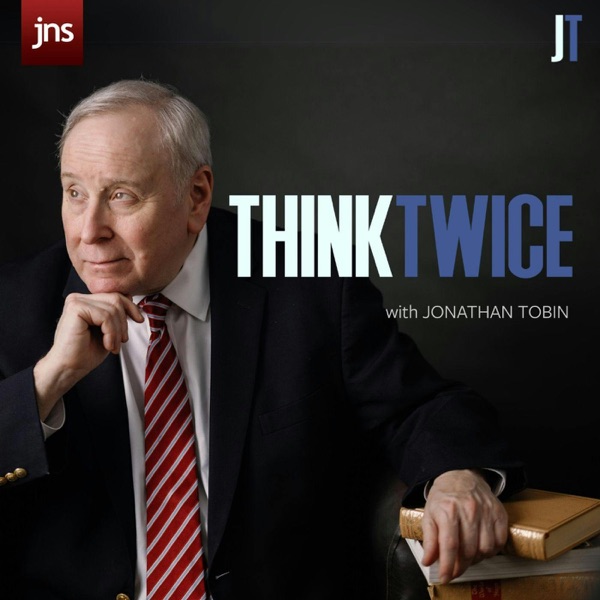
The Internet and mainstream media are inundated with misinformation and superficial hot takes. That’s why you’re not getting the full story. Take another look with JNS Editor-in-chief Jonathan Tobin as he takes deep dives into the most critical stories and controversies impacting the Jewish world with insightful commentary and fascinating interviews. If you want to understand the bigger picture and the context of the issues that really matter, this show is for you. Thanks for listening to Jonathan Tobin's podcast. If you appreciated today’s discussion and want to dive deeper into the issues shaping Israel and the Jewish world, join our community by subscribing to our newsletter. Your engagement keeps our journalism thriving. Your support is crucial. Support us with a donation to ensure we can continue delivering in-depth reporting: Donate Now!
On the charts
Every published chart this podcast appears in, in the snapshot behind this page. Each one links to the chart it came off.
The Mato Topic Intelligence Platform does not report this podcast as charting in a published category in this snapshot.
From the feed
The latest episodes published to this podcast’s own RSS feed. Titles and descriptions are the publisher’s.
The Oct. 27 Israeli election will be a referendum on the record of Prime Minister Benjamin Netanyahu. But according to JNS contributing editor Ruthie Blum, the voters will also be registering their verdict on whether they believe the promises of his opponents. Blum joins JNS editor-in-chief Jonathan Tobin on this week’s episode of Think Twice to analyze the upcoming vote. According to Blum, many Israelis may be tired of the prime minister, who has now served for 15 out of the last 17 years as his country’s premier and for 18 years in total. But the campaign will also test the appeal of the apparent new leader of the opposition bloc, former Israel Defense Forces chief of staff Gadi Eisenkot. The general has mainstream appeal and has the sympathy of the nation after losing his son during the war in Gaza. As Blum notes, Eisenkot is trying to sound as much like Netanyahu as possible when it comes to issues like the war against Iran and its terrorist proxies, Hamas and Hezbollah while still blaming the prime minister for Oct. 7. Yet the military establishment he embodies just as, if not more responsible for Israel being surprised by Hamas. More than that, his record as chief of staff shows that he is clearly on the left though not trying to sound like it. And contrary to the promises that have been made, the opposition may well hope to bring in the Muslim Brotherhood-connected United Arab List to help them form a government now that it has one Jewish member on its list of candidates. Israelis are, she says, exhausted by the war and sick of the divisiveness that it engendered. But a key factor in determining the outcome will depend on which of the various smaller parties (38 different lists registered before the deadline) will be able to garner the necessary 3.5% of the vote in order to make it into the Knesset. If the right, left or Arab splinters and votes are “wasted” by being cast for parties that don’t qualify, that may make the difference in whether Netanyahu or Eisenkot will be able to form a government. Listen/Subscribe to weekly episodes on Spotify, Apple Podcasts, YouTube Music, iHeart Radio or wherever you listen to your podcasts. Watch new episodes every week by subscribing to the JNS YouTube Channel.
Antisemitism in American education isn’t merely a matter of elite universities. It’s being tolerated and encouraged at colleges large and small across the country by woke administrators and faculty. But according to JNS Editor-in-Chief Jonathan Tobin, it’s also happening in K-12 schools, something that is being facilitated by teachers’ unions. He’s joined in this week’s episode of Think Twice by Deborah Project Legal Director Lori Lowenthal Marcus, whose cases involve suing school districts and institutions of higher learning where Jews are being targeted and suffering discrimination. Marcus recently won a significant victory by forcing Haverford College, where administrators and faculty were tolerating anti-Zionist and antisemitic behavior, to adopt new standards that will, if enforced, force them to fundamentally change their approach to Israel and the treatment of Jewish students. What made the difference in the Haverford case was the fact that investigations by Congress and the federal government pressured the school into conceding to the demands of Jewish students. Without that pressure, Marcus says, the school would have stood its ground. The Deborah Project has also been defending students in Philadelphia whose families were forced to move to enable them to go to school without suffering antisemitic targeting. The incident involved a public high school that established a “prayer room” that was a de facto mosque, where Jewish students were falsely accused of assaulting other students. According to Marcus, part of the problem in fighting back against antisemitism in education is the way the entire profession of teaching, at both the K-12 and college levels, has been captured by people indoctrinated in toxic theories. They don’t consider antisemitism to be a problem because Jews don’t qualify as victims in the intersectional mindset, in which only racial minorities deserve help. The other problem is that many Jews are either too intimidated to take action in defense of themselves or their children. Many are also partisans and so prejudiced against President Donald Trump and the Republicans that they oppose their efforts to combat antisemitism even when it is to their benefit.
The global surge of antisemitism that followed the Hamas-led Palestinian Arab terror attacks on Israel was no spontaneous outburst of hate. According to JNS editor-in-chief Jonathan Tobin, it’s clear that it was not only the product of years of preparation by ideologues recycling Soviet-era propaganda aimed at delegitimizing Israel and Jewish rights. It was also the direct result of funding and planning carried out by Islamists in Qatar and other Middle sources as well as UN agencies, NGOs, non-profits, and charities who were behind this effort. He’s joined in this week’s episode of Think Twice by Canadian political consultant Warren Kinsella, author of the new book, The Hidden Hand: The Information War and the Rise of Antisemitic Propaganda. Kinsella asserts that the best way to understand the insidious effort to rationalize and/or defend Hamas and demonize the Jewish state and its supporters is to think of it as the moral equivalent of a political campaign. He argues that this is a story that the mainstream media has ignored as it became the willing stenographer for antisemitic terrorists. Kinsella points out that this plot to destroy Israel is a highly sophisticated plan that relies heavily on social media algorithms aimed especially at influencing young people. The author, who isn’t Jewish, believes it's imperative to recognize the threat Islamist hate poses to the West, not just Israel. He worries that despite the fact that it has a great story to tell and has the truth on its side, the state of Israel is failing to get its message across to those being indoctrinated in the antisemitic narrative in the West. He believes it is imperative for Jerusalem to start taking this threat seriously. Just as important, he thinks all people of goodwill must push back against the blood libels being spread about Jews in the media. Kinsella believes what's at stake is not just Israel and the Jewish people, it's democracy and civilization itself. Listen/Subscribe to weekly episodes on Spotify, Apple Podcasts, YouTube Music, iHeart Radio or wherever you listen to your podcasts. Watch new episodes every week by subscribing to the JNS YouTube Channel.
What should we be asking about what happened on Oct. 7, 2023, and its aftermath? According to JNS editor-in-chief Jonathan Tobin, the key issue is not only learning and understanding the truth about the horrific crimes that occurred on that day. Rather, it is how so much of the world reacted to it by siding with the perpetrators and against the victims. He’s joined on this week’s episode of “Think Twice” by documentary filmmaker Gloria Greenfield, the producer, director and writer of the new film, “A Collective Descent Into Evil: The Lethal Obsession with Jews and the Jewish State.” It gives voice to a broad array of scholars, writers and commentators on the subject, and isn’t only about the barbarism and atrocities that occurred during the Hamas-led Palestinian Arab terror attacks on communities in southern Israel. It is, she says, an exploration of the motivations, ideologies and strategies of those involved, as well as their apologists and enablers. The problem is not just the terrorists and a population that supported and participated in the horrors of Oct. 7. Greenfield explains that her film seeks to broaden our understanding of the subject by pointing out that what happened was the product of decades of indoctrination into hatred for Israel, the Jews and the West. The same is true of the mobs on college campuses and in the streets of American cities who turned out in support of Oct. 7 and to defend its perpetrators. The goal wasn’t, says Greenfield, merely “destroying the Jewish people and destroying Israel. It’s also about destroying the free world and destroying people that don’t subscribe to Islamist ideologies.” Greenfield, a feminist publisher who grew disillusioned with the movement because of its tolerance for antisemitism, points out that the “epidemic” of tolerance for Jew-hatred is rooted in the success of Marxist and radical ideologies in their “long march” through American institutions. The film is available for streaming via the Roku Channel and Doc Emet Productions, as well as by request for community screenings. Listen/Subscribe to weekly episodes on Spotify, Apple Podcasts, YouTube Music, iHeartRadio or wherever you listen to your podcasts. Watch new episodes every week by subscribing to the JNS YouTube Channel.
Is it possible for America to defeat its Islamist enemies like the Iranian terror regime when they resort to asymmetrical warfare? And does President Donald Trump truly understand that diplomacy will never convince Tehran and its terrorist proxies to give up their war on the West? Those are the questions posed by JNS editor-in-chief Jonathan Tobin about whether the United States will resume efforts to stop Iran from getting nuclear weapons and spreading terror around the world. He’s joined in this week’s episode of Think Twice by Jonathan Schanzer, the executive director of the Foundation for Defense of Democracies. According to Schanzer, the “rules-based international order” created in the aftermath of World War II” appear to be “binding the hands of the United States” and preventing it from conclusively defeating enemies like Iran. The answer, he says, is that, “if our hands are tied, we're the stronger power and we have justice on our side, but yet cannot take the action that is necessary in order to win based on rules that we created,” that’s a problem. “It may be time to revise them,” he concludes. He argues that the efforts of Trump envoys and advisers Steve Witkoff and Jared Kushner, backed by Vice President JD Vance, to get Iran to agree to give up its nuclear program or to persuade Hamas and Hezbollah to lay down their arms in Gaza and Lebanon is “not feasible.” They can’t be won over by diplomacy, something that was proved by the failures of the Obama and Biden administrations. Instead, they can be defeated. What Trump needs, says Schanzer, is a “new strategy” that will offset the advantages Iran has gained because of the rise in the price of oil and the American shortage of munitions. The stakes in this conflict, Schanzer asserts, are enormous. If Iran is defeated, it will help facilitate the creation of IMEC—an Indian-Middle East energy corridor—that will connect the subcontinent to Europe via moderate Arab nations and Israel that will transform the international situation for the better. The alternative would be the advance of the so-called STEP alliance of Saudi Arabia, Turkey, Egypt and Pakistan, that will be an Islamist obstacle to regional stability, American influence and normalization of relations between the Arab and Muslim world with Israel.
American Jews are facing an unprecedented crisis of antisemitism but according to JNS editor-in-chief Jonathan Tobin, that’s just part of the problem. What’s also wrong is that the majority of American Jews who identify as politically liberal, don’t seem to understand that continuing to support a party and a movement that spreads blood libels about them and defines them as “white” oppressors is, at best, self-sabotage and, at worst, suicidal. He’s joined in this week’s episode of Think Twice by journalist Batya Ungar-Sargon, author of the new book, The Jews and the Left. Ungar-Sargon argues that a principal reason why Jewish liberals were unprepared for the post-Oct. 7 surge of antisemitism and seemingly unwilling to draw conclusions about it is that they fundamentally misunderstand their place in America. From the beginning of the American republic, Jews have always been equal partners and not a tolerated and discriminated-against minority. In her book, she makes the case that American exceptionalism is real and that the belief that Jews were, like racial minorities, among the oppressed, is wrong. Jews found themselves on the political left in the mid-20th century because Democrats supported the rights of labor, civil rights, and were associated with the war against the Nazis. But in the 21st century, the Democrats are no longer, she says, the party of the working class, but rather of the credentialed elites. What’s worse, the woke hijacking of the party has led to a situation where the reigning orthodoxy on the left puts Jews and Israel in the intersectional cross-hairs. That is why after the atrocities of Oct. 7, 2023, the American left which now dominates the Democrats took sides against Israel and was ready to tolerate and even encourage Jew-hatred. Ungar-Sargon believes that the response to this crisis on the part of liberal Jewish organizations that make up the Jewish establishment is not merely inadequate; it’s wrongheaded since it counsels Jewish students to “shelter in place” and not resist the antisemitic mobs. She also believes the continuing refusal of Jewish liberals to join forces with the majority of Americans—largely on the right—who oppose the Jew-haters on both the left and the right. Jews must, she believes, “get off their knees and fight.”
Though overlooked because of the impact and fame of his charismatic successor, the sixth Lubavitcher Rebbe, Rabbi Yosef Yitzchak Schneersohn was one of the most impactful figures in 20th century Jewish history. And he’s the subject of a new biography, Undaunted by Rabbi David Eliezrie, who joins JNS editor-in-chief Jonathan Tobin for this week’s episode of Think Twice. Eliezrie, the founder and leader of North County Chabad/Congregation Beth Meir HaCohen in Yorba Linda, California has written the first scholarly biography of Schneersohn and acknowledges that although he was considered a major figure during his lifetime, he has been eclipsed by the seventh Rebbe, Rabbi Menachem Mendel Schneersohn. But the transformation of Chabad from a small sect of Hasidic Jewry to its current status as one of the most important forces in modern Jewish life was only made possible by the sixth rebbe’s successful struggles to save Soviet Jews and reimagine American Judaism. The story of this rebbe is, as Eliezrie notes, a saga that encompasses the key struggles of 20th century Jewish history. Displaced from its traditional home in the Russian town of Lubavitch by the First World War, Schneersohn and Chabad found themselves the center of resistance against Communism efforts (led by Jewish Bolsheviks) to eradicate Judaism. Eliezrie’s book tells the story of, despite ill health, threats, imprisonment and a death sentence against him handed down by Moscow, the rebbe stubbornly insisted on fighting to keep Jewish education and practice alive in the Soviet Union. After a narrow escape from the Nazis at the start of the Second World War, the rebbe came to the United States. There, he first supported efforts for rescue of European Jewry, which was opposed by the American Jewish establishment that feared offending President Franklin D. Roosevelt. He also chose, unlike other Orthodox movements who felt maintaining their own communities was the priority, to emphasize outreach and bringing Judaism and Jewish learning to all Jews, regardless of their affiliation and observance. In this way, Eliezrie says, he helped transform American Jewish life and set the stage for his successor’s subsequent successful revolutionary international outreach campaign. Perhaps just as important was Schneersohn’s willingness to put aside past disagreements with Zionism after the birth of the modern state of Israel in 1948. Though not formally Zionist and opposed to secular nationalism replacing Judaism, the rebbe took a stand that opposed the Haredi world’s efforts to remain separate from modern Israeli society. As a result, as Eliezrie says, “We want to be engaged with that society. The previous Rebbe told his followers everybody has to share in the defense of the country, that we have to go to the army.” The author notes that surveys of American Jewry show that the largest percentage of American Jews who identify as Zionists are actually those who affiliate with Chabad synagogues.
The question many supporters of Israel ask is one that Israelis struggle to explain, says JNS editor-in-chief Jonathan Tobin. How can a leading Israeli institution like the Haaretz newspaper justify their role in spreading blood libels against the Jewish state which help to bolster the efforts of those who are working to eradicate it and kill Israelis? He is joined in this week’s episode of Think Twice by Israeli historian and writer Gadi Taub who has an explanation. According to Taub who wrote about this dilemma in JNS, Israelis who think of themselves as “progressives,” as is the case with the staff of Haaretz, must turn on their own country in order to maintain their standing with other leftists. Their only strategy to not be included in the antisemitic boycotts of their country is to join it. It generally doesn’t work since those who hate the Jewish state and wish to isolate it, don’t grant exemptions to Israelis who validate their false accusations. But as Taub explains, that doesn’t deter Israeli leftists. They don’t seem to connect the dots between their turn toward anti-Zionism and false accusations about Israel committing “genocide” in Gaza and the fact that the people they are aiding want to commit actual genocide against all Israeli Jews, including those who hate their own country. They justify it, Taub says, by imagining that the Palestinian Arabs are mirror images of Israelis and that their threats are either meaningless or by justifying them and embracing genocidal terrorism, such as what occurred on Oct.7, 2023, as justified “resistance” rather than mass, murder, rape and kidnapping. For many years, Haaretz and the extreme left in Israel stuck to critiques of the “occupation” and the measures of self-defense undertaken by the country’s government and military. But in the weeks before Oct. 7, the publishers of the newspaper dropped the pretense that they were merely liberal Zionists and, instead, have embraced efforts to erase the country’s identity and purpose. Taub believes the Haaretz approach to the conflict is linked to the effort to prevent reform of Israel’s out-of-control judiciary. They know that the project to essentially dismantle the Jewish state will never gain the approval of Israel’s voters. But 15 unelected judges of the Israeli Supreme Court, who have arrogated to themselves absolute power over the government, do have the ability to advance the demise of Zionism, he argues. Listen/Subscribe to weekly episodes on Spotify, Apple Podcasts, YouTube Music, iHeart Radio or wherever you listen to your podcasts. Watch new episodes every week by subscribing to the JNS YouTube Channel.
Totalitarian regimes such as those led by Communists and Nazis have something in common with jihadist terrorist organizations and politically fashionable leftist movements. They all use propaganda, scare tactics, the law and social isolation and pressure to convince people to passively accept the unacceptable as not just normal but an inescapable imperative. That’s a key insight of radio host Buck Sexton’s new book, Manufacturing Delusion: How the Left Uses Brainwashing, Indoctrination and Propaganda Against You. Sexton joins JNS editor-in-chief Jonathan Tobin on this week’s episode of “Think Twice”. He says he was motivated in part to write the book because of the way Americans were manipulated into accepting Covid-19 pandemic measures like masks, lockdowns and vaccines that authorities imposed upon them with lies and false reassurances. But the tactics that enabled that mass deception to happen also apply to other issues including climate change alarmism, gender ideology and acceptance of myths about racist killings of African-Americans that fueled the Black Lives Matter movement. The former CIA analyst and New York Police Department terrorism consultant argues that the Islamist extremism that he witnessed in Iraq and in Nigeria was enabled by some of the same methods pursued by the tyrants that ran the Soviet Union and Communist China. The effort to force people to abandon independent judgement and accept the lies imposed on them were discussed by George Orwell in his classic novel 1984, which sought to alert the world to the threat from Communism. But these tactics have also been used by cults as well as political movements. He notes that it is no small irony that contemporary extremists who have spread antisemitism and blood libels as part of an effort to mainstream efforts to destroy Israel are using lies and slogans crafted for the same purpose by Soviet propagandists. The radicalization of those who join terrorist groups involves these methods. But it also applies to the way masses of people are convinced to believe conspiracy theories that use Jews and Israel as the scapegoats for the world’s problems. That has led to indoctrination of young people by leftist ideologues and also is part of the explanation for the Jew-hatred promoted by right-wing podcasters like Tucker Carlson. Listen/Subscribe to weekly episodes on Spotify, Apple Podcasts, YouTube Music, iHeartRadio or wherever you listen to your podcasts. Watch new episodes every week by subscribing to the JNS YouTube Channel.
The United States and Israel achieved unprecedented military success in their campaign against that started earlier this year on Feb. 28. But, according to JNS editor-in-chief Jonathan Tobin, the American decision to stop the war due to the economic pressure Iran was able to exert via its menacing of shipping in the Strait of Hormuz revealed a bitter truth about the West’s ability to defend itself. He’s joined in this week’s episode of Think Twice by military expert Col. Richard Kemp, a veteran of several wars in which the United Kingdom took part and an on-the-scene analyst of the conflict Israel has been fighting against Iran and its terrorist proxies. Kemp says the reason why the United States pulled the plug on the war was due to President Donald Trump’s unwillingness to risk even a small number of casualties in order to ensure freedom of navigation in the Persian Gulf. “Very clearly, the United States was not, and probably would never be prepared to commit to boots on the ground in that situation,” says Kemp. While Israelis are willing to do what is necessary to defend their country as well as their homes and families, the political leadership of the United States as well as Western Europe, lacks the will to commit to such a fight. Kemp also believes that the refusal of Britain and other NATO allies to fight alongside the United States against a nation like Iran that is as much of a threat to them as America, also played a role in Trump’s decision. That is a political decision by London. According to Kemp, that has embarrassed the British military, since they would have been willing to defend British sovereign territory, like their bases in Cyprus, which were attacked by Iran, but their political leaders lack the will to do so. Kemp also described the enormous difference between the image of Israel, which he visits frequently, and the way it is depicted in the Western media. “We shouldn't forget that this is not a misunderstanding or a lack of knowledge,” says Kemp. It is a deliberate campaign to delegitimize Israel, which began in the Soviet Union in the 1960s.” In particular, he drew a strong contrast between the way Israel empowers and takes care of all of its citizens, including those who are disabled, with the way Palestinian Arabs treat their people. Israel is, he says, the only country that allows its disabled to serve their country while the Palestinians sacrifice their disabled children as human shields in the fighting in Gaza. When asked about the future of British Jews, Kemp says the problem isn’t only the plague of antisemitism that has been tolerated by both the British Labour and Conservative parties. It’s that the rights of all British citizens, what he refers to as the “indigenous” people of Britain, are being undone by a willingness to tolerate law-breaking and Islamicization of society by immigrants from the Arab and Muslim world. Kemp says the prospects for a political sea change that will enable any conceivable British government to protect the rights of all British citizens, including Jews, are not good. He believes it is more likely than not that future British prime ministers, like the last few, will be too afraid of violence from Muslims and the far left, to do anything about the problem. If that is the case, he predicts that it will result in a kind of civil war, comparable to the strife that prevailed in Northern Ireland for decades, where government forces strove in vain to counter violence from competing factions. In this case, that will mean Muslim terror will become a normal part of British life alongside counter-terror from “indigenous” Britons. Listen/Subscribe to weekly episodes on Spotify, Apple Podcasts, YouTube Music, iHeart Radio or wherever you listen to your podcasts. Watch new episodes every week by subscribing to the JNS YouTube Channel.
With Israelis set to go to the polls in a few months, an issue that has been on the backburner since Oct. 7 will probably again be provoking public debate in the Jewish state. An effort to reform Israel’s Supreme Court and judicial system enraged the opponents of Israeli Prime Minister Benjamin Netanyahu’s government in 2023 and is likely to be on the agenda again. Joining JNS editor-in-chief Jonathan Tobin in this week’s episode of Think Twice is Israel-American lawyer Yonatan Green, author of the new book, Rogue Justice: The Rise of Judicial Supremacy In Israel. Green says that there is no court in the world in a democratic country that has the kind of power that Israel’s Supreme Court has seized for itself. And contrary to the claims of the opponents of judicial reform, “the biggest threat to Israeli democracy and the rule of law is the Israeli Supreme Court itself and its allies and its proxies.” By abolishing the very notions of standing and justiciability, two cornerstones of English and American law, Israel’s courts have arrogated to themselves the ability to overrule the elected government on virtually any issue or action in ways unheard of in other democracies. This has created a system of judicial supremacy that is antithetical to democracy. And when you add in the fact that members of the court have the power to name or at least veto potential fellow judges, what Israel has created is a judicial oligarchy. Nevertheless, judicial reform opponents call any effort to rein in this undemocratic system and re-establish a balance between the judiciary and the elected members of the Knesset and government a threat to democracy. Green believes that many Israelis believe this to be true because when it comes to the judiciary, citizens of the Jewish state are essentially isolated from other democratic nations and have no idea what is considered normative elsewhere. As a result, they actually believe that democracy is not a matter of majority rule limited by independent courts that are restrained from overstepping their responsibilities. Rather, they actually are under the impression, reinforced by liberal dominance of their education system, that the rule of elites who have the right and duty to ignore the will of the voters is democracy. Moreover, they seem unfamiliar with the basic concept underlying the American system which holds that the rights of citizens are derived from God rather than a gift from a government that can be limited or taken away at will. Green believes the danger from this undemocratic and coercive system that pretends to be democratic but is not, goes beyond the impact of an out-of-control judiciary. It has also increased polarization and made it harder for Israelis to get along with each other. The solution to this problem, he says, is a much-needed change in Israeli education to promote knowledge about how democracy works and the election of a constitutional convention that, like the one that wrote America’s constitution in 1787, can come up with a more equitable system.
The forces behind the mainstreaming of anti-Jewish conspiracy theories have gained a foothold in both major political parties. And according to JNS editor-in-chief Jonathan Tobin, there’s no sign of them being driven back to the fever swamps of the far left and the far right where they belong. Or at least not for the foreseeable future. He’s joined in this week’s episode of Think Twice by columnist and author David Harsanyi who argues that no one would ever think about being racist and conspiratorial in the way they are about Jewish people when speaking about black Americans or anyone else. And, he says, expressions of anti-Zionism gives them the cover to get away with it. While such people claim their beliefs are about their revulsion for Israel, Harsanyi argues that their use of tropes about Jews controlling the media, money, and being able to displace or get rid of politicians they don't like aligns with the sort of hatred that's always existed. It exists, he says, among progressives but also among the isolationist types and the paleocons. Such alleged right-wingers are very close to being progressives. “Tucker Carlson is far closer to Hassan Piker than people probably want to admit. In fact, I'd say they're relatively indistinguishable except maybe for some cultural issues.” Harsanyi says. What’s more, there's no real price to pay anymore for being antisemitic in society, Harsanyi points out. “If you're a racist, there's still a price to pay. If you're an antisemite, there is virtually no price to pay. You see comedians do it. You see podcasters do it, and you see mainstream media types do it as well. While most Republican officeholders are pushing back against the antisemites, with, Harsanyi says, the conspicuous exception of Vice President JD Vance, most Democrats are giving in to their antisemites. The acceptance of people like Maine U.S. Senate candidate Graham Platner, despite his Nazi tattoo and sex scandals, as well as his vicious anti-Israel rhetoric is, like the rise of the left-wing congressional “Squad,” evidence of the progressive capture of the Democratic Party. Nevertheless, Harsanyi thinks Democrats are making a mistake by investing so heavily in anti-Israel rhetoric. Most Americans, even those who are not predisposed to support Israel, are just not that interested in the issue and the left’s commitment to smearing the Jewish state and targeting Jews is not an election-winning issue. Listen/Subscribe to weekly episodes on Spotify, Apple Podcasts, YouTube Music, iHeart Radio or wherever you listen to your podcasts. Watch new episodes every week by subscribing to the JNS YouTube Channel.
What can American Jews do to successfully respond to the surge of antisemitism that followed the Hamas-led Palestinian Arab attacks on Israel on Oct. 7, 2023? The answer, says JNS editor-in-chief Jonathan Tobin, may be to channel the spirit of activism that characterized the movement to free Soviet Jewry in the 1970s and 80s. He’s joined in this week’s episode of Think Twice by scholar and author Izabella Taborovsky, the author of Be a Refusenik: A Jewish Student’s Survival Guide. Taborovsky points out that the script for those engaging in what she calls “conspiratorial anti-Zionism was written by Soviet propagandists more than a half century ago. She says the Soviet Union didn’t merely engage in state-sponsored antisemitism but also in a similar effort to promote anti-Zionism in order to suppress Jewish dissent at home and to attack the United States and Israel. What we’re facing today, she says, is, “the same language, the same ideas, the same conceptual universe and the same explanatory logic” employed by the Soviets against Jews then. The “refuseniks”—the Jews who wouldn’t go along with this assault on Jewish identity and demanded the right to emigrate—”refused this idea that in order to be accepted, we have to give up every aspect of our Jewish ideas and identity.” Moreover, she argues, they knew they weren’t accepted anyway by a society that was drenched in Jew-hatred. The lessons she draws from this struggle, can, she asserts, be applied to the Jewish dilemmas of today. The six principles laid out in her book are to: Reclaim your Zionism and its centrality in Jewish identity; Educate yourself rather than remain Jewishly illiterate; Find comrades in arms and embrace allies, which exist in America among pro-Israel Christians; Do the unexpected and refuse to play by the rules laid down by the antisemites; Reject victimhood and embrace pride in Jewish success; and to Lead with Jewish life as a pathway to success. Taborovsky also points out that efforts to bring up the history of the Jewish Socialist Bund as an alternative to Zionism is ahistorical. The Bund was just as nationalist as Zionism; it just wanted to practice it in Eastern Europe. To revive this doomed notion is to forget that it died in the ashes of the Holocaust and the Soviet gulags. To the contrary, she believes Jews should take heart from Israel’s successes and to realize that Zionism is the future of the Jewish people. It is those who reject it or wish to destroy it that are, as in the past, on the wrong side of history. Listen/Subscribe to weekly episodes on Spotify, Apple Podcasts, YouTube Music, iHeart Radio or wherever you listen to your podcasts. Watch new episodes every week by subscribing to the JNS YouTube Channel.
The problem for democracies throughout the ages has always been the rage and impatience of mobs with any limits on their power to act on their impulses. According to JNS editor-in-chief Jonathan Tobin, such movements have become a major factor driving not just divisive politics and threats to liberty but also antisemitism. He’s joined in this week’s episode of Think Twice by law professor, Fox News legal analyst Jonathan Turley, author of the new book, Rage and the Republic: The Unfinished Story of the American Revolution. Turley traces the history of this potent threat to freedom by discussing both the American and French revolutions and how they differed. His hero is Thomas Paine, the author of pamphlets and books that inspired both world events but who has been shunted to the side by many historians. The problem that undermines all attempts at government by consent of the governed is when crowds of people, inflamed by the passions of the moment, seek direct democracy without limits. As history teaches us, Turley explains, that usually leads to violence and the end of freedom. The one example where that was avoided was the American experiment because of the adoption of a Constitution that created checks and balances that spoke to the founders fears of mob rule. That didn’t happen in France and that’s why their revolution failed. Yet while the American system has worked well for 250 years, the threats to its survival are real. Chief among them, Turley says, are what he calls the new Jacobins, the politicians, professors and journalists who want to “reform” or trash the Constitution in order to allow them to enact radical change that is antithetical to freedom. The same factors, he says, are behind the current surge in antisemitism. Such rage is, Turley asserts, corruptive, addictive and contagious. Revolutions, like the mythical story of Saturn, eat their children. Antisemitism is one of those forms of rage. It has that sort of release for some people. It leads inevitably to violence such as the attacks on Jews as well as the murder of Charlie Kirk and the assassination attempts on President Donald Trump. Listen/Subscribe to weekly episodes on Spotify, Apple Podcasts, YouTube Music, iHeart Radio or wherever you listen to your podcasts. Watch new episodes every week by subscribing to the JNS YouTube Channel.
Israel has been put on trial every day throughout its history. But according to JNS editor-in-chief Jonathan Tobin, the case against it—including blood libels about it committing “genocide” or being an “apartheid state”—are nothing but myths and lies that can be systematically exposed and refuted by simple research and legal logic. He’s joined on this week’s episode of Think Twice by federal Judge Roy Altman, who has written a book that does exactly that. Altman, who serves on the United States District Court for the Southern District of Florida is the author of the new book Israel on Trial: Examining The History, the Evidence and the Law. In it he goes about the task of exploring each of six major accusations against the Jewish state: That Jews are colonists in the Land of Israel; That Israel’s founding was illegitimate or aberrational; That Israel has prevented the establishment of a Palestinian state; That Israel was occupying Gaza (and had turned Gaza into an open-air prison or a concentration camp) before October 7; That Israel is an apartheid or white-supremacist state; and that Israel has committed genocide in Gaza. All are false. The judge says he was motivated to write the book not so much because of the atrocities committed on October 7, 2023 by Hamas and other Palestinians when they attacked southern Israel. Rather, it was because of the way American institutions turned their backs on Israel and the Jews in the wake of the massacre. But he believes that the truth about the accusations against Israel can help turn public opinion around. Altman estimates that about 10% of Americans believe the lies about Israel, while another 30% are patriotic and understand that Jews are an integral part of what has made America flourish, and therefore don’t believe the blood libels. The rest, he says, are persuadable if they are given the truth. His book treats the various false assertions against the Jewish state as legal charges that rise or fall based on objective evidence. Examining each through a judicial lens, he renders a final verdict and declares Israel innocent on all counts. Altman believes that at the heart of the case against Israel is the fact that anti-Zionism is indistinguishable from antisemitism, and the effort to delegitimize Israel and treat Palestinian Arab claims as credible is an inversion of the truth. Watch more Think Twice: https://www.youtube.com/playlist?list=PLsksduy16U5Kb-ZQdW5aIj7xGhY1kk6i0 Listen/Subscribe to weekly episodes on Spotify, Apple Podcasts, YouTube Music, iHeartRadio, or wherever you listen to your podcasts. Watch new episodes every week by subscribing to the JNS YouTube Channel. Register for the JNS International Policy Summit here: https://jns-summit.org
In the aftermath of the horror of Oct. 7, 2023, one of the most discouraging things for embattled American Jews was the relative silence from Hollywood. An industry that was never slow to speak up about all sorts of other causes and filled with Jewish artists seemed curiously unconcerned about the assault on Israel and the subsequent surge of antisemitism. As JNS editor-in-chief Jonathan Tobin says, American Jews were left to wonder why the arts community seemed just as likely to cheer for those attacking Israel as to declare their solidarity with Jewish hostages. He’s joined in this week’s episode of Think Twice by actor, singer and director Jonah Platt who has dedicated his energies since Oct. 7 to advocating for Jewish solidarity and unity. Platt, the son of a successful film producer and philanthropist, hosts a podcast called “Being Jewish With Jonah Platt,” points out that most of those Jews who have remained silent were never engaged or committed Jewishly. Nevertheless, he says the failure of those who had often called upon the Jewish community to offer them solidarity on other issues but were then not willing to do so when the Jews needed help after Oct. 7 was noticed. Platt noted that there were people who in the second week of October couldn't put their names on a letter saying free the hostages because they couldn't get involved. “That, I'll never understand and to me that's pretty inexcusable,” he said. But, he adds, no one should be shocked when those Jewish artists who never opened their mouths on behalf of the Jewish people on a good day didn’t suddenly open their mouths on a really terrible day. Platt says that those who run the entertainment business are generally worried about politics becoming part of the conversation about their work. Nevertheless, he pointed out that there is no “blacklisting” of pro-Israel artists in Hollywood. Those who have spoken up for Israel like actress Ginnifer Goodwin, who appeared on Platt’s podcast, haven’t suffered in their careers. Nevertheless, the erasure of Jews from the movies is, he thinks, “an inherited ethos” from the 1930s when the Jewish founders of Hollywood were desperate to assimilate and to avoid the antisemitism of that era. Another problem is that even many of those artists who don’t hesitate to identify Jewishly define themselves largely by the ideas of social justice and solidarity with others rather than advocating for Jewish causes. In this way, they are uncomfortable about supporting Israel and Israeli victims without also expressing sympathy for Arabs who have suffered as a result of a war their side started. With respect to how Jewish families can deal with divisions caused by some family members who have taken sides against Israel, Platt says the most important thing is to preserve relationships with loved ones while being honest about those differences. In this he speaks with experience because his brother, actor Ben Platt has spoken up on behalf of the Palestinians and against Israel. As for how the community as a whole should deal with those who oppose Israel’s existence, he takes a very different view. He believes there should be room for questions and debate and criticisms of Israel’s government, especially for young people and others who are not fully educated about the issues. But we shouldn’t have to debate about whether we ought to be connected with Israel. Listen/Subscribe to weekly episodes on Spotify, Apple Podcasts, YouTube Music, iHeart Radio or wherever you listen to your podcasts. Watch new episodes every week by subscribing to the JNS YouTube Channel.
Why are so many young Americans saying they support communism and do they understand that the anti-Zionist lies they are swallowing were cooked up by Soviet propagandists a half-century ago? Those are the questions JNS editor-in-chief Jonathan Tobin is asking about the willingness of ignorant Americans who are embracing the Marxist war on the West. He’s joined in this week’s episode of Think Twice by scholar Jonathan Brent, the CEO of the YIVO Institute for Jewish Research and a historian of communism and the Holocaust. According to Brent, the reason for the revival of Marxism is, “the hatred of the American system of government and of the West generally that has been inculcated in generation after generation of young people who have gone to our most liberal and our most privileged universities and progressive schools.” This has, he says, created an appetite for a belief in the power of the state to “smash” bourgeois values, liberalism and institute more equality. But Brent points out that all this failed ideology has to offer is “an equality that is actually based on deprivation and enslavement rather than on lifting people up.” The renewed infatuation with Marxism and the overlooking of its role in the murder of more than 100 million people during the 20th century is, Brent argues, also directly related to the support for Hamas, anti-Zionism and the war against Israel among young people. It also explains the support that an anti-Zionist like New York City Mayor Zohran Mamdani gets from many young people. Alongside of this trend is a renewed interest in the Jewish Labor Bund, the socialist Jewish movement that thrived in Europe before the Holocaust. Brent believes it is wrong for contemporary anti-Zionists to use it to attack the existence of the state of Israel. “The back in the 1930s was not between Bundism and Israel,” Brent points out. It was a debate about, “Do we stay here or do we go there? Where do we have the best chance of survival? And by that I don't mean simply physical survival, but the survival of our traditions, the survival of our language, the survival of our customs, our literature, our music, and so on. That was the issue. Bundism, in the classical sense, was never against Israel as such. So, it's a bit dishonest to take that principled intellectual dispute of the 1930s and transport it into the present day.” Brent also discussed the work of YIVO, which seeks to preserve the record of the Eastern European Jewish civilization that perished in the Holocaust and the Soviet gulags. While the Bundists shouldn’t be blamed for believing that Europe could be a place where Jewish life could continue to flourish, the verdict of history vindicated the belief of the Zionists that it was doomed there. Listen/Subscribe to weekly episodes on Spotify, Apple Podcasts, YouTube Music, iHeart Radio or wherever you listen to your podcasts. Watch new episodes every week by subscribing to the JNS YouTube Channel.
The trouble with most reporting and commentary about the war the United States and Israel have waged against Iran is obvious, says JNS editor-in-chief Jonathan Tobin. Liberal Journalists and members of the foreign policy establishment are so deranged by their hatred of U.S. President Donald Trump and Israeli Prime Minister Benjamin Netanyahu that they’d rather the Iranian Islamist terror regime win a war than see those two leaders get credit for doing the right thing. He’s joined in this week’s episode of Think Twice by Michael Doran, the senior fellow and director of the Center for Peace and Security in the Middle East at the Hudson Institute. Doran believes there are seven myths about the conflict that need to be debunked if Americans are to understand what’s happening in the Middle East. The first is that it is a “war of choice.” It is not, he argues. The only other option was for the U.S. and Israel to wait for the Iranians to construct a sufficiently strong force of missiles with which they could defend their nuclear program at which point it would have been too late to do anything about it. The second is that President Barack Obama’s Iran nuclear deal would have prevented the threat if Trump hadn’t withdrawn from it. The truth is the opposite. The accord guaranteed that Iran would get a bomb rather than preventing it. The third is that President Joe Biden had left Trump a peaceful world. That is also false because Biden’s weakness and appeasement efforts empowered Iran and left the Middle East in flames. Another myth was that Iran was ready to compromise with Trump. As with their dealings with Obama and Biden, Tehran’s idea of compromise was the United States tolerating Iran’s terrorism, missiles and nuclear ambitions. Doran also points out that the idea that stopping Iran is a distraction from the need to contain and confront China is wrong. Conceding victory to Iran will immeasurably strengthen its Chinese ally. The most damaging myths are the ideas that Israel dragged the United States into war and that Trump and Netanyahu are megalomaniacal warmongers. The claims about the Jewish state deceiving Trump into war are more about the antisemitism of anti-Zionists and other Israel-bashers and completely divorced from the truth. The main purpose of the war is to defend American national interests. Nor are the claims about the two leaders true. They waited until all other avenues for ending the Iranian threat were tried before ordering the strikes on Iranian targets. Doran also deprecates those who analogize the war to past historical incidents like the 1956 Suez crisis. The United States is, unlike Britain and France in 1956, not a declining power that can be muscled by powerful allies into abandoning their interests. While the outcome of the war and negotiations to end it are unclear, Doran points out that the notion that the U.S. and Israel are doomed to defeat simply isn’t true. Listen/Subscribe to weekly episodes on Spotify, Apple Podcasts, YouTube Music, iHeart Radio or wherever you listen to your podcasts. Watch new episodes every week by subscribing to the JNS YouTube Channel.
The problem facing Jews today, says JNS editor-in-chief Jonathan Tobin, is that blood libels about Israel aren’t just being mainstreamed as they are becoming unchallenged tropes of popular culture. He’s joined in the week’s episode of Think Twice by scholar and educator Naya Lekht who argues that it’s a mistake to think that the current surge of antisemitism dates back only to the aftermath of the Hamas-led Palestinian Arab terror attacks on Israel on Oct. 7, 2023. Lekht argues that to understand what’s happened, we need to realize that current events were catalyzed by the UN’s 2001 Durban Conference, the September 11, 2001 terror attacks and the Second Intifada. These events helped introduce into the West an ideological assault on Zionism and Jewish rights for which the organized Jewish community was completely unprepared. What’s more, she says, there is no major Jewish legacy organization that's running a campaign devoted to opposing anti-Zionism. The anti-Zionist propaganda which is aimed at attacking an essential element of Jewish identity that has been normalized in academia and throughout Western society is not new. It is, she points out, a vestige of Soviet disinformation and propaganda. Lecht, who emigrated from the former Soviet Union as a child, says that Jews living under Soviet rule were immune to this propaganda because they understood instinctively that what they were hearing from the Communist government’s media was always untrue. By contrast, Americans are vulnerable to such appeals. That’s especially the case when they come packaged as part of fashionable ideologies about race that have been adopted by liberal cultural and media institutions as a new orthodoxy. In this manner, such toxic ideas are accepted even when they are specifically crafted to target Jews. She teaches that Jew hatred can be understood as part of a “three-era framework,” consisting of three distinct eras, anti-Judaism, anti-Semitism, and anti-Zionism that are all part of a demonization project. The mistake that many Jews and supporters of Israel make is to try and debate the truth of blood libels about Israel such as the claim that it is committing “genocide” or defend the Jewish state’s right to exist. As much as it is important that such blatant lies be refuted, Lekht says what is needed is an effort to stop playing defense and isolate the Jew-haters spreading propaganda. Listen/Subscribe to weekly episodes on Spotify, Apple Podcasts, YouTube Music, iHeart Radio or wherever you listen to your podcasts.
Jews around the world are reeling from the unprecedented surge of antisemitism that followed the Hamas-led Palestinian Arab attacks on southern Israel on Oct. 7, 2023. They may feel helpless when confronted by the way the Jew-haters have mainstreamed tropes of antisemitism in order to demonize Israel and its supporters. But, says JNS editor-in-chief, the answer to this problem is not to give up. Jews don’t merely need to wake up and fight back but to do so effectively and win. He’s joined in this week’s episode of Think Twice by JNS columnist Melanie Phillips, who has written a handbook for doing just that, titled, Fighting the Hate: A Handbook for Jews Under Siege. According to Phillips, many Jews have responded to the post-Oct. 7 tsunami of hate with shock and confusion. She says that Jews have an absolute duty to stand up against lies, against injustice, and to tell the truth. “It seemed to me that there was much that could be done if people had the right ideas about how best to go about this, " said Phillips. “And I thought, and I still think, that the organized Jewish world in the diaspora didn't really have a strategy.” Instead of playing defense, Phillips believes the Jewish world has to get off the back foot onto the front foot and go on the offensive. Yet too many are ignorant about the conflict with the Palestinians and the way leftist ideologues are spreading Hamas propaganda. Part of the problem is what she calls, “liberals with moral vertigo.” Phillips says some Jews were so stunned on October 7th by the people that they had thought were being oppressed by the Israelis, but had turned into barbaric, psychopathic, slaughterers for which there was absolutely no reasonable excuse and they can't process it. Yet she believes that the pro-Israel and sane Jewish community can make some headway with them. But, she says, the first thing is you have to park your anger and reach out to those who used to rationalize Palestinian behavior and try to reach them with the truth and the facts. Listen/Subscribe to weekly episodes on Spotify, Apple Podcasts, YouTube Music, iHeart Radio or wherever you listen to your podcasts. Watch new episodes every week by subscribing to the JNS YouTube Channel.
Ranking source
Apple Podcasts rankings via the Mato Topic Intelligence Platform.
Observed September 19, 2026. Cached outside the daily freshness window; the positions keep the date they were taken on.
Apple and Apple Podcasts are trademarks of Apple Inc., registered in the U.S. and other countries.
Pairs with
Bring this source into Mato to read its transferable patterns, then turn them into an original show for your own audience.