Mato just raised pre-seed Read more

Podcast charts
Published by Mark Longbottom
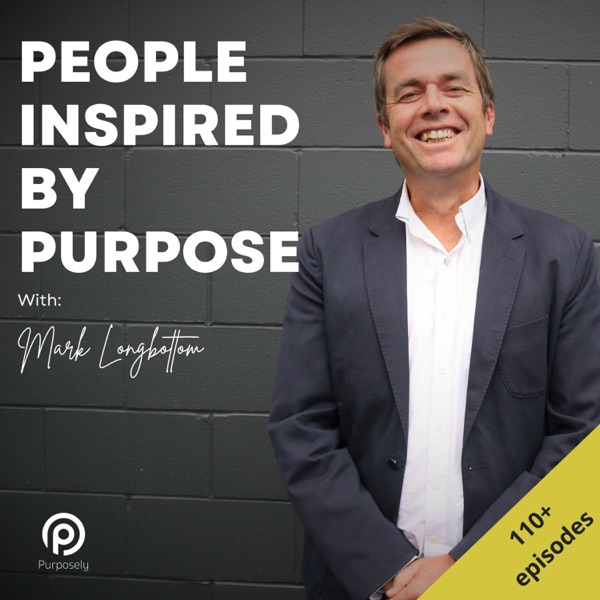
Speaking with people of purpose, those making the world a better place People Inspired By Purpose - Purposely Podcast amplifies the stories of inspirational people from across the Globe, philanthropy leaders, founders and CEO's of nonprofits, charities, for purpose business leaders as well social entrepreneurs. They are often inspired by their own experiences. Join the Purposely team www.purposelypodcast.com
On the charts
Every published chart this podcast appears in, in the snapshot behind this page. Each one links to the chart it came off.
From the feed
The latest episodes published to this podcast’s own RSS feed. Titles and descriptions are the publisher’s.
In this SHORT episode of Purposely, coach and facilitatorShruthi Vijayakumar joins us on why perfect is the enemy of good, what coaching really looks like in practice, and the moment she had to learn to back herself. Shruthi's first big lesson came early and came hard: don'tlet perfection be the enemy of good. Drafting curriculum as a young, startup market employee, she felt the full weight of imposter syndrome, chasing a version of "right" that didn't need to exist. The shift came through what she now calls design thinking and agile practice – get something out,iterate, trust your collaborators to correct you, and be humble enough to be corrected. It was, she says, a reprogramming compared to how she'd operated in university or consulting, and it made the work faster, better, and far more impactful. That same instinct carried her into coaching. In its trueform, she says, coaching isn't about telling people what to do – it's holding space and asking questions that bring out someone's own wisdom. She saw this play out in classrooms, where teachers asked children questions that surfacedtheir assumptions, prejudices and hopes, with striking effect. It was this – paired with her own interest in personal and spiritual development – that drew her into a field where she could do exactly that, full time. Shruthi started training as a coach at 24, and admits theself-doubt was real. Her own first coach set her a challenge she was sure she'd nail: find three clients by the next call. She did it anyway, stretched and held accountable by someone who was willing to push her growth. That experienceof being walked through the discomfort by someone further along the path is one she still draws on, in different forms, today. Key themes Letting go of perfectionism in early career work Design thinking and iteration over getting it right thefirst time What coaching actually looks like: holding space, not givinganswers Teaching kids to ask questions that surface their ownassumptions and hopes Learning to back yourself through the discomfort of beingstretched The value of having your own coach walk the journey with you This episode of Purposely is brought to you by Benevity and Trust Investments
Welcoming Simone Woodland, Co-founder of Circle Living, toPurposely Podcast. Simone is an architect and the co-founder of Circle Living,a people-first property development company building intergenerational, community-led neighbourhoods across New Zealand, with developments underway inWellington, Christchurch and Nelson. The idea is simple but not common in mainstream housing: design homes so people have their own privacy, while making it easy to connect with the people living around them. Originally from Bristol in the UK, Simone traces herinterest in community back to childhood, when her father ran street parties on their cul-de-sac to bring disconnected neighbours together. At 15 she helped build a house in a co-housing development in Bristol's St Werburgh's, an early,hands-on introduction to what community-built housing could look like. She studied architecture in Brighton and completed a mastersin urban design and planning at Bristol University, but found the traditional architecture industry limiting. Her early career as a social entrepreneur started with Paper Arts, a platform she built for students to showcase their work, which grew into a gallery, studios and a printing service, and eventually into a training facility teaching enterprise skills to young people. A trip around New Zealand's South Island in 2013 convincedSimone this was where she wanted to live. She moved through the Edmund Hillary Fellowship, joining its first cohort of global entrepreneurs focused on people and planet. That move led to Elemental Design and Build, a natural buildingcompany in the Tasman region working with materials like hemp, straw and earth, and eventually to the Takaka co-housing neighbourhood in Golden Bay. Simonetalks through how that first development came together: a 14 hectare piece of land secured with a 10 percent deposit, nine months to find the rest of the funding, and a model built on loans from future residents rather than a traditional developer structure. Circle Living builds on that experience with a differentfinancing model, allowing residents to buy off the plans with a deposit rather than putting large sums at risk upfront. The communities run on Sociocracy, a decentralised decision-making approach where smaller groups hold responsibilityfor specific areas rather than requiring full consensus on every decision. Simone talks candidly about what it takes to build trust within a community, why shared resources like community solar and car share schemes help keep ongoing costs down, and her long-term goal of seeing co-housing become a mainstream choice in New Zealand, in the way it already is in Denmark, where five percent of new homes are built as some form of collective housing. The conversation also gets into what community actuallydelivers day to day, including a moment when a neighbour drove ninety minutes each way to collect Simone's children after she was unable to drive, and what that kind of reciprocity means for the people who choose to live this way.
Welcoming Darrell Wade to Purposely Podcast. Darrell co-founded Intrepid Travel, one of the largestadventure travel companies in the world and a certified B Corp, built on the idea that travel should give something back to the places it touches. He is also Chair of Philanthropy Australia, the peak body working to build a strongerculture of giving across the country. The idea for Intrepid came together in 1988, on a nine monthoverland trip across Africa in a converted truck with a group of friends, including his now wife Anna and university mate Geoff “Manch” Manchester. Back in Australia, a good job with a strong salary was on offer. Darrell was ready to take it and put the travel company idea aside, until Anna told him he would be a pain in the ass unless he started the business. He did, expecting a 90 percent chance of failure. The company was bootstrapped on 20,000 dollars between the two founders, and the first five years were lean. Darrell talks candidly about the slow build, the early days running the entire business from a single desk while Manch led trips in Thailand, and the gradual shift from a lifestyle choice into a genuine company with a plan. A significant turning point came in 2011, when Intrepid solda 60 percent stake to Tui Group. Darrell describes the decision and the four years that followed as oil and water. The cultures were fundamentally incompatible, growth stalled, and in 2015 the founders unwound the deal. Within a month of separating, the business was growing again. He is direct about whathe took from it: financial logic is not enough if the culture does not hold together. Darrell also talks about the moment his thinking on climatechanged. Reading Tim Flannery's The Weather Makers on a family safari in Botswana, not long after Intrepid had won an award for responsible tourism, he realised the company was not the environmental good guy he thought it was. Hedescribes it plainly: they were part of the problem. That reckoning shaped Intrepid's climate work from there on, including taking the entire office and a thousand travellers to see An Inconvenient Truth. The conversation covers the depth of the COVID crash too.Intrepid went from operating in 120 countries to zero almost overnight, and the company had to make significant redundancies to survive. Darrell shares a moment from that day that has stayed with him: a staff member he had just maderedundant stopped him in the office and asked if he was okay. The episode closes on giving. Darrell sets out why Intrepidbuilt structured philanthropy into the business through The Intrepid Foundation, the case for corporate giving as something that benefits customers, staff and the business itself rather than a purely altruistic add-on, and his view on doing philanthropy thoughtfully rather than assuming good intentions are enough. He also speaks to his role as Chair of Philanthropy Australia, and what it means to govern a peak body trying to build a stronger, broader culture of giving across the country rather than leaving it concentrated among high net worth donors. This episode of Purposely is brought to you by Benevityand Trust Investments. Key Themes
In this Purposely Short, we revisit a four-minute segment from our full conversation with Liz Gibbs on how mission-driven organisations can fund and invest in innovation to grow their social impact. Liz points to examples like Eli Care to show what it takes for charities, social enterprises and philanthropic investors to move beyond one-off grants and take an investment-minded approach that still stays true to mission. She talks through how capital can be structured and partnered, so it supports good causes now while helping build sustainable, impact-led enterprises for the future. This one is useful for charity leaders, impact investors and funders working out where philanthropy, investment and innovation meet. Key themes • Why more funders are looking to invest in innovation and commercial models, not just rely on one-off grants • What Eli Care shows about blending commercial discipline with social mission • The capital and partnerships needed to back early-stage, impact-focused ventures • What boards and leadership teams should weigh up on risk, return and mission • How funding strategy can build long-term, community-level impact, not just short-term outputs This episode of Purposely is brought to you by Benevity and Trust Investments
Welcoming Tara Arnold back to Purposely Podcast. Tara is a fundraising consultant, engaged by grant making charities including Unbound Philanthropy and Lloyds Bank Foundation to help small and mid sized nonprofits strengthen their income generation. This is her second appearance this year on the show, following an earlier conversation about her work in grant making at Sharegift, and this time the focus turns to what she sees from inside the charities she supports. Tara works through a funder plus model, where a grant comes bundled with an offer of consultancy support. With Unbound, that support is light touch and opt in, a follow up email after a grant is confirmed. With Lloyds, charities apply directly for up to six days of support across fundraising, finance, volunteering or governance. In both cases Tara is usually introduced at CEO or director level, working on strategy rather than day to day delivery, and she starts every relationship by listening before she advises. Much of the conversation centres on income diversification. Tara describes charities that dip into difficulty because they lean on a single funding stream, often grants, and never build anything alongside it. She talks through practical, lowcost ways to test new approaches, from a five minute ask at the end of an online event to reviewing untapped supporter bases the charity has never directly asked for money. She is blunt about the discomfort many charities feelaround fundraising itself, describing organisations with long term, loyal supporters who have simply never been asked to give. A recurring theme is the mismatch between expectation and resourcing. Tara has seen new fundraisers hired with no budget and an unspoken expectation that they raise their own salary in year one. She calls it insanity, and argues that if acharity cannot answer a straightforward question about budget and culture in an interview, that is a warning sign for any fundraiser considering the role. She also flags basics that get missed constantly, including no reserves policy, nofundraiser on the board, and donors thanked late or not at all. The conversation closes on stewardship, the unglamorous work of keeping donors and funders engaged after the money lands. Tara's examples are small and human, athirty second video from a charity worker, a short case study, a one line thank you email. None of it costs much. All of it, she says, is what actually keeps funding relationships alive. The funder plus model and how consultancy support gets triggered without being forced on charities Why income diversification matters and how to test new fundraising approaches cheaply The real cost of underfunding a fundraiser's role, and what questions to ask before taking the job Getting buy-in and a genuine fundraising culture across an organisation, not just the fundraising team Stewardship as the quiet, unglamorous work that keeps donors and funders engaged Basics that get missed: reserves policies, fundraiser representation on boards, and simply saying thank you This episode of Purposely isbrought to you by Benevity and Trust Investments. Key Themes
In this SHORT episode of Purposely, we are back with SimonBowden, Head of Philanthropic Services at Forsyth Barr, on why investment firms are bringing philanthropy into the advisory relationship, and what that means in practice. Simon explains that demand from clients is a big part ofwhat is driving the shift. Generational wealth transfer is bringing people into the conversation who have a strong interest in how their money affects the world around them. Holistic financial advice, the kind that starts with what aperson actually cares about, naturally makes room for that conversation. He talks through how firms like Forsyth Barr handle thepracticalities. A regular distribution to a charity is straightforward. When it comes to larger gifts or capital, partnerships with community foundations anddonor advised funds mean the money can keep working in perpetuity while the advisor stays involved. It is a model that works for the client, the advisor and the organisations being supported. And when the giving conversation opens up, something elsehappens. Clients start talking about their values, what they care about, how their wealth was built and who they want to remember. Advisors who have known clients for years often come out of those conversations having learned thingsthey never knew. It deepens the relationship on both sides. • Why investment firms are building philanthropicservices teams and what is driving client demand • How donor advised funds and community foundations fitinto the advisory relationship • Keeping capital working in perpetuity while supportinggood causes • Generational wealth transfer and the shift in whatclients want from financial advice • What opening up the giving conversation does for theadvisor-client relationship This episode of Purposely is brought to you by Benevity and Trust Investments Key Themes
Welcoming Shruthi Vijay Kumar, coach, facilitator andeducator based in Aotearoa New Zealand, to Purposely Podcast. Shruthi works with leaders and organisations trying to shiftfrom extractive to more regenerative ways of working. She draws on indigenous, eastern and western knowledge traditions to do it. She holds an MBA from Oxford, has worked with the World Economic Forum, taught at AUT, and foundedthe Fire Circle, a space for cross-cultural wisdom bringing together indigenous elders from around the world with leaders in business, education and community. This conversation starts with pain. Shruthi was a highachiever who found her way into a blue chip consulting firm in Melbourne, only to be sat down by a senior partner and told her performance was not where it needed to be. She talks openly about what that did to her, the tears, thecollapse of external validation, and the long process of rebuilding a sense of worth that did not depend on how a company reviewed her every few months. Thatexperience, she says, set her free. Rather than waiting for conditions to change or for someone to give her permission, she left and went to India to work for a small education startup trying to reimagine curriculum throughstorytelling. It was, she says, the most aligned she had ever felt. From there, a career took shape that sits at the intersection of inner work and outer impact. Shruthi trained as a coach fromher mid-twenties, drawn to a discipline that holds space for people to find their own answers rather than being told what to think. She is clear that the most important thing she has brought to that work is her own inner journey, including time in ashrams in India, with a mindfulness community in theCoromandel, and with spiritual teachers whose presence, she says, has helped her meet the grief and pain that clients bring. The Fire Circle grew out of the COVID period, when Shruthiand three colleagues from Australia, New York and Arnhem Land asked what it would look like to elevate indigenous and pre-colonial wisdom in conversations about business, leadership and how to build back differently. The circle nowhas eight or nine elders from around the world. It has run online gatherings, retreats with climate leaders, and guest lectures at business schools. The animating idea is that nature is not one priority among many. It is the foundation on which everything else rests. This episode of Purposely is brought to you by Benevityand Trust Investments.
In this SHORT episode of Purposely, we are back with HelenHughes, Chief Executive of Sanctuary Mountain Mangatautari, on what she found when she lifted the bonnet on one of New Zealand's most remarkable conservation organisations, and what she did about it. Helen was the seventh CE in twelve years when she arrived.Three months in, she started asking basic questions about how the place was funded, and the answers were not good. The sanctuary had been running at an operating loss of around $50,000 a month, masked by grant funding landing atirregular intervals. At its lowest point, there were two weeks of cash flow left. On top of that, Helen had inherited a team that had grown disconnected under a previous leader who was working remotely and part-time. Her response was to go to media. She sat with her teamfirst, told them what she was about to do, and went public with the financial reality. It was not an easy call, and it was the right one. Philanthropic funders responded with around $250,000, which bought time and breathing room.But Helen was clear that a rescue was not a strategy. The sanctuary needed to stand on its own feet. Since then, she has been building new revenue streamsalongside the core grant funding. Tourism is the biggest opportunity: 300 visitors a day at full capacity would bring in $3.5 to $4 million annually. An education programme now brings 6,000 students a year through the sanctuary,with global virtual tours being explored. On-site accommodation generates $40,000 a year through Airbnb. A native nursery, recently taken commercial, is expected to add $90,000 to $100,000 annually, growing rare trees most nurseries cannot access. And then there is the biodiversity credit programme, builton work started by a previous CE and developed with Sean Weaver at Ecos. It is the only accredited programme within the International Biodiversity Credit Alliance, listed on a major international carbon trading platform within a weekof applying. The model turns the sanctuary's annual operating costs into priced units of conservation work that can be sold to the market. It is early days, but it is genuinely new ground. • Walking into a funding crisis: what Helen found threemonths into the role • The decision to go public with financial difficulty,and why it was the right call • Why grant dependency is not a strategy, and what to doabout it • Tourism, education, accommodation and nursery: buildingdiversified revenue • Biodiversity credits: how the sanctuary became theworld's only accredited programme • What it takes to turn an operating loss of $700,000into near break-even in one year Key Themes
Welcoming back Tara Arnold, Head of Grant Making at ShareGift, to Purposely Podcast. Sharegift is a UK charity built around an idea most people have never heard of: collecting donated shareholdings that are too small to sell, pooling them together and distributing the proceeds to good causes. The model was created thirty years ago by founder Claire McIntosh, a stockbroker who noticed the waste sitting in small, unwanted share parcels. Today, a team of five has given away close to 70 million pounds, with all grants unrestricted and no impact reports required. When Tara rings a charity to let them know money is coming, she hears the relief in their voices. Tara also works as a fundraising consultant, supporting small charities through Unbound Philanthropy and Lloyds Bank Foundation. It means she understands the funding relationship from both sides, and that perspective runs through everything she talks about in this episode. Her fundraising career started in 2001 with face-to-face fundraising, moved through trusts and legacy roles, and sharpened into a specialism around compelling grant applications. Her thesis has always been that good proposal writing is part craft and part alchemy. You collect everything you need, you speak to the people whose lives the work touches, and then you bring it all together into something that reads as human. That last part, she says, is what most applications get wrong. If it does not feel human, you will not get a look in. This episode is full of practical insight for anyone working in fundraising or grant making. Tara talks about how Sharegift actually finds charities to support, and it is not always through traditional channels. She describes discovering organisations through Google searches, LinkedIn and even maps. She talks about the reality of pitching to funders, including a memorable moment in a room at St James's Place Foundation where she clocked that her ten-page proposal had been reduced to a single paragraph, and had to think fast. Her advice: always recap your project at the start of a pitch, regardless of what you think the panel has already read. She is also candid about the state of the UK charity funding environment right now. She started fundraising just before the 2008 financial crash, and says that felt like child's play compared to what smaller organisations are facing today. Frontline charities are dealing with rising costs, shrinking grant rounds and funders changing criteria mid-cycle. Against that backdrop, the unrestricted, no-application model that Sharegift runs feels more valuable than ever. The conversation closes on the funder-plus model, where grant makers offer capacity building alongside financial support. Tara's consulting work sits squarely in that space, helping small charities strengthen their income generation, review applications, sharpen their storytelling and think harder about stewardship. Her recurring observation from across all of it: most charities just need to do the basics well. Read what the funder has asked for, and do that. Key Themes - How Sharegift works and why unrestricted, no-application funding matters more than ever - The alchemy of a great grant application and why human writing beats polished writing - How Sharegift finds charities, and what that tells fundraisers about their digital presence - Pitching to funders: what really happens to your proposal before it reaches the room - The UK funding crisis and what it feels like from inside a grant making charity Funder-plus models and the case for investing in fundraising capability This episode of Purposely is brought to you by Benevity and Trust Investments.
In this SHORT episode of Purposely, we are back with Gary Stannett, CEO of the Rio Ferdinand Foundation, on the realities of setting up and running a charity attached to a famous name, and why getting it right matters far more than most people realise. Gary is direct about something the sector doesn't always say out loud: putting a well-known name on a charity is a brave thing to do. Charities are more publicly exposed than most organisations. Anyone can look up the finances, the governance, the trustees. When the name above the door belongs to someone famous, that scrutiny goes up considerably. He talks through how the foundation came together. Gary had crossed paths with Rio Ferdinand when Rio was playing at West Ham and Gary was running programmes in nearby Elephant and Castle in South London. When Rio started exploring the idea of setting up a charity, Gary found himself in the room helping explain how it would actually work, including pushing back on assumptions about government funding that weren't going to materialise. The introduction was informal, the process was long, and what Gary told Rio at the start turned out to be true: the foundation would look very different in the long run from what anyone imagined at the beginning. A lot of athlete-led charities, Gary explains, either go quiet or wind up fairly quickly. Often it comes down to the athlete not fully understanding what running a charity actually involves, or not having the right people around them from the start. The Rio Ferdinand Foundation took a deliberate approach to building its board, reviewing trustee skills every year and making sure key areas are covered: legal, financial, youth and community development, civil rights, business, and higher education. It is not the most glamorous part of the work, but Gary is clear it is the foundation that makes everything else possible. The broader point Gary makes is one that applies well beyond celebrity charities. Setting up a charity sounds straightforward. It rarely is. The governance responsibilities, the public scrutiny, the financial oversight, and the ongoing need for care and momentum, none of it switches off once you start. Anyone thinking about it needs to go in with their eyes open. Key Themes • Why putting a famous name on a charity raises the stakes for governance and scrutiny • How the Rio Ferdinand Foundation came together, and what Gary told Rio at the start • Why many athlete-led charities struggle or close, and what makes the difference
Welcoming Dan Leverington, founder of The Ocelli Group, to Purposely Podcast. The Ocelli Group is a for-profit business built around a clear purpose: connecting organisations that need to do sustainability work with the right partners to deliver it. Dan sits in the middle, not as a consultant doing the work himself, but as a connector who understands both sides of the equation and knows how to bring them together. The name comes from the secondary visual system bees use to navigate by the sun. It is a fitting metaphor for a business built on seeing just over the horizon. Dan grew up around mining and heavy industry in Australia, which gave him an early and unromantic view of how extraction economies work. A university project on the Murray-Darling Basin introduced him to ecological economics and the idea that threats to nature carry real economic consequences. That tension between industry and environment has run through his career ever since. His path to founding The Ocelli Group ran through engineering recruitment in Queensland's LNG sector, tech startups, time in the US, and a co-owned media company focused on B Corps and renewable energy businesses. Across all of it, the same pattern: he was always the person in the middle, figuring out who had the problem and who had the solution. When mandatory climate reporting began to create urgent demand for sustainability partners across Australia, he saw a gap that matched exactly what he was built to do. The business model is built on referral fees from partners rather than charges to clients, which keeps the value exchange clean and the incentives aligned. Dan facilitates the introductory calls himself, which means he gets to see in real time whether his read of both sides was accurate. His first deal closed in three weeks. He is candid that nothing since has moved that fast, and that the first 18 to 24 months were difficult as the market caught up with where he could already see it heading. This conversation covers the realities of building a connector business from scratch, including the trust problem people warned him about, the discipline required to work both sides of a marketplace simultaneously, and what it actually feels like to leave a stable career and back your own thesis. Dan talks about the weight of that decision on his family, the importance of honest timelines, and how he learned over time to give himself permission to step back. He is also the host of the Green Fix Podcast and the author of Honeydrops, a weekly newsletter that started with six recipients and has since become a platform for making sense of the sustainability landscape in plain language. Both have become genuine business development assets, not just content for its own sake. On ESG, Dan is direct. The term takes a kicking, he says, because leaders have spent careers putting difficult things in the externalities bucket. What is changing is that those externalities are starting to sit on the balance sheet. Key Themes What it means to build a connector business, and why the model works when trust is earned Mandatory climate reporting as a market catalyst and what it revealed about the gap Ocelli was built to fill Why ESG gets a kicking, and how to have the sustainability conversation in a language that moves CFOs The reality of founding a business: bumpy not linear, and the weight it places on family Being too early: the upside of arriving before the market is ready Content as a business asset: Green Fix Podcast and the Honeydrops newsletter From coal country to climate economy: the career arc behind the business This episode of Purposely is brought to you by Benevity and Trust Investments.
Welcoming Kate Sclater, Head of Community Investment at Rātā Foundation, to Purposely Podcast. Rātā Foundation is one of twelve community trusts acrossAotearoa New Zealand, formed following the deregulation of the banking sector in the late 1980s. With a fund of around $700 million, it operates in perpetuity across Canterbury, Nelson Marlborough and the Chatham Islands, striving for an equitable and sustainable society under the kaitiakitanga of Te Tiriti o Waitangi. Its name comes from the Southern Rātā tree, a flowering native that lives within an ecosystem and lifts those around it. Kate grew up in Exeter, Devon, in a low-socioeconomiccommunity. At eleven, she was awarded a scholarship to attend a private school, an experience that gave her a daily, lived view of inequality. Walking between two worlds shaped a belief that would carry through her entire career: whatphilanthropy gives people is not just money. It is belief in themselves. Her early career in the UK took in the National LotteryCharities Board, where she ran a small grants pilot designed to reach the parts of the voluntary sector other programmes had not reached. She recalls a man in Plymouth who received a grant of two and a half thousand pounds to bring acommunity together around a football, who later secured six million pounds of European regeneration funding for his neighbourhood. The lesson she carried from that: remove barriers, meet people where they are, and enable them tobelieve what is possible. Twenty-two years ago, Kate arrived in New Zealand with herpartner. Her first role here was with St John, before Canterbury's twin crises, the earthquakes and the 2019 mosque shootings, shaped much of what Rātā became.In both cases, the foundation's pre-existing relationships with funders, iwi and council meant they could respond within days, not weeks. Kate is clear: you cannot build those relationships in the moment of trauma. They have to existbefore the crisis arrives. At Rātā, Kate has helped develop a community investmentapproach that sits across a full range of tools: grant funding, multi-year partnerships, capability building and impact investment. Their current strategic focus areas are health, housing, education and environment. Housing has been the primary focus for their impact investment work, using construction financing, revolving credit facilities and equity placements to support affordable rental and progressive home ownership. The outcomes are tangible. Afamily that had moved fourteen times in ten years now has a stable home. The educational and health outcomes that follow from that stability are what intergenerational change actually looks like. The conversation also covers the AI capacity-building workRātā has supported through the Nelson AI Sandbox, helping community organisations use the technology ethically and practically, including for multilingual communication, grant writing and data collection. Kate talks abouta future in which AI might allow funders to have conversations with people that populate application forms, rather than requiring applicants to navigate written processes that can feel designed to exclude. What philanthropy actually gives people, and why beliefmatters more than money The geographic reach and intergenerational purpose of RātāFoundation Impact investment as one tool among many, and why housingwas the right place to start Responding to crisis, the mosque shootings, the earthquakes,and why relationships have to come first Starting again: arriving as a migrant and starting again AI, the digital divide, and how the community sector cankeep up Holding purpose tightly and method lightly This episode of Purposely is brought to you by Benevityand Trust Investments. Key Themes
In this SHORT episode of Purposely, we’re back with NedWills, on an unexpected place his community engagement journey began, and what it taught him about ethics, incentives, and connecting elite sport to grassroots impact. Ned’s eyes were first opened to community work through anunlikely route: working in the oil industry in the early 2000s. Large infrastructure projects in unstable parts of the world meant companies had to invest heavily before seeing any return, which made getting community relationsright a genuine commercial priority, not just good PR. That put Ned at an unusual intersection of sponsorship and community engagement early in his career. What struck him most was the people. Despite working for anindustry that’s easy to criticise from the outside, he found many of his colleagues to be genuinely community-minded, regularly navigating real ethical dilemmas with care. There was a constant tension between commercial pressure todeliver shareholder returns and a genuine desire to make sure the impact on local communities was a positive one. That early exposure to ethical complexity has stayed withNed throughout his career, and it shows up clearly in his work today at Laureus Sport for Good. The Laureus World Sports Awards bring the glitz, but the real work happens at the other end of the scale entirely: taking the inspiration andpassion the world feels watching athletes like Lewis Hamilton, Novak Djokovic and Usain Bolt, and channelling it into young people navigating war, violence, gang crime, and lack of access to education and healthcare. The question Nedkeeps coming back to is how sport’s emotional power can be harnessed to help young people change their own lives, and their communities, for the better. This episode of Purposely is brought to you by Benevity and Trust Investments. Key Themes
Welcoming Liz Gibbs, CEO Burnett Foundation Aotearoa, to Purposely Podcast. Burnett Foundation is the organisation on a mission to get New Zealand to zero HIV transmission by 2030, while ensuring LGBTQ+ communities have the best possible health and wellbeing. The conversation starts with the foundation's origin story. Formerly the New Zealand AIDS Foundation, it was set up 40 years ago by three men, including Bruce Burnett, a New Zealander who returned home from San Francisco with HIV and chose to travel the length of the country talking openly about the epidemic at a time when almost nobody else would. His advocacy, and the work that followed, has saved lives and helped shape New Zealand's response to HIV ever since. Liz talks about where New Zealand sits globally, doing comparatively well with around 95 locally acquired cases in 2024, but still around 15 years behind best practice when it comes to access to modern medication. She covers the science behind U equals U, undetectable equals untransmittable, and the gap between what the evidence says and what the law still allows, including current criminalisation settings around disclosure. Liz reflects on growing up in a household shaped by her father's experiences in India, an upbringing built around curiosity, openness and an instinct to help, and how that led her into a career spanning Save the Children, Philanthropy New Zealand, Selwyn Foundation and now Burnett Foundation. Towards the end, the conversation moves into impact investing and innovation. Liz talks about the Burnett Foundation's current Innovation Challenge, which is inviting community organisations, technologists and social entrepreneurs to bring new thinking to old problems, and shares lessons from a similar initiative at Selwyn Foundation that led to a successful equity investment in a New Zealand tech company. This episode of Purposely is brought to you by Benevity and Trust Investments NZ.
In this SHORT episode of Purposely, we’re back with Rose Challies – founder and director of Terra Nova Foundation – on the uncomfortable truths about how philanthropy actually works, and what it would look like if funders finally put people at the centre. Rose has a view that cuts through a lot of the noise in this space: we’re not funding projects. We’ve never been funding projects. We’re funding humans to do change making. The sooner philanthropy gets honest about that, the sooner we’ll start backing the right things in the right ways. She’s direct about the damage done by short-term funding. A 12-month grant is effectively a six-month grant, because six months in, people are already scanning the job pages. The people holding up some of the most important work in our communities have no security, and the sector treats that as normal. Rose doesn’t. On the power dynamics in philanthropy, she’s clear-eyed. If you control resources that someone else needs, that is a power relationship, whether you intend it to be or not. The best funders understand this and work actively to shift it. The rest… don’t always notice. Rose also challenges the widespread assumption that philanthropic expertise is somehow optional. She compares it to medicine: we all have some understanding of health, but we don’t all call ourselves doctors. Understanding what poverty or environmental harm looks like from the outside is different from understanding how to change it. That distinction matters, and the sector doesn’t always honour it. And on the ‘no core funding’ trend she’s seeing from more and more funders: please pay the people doing the work. Even a contribution to someone’s salary, alongside others, makes a difference. Refusing to fund people while demanding their expertise and impact is, in Rose’s words, the biggest travesty in the sector right now. Key Themes • Why philanthropy funds people, not projects – and why we should say so • The real cost of 12-month grants and the insecurity baked into charity work • Power dynamics in funder-grantee relationships – and how to navigate them • Philanthropic expertise as a genuine discipline – not a nice-to-have • The ‘no core funding’ trend and why it undermines the sector • Backing change makers directly: what it looks like and why it works • The difference between administrative grant making and change making philanthropy • New Zealand as a place to try things – and why that opportunity is worth protecting This episode of Purposely is brought to you by Benevity and Trust Investments.
Welcoming Helen Hughes to Purposely Podcast, Chief Executive and Tai Oroni of Sanctuary Mountain Maungatautari, one of New Zealand's most remarkable conservation stories and the world's largest pest-proof fenced sanctuary, sitting in the Waikato near Cambridge. 3363 hectares of restored native forest. 47 kilometres of predator-proof fencing. Kiwi, kokako, giant weta and hundreds of native species finding their footing again in a forest that had lost its voice. The ecological work at Maungatautari is extraordinary. But this conversation is just as much about the human story behind it, and the very real challenge of keeping something this significant financially alive. Helen came to this role after a life that took her from London investment banking to IT support, insurance, a sausage roll factory, and eventually the government's billion trees programme. It was not a straight line, and she is the first to say that the foundation for where she is now was not laid in her childhood but in a period of profound personal loss that sent her into the forest to heal. In this conversation Helen and Mark get into the origin story of the sanctuary, how a community in the Waikato took an audacious idea and built something the world has not seen before, and the relationship with iwi that sits at the heart of everything the sanctuary does. The process of tono, iwi to iwi conversation before any translocation takes place, is one of the more quietly moving things discussed in the episode. Helen also talks openly about what she walked into as CEO. A funding model that had not kept pace with rising costs, a significant operating loss, cash flow at times sitting at just two weeks, and a team that needed steadying. She made the call to go public with the financial reality and talks about why that was the right decision even when it was a hard one. From there the conversation moves to what she has done to turn things around: growing the tourism business, building out the native nursery, creating on-site accommodation, developing an education programme that now reaches thousands of students a year, and exploring the early promise of biodiversity credits as a potential new way of funding conservation at scale. She is clear that the work is not done and that the pressure is constant. What comes through is someone who cares deeply about the place, is clear eyed about the challenges still ahead, and is not short of determination to see it through. This episode of Purposely is brought to you by Benevity and Trust Investments NZ.
In this SHORT episode of Purposely, we’re back with Duncan Matthews – founder of Good Numbers – on funder reporting, the pain of being a volunteer treasurer, and why small charities deserve better tools. Duncan opens with a familiar frustration: tier four charities – those under $140,000 in annual expenditure – are everywhere in Aotearoa (around 15,000 on the charities register alone), yet virtually no software has been built with them in mind. Small in money, perhaps. But not small in impact. He talks about the reality of funder reporting – and how wildly it varies. Foundation North makes it simple.Gaming trusts? Not so much. Some require receipts, bank statements, and proof of every expenditure. That’s hours of work, printing and highlighting and photo-taking, just to stay compliant and keep the grants flowing. Good Numbersis built to make that whole workflow dramatically easier. And then there’s the treasurer problem. Duncan has sat on four nonprofit boards at once – because the role isa “guaranteed vacancy.” Nobody wants it. It’s not because people don’t care; it’s because the tools make it needlessly hard. The xRB reporting standards that arrived in 2013 were a step forward, but most small organisations still struggle to match their old categories to the new ones. Duncan’s insight: if complex tasks can be made easy in other parts of life, why not here? Good Numbers is his answer – a purpose-built tool that turns bookkeeping and funder reporting from a chore into something close to effortless. Because more time on compliance means less time on mission. And that’s a problem worth solving. • Why tier four charities are underserved – and what’s atstake when reporting feels impossible • The xRB reporting standards that changed everything,and why many small organisations still struggle • The real cost of funder reporting – from gaming trustrequirements to highlighting bank statements • Why the volunteer treasurer role is a “guaranteedvacancy” – and how to change that • Good Numbers: bookkeeping built for small charities,not adapted for them • Making compliance easier so organisations can focus onwhat actually matters This episode ofPurposely is brought to you by Benevity. Find Duncan and Good Numbers at goodnumbers.nz – including a free 15-minute demo booking. Key Themes
Welcoming Ned Wills, CEO of Laureus Sport for Good, to Purposely Podcast - a global foundation that uses sport to end violence, discrimination and disadvantage, working with young people across 40 countries through more than 200 programmes, and chaired by All Black legend Sean Fitzpatrick. Laureus was born from Nelson Mandela's words - that sport has the power to change the world - and 25 years on, Ned makes a compelling case that the organisation is more relevant than ever. But this isn't a story about elite athletes and glitzy awards. It's about what actually makes a purpose-driven organisation endure: deep trust with grassroots partners, a community of 400 volunteer sporting ambassadors, and the rare ability to think in 20-year horizons rather than four-year funding cycles. Ned also reflects on his own unconventional path - sailing, the oil industry, running commercial operations at Harlequins Rugby, and back to Laureus as CEO. He talks about what crossing between the for-profit and for-purpose worlds taught him, why he believes traditional philanthropy alone won't get us there, and what Grant Dalton once said to him on a boat that shaped how he leads. Key Themes Why the community around Laureus, not the awards, is what's kept it alive for 25 years The productive tension between corporate partners and community organisations, and how to work with it rather than against it Long-term thinking as a leadership asset, what it actually looks like in practice What a stint in elite sport taught him about purpose, performance and what really drives a fanbase Letting go as a CEO, and why his job is to give talented people the cover to do their best work Why sport is one of the most cost-effective interventions in the sector, and what resilience has to do with it The funding and impact questions every for-purpose leader is grappling with right now This episode of Purposely is brought to you by Trust Investments your specialist for-purpose investment manager and Benevity, the all-in-one software solution that benefits employees, customers, nonprofits and society.
In this SHORT episode of Purposely, we’re back with fundraising strategist Craig Pollard – and this time he’s asking a question that most of the sector is too busy to sit with: what is enough? Craig opens by naming something that rarely makes it into funding conversations: wellbeing. He works alongside people carrying enormous weight – Afghan exiles, communities under pressure, leaders navigating impossible situations – and he’s clear that the sector often measures and incentives the wrong things. His reframe is: rather than being well-funded, be well and funded. He shares a story from the Joseph Heller obituary that stops you in your tracks. Heller – author of Catch-22 – was once asked how it felt to know a wealthy hedge fund owner earned more in a single day than Heller had made in lifetime book sales. His response? “I have one thing he’ll never have. Enough.” For Craig, this isn’t just a good anecdote. It’s foundational to how nonprofits should think about funding, growth, and impact. On funding strategy, Craig challenges the dominant logic. Most fundraising conversations start with income – which, he argues, is entirely the wrong place to begin. His three-eyes framework – Impact, Investment, Income – reorients everything. Start with impact. Be honest about what you’ve invested. Then income follows naturally, because you’re no longer asking for money – you’re inviting co-investors into something they care about. Craig also challenges the idea of unrestricted funding –bluntly, he says it doesn’t exist. All money has motivation, strings, or designation attached. What organisations can do is move up the quality ladder: from project-level funding, to programme-level funding, to purpose-level funding. That shift takes three to five years, requires strategic clarity, and sometimes means reducing your project funding first. It’s uncomfortable – and it’s exactly right. And a note of caution for those dreaming of a transformational grant: Craig has seen organisations receive MacKenzie Scott-level funding and fall over because they weren’t ready for it. Purpose-level funding doesn’t solve problems – it shifts the type of problem. The transition has to be deliberate, careful, and well-supported. • Wellbeing and the real cost of the funding treadmill • Being well and funded – not just well-funded • ‘Enough’ as a strategic and philosophical foundation • The three-eyes framework: Impact → Investment → Income • Why unrestricted funding is a myth – and what to pursue instead
Welcoming Gary Stannett MBE to Purposely Podcast, Chief Executive of the Rio Ferdinand Foundation, the UK charity that uses sport and the creative arts to open up opportunities for young people in communities that have historically been overlooked and underinvested. Gary came into this work through youth work and community sports development, not through a career plan. He built programmes from the ground up in South London, earned his qualifications alongside the work, and has spent nearly 30 years getting better at something he never expected to turn into a career. That experience shapes how he leads and how the foundation operates. The Rio Ferdinand Foundation was set up around 15 years ago, inspired in part by Rio's mother Janice, who was deeply embedded in community life in Peckham and served as the foundation's chair until her death in 2017. It started with a focus on education and training for young people in London and Manchester, and has since grown to deliver work in Belfast, Derry, Sligo and across the UK and Ireland through partnerships with other organisations. In this conversation, Gary and Mark get into what it actually means to run a charity with a famous name attached to it. The brand opens doors but it does not conjure funding. Every partnership still has to be earned, every impact still has to be evidenced, and there is a constant discipline required to make sure people are engaging with the foundation for the right reasons and not just for access to Rio. Gary is clear-eyed about all of it. He talks about the foundation's model, using football and youth culture as a way in, then moving young people through personal development, accredited training and real pathways into careers. The goal is not a quick programme but a longer journey, connecting young people with industries and employers they might never otherwise encounter, and building the networks and confidence that social mobility actually requires. Gary also reflects on what he has learned about leadership over time, becoming less harsh on himself, stepping back more, and bringing people on the journey rather than pushing them towards a vision they do not yet share. And he talks about young people today, the very real weight of poverty, housing costs, debt and a changing jobs market, alongside the energy, talent and resilience he sees every day that keeps him showing up. Find out more about the Rio Ferdinand Foundation at rioferdinandfoundation.org This episode of Purposely is brought to you by Benevity and Trust Investments NZ.
Ranking source
Apple Podcasts rankings via the Mato Topic Intelligence Platform.
Observed September 21, 2026.
Apple and Apple Podcasts are trademarks of Apple Inc., registered in the U.S. and other countries.
Pairs with
Bring this source into Mato to read its transferable patterns, then turn them into an original show for your own audience.