Mato just raised pre-seed Read more

Podcast charts
Published by Mark Galeotti
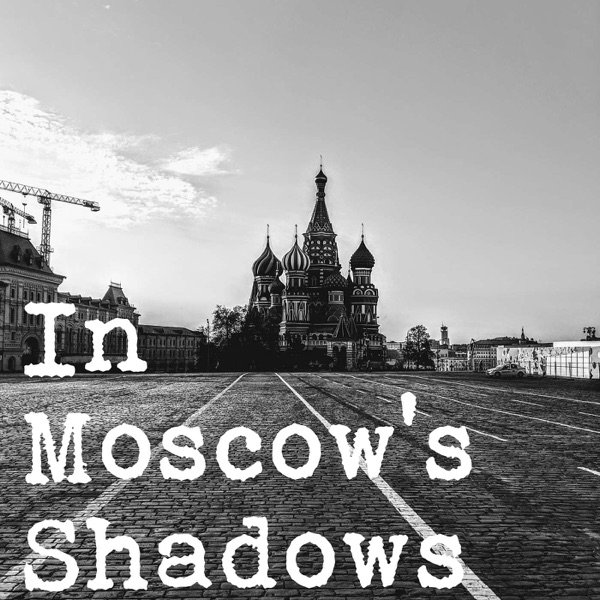
Russia, behind the headlines as well as in the shadows. This podcast is the audio counterpart to Mark Galeotti's blog of the same name, a place where "one of the most informed and provocative voices on modern Russia", can talk about Russia historical and (more often) contemporary, discuss new books and research, and sometimes talk to other Russia-watchers. If you'd like to keep the podcast coming and generally support my work, or want to ask questions or suggest topics for me to cover, do please contribute to my Patreon at https://www.patreon.com/InMoscowsShadows The podcast's corporate partner and sponsor is Conducttr , which provides software for innovative and immersive crisis exercises in hybrid warfare, counter-terrorism, civil affairs and similar situations.
On the charts
Every published chart this podcast appears in, in the snapshot behind this page. Each one links to the chart it came off.
From the feed
The latest episodes published to this podcast’s own RSS feed. Titles and descriptions are the publisher’s.
I start with a round-up of current news stories: the Witkoff-Kushner peace mission that is likely heading nowhere, Zelensky's apparent threat to civil aviation that was likely more psyop than serious, and the SCO summit in Bishkek that was likely more significant than either of the above. (And medieval counterfeiting, for good measure...) In the second half, I look at Russia's drone strike on the SBU HQ in Kyiv and the signs of a SBU-GUR rivalry, driven by both politics and also the thriving criminal call centre fraud industry. The podcast's corporate partner and sponsor is Conducttr , which provides software for innovative and immersive crisis exercises in hybrid warfare, counter-terrorism, civil affairs and similar situations. You can also follow my blog, In Moscow's Shadows , and become one of the podcast's supporting Patrons and gain question-asking rights and access to exclusive extra materials including the (almost-) weekly Govorit Moskva news briefing right here . Support the show
Everyone keeps diagnosing Putin’s mood, not least given the CIA Director’s visit to Moscow. Putin is angry, he's frightened, he's desperate -- that seems to be the standard Western talking point these days, and hence the fear that he might do something dangerously escalatory. But is he? Things might actually look rather more encouraging from his perspective. So, in this episode, I try and peer through the Kremlin's windows, to understand how he believes things are going, in war and potential peace. Finally, I look at Nicole Grajewski's excellent new book, Russia and Iran. Partners in defiance, from Syria to Ukraine (Hurst, 2026) and what that may say not just about the Moscow-Tehran relationship, but also our understandings of the world. The podcast's corporate partner and sponsor is Conducttr , which provides software for innovative and immersive crisis exercises in hybrid warfare, counter-terrorism, civil affairs and similar situations. You can also follow my blog, In Moscow's Shadows , and become one of the podcast's supporting Patrons and gain question-asking rights and access to exclusive extra materials including the (almost-) weekly Govorit Moskva news briefing right here . Support the show
The war seems to be getting (even) nastier, in part perhaps - and this may be over-optimistic - as both sides seen an endgame almost in sight, as well as out of growing desperation on both sides. The desperation even extends to digging up Prince Dmitri Donskoi's bones for propaganda purposes. Then again, in the second half this gives me an excuse to talk about a couple of archaeological stories that have no real political importance, but interested me... The episode of the Peacemonger podcast I mentioned is here . The comments are, well, quite something. The podcast's corporate partner and sponsor is Conducttr , which provides software for innovative and immersive crisis exercises in hybrid warfare, counter-terrorism, civil affairs and similar situations. You can also follow my blog, In Moscow's Shadows , and become one of the podcast's supporting Patrons and gain question-asking rights and access to exclusive extra materials including the (almost-) weekly Govorit Moskva news briefing right here . Support the show
When the Kremlin changed its mind and decided to ban the opposition party Yabloko (Apple) from running in September's elections, it demonstrated its concern that this could become the new vessel of the 'coalition of the fed-up.' After all, this seeming no-hoper party was suddenly being boosted by a guerrilla meme campaign and looked as if it might even cross the 5% threshold to get into the Duma. This could not be allowed. The Kremlin is not frightened of Yabloko winning, it is frightened of people discovering one another and forming horizontal ties in a system that relies on atomisation and apathy. From there, I look at The Successor , Mikhail Fishman’s major new biography of Boris Nemtsov, the opposition politician murdered in 2015, using it to explore the dilemmas of opposition politics under Putin: charisma versus organisation, symbols versus power, and why the 1990s still poison today’s reputations. This is also live argument splitting the exiled opposition and Western commentators: should the priority be sanctions and isolation to weaken the regime, or protecting Russians while trying to build a credible future political force? It’s dissident moral authority versus politician’s ambition, with the added warning that collapsing systems can usher in something worse. The articles I mention are Nigel Gould-Davies's first in the Spectator , then Ilya Yashin's rebuttal in the Moscow Times , followed again by Gould-Davies here . The podcast's corporate partner and sponsor is Conducttr , which provides software for innovative and immersive crisis exercises in hybrid warfare, counter-terrorism, civil affairs and similar situations. You can also follow my blog, In Moscow's Shadows , and become one of the podcast's supporting Patrons and gain question-asking rights and access to exclusive extra materials including the (almost-) weekly Govorit Moskva news briefing right here . Support the show
Ukraine’s long-range campaign against Russia is no longer just about spectacular refinery fires. When Kyiv pivots towards softer targets like logistics hubs, it can hit morale, prices, and everyday life in ways that pure military targets do not. It is also a reminder of the innovation cycle in the war: Ukraine shifts tactics, Russia adapts, and both sides hunt for the next gap in air defences and the next pressure point that the public cannot ignore. What is the political intent behind these strikes, and how may Moscow respond? In the second half, I look at the political battlefield ahead of State Duma elections. Putin suddenly tried to present himself as the caring tsar, parties fight for the grey vote, and the only credible liberal option, Yabloko, faces a squeeze. How far will the political technology go, and can a managed election still look credible during a real war? The podcast's corporate partner and sponsor is Conducttr , which provides software for innovative and immersive crisis exercises in hybrid warfare, counter-terrorism, civil affairs and similar situations. You can also follow my blog, In Moscow's Shadows , and become one of the podcast's supporting Patrons and gain question-asking rights and access to exclusive extra materials including the (almost-) weekly Govorit Moskva news briefing right here . Support the show
Zelensky sacks a defence minister, then removes his commander-in-chief, and suddenly the question is not “who is better?” but “who controls the politics of war?” I use this as an opportunity to explore the systemic warfighting capacities of Ukraine and Russia defined not so much in military but political terms: political focus, generating and motivating soldiers, and learning. Russia can concentrate resources and recruit with money longer than many expect, but morale, discipline, and selective adaptation bite hard when reforms threaten the regime’s control. Ukraine looks more politically contested, yet its civic autonomy and bottom-up innovation can translate into faster learning and stronger buy-in. Which matters more in the end, mass or legitimacy? The books I discuss are: Serhiy Kudelia, Seize the City, Undo the State: The Inception of Russia's War on Ukraine (Oxford UP, 2025) Edward Crowther, War in Ukraine, Vol. 1: Armed Formations of the Donetsk People’s Rep 2014-2022 (Helion, 2022) Illya Sekirin, Rise of the Machines – Drone Warfare in the Russia-Ukraine War , edited by Andrew Simms (Helion, 2026) The articles I mention are: Balász Jarábik, ' Control Above Reform: What’s Behind Ukraine’s Government and Security Reshuffle? ,' Carnegie Politika , 24 July 2026 Fabrizio Minniti & Giangiuseppe Pili, ‘ Russia’s Selective Adaptation: Command, Control and the Limits of Learning in War ,' RUSI, 22 July 2026 The podcast's corporate partner and sponsor is Conducttr , which provides software for innovative and immersive crisis exercises in hybrid warfare, counter-terrorism, civil affairs and similar situations. You can also follow my blog, In Moscow's Shadows , and become one of the podcast's supporting Patrons and gain question-asking rights and access to exclusive extra materials including the (almost-) weekly Govorit Moskva news briefing right here . Support the show
Putin is being pressed by some within the elite to call it quits and freeze the war on the current front line, by others to step up and try and impose a quick military solution. His natural impulse is to put off decisions, but Kyiv's campaign against Crimea may make that impossible. He seems determined to hold out for the last bit of the Donbas, so he has to escalate. With other options, from nuclear demonstration to stepping up the covert campaign in Europe not being viable, all he has is expanding the force in Ukraine, and that will require an unpopular and dangerous mobilisation. The podcast's corporate partner and sponsor is Conducttr , which provides software for innovative and immersive crisis exercises in hybrid warfare, counter-terrorism, civil affairs and similar situations. You can also follow my blog, In Moscow's Shadows , and become one of the podcast's supporting Patrons and gain question-asking rights and access to exclusive extra materials including the (almost-) weekly Govorit Moskva news briefing right here . Support the show
“Russia is run by the spooks” is a satisfying line, but it is also a lazy one. Despite talk of a 'Chekistocracy' run by the intelligence and security services, the FSB, SVR and GRU are better understood as competing institutional actors than as a single all-powerful caste pulling every lever in the Kremlin. In that context, "power" itself is a complex phenomenon, and I outline a framework of six different kinds of power: the ability to dictate policy, the court politics of access and trust, the quiet art of resistance, the deeper pull of conceptual dominance through briefings and narratives, the pre-emptive authority that makes leaders avoid a fight, and the transactional coalitions that get things done below the apex. In the second part, I look at three excellent journalistic accounts of covert operations: Shaun Walker, The Illegals. Russia’s Most Audacious Spies And The Plot To Infiltrate The West (Profile Books, 2025) Drew Hinshaw & Joe Parkinson, Swap, A Secret History Of The New Cold War (Harpercollins, 2025) Bojan Pancevski, The Nord Stream Conspiracy (Hutchinson, 2026) The SSEES event I mention is here . The podcast's corporate partner and sponsor is Conducttr , which provides software for innovative and immersive crisis exercises in hybrid warfare, counter-terrorism, civil affairs and similar situations. You can also follow my blog, In Moscow's Shadows , and become one of the podcast's supporting Patrons and gain question-asking rights and access to exclusive extra materials including the (almost-) weekly Govorit Moskva news briefing right here . Support the show
A collection of stories to discuss, but all of which in one way or another come down to endgames: the death of Sergei Ivanov, the "drone siege" of Crimea, the debate over the use of non-strategic nuclear weapons, and a shell-shocked soldier threatening mutiny. How far, to put it fancifully, does what feels like the increasing the emergence of all kinds of false prophets, end is nigh doomsayers, cultists and rabblerousers tell us something about the mood in Russia? The podcast's corporate partner and sponsor is Conducttr , which provides software for innovative and immersive crisis exercises in hybrid warfare, counter-terrorism, civil affairs and similar situations. You can also follow my blog, In Moscow's Shadows , and become one of the podcast's supporting Patrons and gain question-asking rights and access to exclusive extra materials including the (almost-) weekly Govorit Moskva news briefing right here . Support the show
A 74-year-old port magnate known in the underworld as Antikvar is arrested by an FSB team, hauled into Moscow’s Basmanny Court, and suddenly the ghosts of St Petersburg’s wild 1990s feel very alive. Ilya Traber's career took him from from antiques monopolies to oil terminals, in the murky interface between “authoritative business” and outright organised crime. And much of it thanks to his relationship with Putin in and since the 1990s. Traber's name has run through the bloody annals of 'Banditsky Peterbug,' so why act now? My theory: he overstepped the bounds of the new rules, at a time when serious figures within the FSB, including First Deputy Director Korolev, had reason to go after him. But this would have come to nothing had Traber's old partner Putin not given the green light. When the decision is made at the top, even yesterday’s “untouchables” can become expendable. The podcast's corporate partner and sponsor is Conducttr , which provides software for innovative and immersive crisis exercises in hybrid warfare, counter-terrorism, civil affairs and similar situations. You can also follow my blog, In Moscow's Shadows , and become one of the podcast's supporting Patrons and gain question-asking rights and access to exclusive extra materials including the (almost-) weekly Govorit Moskva news briefing right here . Support the show
Peace gets talked about as if it is a destination we can spot from the front line, but the closer we look, the more it feels like a mirage. Ukraine’s mid-range strikes and tactical gains tempt commentators into declaring a decisive shift, and then into assuming peace is near. Real progress matters, but overconfident stories can set the public up for disappointment and push policymakers towards shortcuts. I take an article by British ex-diplomat Ian Proud on what he thinks a peace would require - I agree with many of his diagnoses, but not with a lot of his prescriptions - as a starting point to explore the different moving parts within any peace process. I don't end up feeling especially optimistic, although Russia could still just stop fighting at any time. The Proud article, by the way, is here: https://responsiblestatecraft.org/ukraine-russia-europe-talks/ The podcast's corporate partner and sponsor is Conducttr , which provides software for innovative and immersive crisis exercises in hybrid warfare, counter-terrorism, civil affairs and similar situations. You can also follow my blog, In Moscow's Shadows , and become one of the podcast's supporting Patrons and gain question-asking rights and access to exclusive extra materials including the (almost-) weekly Govorit Moskva news briefing right here . Support the show
Russia still talks about the “Near Abroad” as if the map never changed, but the region is changing anyway. After a quick touch on Zelensky's open letter to Putin and the St Petersburg International Economic Forum, I dive into the relative trajectories of Armenia, currently at the polls, and Belarus, emphatically not. Despite its continued use of this problematic, imperialist term the "Near Abroad," in different ways, Moscow’ is finding its influence fraying across the former Soviet space, and why the Kremlin is leaning harder on pressure, deniability, and narrative spin to compensate for a shrinking sphere of influence. The podcast's corporate partner and sponsor is Conducttr , which provides software for innovative and immersive crisis exercises in hybrid warfare, counter-terrorism, civil affairs and similar situations. You can also follow my blog, In Moscow's Shadows , and become one of the podcast's supporting Patrons and gain question-asking rights and access to exclusive extra materials including the (almost-) weekly Govorit Moskva news briefing right here . Support the show
A Russian drone hits a Romanian apartment block, two civilians are injured, and suddenly a stray weapon becomes a case study in how Putin’s Kremlin handles bad news. Why does the Kremlin’s crisis management default to a belligerent, self-sabotaging sequence that turns a manageable incident into a wider political problem? It comes down to the priorities of an insecure, personalistic authoritarian system that equates any admission of failure with weakness, that regards information as a battlefield, and which lacks institutional filters between personality and policy. Details of the 23 June event in Potsdam I mentioned are: https://www.bundeswehr.de/de/marc-galeotti-autocracy-vs-technocracy-explaining-ukraine-war-6107930 The podcast's corporate partner and sponsor is Conducttr , which provides software for innovative and immersive crisis exercises in hybrid warfare, counter-terrorism, civil affairs and similar situations. You can also follow my blog, In Moscow's Shadows , and become one of the podcast's supporting Patrons and gain question-asking rights and access to exclusive extra materials including the (almost-) weekly Govorit Moskva news briefing right here . Support the show
After Putin's Beijing visit - long on rhetoric, short on results - I look more broadly as Asia: the limits of the "friendship with no limits" with China, heding with India, and the ebbing of hegemony in Central Asia. In short, everyone is a transactional pragmatist, behind the talk of "all-weather partnerships" and "eternal friendships." But then again, isn't everyone everwhere, these days? The podcast's corporate partner and sponsor is Conducttr , which provides software for innovative and immersive crisis exercises in hybrid warfare, counter-terrorism, civil affairs and similar situations. You can also follow my blog, In Moscow's Shadows , and become one of the podcast's supporting Patrons and gain question-asking rights and access to exclusive extra materials including the (almost-) weekly Govorit Moskva news briefing right here . Support the show
First, a round up of some current issues: Putin heading to China, two governors out (and two men with Ukraine war connections in), party politics and the jostling for second place, and how the Council of Europe is implicitly encouraging Putin to stay in power until he dies... In the second half, the opening episode of a series of alternative history (the rest will be available to paying Patrons) exploring some of the great what-ifs. This time, what if Kyiv had surrendered to the Mongols in 1240 and never lost its pre-eminence? Following that single fork in the road leads to a different centre of gravity, different institutions, and maybe even a world where “Ukraine” never emerges in the way we know it. The podcast's corporate partner and sponsor is Conducttr , which provides software for innovative and immersive crisis exercises in hybrid warfare, counter-terrorism, civil affairs and similar situations. You can also follow my blog, In Moscow's Shadows , and become one of the podcast's supporting Patrons and gain question-asking rights and access to exclusive extra materials including the (almost-) weekly Govorit Moskva news briefing right here . Support the show
No tanks, great camera work. Victory Day is supposed to be Russia’s most unshakeable story, the moment when the state proves its strength, its allies, and its confidence on Red Square. Yet watching this year’s parade, I can’t escape the sense that the symbolism is working harder than the reality: fewer troops, no heavy hardware in Moscow, and security concerns hanging over the whole performance. In the rest of the podcast, I look at a leaked report on spinning peace and wonder if it part of an attempt to lobby Putin indirectly, the appointment of a new commander of Aerospace Forces, Colonel General Chaiko, and that (to me, pretty dodgy) 'European intelligence report' that has caused such a storm. The bigger point is simple and uncomfortable: disinformation and psychological warfare are part of how this conflict is fought, and they thrive on our appetite for certainty. The Kyiv Independent report I mentioned is here . The podcast's corporate partner and sponsor is Conducttr , which provides software for innovative and immersive crisis exercises in hybrid warfare, counter-terrorism, civil affairs and similar situations. You can also follow my blog, In Moscow's Shadows , and become one of the podcast's supporting Patrons and gain question-asking rights and access to exclusive extra materials including the (almost-) weekly Govorit Moskva news briefing right here . Support the show
A battlefield setback in Mali sparks a much bigger question: what kind of power is Russia now, and what kind of power can it afford to be? Is it a superpower? No. Is it a great power? It depends what you mean. It certainly is not just the "gas station with nukes" of the cliche. Putin’s language of “sovereign civilisation” recasts greatness as resistance rather than dominance, especially as Victory Day messaging leans on endurance. I argue Russia is a middle power that can pivot, triangulate and sometimes punch above its weight without shaping the world order. That's no bad thing. Russia (and Putin) are not "failures" as some would suggest, even if they have by no means hit their grand, aspirational goals. Russia would be a lot happier if it accepted this status but for Putin and his Homo Sovieticus peers, alas, this is not enough - and that is what has lead us all to the present unhappy place. The article I mentioned from The i Paper is here , and the Deutsche Welle video is here . The podcast's corporate partner and sponsor is Conducttr , which provides software for innovative and immersive crisis exercises in hybrid warfare, counter-terrorism, civil affairs and similar situations. You can also follow my blog, In Moscow's Shadows , and become one of the podcast's supporting Patrons and gain question-asking rights and access to exclusive extra materials including the (almost-) weekly Govorit Moskva news briefing right here . Support the show
Putin didn’t pick a battlefield hero to run Russia’s Defence Ministry. He picked Andrei Belousov, an economist with a planner’s instincts and a technocrat’s patience. Thats what the Kremlin thinks it needs most right now: a 'Quartermaster-in-Chief,' who wouldn't tangle with Chief of the General Staff Gerasimov, but instead focus in procurement that works, production at scale, drones that reach units fast, and a defence industrial complex that can keep up with an ugly, grinding war economy. He is satisfying Putin, the generals and society -- for now. But his legitimacy depends on results, he is boxed in by a team of deputies representing other factions and interests, and in many ways the real tests begin when the war ends. The podcast's corporate partner and sponsor is Conducttr , which provides software for innovative and immersive crisis exercises in hybrid warfare, counter-terrorism, civil affairs and similar situations. You can also follow my blog, In Moscow's Shadows , and become one of the podcast's supporting Patrons and gain question-asking rights and access to exclusive extra materials including the (almost-) weekly Govorit Moskva news briefing right here . Support the show
The fastest way to lose your grip on Russia is to reach for the word “war” every time a scary headline lands. The incentives are everywhere: politicians who want public backing for big defence spending, media outlets that live on attention, and all of us who share first and think later. I look at two particular examples: the current fascination in the British press with the idea that Russia may launch an attack using long-range missiles, and a truly insane essay by Konstantin Malofeyev in his Tsargrad media outlet fantasising about a tactical nuclear strike to end the Ukraine war. The British article is here , the Russian one here . The podcast's corporate partner and sponsor is Conducttr , which provides software for innovative and immersive crisis exercises in hybrid warfare, counter-terrorism, civil affairs and similar situations. You can also follow my blog, In Moscow's Shadows , and become one of the podcast's supporting Patrons and gain question-asking rights and access to exclusive extra materials including the (almost-) weekly Govorit Moskva news briefing right here . Support the show
Power doesn’t just seize territory. It seizes the story. I’m using a selection of 6 excellent new books to follow the narrative battlegrounds where modern Russia tries to control what people see as true, normal, and inevitable, and where society still finds ways to push back even when formal protest is risky, whether in framing Harry Potter, or surviving in the occupied Donbas. The books in question are: Alexis Lerner, Post-Soviet Graffiti. Free Speech in Authoritarian States (University of Toronto Press, 2025) - see also her Eurasian Knot podcast interview here . Michael Gorham, Networking Putinism. The rhetoric of power in the digital age (Cornell University Press, 2026) Eliot Borenstein, The Politics of Fantasy. Magic, Children’s Literature and Fandom in Putin's Russia (University of Wisconsin Press, 2025). Greta Lynn Uehling, Everyday War: The Conflict Over Donbas, Ukraine (Cornell University Press, 2023) David Lewis, Occupation. Russian Rule in Southeastern Ukraine (Hurst, 2025) Martin Laryš, Rebel Militias in Eastern Ukraine, from leaderless groups to proxy armies (Routledge, 2025). Details of the Times event on 7 May I mentioned are here . The podcast's corporate partner and sponsor is Conducttr , which provides software for innovative and immersive crisis exercises in hybrid warfare, counter-terrorism, civil affairs and similar situations. You can also follow my blog, In Moscow's Shadows , and become one of the podcast's supporting Patrons and gain question-asking rights and access to exclusive extra materials including the (almost-) weekly Govorit Moskva news briefing right here . Support the show
Ranking source
Apple Podcasts rankings via the Mato Topic Intelligence Platform.
Observed September 19, 2026.
Apple and Apple Podcasts are trademarks of Apple Inc., registered in the U.S. and other countries.
Pairs with
Bring this source into Mato to read its transferable patterns, then turn them into an original show for your own audience.