Mato just raised pre-seed Read more

Podcast charts
Published by The Hammersley Brothers
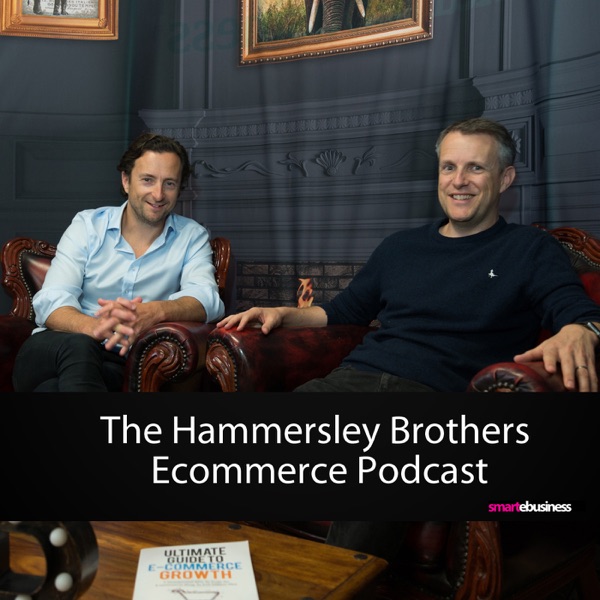
The Hammersley Brothers Ecommerce Podcast By Mark & Ian Hammersley
On the charts
Every published chart this podcast appears in, in the snapshot behind this page. Each one links to the chart it came off.
From the feed
The latest episodes published to this podcast’s own RSS feed. Titles and descriptions are the publisher’s.
Your bestsellers can look available while the sizes your customers want are sold out. We made that mistake in our own Shopify bedding business, with replacement products available further down the collection pages. Want help identifying what is holding back growth in your ecommerce business? Apply to work with the Hammersley Brothers: https://go.hammersleybrothers.com/apply-now/?utm_source=youtube&utm_medium=video&utm_campaign=shopify_stock_mistake&utm_content=description In this episode, Mark and Ian explain what happened and discuss the stock, merchandising and advertising decisions to review before Black Friday and Christmas trading. We cover why selling out is not always a success, when spending more on advertising makes little sense, and how to investigate products you could have sold more of last year. We also discuss avoiding panic hires, helping your ecommerce team understand what matters, and using AI to analyse business data without handing over the decisions. Subscribe for practical ecommerce conversations about sales, margins and profitable growth. P.S. Whenever you’re ready... here are 3 ways Ian and I can help you grow your ecommerce business: 1. Talk to us. Book a call with us and let's talk about accelerating your growth - https://go.hammersleybrothers.com/apply-now/ 2. Grab a copy of our book - https://gohigh.hammersleybrothers.com/get-the-book 3. Follow the Hammersley Brothers on Instagram and connect with e-commerce owners who are scaling too - https://www.instagram.com/hammersleybrothers
Why do successful ecommerce brands suddenly stop growing? After reviewing 100 ecommerce businesses and working with thousands of brands over the years, we identified the seven most common bottlenecks that prevent ecommerce companies from reaching the next level. Watch the full episode to discover where your ecommerce business may be getting stuck and what you should focus on next. Subscribe for practical ecommerce growth strategies based on real businesses, real numbers and decades of experience. P.S. Whenever you’re ready... here are 3 ways Ian and I can help you grow your ecommerce business: 1. Talk to us. Book a call with us and let's talk about accelerating your growth - https://go.hammersleybrothers.com/apply-now/ 2. Grab a copy of our book - https://gohigh.hammersleybrothers.com/get-the-book 3. Follow the Hammersley Brothers on Instagram and connect with e-commerce owners who are scaling too - https://www.instagram.com/hammersleybrothers
In previous episodes, we explored the strategies that help an ecommerce business navigate each stage of growth. Now, we use our premium bedding brand as a real-world case study, following its journey from an unproven store with underperforming ads to a multimillion-revenue business entering the scaling phase. Inside the episode: • How to validate whether strangers will buy from an unknown brand • Why some sales can be more encouraging than a low ROAS • How to identify winning products and eliminate distractions • Why mastering one advertising channel can beat trying everything • How reviews, trust and positioning increased conversion • Why average order value became the key to doubling ad spend • How better supplier margins and payment terms accelerated growth • How to make safer stock decisions during rapid growth • Why every ecommerce type requires a different strategy • What changes when a business moves from 5 million towards 20 million You do not need more random tactics. You need to understand your ecommerce type, your current revenue stage and the specific constraint preventing you from reaching the next level. Watch the full episode to learn how to stop operating emotionally, build a reliable growth model and make better decisions with advertising, stock, margins and cash flow. P.S. Whenever you’re ready... here are 3 ways Ian and I can help you grow your ecommerce business: 1. Talk to us. Book a call with us and let's talk about accelerating your growth - https://go.hammersleybrothers.com/apply-now/ 2. Grab a copy of our book - https://gohigh.hammersleybrothers.com/get-the-book 3. Follow the Hammersley Brothers on Instagram and connect with e-commerce owners who are scaling too - https://www.instagram.com/hammersleybrothers
What should an ecommerce founder actually focus on once the business reaches 5 million in annual revenue? In the fifth episode of our ecommerce growth series, we explain how the founder’s role, financial priorities and growth strategy must change as the company moves from 5 million to 20 million. At this stage, tiny improvements can produce huge results. Better supplier terms, stronger margins, improved conversion rates and smarter cash flow decisions can add millions in revenue and profit. But this is also where businesses become bloated, founders hire the wrong senior people and teams start chasing numbers that do not benefit the overall company. In this episode: • How to use your customer list, reviews and brand trust as a competitive moat • Why a 2 percent margin improvement can dramatically increase profit • The supplier, shipping and transaction fees you should renegotiate • Why ecommerce advice for huge brands rarely works for smaller businesses • When checkout optimisation and small conversion wins finally matter • How to remove the founder from routine work without losing the company culture • The difference between delegating and abdicating responsibility • How to structure expansion into new markets • Why revenue attribution numbers often do not add up • How to build a business that an investor would actually want to buy This stage is not about chasing every new tactic. It is about doing the right things exceptionally well, protecting the company’s profit, and using your scale to pull further ahead of competitors. P.S. Whenever you’re ready... here are 3 ways Ian and I can help you grow your ecommerce business: 1. Talk to us. Book a call with us and let's talk about accelerating your growth - https://go.hammersleybrothers.com/apply-now/ 2. Grab a copy of our book - https://gohigh.hammersleybrothers.com/get-the-book 3. Follow the Hammersley Brothers on Instagram and connect with e-commerce owners who are scaling too - https://www.instagram.com/hammersleybrothers
This week on the Hammersley Brothers Ecommerce Podcast, we continue our five-part series on the stages of ecommerce growth. In part four, we explain what really changes when an ecommerce business grows from 1 million to 5 million per year. This can be one of the most exciting stages of growth, but it is also one of the most dangerous. Hiring larger teams, working with more agencies, expanding into new countries, adding products, and increasing fixed costs may cause revenue to rise quickly while profit quietly disappears. In this episode: Why businesses get stuck between 1 million and 5 million How hiring expensive experts can reduce profit instead of increasing it Why every employee, agency, and supplier should follow the same number The danger of expanding into new countries too early Why adding more products can damage cash flow and stock management How to calculate the true cost of a new warehouse or team member Why growing revenue does not always increase the value of your business How better supplier relationships can improve margins and payment terms Why repeatable systems are more valuable than new ideas How to architect the numbers required to reach 5 million At this stage, growth cannot be left to chance. You need to understand exactly how your marketing spend, margins, stock, fixed costs, and profit work together. Otherwise, you may build a much larger business that makes less money. Subscribe for the final episode in the series, where we cover the journey from 5 million to 20 million. P.S. Whenever you’re ready... here are 3 ways Ian and I can help you grow your ecommerce business: 1. Talk to us. Book a call with us and let's talk about accelerating your growth - https://go.hammersleybrothers.com/apply-now/ 2. Grab a copy of our book - https://gohigh.hammersleybrothers.com/get-the-book 3. Follow the Hammersley Brothers on Instagram and connect with e-commerce owners who are scaling too - https://www.instagram.com/hammersleybrothers
Welcome back to the Hammersley Brothers eCommerce Podcast and our series on the different stages of ecommerce growth. In this episode, we look at the 500K to 1 million stage. This is the point where ecommerce founders often think they need more traffic, more products, more channels, more campaigns, and more complexity. But in reality, the next stage of growth usually comes from doing fewer things better. We cover: Why is more traffic not always the solution? How to increase revenue per visitor Why your store needs a stronger conversion rate, average order value, repeat purchases, and gross margin Why every product needs to earn its place How weak products can hurt cash flow and profit Why your growth roadmap should be based on the biggest bottleneck How to avoid changing your marketing just because you are bored with it Why systems beat heroics as your business grows What profit velocity means and why it matters Why scaling comes from doubling down on winners This episode is for ecommerce founders who want to move beyond the early growth stages and build a business that is clearer, more profitable, and easier to scale. P.S. Whenever you’re ready... here are 3 ways Ian and I can help you grow your ecommerce business: 1. Talk to us. Book a call with us and let's talk about accelerating your growth - https://go.hammersleybrothers.com/apply-now/ 2. Grab a copy of our book - https://gohigh.hammersleybrothers.com/get-the-book 3. Follow the Hammersley Brothers on Instagram and connect with e-commerce owners who are scaling too - https://www.instagram.com/hammersleybrothers
This week on the Hammersley Brothers eCommerce Podcast, we continue our series on the stages of ecommerce growth. After covering the 0 to 100K stage last week, this episode focuses on the next major step: growing from 100K to 500K per year. This is where many ecommerce businesses start to feel like they have something real. But it is also the stage where founders often make the mistakes that stop them from scaling. In this episode, we break down: • Why 100K to 500K is the danger zone for ecommerce brands • How shiny object syndrome slows down growth • Why most new tactics, platforms, and trends are distractions • The “beer mat test” for simplifying your ecommerce business • Why agencies often fail at this stage? • The numbers you actually need to understand before scaling • Why looking at too many numbers can hurt your business • How to avoid spreading your budget across too many marketing channels • Why profit, cash, and focus matter more than attribution obsession If your ecommerce business is doing around 100K per year and you want to get to 500K, this episode will help you understand what to focus on, what to ignore, and how to avoid adding complexity too early. P.S. Whenever you’re ready... here are 3 ways Ian and I can help you grow your ecommerce business: 1. Talk to us. Book a call with us and let's talk about accelerating your growth - https://go.hammersleybrothers.com/apply-now/ 2. Grab a copy of our book - https://gohigh.hammersleybrothers.com/get-the-book 3. Follow the Hammersley Brothers on Instagram and connect with e-commerce owners who are scaling too - https://www.instagram.com/hammersleybrothers
This week on the Hammersley Brothers eCommerce Podcast, we start a new series breaking down the key revenue stages every eCommerce business goes through. In this episode, we focus on the 0 to 100k revenue per year stage, the point where most eCommerce businesses begin, and where many get stuck. We explain why the strategy that gets you from 0 to 100k is completely different from the strategy needed at later stages, and why most founders overcomplicate things far too early. In this episode: • Why most eCommerce brands never get past the first 100k • Why does nobody care about your “brand” as much as you do at this stage? • Why trying to make everything perfect can stop you from making sales • How to choose a clear, addressable market • Why your margins, CAC, and basic numbers matter from day one • Why revenue means nothing without profit • Why doing Meta, Google, TikTok, SEO, Pinterest, affiliates, and Amazon all at once is usually a mistake • Why can too many products and SKUs create chaos before you are ready If you are building an eCommerce business and trying to get through the first 100k per year, this episode will help you focus on what actually matters. P.S. Whenever you’re ready... here are 3 ways Ian and I can help you grow your ecommerce business: 1. Talk to us. Book a call with us and let's talk about accelerating your growth - https://go.hammersleybrothers.com/scheduleuk-ant 2. Grab a copy of our book - https://gohigh.hammersleybrothers.com/get-the-book 3. Join the Ultimate Guide To Ecommerce Facebook group and connect with e-commerce owners who are scaling too - https://www.facebook.com/groups/924567391291786
Most eCommerce advice fails because it's aimed at the wrong stage of business growth. What works for a $10M brand can be completely irrelevant for a business doing $100K. In this episode, Mark and Ian break down the different stages of eCommerce growth and explain why knowing what to focus on next is one of the biggest advantages you can have as a founder. In this episode: • Why most founders focus on the wrong things at the wrong time • The 5 stages of eCommerce growth from startup to $20M+ • How priorities change as your business scales • Why copying large brands can slow your growth • The danger of chasing advanced tactics too early • What successful founders ignore so they can move faster • How to know what actually matters at your current stage • Why eCommerce growth is more about sequence than strategy • The biggest mistake business owners make when scaling If you've ever felt overwhelmed by conflicting eCommerce advice, this episode will help you understand exactly where to focus next. P.S. Whenever you’re ready... here are 3 ways Ian and I can help you grow your ecommerce business: 1. Talk to us. Book a call with us and let's talk about accelerating your growth - https://go.hammersleybrothers.com/scheduleuk-ant 2. Grab a copy of our book - https://gohigh.hammersleybrothers.com/get-the-book 3. Join the Ultimate Guide To Ecommerce Facebook group and connect with e-commerce owners who are scaling too - https://www.facebook.com/groups/924567391291786
This week on the Hammersley Brothers eCommerce Podcast, we reveal the real conversations happening inside fast-growing eCommerce brands. After speaking with our coaches and reviewing dozens of businesses, we break down the common themes that keep appearing in companies scaling from 7 figures to 8 figures and beyond. In this episode: • Most eCommerce brands think they have a marketing problem. Actually, they have a numbers problem • The real reason ads stop scaling and what successful brands do instead • Why are there no secret tactics, hacks, or magic buttons in eCommerce • How top brands "architect the numbers" before they scale • The role of seasonality and why many stores completely misunderstand it • Why existing customers create the biggest growth tailwind in your business • How larger brands use momentum to outperform smaller competitors • The surprising truth about branding that most founders gets wrong • Why tracking movement in your numbers matters more than the numbers themselves If you've ever wondered what the businesses doing $10M, $20M, or even $70M+ are actually focused on, this episode gives you a rare look behind the curtain. P.S. Whenever you’re ready... here are 3 ways Ian and I can help you grow your ecommerce business: 1. Talk to us. Book a call with us and let's talk about accelerating your growth - https://go.hammersleybrothers.com/scheduleuk-ant 2. Grab a copy of our book - https://gohigh.hammersleybrothers.com/get-the-book 3. Join the Ultimate Guide To Ecommerce Facebook group and connect with e-commerce owners who are scaling too - https://www.facebook.com/groups/924567391291786
This week on the Hammersley Brothers Ecommerce Podcast, we dive into one of the most overlooked parts of scaling an ecommerce business properly: stock forecasting. Most founders think forecasting is just spreadsheets and guesswork. In reality, it’s one of the biggest drivers of growth, cashflow, profitability, and momentum. In this episode, we discuss: Why stock forecasting feels like gambling for most ecommerce owners The hidden danger of understocking your best sellers Why running out of stock destroys your ROAS and growth How long lead times completely change your business model Why some brands intentionally choose lower margins for faster stock rotation The importance of focusing on hero products instead of too many SKUs How to improve your odds when ordering stock The relationship between stock levels, Meta ads, and Google Ads Why trending products can destroy forecasting models How to identify winning products before scaling harder The “yo-yo” effect that traps many ecommerce brands How great forecasting creates confidence to scale aggressively If you’ve ever struggled with stock, cashflow, forecasting, or scaling profitably, this episode will completely change how you think about ecommerce growth. P.S. Whenever you’re ready... here are 3 ways Ian and I can help you grow your ecommerce business: 1. Talk to us. Book a call with us and let's talk about accelerating your growth - https://go.hammersleybrothers.com/scheduleuk-ant 2. Grab a copy of our book - https://gohigh.hammersleybrothers.com/get-the-book 3. Join the Ultimate Guide To Ecommerce Facebook group and connect with e-commerce owners who are scaling too - https://www.facebook.com/groups/924567391291786
This week on the Hammersley Brothers Ecommerce Podcast, we talk about the mindset traps that stop ecommerce founders from scaling and what actually separates the brands that break through from the ones that stay stuck. Inspired by a conversation with one of our Level 1 members, we unpack what it really feels like when you're at the beginning of your ecommerce journey, looking up at bigger brands and wondering if you can actually build something massive yourself. In this episode, we discuss: Why do most ecommerce founders get distracted by too many ideas The dangerous trap of shiny object syndrome Why successful ecommerce businesses are built on boring fundamentals How understanding the “rules of the game” changes everything Why being busy is not the same as making progress The difference between founders who start brands and operators who scale them Why strong numbers and decision-making beat emotion every time How to know if your business actually has legs The brutal truth about scaling an ecommerce business Why failing fast can actually accelerate your success If you’ve ever felt overwhelmed, distracted, or unsure whether your ecommerce brand can truly scale, this episode will help you focus on what actually matters. P.S. Whenever you’re ready... here are 3 ways Ian and I can help you grow your ecommerce business: 1. Talk to us. Book a call with us and let's talk about accelerating your growth - https://go.hammersleybrothers.com/scheduleuk-ant 2. Grab a copy of our book - https://gohigh.hammersleybrothers.com/get-the-book 3. Join the Ultimate Guide To Ecommerce Facebook group and connect with e-commerce owners who are scaling too - https://www.facebook.com/groups/924567391291786
This week on the Hammersley Brothers eCommerce Podcast, we’re tackling a topic we haven’t covered before — but one that can have a massive impact on the growth of your business: Hiring the wrong person, team member, or agency. In eCommerce, the wrong hire doesn’t just cost you money. It can slow momentum, create bad energy in the business, pull you out of sync with the market, and in some cases, set you back for years. In this episode, we talk through: Why hiring the wrong people can be so damaging The hidden cost of bringing “C players” into your business Our own mistakes when it comes to hiring and choosing partners How to spot the warning signs before it’s too late What to look for when building the right team around your brand Whether you’re hiring internally, working with freelancers, or choosing an agency, this episode will help you avoid one of the biggest mistakes eCommerce brands make. P.S. Whenever you’re ready... here are 3 ways Ian and I can help you grow your ecommerce business: 1. Talk to us. Book a call with us and let's talk about accelerating your growth - https://go.hammersleybrothers.com/scheduleuk-ant 2. Grab a copy of our book - https://gohigh.hammersleybrothers.com/get-the-book 3. Join the Ultimate Guide To Ecommerce Facebook group and connect with e-commerce owners who are scaling too - https://www.facebook.com/groups/924567391291786
This week on the podcast, we’re breaking down one of the biggest reasons ecommerce brands struggle to scale with ads. It’s not always a traffic problem. It’s usually a revenue per visitor problem. Most store owners focus on traffic or conversion rate, but revenue per visitor is the metric that really drives ROAS, profitability, and growth. In this episode: What revenue per visitor actually means How it directly impacts your ROAS and ad performance Why is the conversion rate alone is misleading The relationship between AOV, conversion rate, and revenue per visitor Why your ads might not be the real problem The easiest lever to improve revenue per visitor quickly Real examples of how improving this metric changes everything Why most ecommerce stores are under-optimised Fix this one number, and your entire store performs differently. P.S. Whenever you’re ready... here are 3 ways Ian and I can help you grow your ecommerce business: 1. Talk to us. Book a call with us and let's talk about accelerating your growth - https://go.hammersleybrothers.com/scheduleuk-ant 2. Grab a copy of our book - https://gohigh.hammersleybrothers.com/get-the-book 3. Join the Ultimate Guide To Ecommerce Facebook group and connect with e-commerce owners who are scaling too - https://www.facebook.com/groups/924567391291786
Buying an ecommerce business can look straightforward on the surface. The revenue looks good. The brand looks decent. The seller talks about “huge potential”. But this is where people get caught out. What matters is not what the business looks like from the outside. It’s what is really going on underneath. The numbers. The margins. The customer behaviour. The cash flow. The operational risks you inherit the moment the deal is done. In this podcast episode, Mark and Ian break down the biggest mistakes people make when buying an ecommerce business, the red flags that are easy to miss, and what you should actually be looking at before you hand over any money. Because if you get this wrong, you’re not buying an opportunity. You’re buying a pile of problems. In this podcast episode: Why the stated profit is often not the real profit The hidden costs that only show up once you take over How supplier risk can destroy your margins overnight Why are there no repeat customers? It is a massive warning sign The difference between having customers and just having orders How to tell whether a business is under-optimised or just weak Why margin and lifetime customer value matter far more than top-line revenue What actually creates a moat in ecommerce Why reselling other people’s products is often riskier than it looks The danger of trend-driven and fad products How stock, lead times, and cash flow quietly kill ecommerce businesses The key questions you should be asking before you buy If you’re even considering buying an ecommerce business, watch this first. P.S. Whenever you’re ready... here are 3 ways Ian and I can help you grow your ecommerce business: 1. Talk to us. Book a call with us and let's talk about accelerating your growth - https://go.hammersleybrothers.com/scheduleuk-ant 2. Grab a copy of our book - https://gohigh.hammersleybrothers.com/get-the-book 3. Join the Ultimate Guide To Ecommerce Facebook group and connect with e-commerce owners who are scaling too - https://www.facebook.com/groups/924567391291786
In our latest podcast episode, we unpack five distinct areas that ecommerce brands should focus on right now. Why now? Because market conditions are shifting quickly, demand is less predictable, and AI is changing both the cost and complexity of execution. Pre-developing weather-related campaigns Brands can no longer afford to wait and react. The businesses winning right now are planning weather-led campaigns in advance so they can move as conditions change. Planning for the impact of major events on demand Big events this year, such as the World Cup or elections, can significantly skew consumer demand. We talk about why those moments need to be factored into planning early, not treated as an afterthought. Understanding whether performance is brand-led or market-led Categories are moving unevenly at the moment. Some are growing, some are flat, and some are down. It is critical to understand whether your performance is a reflection of your strategy or the broader market. Reviewing AI for front-end work to lower costs AI is now creating real opportunities to reduce costs in front-end marketing and production work. We look at where it can genuinely improve efficiency right now. Why taking ads in-house is easier now than it was a year ago AI has simplified campaign management to the point where bringing ads in-house is now far more realistic for many brands than it was even 12 months ago. This is a timely episode for marketers thinking about how to respond to changing demand, improve efficiency, and build a more adaptable marketing model for the year ahead. P.S. Whenever you’re ready... here are 3 ways Ian and I can help you grow your ecommerce business: 1. Talk to us. Book a call with us and let's talk about accelerating your growth - https://go.hammersleybrothers.com/scheduleuk-ant 2. Grab a copy of our book - https://gohigh.hammersleybrothers.com/get-the-book 3. Join the Ultimate Guide To Ecommerce Facebook group and connect with e-commerce owners who are scaling too - https://www.facebook.com/groups/924567391291786
Most ecommerce businesses are not worth investing in. Not because they are bad businesses. But because they are structurally broken. In this episode, Mark and Ian break down what actually makes an ecommerce business investable and why only a small percentage truly stands out. They cover: Why do only 1 in 10 ecommerce businesses have real scale potential? The difference between a lifestyle business and a scalable asset What “structurally broken” actually means in ecommerce The three key levers every serious investor looks at How to spot an unoptimised business with huge upside Why high margins and repeat purchases change everything The role of conversion rate, average order value, and lifetime value Why boring problem-solving products often outperform trendy brands How to think about market size and long-term growth potential This is not a theory. These are the exact lenses used to evaluate real ecommerce businesses doing millions. If you are building a brand, this episode will show you what makes it valuable and what holds most businesses back. P.S. Whenever you’re ready... here are 3 ways Ian and I can help you grow your ecommerce business: 1. Talk to us. Book a call with us and let's talk about accelerating your growth - https://go.hammersleybrothers.com/scheduleuk-ant 2. Grab a copy of our book - https://gohigh.hammersleybrothers.com/get-the-book 3. Join the Ultimate Guide To Ecommerce Facebook group and connect with e-commerce owners who are scaling too - https://www.facebook.com/groups/924567391291786
If your best products are out of stock, your ads are going to struggle. It does not matter how much product you have sitting in the warehouse. If the products that actually drive new customer sales are missing, performance gets hit hard. In this episode, Mark and Ian continue their 80:20 conversation and dive into one of the most overlooked parts of ecommerce growth: Stock. They break down: Why do some products matter far more than others How a few key SKUs often drive the majority of revenue Why stock depth beats endless product range How being out of stock on the wrong products can wreck your conversion rate and ROAS Why are first-time customer products especially important How Google and Meta behave when the core products are missing Why do many brands spread budgets across far too many SKUs What happens when businesses try to use weaker products to make up for missing bestsellers Why adding more categories often creates more problems, not more growth How to think more clearly about stock rotation, product focus, and scaling profitably The truth is simple: Most ecommerce brands are not short of products. They are short of the right stock in the right lines at the right time. If you want to scale without wasting money, this episode is worth watching. P.S. Whenever you’re ready... here are 3 ways Ian and I can help you grow your ecommerce business: 1. Talk to us. Book a call with us and let's talk about accelerating your growth - https://go.hammersleybrothers.com/scheduleuk-ant 2. Grab a copy of our book - https://gohigh.hammersleybrothers.com/get-the-book 3. Join the Ultimate Guide To Ecommerce Facebook group and connect with e-commerce owners who are scaling too - https://www.facebook.com/groups/924567391291786
Most ecommerce brands think that more products mean more sales. Usually, it means more complexity, more stock problems, more cash tied up, and worse performance. In this episode, Mark and Ian unpack one of the biggest truths in ecommerce growth: A small number of products usually drive the vast majority of the revenue. They break down: Why 20 percent of your SKUs often drive 80 percent of your sales? Why adding more products can actually slow down growth How too much range creates stock headaches, ad inefficiency, and wasted cash What Bedding Envy taught them about white sheets, bestsellers, and running out of the products that matter most Why narrower ranges with deeper stock often scale better than huge catalogues How Google and Meta behave when your revenue is spread too thinly across too many products Why “more choice” online does not work the same way it does in retail stores The difference between recruitment products, add-on products, and dead-weight SKUs This is a big one. Because a lot of ecommerce owners are not short of products. They are short of focus. If your range is getting bigger, but your growth is getting harder, this episode will explain why. P.S. Whenever you’re ready... here are 3 ways Ian and I can help you grow your ecommerce business: 1. Talk to us. Book a call with us and let's talk about accelerating your growth - https://go.hammersleybrothers.com/scheduleuk-ant 2. Grab a copy of our book - https://gohigh.hammersleybrothers.com/get-the-book 3. Join the Ultimate Guide To Ecommerce Facebook group and connect with e-commerce owners who are scaling too - https://www.facebook.com/groups/924567391291786
This is Episode 5 in our series on why your ads are not scaling, and this one is about something most ecommerce owners do without even realising. They panic. One bad day. One bad week. ROAS dips. Sales wobble. And suddenly, they are changing budgets, fiddling with campaigns, second-guessing the platforms, and essentially resetting the machine before it has had a chance to work. In this episode, Mark and Ian break down: Why emotional decision-making wrecks ad performance Why do most people change things far too quickly? How Google and Meta actually need time to optimise Why looking at single-day performance is a trap The power of using moving averages instead of reacting to noise Why the best ecommerce operators know when to hold their nerve How stock, seasonality, and demand create lumpy growth Why are some months naturally stronger than others, and that does not mean anything is broken? How to keep Google and Meta in sync instead of pulling one lever too hard The reason teams fail is that everyone is looking at different numbers. This is really about maturity. The brands that scale are not the ones constantly panicking and changing direction. They are the ones who understand the model, know their numbers, and only make changes when the data actually indicates it. If you are forever tweaking ads, budgets, and campaigns because of a bad day or two, this episode is for you. P.S. Whenever you’re ready... here are 3 ways Ian and I can help you grow your ecommerce business: 1. Talk to us. Book a call with us and let's talk about accelerating your growth - https://go.hammersleybrothers.com/scheduleuk-ant 2. Grab a copy of our book - https://book.hammersleybrothers.com/ 3. Join the Ultimate Guide To Ecommerce Facebook group and connect with e-commerce owners who are scaling too - https://www.facebook.com/groups/924567391291786
Ranking source
Apple Podcasts rankings via the Mato Topic Intelligence Platform.
Observed September 21, 2026.
Apple and Apple Podcasts are trademarks of Apple Inc., registered in the U.S. and other countries.
Pairs with
Bring this source into Mato to read its transferable patterns, then turn them into an original show for your own audience.