Mato just raised pre-seed Read more

Podcast charts
Published by Stephen Halasnik
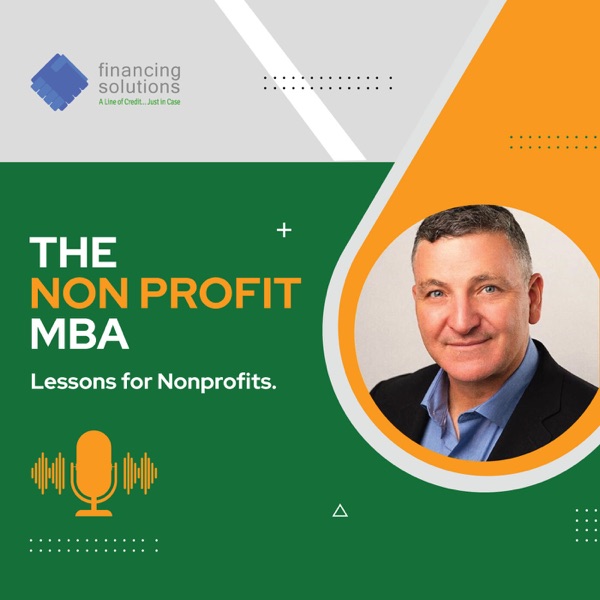
The Nonprofit MBA Podcast's purpose is to provide new business insights and fresh creative ideas for Nonprofit Executive Directors and their teams that will help them improve their Nonprofit organizations. Hosted by Stephen Halasnik, Managing Partner at Financing Solutions. Stephen sits down with Nonprofit executives and discusses ways to fundraise, forecast, and even fix your organization for a larger impact. Financing Solutions is the leading provider of Lines of Credit to Nonprofits.
On the charts
Every published chart this podcast appears in, in the snapshot behind this page. Each one links to the chart it came off.
From the feed
The latest episodes published to this podcast’s own RSS feed. Titles and descriptions are the publisher’s.
Becoming a nonprofit executive director can mean moving from leading programs to managing an entire organization, often without formal training in fundraising, finance, or operations. In this episode of the Nonprofit MBA Podcast, Stephen Halasnik of Financing Solutions speaks with Jocelyn Chamra Barrera, Executive and Clinical Director of The Christi Center in Austin, Texas, about her transition into nonprofit executive leadership. Jocelyn shares how she stepped into the role amid financial pressure and low staff morale, what she learned about fundraising and financial management, and why leadership, fundraising, and operations became three of her biggest responsibilities. The conversation also explores how new executive directors can learn from peers, develop management skills, stabilize their organizations before pursuing expansion, and build confidence through experience. Whether you're preparing to become an executive director or navigating your first few years, this episode offers practical insights into the challenges and opportunities of nonprofit leadership.
Grant funding is becoming more competitive, and even strong nonprofit organizations are seeing proposals rejected. In this episode of the Nonprofit MBA Podcast, Stephen Halasnik of Financing Solutions speaks with Allison Welch, founder of Spark the Fire Grant Writing Classes, about what grant reviewers actually look for and why some seemingly strong applications fail to receive funding. Welch brings more than 25 years of grant-writing experience and the perspective of having served as a grant reviewer. The conversation explores how AI is changing grant writing, why generic proposals struggle to stand out, how nonprofits can demonstrate measurable impact, and why funding diversification and organizational credibility matter. Nonprofit leaders will also learn why answering every part of a funder's question is critical, how data and storytelling can work together, and why a grant proposal should focus on the mission rather than presenting the organization as a financial rescue project. For executive directors, CFOs, development leaders, and grant writers, the episode offers practical guidance for building stronger and more credible grant proposals in an increasingly competitive funding environment.
What changes when an experienced corporate executive moves into nonprofit leadership? In this episode of the Nonprofit MBA Podcast, Stephen Halasnik of Financing Solutions speaks with Shaun Carver, Executive Director and CEO of International House UC Berkeley and President of International House Association, about the transition from for-profit to nonprofit leadership. Shaun shares what surprised him most about working with a nonprofit board, why consensus-building becomes such an important leadership skill, and how the role of an executive director changes as an organization evolves. Stephen and Shaun also discuss why nonprofit boards need to evolve with the organizations they serve, how to keep board members meaningfully engaged, and why fundraising eventually becomes a major responsibility for many nonprofit CEOs. Drawing on his experience managing sales teams in the for-profit world, Shaun explains why he views fundraising as a pipeline. Successful fundraising requires identifying the right prospects, building relationships, understanding donor interests, tracking activity, and bringing the executive director into the conversation at the right time. The conversation also explores how corporate skills in finance, operations, strategy, and organizational management can become valuable assets in nonprofit leadership, while still requiring executives to learn a different approach to governance, fundraising, and mission-driven leadership.
Every nonprofit eventually reaches a point where the leadership skills that fueled its early success are no longer enough to support its next stage of growth. Building an organization requires one set of strengths. Scaling it requires another. Strong nonprofit leadership requires more than passion. As organizations grow, executive director leadership must evolve from founder-focused decision making to building systems, developing leaders, and strengthening nonprofit organizational culture. On this episode of the Nonprofit MBA Podcast, Stephen Halasnik, Managing Partner of Financing Solutions, sits down with Dr. Lindsay Whorton, President of The Holdsworth Center, to discuss one of the most overlooked challenges nonprofit executives face: learning to lead a different organization than the one they originally built. Their conversation isn't about management techniques or productivity hacks. It's about the personal transformation leaders must make as their organizations grow, become more complex, and create greater impact. Whether you're leading a startup nonprofit or an established organization, the lessons are remarkably consistent. Growth doesn't simply require more resources or larger budgets. It requires leaders who are willing to evolve alongside their organizations.
Stephen Halasnik, Managing Partner of Financing Solutions, speaks with nonprofit leaders and finance professionals about the real-world financial challenges organizations face, including nonprofit cash flow gaps, funding delays, working capital shortages, and the need for stronger fundraising decisions. In this conversation, Shahar Brukner, Founder and CRO of Impala, explains why having more fundraising data does not automatically lead to better fundraising outcomes and how nonprofits can turn information into actionable intelligence.
Artificial intelligence is changing how nonprofits attract donors, improve visibility, and strengthen fundraising strategies. In this episode of The Nonprofit MBA Podcast, Stephen Halasnik speaks with Catherine LaCour of Blackbaud Giving Fund about AI-powered donor discovery, workplace giving, nonprofit website optimization, and practical ways organizations can use AI to improve fundraising and operational efficiency.
In this episode, Stephen Halasnik speaks with Dr. Adam Aponte about how nonprofits can manage cash-flow gaps, funding delays, and working-capital challenges in today's uncertain environment.
Is your nonprofit mission actually achievable? In today's uncertain funding environment, nonprofit leaders are being pushed to prove not only that their work matters, but that their mission is realistic, measurable, and aligned with real community needs. In this episode of the Nonprofit MBA Podcast , Stephen Halasnik speaks with Dr. Zuri Tau , founder and CEO of Social Insights , about how nonprofits can evaluate whether their mission is achievable, why theory of change matters, and how organizations can build stronger evaluation systems without needing massive budgets. They also discuss how funding instability, shifting public sentiment, and growing accountability pressures are forcing nonprofits to rethink strategy, clarify impact, and define success in ways that truly reflect community needs. In this episode, you'll learn: Why nonprofit missions should be aspirational but still measurable How nonprofits can assess whether their mission is achievable Why community-defined success matters How theory of change helps uncover blind spots Practical ways small nonprofits can begin evaluating impact This is an important conversation for nonprofit leaders, board members, funders, and anyone thinking seriously about strategy, outcomes, and long-term impact. Guest: Dr. Zuri Tau, Founder and CEO of Social Insights Host: Stephen Halasnik, Co-Founder of Financing Solutions
Change management in nonprofit strategy has become increasingly important as nonprofit leaders balance mission, funding uncertainty, and leadership transitions. In today's environment, that challenge is becoming far more complex. Funding can shift quickly, leadership transitions can happen unexpectedly, and external events can reshape priorities almost overnight. In this episode of the Nonprofit MBA Podcast , Stephen Halasnik, Co-Founder of Financing Solutions, speaks with Matt Glazer of Blue Sky Partners about one of the most important issues facing nonprofit organizations today: change management in nonprofit strategy . Glazer has led strategic planning efforts for more than 50 organizations and works with mission-driven groups on strategy, operations, leadership, and organizational development. Blue Sky Partners helps nonprofits and social impact organizations clarify vision, set priorities, and build practical roadmaps for growth and impact. The conversation highlights an increasingly clear reality in the nonprofit sector. A strategic plan is no longer enough if it sits on a shelf. In a world of funding interruptions, workforce strain, board turnover, and policy volatility, strategy must become a living process. That is where change management plays a critical role. This topic is especially timely because the nonprofit sector is facing real pressure. Data from the National Council of Nonprofits shows that nonprofits generate more than 80% of revenue from fees for services and government grants and contracts. At the same time, the 2025 Nonprofit Finance Fund survey found rising demand for services, increasing costs, and growing concern about future government funding.
Nonprofit leaders often overlook website maintenance, security, and speed. Yet, a nonprofit website is critical infrastructure for fundraising, donor trust, and search visibility. In the early days of the internet, a nonprofit's website was little more than a digital brochure: a static page listing a mission statement, a mailing address, and perhaps a grainy logo. Today, that same website is the organization's front door, donation engine, volunteer recruiter, grant validator, and public trust ledger all at once. For nonprofit leaders, the shift has been profound. A slow or insecure website is no longer an inconvenience. It is an operational risk. On a recent episode of the Nonprofit MBA Podcast, Stephen Halasnik from Financing Solutions sat down with Garrett Goldman, co-founder and CEO of StateWP, to explore what nonprofit executives need to understand about website security, performance, and governance in 2026. The conversation revealed a critical truth: nonprofits must stop treating their websites as one-time design projects and start treating them as mission-critical infrastructure.
Nonprofit financial management has become one of the most important challenges facing nonprofit leaders today. Economic uncertainty, changing donor priorities, and shifting government funding have made financial strategy more critical than ever. In this episode of the Nonprofit MBA Podcast, Stephen Halasnik speaks with Nick Jain, co-founder of Eagle Rock CFO Services, about how nonprofit financial management can improve through stronger budgeting, better bookkeeping, operational discipline, and measurable outcomes. Below is a summary of their conversation, followed by the full podcast transcript. In an era of political shifts, economic whiplash, and tightening donor priorities, America's nonprofits find themselves navigating a new and unsettled terrain. For decades, the sector has been a quiet giant—employing roughly one in five American workers before 2025, powering food banks, religious institutions, arts organizations, veterans' groups, and thousands of other mission-driven enterprises. But what happens when funding priorities change? When donors redirect their giving? When government support ebbs in one region and expands in another? On a recent episode of the Nonprofit MBA Podcast, Stephen Halasnik, co-founder of Financing Solutions (a leading provider of nonprofit lines of credit), sat down with Nick Jain, co-founder of Eagle Rock CFO Services, to explore a question weighing heavily on nonprofit leaders: How can nonprofits manage their finances better—especially in uncertain times? Their conversation revealed something both sobering and hopeful. The nonprofit sector, Jane argues, is neither fragile nor immune to change. It is enduring—but only if leaders run it with discipline.
In this episode of the Nonprofit MBA Podcast, host Stephen Halasnik speaks with Luke Mickelson, founder of Sleep in Heavenly Peace, about how a small garage-based Christmas project grew into a nearly $30 million nonprofit operating across the U.S. and beyond. Mickelson shares the key inflection points behind that growth, including realizing the scale of child bedlessness, transitioning to a formal nonprofit, leveraging a major media moment from Returning the Favor with Mike Rowe, and—most importantly—building the right governance structure, systems, and processes to sustain rapid expansion. The conversation explores why treating a nonprofit like a real business matters, how a "franchise-like" chapter model with a single EIN enabled scalable growth while preventing mission creep, and how COVID ultimately helped the organization slow down and professionalize operations. Mickelson also discusses the critical distinction between visionary founders and operational leaders, the necessity of investing in talent, and why long-term nonprofit success depends on strong leadership, clear roles, and disciplined execution of best practices.
In this episode of the Nonprofit MBA Podcast, Stephen Halasnik sits down with nonprofit HR expert Allison Wyatt, from Edgility Talent Partners, to explore why an organization's staff should be viewed not as an expense, but as a strategic asset. Wyatt explains how intentional hiring, clear role design, and ongoing staff development directly impact mission effectiveness, financial sustainability, and organizational culture. The conversation covers common nonprofit staffing mistakes, the hidden costs of turnover, and how leaders can better align people strategy with long-term goals—even with limited budgets. Together, they emphasize that nonprofits that invest thoughtfully in their people build stronger, more resilient organizations capable of greater impact.
In this episode of the Nonprofit MBA Podcast, Stephen Halasnik talks with Michael Toguchi, Chief Strategy Officer at eResources, about how nonprofits can streamline grantmaking and donor programs to save time and reduce staff burnout in a tighter funding environment. They explore how recent economic and political shifts have made grants harder to secure, pushing organizations to apply for more funding with limited resources. Michael explains how combining strong internal processes with nonprofit-specific software can create efficient, repeatable workflows for grants and donor management, improve results, and protect organizations from staff turnover, ultimately freeing teams to focus more on their mission and impact.
In today's rapidly changing nonprofit landscape, nonprofit arts organizations are facing significant challenges. Traditional models of fundraising, ticket sales, and audience engagement no longer meet funder expectations. The conversation between Stephen Halasnik and Alan Harrison highlights a core shift taking place: arts organizations and community impact must now be directly connected. Organizations that can measure and demonstrate their impact are the ones best positioned to survive and thrive. Harrison's career spans more than 300 theater productions on and off Broadway. He is the author of the Scene Change series, which argues that arts nonprofits must rethink their missions, focus on outcomes, and demonstrate tangible benefits to their communities in order to survive.
Nonprofits have traditionally operated with a mindset of caution, focusing primarily on mission-driven work while avoiding financial risk. While this approach promotes stability, it often limits growth and long-term impact. On a recent episode of the Nonprofit MBA Podcast, host Stephen Halasnik, co-founder of Financing Solutions, discussed this topic with Barb Clapp, CEO of Dwyer Workforce Development. Together, they explored how nonprofits can grow faster by taking strategic risks similar to for-profit businesses.
For many nonprofit leaders, communication feels like an afterthought, something to address once the real work is done. Yet, in today's media-saturated world, a clear, emotional, and strategic message is not just a "nice to have." It is the heartbeat of organizational growth. As Jason Clark, President and CEO of VIA Studio, told Stephen Halasnik in their conversation for The Nonprofit MBA Podcast, "It is really hard to read the label from inside the jar." That metaphor captures a common problem: many nonprofits are too close to their own mission to communicate it effectively to others. This shift highlights why a strong nonprofit marketing strategy is essential today. Clark's Louisville-based digital agency, VIA Studio, has spent over two decades helping nonprofits and mission-driven organizations modernize their branding, websites, and messaging strategies. His insights shed light on a challenge faced by countless small and mid-sized nonprofits: how to evolve from outdated, fact-heavy messaging to emotionally resonant storytelling that inspires real engagement and real donations.
The New Era of Nonprofit Fundraising: Fewer Donors, Bigger Gifts In today's nonprofit landscape, one thing is clear: major gifts are driving the deepest impact. According to research from the Giving USA 2024 Report, individual giving dropped 3.4% last year, but donations from high-net-worth individuals and foundations increased significantly. This shift has created a paradox: fewer donors overall, but larger contributions from the top tier of philanthropists. This shift is reshaping major gifts fundraising across the nonprofit sector. Fundraising expert Gail Perry, founder of the Gail Perry Group, says this moment represents both a challenge and an opportunity. "Every single organization has major donors in its database," she explains. "The problem is, they're often treated like small donors—receiving generic messages instead of genuine engagement." This moment represents a major shift in major gifts fundraising.
The New Reality for Nonprofit Funding For decades, nonprofits have relied heavily on a mix of grants, donations, and government funding to sustain their missions. But as global philanthropy evolves, those traditional sources are becoming less predictable. According to The Nonprofit Finance Fund's 2024 State of the Nonprofit Sector Report, nearly 56% of nonprofit leaders said funding uncertainty is their biggest operational challenge. On a recent episode of the Nonprofit MBA Podcast, host Stephen Halasnik and guest Joe Reed, founder of the Exponent Group and SolveLine, discussed an urgent question: What happens when your biggest grant disappears? Their answer—nonprofits must begin to think like startups, diversifying income streams and even launching mission-aligned for-profit ventures to ensure long-term impact. "We don't have the luxury to not have this conversation anymore," Reed emphasized. "Healthy nonprofits must start thinking creatively about how they generate revenue."
The Quiet Revolution Reshaping Charitable Giving In recent years, one of the most powerful forces shaping philanthropy hasn't come from a new fundraising platform or viral campaign—it's come from an investment account. Donor-Advised Funds (DAFs), once the domain of the ultra-wealthy, are now a mainstream tool for charitable giving. For nonprofits, understanding and integrating a DAF strategy is no longer optional—it's essential. According to the National Philanthropic Trust's 2024 DAF Report, assets in donor-advised funds have surpassed $230 billion in the United States, with annual grantmaking exceeding $50 billion. These numbers represent a 30% increase in just five years, signaling a major shift in how Americans prefer to give. For nonprofits that fail to adapt, this change could mean missing out on the next generation of major donors.
Ranking source
Apple Podcasts rankings via the Mato Topic Intelligence Platform.
Observed November 4, 2026.
Apple and Apple Podcasts are trademarks of Apple Inc., registered in the U.S. and other countries.
Pairs with
Bring this source into Mato to read its transferable patterns, then turn them into an original show for your own audience.