Mato just raised pre-seed Read more

Podcast charts
Published by Andy Humphrey
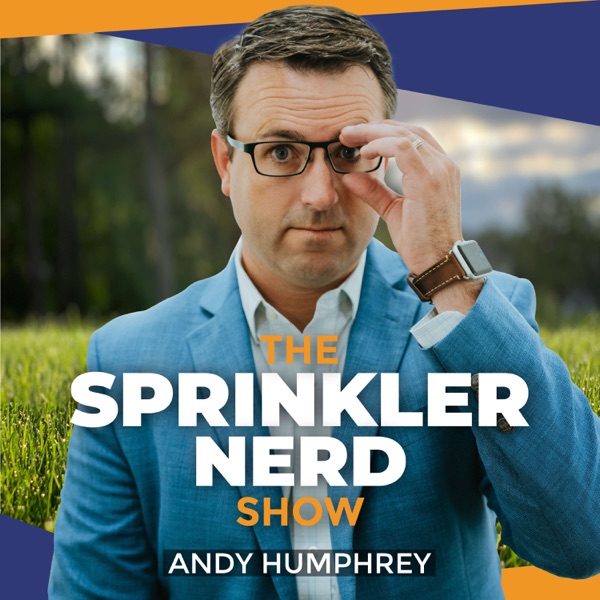
If you are a Landscape Entrepreneur this show is for you. Andy, a former contestant on the ABC hit television series Shark Tank, irrigation technology expert, and multimillion-dollar eCommerce entrepreneur brings his curiosity & creativity to tease out the secrets of successful landscape influencers and business owners. Discover how to get a leg up on the competition, be the smartest person at the design table, and advance your career in the irrigation and landscape industry at any level. All stones will be unturned as Andy digs into the nerdy details of business, technology, and personal growth here on the Sprinkler Nerd show. To join the community of Sprinkler Nerds transforming the Green Industry visit www.SprinklerNerd.com.
On the charts
Every published chart this podcast appears in, in the snapshot behind this page. Each one links to the chart it came off.
From the feed
The latest episodes published to this podcast’s own RSS feed. Titles and descriptions are the publisher’s.
This week, I'm in Palm Springs, California, helping build a LoRaWAN data layer across a private golf course. The first use case is simple: BLADE soil moisture sensors in the greens, giving the superintendent real-time insight without relying entirely on manual field scouting. But the bigger opportunity is the network itself. This isn't command and control. The irrigation controller already owns that job. This is a separate, open data layer — one that can support soil moisture, pressure, rainfall, water level, weather, flow, and whatever else we become curious enough to measure. Every golf course needs a data layer. And maybe every large landscape does too. Follow your curiosity. Try something. See what happens. Stay curious, my friends.
Try MODURA for FREE: monitor.modura.app In this episode of the Sprinkler Nerd Show, Andy reflects on a lesson that has taken decades—and a whole lot of technology—to understand: technology is not the answer. Inspired by Jimmy Buffett's Life Is Just a Tire Swing , Andy goes back to where much of his curiosity began: riding in a truck with Paul Bassett, asking questions and getting honest answers about how irrigation really worked—and how it could work differently. After a career surrounded by controllers, sensors, flow meters, soil moisture, LoRaWAN, analytics, and AI, Andy is more convinced than ever that the future of irrigation starts with people first, simple mechanical solutions second, and digital technology third. Because information alone doesn't change anything. People do.
What if you could spy on an irrigation system without ever touching the controller? Welcome to Irrivoyeurism. In this quickie episode, Andy explores how a simple soil moisture sensor can reveal the hidden behavior of an irrigation system—from how often it waters and how long it runs to how quickly the soil dries down between irrigation events. For decades, if you wanted to understand an irrigation schedule, you went to the controller. Now you can go straight to the soil. Because every irrigation event leaves a signature. The soil becomes the diary of the irrigation system, recording what actually happened instead of what the controller says was supposed to happen. Drop in a sensor. Watch the data. Follow the evidence. The soil tells the story.
Every episode, Andy ends with the same invitation: "Reach out anytime." Thousands of people have heard those words. Only a handful have ever acted on them. What separates the people who send the email, make the phone call, introduce themselves, or ask the question? In this five-minute Quickie, Andy reflects on a story from Steve Jobs about calling Bill Hewlett at just 12 years old and how one simple question changed the course of his life. The biggest opportunities often begin with a single act of curiosity. Sometimes all it takes is the courage to ask. So... are you one of them?
What does it really mean to be real ? In this short solo episode, Andy shares why authenticity has become one of the most important ideas shaping his life, business, and leadership. From admitting you don't have all the answers to trusting data over assumptions, this episode is a reminder that curiosity and honesty often build more trust than certainty. Andy also reads a heartfelt message from a young irrigation professional whose journey perfectly captures the spirit of the Sprinkler Nerd community—a group of people committed to learning, improving, and raising the standard together. Whether you're leading a team, serving customers, or simply trying to become a little better every day, this episode is an invitation to show up as yourself. Sometimes the most powerful words we can say are: "I don't know... but I'll find out."
What if the goal isn't to have your life perfectly mapped out? While listening to Jimmy Buffett's Don't Chu-Know , one lyric stopped me in my tracks: "The best navigators are not quite sure where they're going until they get there." Whether it's an old sailing saying or simply a brilliant lyric, the idea has stayed with me for years. In this short solo episode, I share why I believe the best leaders, entrepreneurs, and even the best versions of ourselves aren't defined by having the perfect plan. They're defined by their ability to pay attention. Life gives us new information every single day. Businesses evolve. Relationships change. Opportunities appear where we least expect them. The question is whether we're willing to adjust our course or stay committed to a destination that no longer makes sense. As someone who's built businesses, started this podcast, and experienced more than a few unexpected turns, I've learned that you rarely see the whole path ahead. You simply take the next step, learn something new, and keep navigating. If you've ever felt pressure to have everything figured out, I hope this episode reminds you that curiosity, awareness, and the willingness to change course may be the greatest navigation tools we have. Thanks for listening, and as always, keep learning, keep growing, and keep navigating.
It's easy to focus on technology. Smart controllers. Sensors. Weather data. Flow meters. Soil moisture. Automation. All of that matters. But in this episode of The Sprinkler Nerd Show , Andy Humphrey and Dustin Nihsen bring the conversation back to the person behind the system. Because even the best irrigation technology in the world is only as good as the operator. Dustin Nihsen, owner of Sprinkler and Irrigation Services in Gretna, Nebraska, has spent more than 30 years in the irrigation industry. He started in the dirt, digging holes and learning the trade the hard way. Since then, he has designed thousands of sprinkler systems, earned multiple Irrigation Association certifications, helped lead one of the Midwest's largest sprinkler companies, and built a business focused on raising the standard of the profession. This conversation is about what it really means to put professionalism back into the irrigation profession. Dustin shares how irrigation contractors can stop competing as "just another sprinkler company" and start becoming the Purple Cow: the company that stands out, communicates better, trains harder, inspects deeper, and delivers a higher-value experience. He explains why professionalism shows up in the small details: how the truck is parked, what the technician wears, how the customer is greeted, how systems are tested, and how confidently a company communicates its value. Andy and Dustin also talk about smart irrigation from a field-level perspective. Sometimes the smartest thing a contractor can do is not install a new device. Sometimes it is reducing runtimes, fixing broken nozzles, understanding precipitation rates, checking pressure, using cycle-and-soak, and training technicians to ask better questions. The episode lands on a powerful challenge for every contractor, owner, technician, and irrigation professional: If you manage 100 clients with 10 zones each, that is 1,000 zones of irrigation under management. Reducing each zone by just one minute could potentially save over 1 million gallons of water per year. That is the power of a smart operator. And Dustin's advice says it all: "In order to make our industry more professional, it has to start with you." This episode is a reminder that Smart Irrigation Month is not only about smarter products. It is about smarter people, smarter standards, smarter service, and smarter leadership.
In this episode of The Sprinkler Nerd Show, Andy talks with Scott Bowen, Commercial Irrigation Manager for Conserva Irrigation, about what happens when irrigation becomes more than service calls and sprinkler repair. Scott shares his 30-year journey through golf irrigation, sports turf, distribution, manufacturing, consulting, design, and commercial water management — and explains how that background shapes the way he sees irrigation today. The conversation explores Conserva's move into commercial irrigation, water management, training, site assessments, flow sensing, smart controllers, high-efficiency components, and the growing need for irrigation professionals to think beyond repairs and toward long-term system performance. Andy and Scott also dig into the future of the irrigation technician, the difference between fixing sprinklers and managing water, why soil health matters, how commercial clients think about water use, and why training, certifications, and networking are essential for contractors who want to become more professional and more valuable. This episode is a great reminder that the future of irrigation is not just about putting water on the ground. It is about understanding the system, the soil, the technology, the client, and the bigger responsibility of managing water well.
Brent Garrett, The Skilled Trades Coach www.theskilledtradescoach.com In this episode of The Sprinkler Nerd Show, Andy talks with Brent Garrett, owner of Sirius Plumbing & Air Conditioning, founder of The Skilled Trades Coach, and author of 30 Days to a Better Business . Brent has lived the skilled trades from the inside. He has built companies, sold companies, rebuilt companies, coached contractors, trained technicians, and learned some of the hardest lessons a business owner can learn. One of those lessons came when the lights went out in his own office because the electric bill had not been paid. That moment forced Brent to look honestly at the business, the financials, the culture, the leadership, and his own responsibility as the owner. This conversation is for every contractor who has ever felt busy but still wondered where the profit went. Brent and Andy talk about what it really takes to build a better trades business. They discuss why sales should not feel sleazy, why technicians should be trained as experts and problem solvers, and why the customer experience starts before anyone ever knocks on the door. Brent shares his approach to needs-based selling, option-based proposals, and the "must, should, could" framework that helps customers choose what is best for their home, their family, and their budget. He explains why people love to buy but hate to be sold, and why value, likability, and affordability must all be in place before a customer says yes. The conversation also gets into one of the biggest challenges in the trades: pricing. Brent explains why contractors often undervalue themselves, why revenue can become a vanity number, and why gross profit is the number every business owner needs to understand. He makes the case that a clean truck, a professional uniform, a trained technician, clear communication, and a repeatable customer experience all have value, and that contractors should price their work accordingly. Andy and Brent also talk about marketing, Google Local Services Ads, PPC, SEO, word-of-mouth growth, and why some contractors may be spending too much with marketing companies. Brent shares how Sirius has grown through organic growth, referrals, top-of-mind awareness, and a disciplined approach to marketing spend. They also discuss AI and technology in the trades, including tools like Claude, Zapier, AI answering systems, texting, CRM workflows, and the difference between leading-edge and bleeding-edge technology. Brent's advice is clear: use technology when it improves the client experience, reduces overhead, or helps the team. Do not chase tech just because it looks exciting. This episode is packed with practical wisdom for irrigation contractors, HVAC contractors, plumbing companies, and any skilled trades business owner trying to move from owning a job to building a real company. Topics covered include: The story behind the lights going out in Brent's business Why business owners can delegate tasks but not responsibility Sales as a culture issue, not just a sales issue Needs-based selling and option-based proposals The "must, should, could" framework Why likability comes before price How technicians can sell without acting like salespeople Why "early is on time" matters The first five minutes of a service call How to ask better questions and listen with your pen Why customers choose the better option How to become your own competition Choosing the right customer for your business PPC, LSA, SEO, and marketing spend in the trades Why contractors need to understand gross profit Revenue vs. profit Why working harder is often not the answer AI tools, texting, call booking, and customer communication Leading-edge vs. bleeding-edge technology Why the magic moment still happens in the field Building a business without compromising your values Brent's message is simple and powerful: you do not have to compromise your values to build a successful, skilled trades business. You can make a fair and honest profit, serve customers well, provide for your family, support your team, and build something that lasts. Learn more about Brent Garrett and The Skilled Trades Coach at: theskilledtradescoach.com
Doug Lewis is a two-time Olympian, World Championship bronze medalist, coach, speaker, and founder of Elite Team. In this episode, Doug shares what skiing, ultra-running, failure, team culture, and doing hard things can teach us about becoming the best version of ourselves. We talk about why people avoid failure, how confidence is built, why the best teams share what they know, and why every win counts. Say yes to the challenge.
For 200 episodes, The Sprinkler Nerd Show has explored irrigation, technology, entrepreneurship, innovation, and curiosity. This episode is different. Not because we're leaving those topics behind, but because we're widening the lens. Behind every irrigation system, business, truck, project, and career is a person. And people are complicated. In this milestone 200th episode, Andy reflects on a difficult season of life, what it means to lose yourself, and what it takes to find yourself again. He shares why the hardest challenges are often not technical, but internal—and why the future of the podcast will explore more of the human side of the journey. Why do we avoid hard things? How do we know when something doesn't feel right? Why can one person embrace a challenge that terrifies another? How do we distinguish between intuition and the stories we tell ourselves? There are no easy answers here. Only curiosity. Andy also shares a preview of Episode 201, featuring his first mentor, Olympic downhill skier and bronze medalist Doug Lewis, and explains why future guests may come from far beyond the irrigation industry. This episode marks the beginning of a new chapter—one centered on authenticity, curiosity, personal growth, and the courage to become the best version of yourself. Whether you're building a business, rebuilding your life, or simply trying to better understand your own journey, this conversation is for you. Because maybe the most important project you'll ever work on is yourself.
What if the next great irrigation software tool doesn't come from a manufacturer, a big tech company, or a traditional development team? What if it comes from you? In this episode, Andy shares his personal experience learning the craft of vibe coding and why he believes it could be a game changer for the irrigation industry. After four months of building apps with AI coding tools, including SLIDE and BranchBoard, Andy explains how curiosity, imagination, and domain knowledge can now turn real-world problems into real software faster than ever before. This is not a technical coding tutorial. It is a rally cry for the curious. If you have ever thought, "Why doesn't this exist?" or "I wish this worked differently," this episode is for you. Andy walks through how to start with a pain point, brainshare with AI, create a product requirements document, and use tools like ChatGPT, Codex, GitHub, Visual Studio Code, and AWS to begin building real applications. The message is simple: If you think it, you can build it. The future belongs to the curious.
Song Credit: Intro/outro music: "Mexico" by Little Stranger. In this solo episode, Andy takes a step back from the usual technical conversations and reflects on what The Sprinkler Nerd Show has really given him. After listening to a friend's podcast while cutting the grass, Andy started thinking about the difference between the episode people hear and the life happening behind the microphone. Every podcast has two versions: the edited version that shows up in your earbuds, and the behind-the-scenes version where life, business, purpose, identity, and the future can feel uncertain. This episode is a personal reflection on learning in public, staying curious, and continuing to show up even when the path is not perfectly clear. Andy talks about the role this show has played in helping him stay connected to the irrigation industry, process change, ask better questions, and remain close to the people doing the real work in the field. He also connects this idea to the larger landscape and irrigation industry, where technology, sensors, controllers, data, AI, software, and new ways of working are beginning to accelerate change. The message is simple: you do not need to know everything before you try something new. You just need to stay curious enough to take the next step. This episode is also a thank-you to the listeners, contractors, friends, and industry professionals who have sent messages, shared ideas, challenged assumptions, and helped shape the show along the way. The Sprinkler Nerd Show was never meant to be a place where Andy pretends to know everything. It is a place where we stay curious together.
In this episode, Andy shares a few simple, real-world ways he used AI this week — from organizing messy data into CSV files, turning commercial property energy bills into a clean PDF, vibe-coding the SLIDE App with Codex in Visual Studio, designing gateway stickers, and creating irrigation patent t-shirt concepts for Sprinkler Supply Store. But this episode is not about letting AI replace your voice, your experience, or your creativity. It is about using AI as a tool — more like a nail gun than a hammer — to move faster, stay curious, and turn ideas into action. Andy also shares why he still wants his writing, emails, podcast, and message to sound like the real Andy, imperfections and all.
For years I've watched irrigation contractors, designers, consultants, and water managers wrestle with the same question: How much water should a landscape actually need? The research exists. The science exists. But getting from all that information to something practical in the field often feels harder than it should. So I decided to build something. In this episode, I'm introducing S.L.I.D.E. — Simplified Landscape Irrigation Demand Estimation , a new tool designed to help estimate landscape water demand using plant type, location, and historical climate information. More importantly, I'm inviting you into the process. Visit: SLIDE Calculator and try it for yourself. Be curious about the results. Test your own property, customer sites, parks, or projects. If you find a bug, have an idea, or think something feels off, click the Buoy icon in the upper right corner and submit a ticket. Those messages come directly to me. This episode is less of a launch announcement and more of an invitation to build something together. Additional notes for fellow nerds: The S.L.I.D.E. methodology builds upon research developed by researchers with the University of California Cooperative Extension. U.S. weather and rainfall inputs use historical gridMET reference evapotranspiration and precipitation data averaged from 2021–2025. Canada weather and rainfall inputs use Open-Meteo historical climate archive data. Because sometimes the best ideas happen when we stop pretending we have it all figured out…and start building in public.
This episode is a behind-the-scenes look at OptConnect, a cellular IoT company helping businesses connect devices to the internet without making connectivity complicated. Justin Nichols explains how OptConnect supports everything from irrigation controllers to ATMs, kiosks, vending machines, wastewater treatment, solar inverters, EV chargers, security trailers, access controls, and other commercial/industrial IoT applications. For the landscape and irrigation industry, the biggest takeaway is that irrigation controllers do not need much data to be valuable. Most controllers may use only 50–100 MB per month, and often less, but the value of that connection is significant: remote access, monitoring, fewer truck rolls, better uptime, and more reliable service. Justin also explains why choosing the right cellular technology matters. Faster is not always better. For low-data irrigation applications, Cat M1 can often be a better fit because it has stronger building penetration than higher-speed cellular options. A few key themes from the conversation: OptConnect is not just selling hardware; they are simplifying connectivity. Irrigation is one piece of a much larger IoT world. The same connectivity principles used in ATMs, solar, EV charging, security, and industrial monitoring also apply to landscape irrigation. Antenna selection and placement are often overlooked but can be the weak link in the system. Multi-carrier and eSIM technology can make deployments easier because the contractor or end user does not need to manually choose the best carrier. The goal is fewer truck rolls, better uptime, and a more professional connected experience. OptConnect's experience across other industries gives the irrigation market access to technology that has already been proven at scale.
What does it actually take to turn around and grow an irrigation business? In this episode, Andy sits down with Erik Dyba from The Bruce Company to talk about his journey through the industry. From learning irrigation in the mountains of Colorado to rebuilding and scaling a department at David J. Frank from a few hundred thousand dollars to over $1.5 million. We get into what really moves the needle: building the right team, investing in training, creating systems that actually work, and leaning into partnerships with organizations like the Irrigation Association . Erik also shares his perspective on water conservation, why education is one of the biggest opportunities in the industry right now, and how his experience in both irrigation and snow removal has shaped the way he leads. This is a conversation about doing things the right way—and what happens when you commit to getting better over time.
In this episode of The Sprinkler Nerd Show , Andy Humphrey is joined by Scott Allison from Hunter Industries to talk about My Design Landscape Beta , Hunter's new contractor-focused design platform for irrigation and landscape professionals. Scott shares how Hunter has been building digital tools for contractors for years, from runtime calculators and site recommendation tools to lighting design software. Now, with My Design Landscape, Hunter is bringing that experience into irrigation design with a tool built to help contractors create better layouts, proposals, hydraulic plans, as-builts, and customer-facing presentations. This conversation is about more than software. It is about helping contractors communicate value. For many irrigation contractors, the biggest challenge is not just designing the system. It is helping the customer understand why proper head-to-head coverage matters, why one system costs more than another, and why professional design can protect water, landscapes, and long-term performance. In this episode, we talk about: Why irrigation design is becoming a stronger sales and communication tool. How My Design Landscape can help contractors create plans faster. The value of visual design when explaining coverage, zones, valves, controllers, and drip irrigation. How contractors may use as-built drawings as an added service. Why beta users have a chance to help shape the future of the software. How better visuals can help justify price, professionalism, and system quality. Why technology may help level the playing field for everyday contractors. Scott also walks through the beta version of My Design Landscape, including image upload, scale setting, hydrozones, sprinkler placement, drip layout, controllers, valves, sensors, project summaries, bill of materials, and PDF exports. If you are an irrigation contractor, landscape professional, designer, distributor, or anyone interested in where irrigation design software is headed, this episode is worth watching. Learn more about My Design Landscape from Hunter Industries: https://www.hunterirrigation.com/my-design-landscape Subscribe to The Sprinkler Nerd Show for more conversations about irrigation, water, technology, contractors, and the future of the green industry.
What if the most important action is no action at all? In this solo episode of The Sprinkler Nerd Show, Andy explores the idea that patience is not something standing in the way of the process… patience is the process. From wanting to get ahead when you are young, to waiting for a customer to sign a proposal, to standing in front of a 150 zone 2-wire system that just will not work, this episode is about the moments when doing more is not the answer. Sometimes the grass does not need more water. More fertilizer. More adjustment. Sometimes, it simply needs time. This episode is a reminder that not all growth is visible, that roots are growing beneath the surface, and that sometimes the wisest thing we can do is step back, trust, and let the grass grow.
What happens when you try to answer one simple question: Where is all the water going? In this episode of the Sprinkler Nerd Show, Andy sits down with longtime friend and collaborator Paul Bassett from ENVOCORE to tell the story of one of the most complex irrigation and water management projects they have ever worked on—a massive retrofit at a government military base. What began as an irrigation upgrade quickly became something much bigger: more than 1,000 water meters, 225 irrigation controllers, 7 million square feet of irrigated landscape, and over 25 million gallons of monthly water use. Together, Andy and Paul share how they used wireless technology, LoRaWAN gateways, smart irrigation controls, weather stations, soil moisture sensors, and utility-grade water meters to build a system capable of tracking every drop across an entire military base. But the real challenge was not installing the hardware. It was learning how to trust the data. They discuss: How to discover and estimate a project of this size Why some properties are unknowingly use twice as much water as they need How missing meter data, duplicate reporting, and underground leaks complicated the project Why "gallons per square foot" may be the most important number in irrigation How water bills can reveal more about a property than most people realize Why contractors should start with the math before they start replacing sprinklers Paul also shares practical advice that any contractor can use immediately, whether they manage a military base or a five-zone residential system. If you want to understand how data, water, and technology are reshaping the future of irrigation, this is an episode you will not want to miss.
Ranking source
Apple Podcasts rankings via the Mato Topic Intelligence Platform.
Observed September 15, 2026. Cached outside the daily freshness window; the positions keep the date they were taken on.
Apple and Apple Podcasts are trademarks of Apple Inc., registered in the U.S. and other countries.
Pairs with
Bring this source into Mato to read its transferable patterns, then turn them into an original show for your own audience.