Mato just raised pre-seed Read more

Podcast charts
Published by Jessey at Pebble
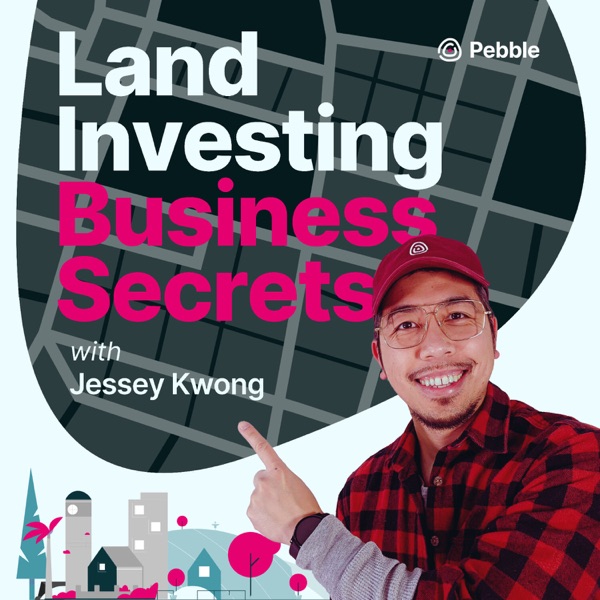
Learn how to fully utilize simple digital marketing strategies and tools for your vacant land investing business. Learn about tested methods and avoid some of the difficult lessons so that you can fast track your own investing with minimal risk. The Land Investing Business Secrets Podcast show by Pebble, hosted by Jessey Kwong, reveals the strategies to growing, scaling, and building your sustainable land investing business all behind your laptop and smartphone form anywhere around the world!
On the charts
Every published chart this podcast appears in, in the snapshot behind this page. Each one links to the chart it came off.
The Mato Topic Intelligence Platform does not report this podcast as charting in a published category in this snapshot.
From the feed
The latest episodes published to this podcast’s own RSS feed. Titles and descriptions are the publisher’s.
Jessey sits down with Robert Howell, a former event marketer who has worked eight Olympics and now builds “land home packages” for a living. Robert buys raw land, puts a new mobile home on it, and turns the whole project around in about four to six months. Robert shares how he went from the Tokyo Olympics delay to buying his first mobile home park, and why he decided to be the mobile home expert instead of chasing every shiny opportunity. He walks through his timeline from due diligence to listing, what he looks for in a lot, and why paying closer to retail for land still works when you add the home. They also get into how Grokbot is speeding up his property search and underwriting, why he moved away from cold calling toward direct mail (including sending contracts), and what buyers look like in today’s market. Robert also tells the story behind the Land Home League and how he’s helping others get started. What You’ll Learn: How a land home package works, from closing day to a finished home ready to list What to look for in a lot, including acreage, road frontage, and due diligence checks Why adding a home lets you pay closer to retail for land and still profit How direct mail, including sending contracts, became Robert’s top source of deals Connect with Robert Howell: 🌐 https://howellandsons.com/ 📞 Phone number and contact form available on the site
Drew Haney is back on the show, and this time Jessey and Drew dig into a question every land operator faces: where should the money for your deals come from? Drew went from flipping around 300 deals himself to funding over a thousand, so he has seen what works (and what keeps people up at night) from both sides of the table.They walk through the four main options: friends and family, bank loans, hard money, and JV funding. Drew shares why the lowest rate on paper often comes with hidden costs like stress, lost time, and risk to your relationships. He also explains why boring five-figure flips are the sweet spot, how a real profit split looks on recent deals, and why he calls the funder’s cut a “labor play” instead of an expense.Along the way, Drew shares his go-to lunch hack, a surprising stat about how financial stress affects your thinking, and a story about a former Amazon employee who earned $900 an hour on a single deal.What You’ll Learn:- The four ways operators can fund land deals and the real trade-offs of each- Why the cheapest money on paper can end up costing you the most- How JV funding works and what profit splits look like on real deals- How to vet capital partners and choose the right funding for where you are in your business Connect with Drew Haney:🌐 drewhaney.com🌐 roostercapital.land📧 drew@drew-haney.com
What actually goes into developing a piece of land, and where do projects usually start going wrong?In this episode, Jessey sits down with developer Eugene Gershman to talk about what he's learned from more than 20 years working across both construction and real estate development.Eugene breaks down what he looks for when choosing contractors, why experience with the same product type matters, and why simply choosing the lowest bid can end up costing you significantly more.They also get into some of the details that owners often overlook, including incomplete construction drawings, missing finishes, change orders, and the difference between getting plans approved and actually having enough information to build from.They also talk about today's development market, why many projects are struggling to pencil, and how Eugene evaluates whether a property is worth moving forward with.What you'll learn:- What to look for when choosing a contractor or development partner- Why experience with the same product type matters- How incomplete plans and missing scope can lead to expensive change orders- Why a project that works on paper can still carry significant riskConnect with Eugene Gershman:Podcast: Real Estate Development: Land to LegacySocial: @eg_developerEugene Gershman Personal: https://egershman.comGIS Companies: https://giscompanies.coLinkedIn: https://www.linkedin.com/in/eugenegershman
After being involved in nearly 1,000 land deals, Drew Haney has enough data to start seeing some pretty clear patterns.In this episode, Jessey and Kevin sit down with Drew to talk through what the numbers are actually showing inside Rooster Capital, including which deals have produced the strongest returns, which ones tend to sit the longest, and why chasing bigger spreads is not always the better move.Drew shares why the sweet spot in their data has been smaller rural and recreational properties, why six-figure infill lots have been much harder to move, and how hold time can matter just as much as the profit on paper.They also get into seasonality, why August and September have historically been tougher months to buy, the danger of drawing conclusions from tiny marketing samples, and why operators should think beyond spreadsheets when evaluating risk, capital, and opportunity.What you’ll learn on this episode: • What nearly 1,000 land deals reveal about the best-performing buy box• Why bigger deals can create more risk, longer hold times, and more mental overhead• What Drew’s data shows about seasonality and when deals tend to perform best• Why small sample sizes can lead investors to make the wrong marketing decisions Chapters00:00 Intro02:59 Drew’s path from land flipping to Rooster Capital05:17 What the data actually says after nearly 1,000 deals07:23 Why six-figure infill lots have struggled08:04 The buy box producing the best returns13:10 Why bigger deals are not always better19:14 Risk, hold time, and mental bandwidth22:49 What the data says about seasonality25:16 Why small marketing samples can mislead you28:38 What Drew looks for in funding partners30:02 Looking beyond the spreadsheet31:48 The reality of losses across nearly 1,000 dealsConnect with Drew Haney:Rooster Capital: https://roostercapital.landEmail: drew@roostercapital.landWant to learn more about Pebble and what we’re seeing across land investor direct mail? Hop on a call with us at www.pebblerei.com/demo
Jessey catches up with Karl James, a familiar face on this show and someone who was there for a lot of his early days in land. Karl retired from a decades long career a few years back and now treats land as a hobby he takes seriously, focusing on properties with messy titles, heirship issues, and delinquent taxes. In this episode, Karl walks through how he pulls leads straight from tax court filings, why he only works a handful of counties in Texas, and how he decides between self-closing a deal or going through a full title process. He also shares a real case study where he turned $5,000 into $25,000 profit in about three months, and talks candidly about the ethics of buying distressed land at a discount. Karl also opens up about bringing his son and daughter into the business, what worked, what didn't, and what he'd tell anyone thinking about mixing family and land deals. What You'll Learn: How Karl finds messy title and tax delinquent leads directly from court records Why he sometimes self-closes deals and pays back taxes only at the time of sale How he thinks through the ethics of buying distressed land for cents on the dollar Lessons learned bringing his son and daughter into the family land business
essey catches up with Dave Denniston, a returning guest last on the show back at episode 96, two years and a lot of changes ago. Dave has shifted his business toward subdivides and messy title deals, but along the way his inventory ballooned to over 160 properties and he had to shut off all marketing just to sell through it.In this episode, Dave breaks down what happened, why he's pulling back to a smaller, more focused footprint, and what he learned testing PPC through an agency for a year. He also shares why, after exploring on market subdivides and cold calling, he's returning to mail with a smaller, more targeted list and a willingness to spend more per piece to get a response.If you've ever wondered whether PPC is worth it, or why mail keeps pulling investors back no matter how many new channels show up, this conversation lays out the real tradeoffs.What You'll Learn:- Why Dave shut off all marketing after his inventory grew past 160 properties- What PPC costs and what it's actually good and bad for in land investing- Why staying geographically and product focused is changing how Dave operates- Why Dave is going back to mail with a smaller, more targeted list Connect with Dave Denniston:🌐 landunconference.com🌐 leadershipinland.com📧 dave@genfamland.com
Jessey sits down with Travis King, a familiar face on this show and the host of The King Show, to talk about a strategy most land investors skip entirely: landlocked properties. While everyone else scrubs these parcels out of their lists, Travis has built a whole playbook around targeting them, and the discounts sellers are willing to give can be massive.Travis breaks down what actually makes a property landlocked, why it scares off traditional buyers, and how that fear creates opportunity for investors willing to do the work. He walks through his exact process for negotiating easement access with neighbors, structuring low offers sellers already expect, and even stacking in a subdivide to multiply returns.If you've ever passed on a deal because it lacked road access, this episode might change your mind. Travis shares real numbers from his own deals, including one property he picked up for around 5,000 dollars and resold for 50,000.What You'll Learn:- What actually makes a property landlocked and why title companies won't insure it- How to negotiate easement access with neighbors, including what to offer and what to say- Where to find landlocked properties and how to build a targeted list- How to price and structure discounted offers without scaring sellers off Connect with Travis King:📖 Free Book: travisking.com 📚 Landlocked Masterclass: thelandinvestorsplaybook.com 🔗 mylandportal.com 🎧 Book also available on Amazon, Audible, and Spotify:
Jessey sits down with Courtney and Skyler, the team behind Terra Data Consulting, to break down what most land investors get wrong when it comes to their data. Courtney's background in data science led her into land investing years ago, and now she and Skyler help other investors clean up their lists, choose smarter markets, and stop wasting money on properties that were never going to work. They dig into the platforms investors rely on, why AI generated data still has gaps, and why trusting a list without double checking it can quietly kill your margins. The conversation also covers how to segment a market instead of mailing blind, and why the real money is often in following up with leads you already have rather than chasing new ones. If you have ever wondered whether your data provider is actually giving you accurate information, or you are unsure how to narrow down a market before you spend on mail, this episode lays out a clear way to think about it. What you'll learn on this episode: Why trusting your data 100% can lead to costly mistakes, and how to catch errors before they cost you How to compare data platforms and know which one actually fits your investing goals How to segment a market by acreage, ownership type, and land use instead of mailing blind Why following up with warm leads outperforms chasing new ones, and how to build that into your process
Jessey sits down with Joshua Kagan, a real estate veteran with 15 years of experience across fix and flips, commercial real estate and single family rentals who discovered land investing just two years ago and has not looked back since. Joshua recently published The Smart Land Investor, an Amazon number one new release in real estate, and every lesson in it came from a mistake he made himself.In this episode Joshua gets candid about what is actually changing in land right now, from increased competition and seller bake-offs to markets that were hot a year ago and are now cooling down. He also walks through how he picks markets, how he A-B tests his mailers and a recent Arizona subdivision deal that came together cleanly from start to finish.If you are newer to land or just want to tighten up your due diligence, this episode is a practical and honest look at what it takes to do this right.What you'll learn in this episode:- The three metrics Joshua uses to find active markets: parcel count, sell through rate and days on market- Why title, zoning and access are the most common and costly mistakes new land investors make- How to A-B test your mailers without muddying your data- Why Joshua gives 100% of his book profits to a conservation fund and what drove that decisionTimestamps:0:00 Introduction0:57 Joshua's background and how he discovered land investing2:01 What has changed in land over the last two years3:40 How he adjusts when competition increases in a market5:09 Remarketing and mailing the same areas every two to three months9:12 The three metrics he looks at before entering any market11:15 What Joshua A-B tests in his mailers and what surprised him13:11 What rising interest rates mean for land investors right now15:20 His three buyer archetypes and what drives them to buy17:20 What a smart land investor actually looks like19:42 The biggest mistakes new land investors make on title and zoning22:48 The Arizona 40 acre subdivision deal breakdown25:53 The Smart Land Investor book and what is inside it27:19 How to connect with Joshua and where to find the bookConnect with Joshua Kagan:Email: joshua@smartlandinvestors.comBook: The Smart Land Investor on Amazon (Kindle and paperback) https://a.co/d/0hrIKpVjWebsite: smartlandinvestors.com
Jessey sits down with Cameron Schulz, operations manager at Generation Family Properties, the land investing business founded by Dave Denniston. Cameron is 24 years old, two years into his role, and responsible for keeping a 14 person remote team running smoothly while Dave splits his time between land and his financial planning business. This episode is a rare look inside the day to day of a scaled land business from someone who is not the founder. Cameron talks about managing closings, putting out fires, building culture across a global remote team and what it actually takes to keep a business moving forward when you are not the one writing the checks. If you are building a team or thinking about your next hire this one is worth your full attention. What you'll learn in this episode: What an operations manager actually does inside a scaled land business How GFP keeps core values alive across a fully remote international team Why culture and the right people matter more than processes alone What to look for when hiring someone to run your operations Shownotes: landunconference.com cameron@genfamland.com
Jessey sits down with Sumner Healey, land investor, founder of LIA and co-founder of Land Insights, for a candid conversation about what it actually takes to scale a land business in today's market. Sumner pulled back from his land business for two years, kept it on maintenance mode, and still did $500,000 in profit annually. Then in 2025 he went all in and everything exploded.In this episode Sumner breaks down the sales system behind 17 acquisitions in a single month, how he cut his days on market from 120 down to 21, and the one tactic that gave him a 50% lift in close rate that most land investors are completely skipping.If you have ever lost a deal after a good conversation with a seller, this episode will tell you exactly why and what to do about it.What you'll learn in this episode:- Why walking sellers through a contract live on the phone can lift your close rate by 50%- How to pre-qualify sellers using the Three Whys framework- Why objections are actually a good sign and vague ones are the real problem- The difference between cowboys and nerds in land and how to know which one you are Connect with Sumner Healey: LIA Community: https://www.skool.com/lia/about Land Insights: https://www.landinsights.co Email: sumner@landinvestor.co 30 day free trial to Land Insights Pro plus $200 in credits for podcast listeners
Jessey sits down with Joe McCall, a real estate investor who has been in the game since 2006 across houses, wholesaling and now land. Joe is seeing something a lot of people are missing right now: direct mail response rates are actually going up, not down. And he has the data to prove it. In this episode Joe breaks down his exact process for finding where the money is moving, drilling down to the right zip codes, and sending simple ugly postcards that get sellers calling. No fancy systems, no secret lists. Just brilliant basics done consistently. If you have been on the fence about direct mail or second guessing your market, this episode will set you straight. What you'll learn: - How to use Landwatch, Redfin and ChatGPT to find the most active markets right now - Why ugly plain text postcards outperform glossy mailers every single time - How Joe averages $750 to $1,000 in marketing cost per deal using direct mail - Why 75% of deals come from follow up and how to build a system around it 0:00 Introduction 1:11 Why Joe thinks the doom and gloom narrative is wrong 2:55 13% response rate on postcards and what that means 4:49 How to follow the money using Landwatch and Redfin 6:01 Drilling down from state to county to zip code 8:38 How to use ChatGPT to analyze sold data fast 9:01 Building your list and filtering for motivated sellers 10:17 The third notice postcard and how Joe softened it 11:06 The ninja trick: answer the phone live when they call 12:46 Why 75% of deals come from follow up 15:49 Why uglier postcards get more calls 18:05 Direct mail response rates are actually rising right now 19:03 How many postcards Joe sends per week and per zip code 23:49 Why postcards outperform letters every time 28:02 Stop reinventing the wheel, go where the money is going 32:38 Sell people what they want, not what you have Connect with Joe McCall: YouTube: https://www.youtube.com/@Joe-McCall Podcast: search Joe McCall on any podcast platform Book: FlipDirtBook.com Shownotes: Winning Postcards Framework Webinar / May 12 at 11am PST/2pm EST Save your spot: www.pebblerei.com/winningpostcards
Jessey sits down with Rhea Campbell, a land investor, lender, and full time entrepreneur who has built a portfolio spanning land, hotels, RV parks, restaurants and a brand new golf course. But before any of that, she had to figure out how to get sellers to actually respond. In this episode Rhea breaks down why most land mailers are completely forgettable and what she does differently to make sellers stop, read and pick up the phone. She calls it the interrupter and once you hear it you will never look at your mailer the same way again. This one is part tactical, part inspirational and packed with real talk from someone who has done it at scale. What you'll learn in this episode: Why your mailer looks like every other land investor and how to fix it What an interrupter is and how to use it to get more callbacks How to shift from a shotgun mailing approach to a sniper strategy Why getting someone on the phone is where the real magic happens Connect with Rhea Campbell: Instagram: @rheacampbell_ORDFunding inquiries: reach out via Instagram
In this episode, Jessey sits down with Michael Robertson to break down how he’s getting more deals by going deeper on his list and doing something most investors completely ignore. Michael focuses on the bottom of the funnel, people who actually need to sell, and instead of just doing due diligence on the property, he goes deep on the seller. They get into how he builds his lists, what he looks for before making an offer, and how he structures multiple offers so sellers end up choosing the deal that works best for him. This is one of those episodes where you’ll want to take notes. What you’ll learn on this episode: How to build a more targeted list by focusing on motivated sellers Why doing due diligence on the seller (not just the property) changes your margins How to structure multiple offers so sellers negotiate against themselves Where Michael is actually finding deals and buyers right now 📱 Connect with Michael Robertson TikTok: Flip4RealPros Facebook Group: Flipping for Real Estate Professionals Phone: 850-377-2203
In this episode, Jessey talks with Casey Cavell about subdividing, bigger land deals, and how to think beyond just flipping one property at a time. Casey shares how he got into real estate, why he moved into land, and how he approaches subdividing with a focus on higher-value deals. They get into what to look for in a property, how to think about highest and best use, and why having a clear niche makes everything easier. They also break down marketing and messaging, what’s actually getting responses right now, and why most people are doing it wrong. And they get into the bigger picture too, not just chasing deals, but what you’re actually trying to build long term. If you’re looking to get into subdividing or just want to level up how you think about your land business, this one’s worth a listen. What you’ll learn on this episode: Why Casey moved from real estate into land and started focusing on bigger deals How to think about subdividing and finding a property’s highest and best use Why clear marketing and better messaging matter more than ever How to think long term about what kind of business and life you’re actually building Shownotes: Casey@TheSubdivideGuys.com www.TheSubdivideGuys.com
In this episode, Jessey sits down with Mason McDonald to talk about what’s actually working right now in the land business.Mason’s been deep in the land world for years now, and since the last time he was on the show a lot has changed. He’s still flipping land, but he’s also become a licensed broker, stepped into a VP role sourcing large ranch deals, and is working on subdivisions across Colorado and Wyoming.They get into how Mason is finding bigger deals, why direct mail is still a huge part of his business, and why he thinks a lot of investors are approaching land deals the wrong way.Mason also shares some hard lessons from buying a 17-lot portfolio, why owner financing has become such an important strategy, and what it actually takes to treat land investing like a real business.If you're sending mail, doing land deals, or trying to scale your land business, there’s a lot in this one.What you'll learn:• Why Mason says many investors are approaching land deals the wrong way• How becoming a broker opened up new deal opportunities• Why direct mail still works (when the messaging is right)• The strategy Mason uses to find large acreage deals• Why owner financing brings more buyers to the table• Lessons from buying a 17-lot portfolio• How Mason balances his own business with a larger acquisitions role• Why land investing needs to be treated like a real business
n this episode of the Land Investing Business Secrets podcast, Jessey sits down with Chris Duff of Serious Land Capital to break down what’s really happening in today’s buyer’s market and how experienced operators are still closing profitable deals.Chris shares why his team shifted toward higher-value properties, how underwriting has changed in tougher markets, and what it really takes to succeed when volume is down and competition is up.They also dive into creative deal structuring, navigating difficult acquisitions, and why focusing on one business can be more powerful than chasing multiple opportunities.If you’re investing in land or real estate in today’s market, this episode offers practical insight on how to adapt, stay profitable, and play the long game.✅ What You’ll Learn:• Why fewer small deals are working in today’s market• How Serious Land Capital evaluates higher-value properties• What “elbow grease” really looks like in tough deals• Why cash flow and discipline matter more than ever• How to think long-term in a buyer’s market• Lessons from running and scaling multiple businesses• Market outlook for land investing in 2026Shownotes:🔗 Learn more about Chris and Serious Land Capital: https://seriousland.capital
In this episode, Andrew Baughan shares how he consistently closes land deals by focusing on follow-up, targeted mailing, and simple systems that work long-term. He explains why boring, repeatable processes beat chasing new strategies and how consistency has helped him stay profitable in competitive markets.We also cover postcards vs letters, cold calling ROI, tightening your lists, tracking KPIs, and how Andrew structures his business to run on 20 hours a week or less.What You’ll Learn:• Why most deals come from long-term follow-up• How Andrew runs profitable mail campaigns every month• The real ROI of postcards vs letters• How many mailers it takes to close a deal today• How to tighten your lists and target better properties• Why tracking KPIs matters more than chasing new tools• How to stay consistent in slow markets• How Andrew runs a lean team and protects his time• How to manage emotions when deals fall through• Why simple systems outperform “shiny” strategiesShownotes:Andrew's Deal funding/JV Form: https://docs.google.com/forms/d/1uDTg... Contact: andrew@vacantlandsolutions.comJoin us this coming Feb 17, 2026 at 11am PST/2pm EST for Winning Postcard Framework Webinar:www.pebblerei.com/winningpostcards
Jessey sits down with investor and funder Drew Haney to talk about what’s really working in 2026—hint: it’s not the newest shiny strategy. Drew shares why boring systems still outperform trends, how he vets operators, why volume and consistency matter more than ever, and what he's seeing across hundreds of land deals funded. What you’ll learn: • Why boring businesses win • How Drew vets the person behind the deal • What transaction volume looks like post-COVID • Trends that distract vs strategies that compound • Marketing channels his top operators are using • What a good operator looks like in today’s market • How masterminds can create decade-long partnerships • The “hot seat” secret of making hard decisions faster • Drew’s bullish take on off-grid tech and rural land demand 🔗 Resources & Links www.drewhaney.com Bali Land Mastermind - https://balilandmastermind.lovable.app Contact Drew drew@drew-haney.com
Dan Haberkost returns for a year-later update with Jessey to break down why he's pulling back from infill lots and going all in on large rural acreage deals. From process servers to subdivides to legal access headaches, Dan shares how he's navigating longer deal cycles, smarter dispo, and growing his rental portfolio with less chaos and better margins. This isn’t about hype. It’s about adapting to what works now.📌 What you’ll learn:- Why Dan stopped flipping infill lots in Florida- What kind of rural land deals are working right now- Lessons from a 640-acre subdivide with seller financing- How he used a process server to unlock a 93-acre deal- What still works in cold calling and direct mail- How Dan is building long-term income with seller-financed deals- Why rental property quality matters more than projections- What personalization looks like in Dan’s direct mail strategy Learn more about the More, Better, New framework:• Blog explaining the idea of doing more, better, and then new for customer acquisition: https://creatorscience.com/more-better-new/Shownotes:[https://danhaberkost.com/] [https://www.instagram.com/danhaberkost/]
Ranking source
Apple Podcasts rankings via the Mato Topic Intelligence Platform.
Observed November 3, 2026. Cached outside the daily freshness window; the positions keep the date they were taken on.
Apple and Apple Podcasts are trademarks of Apple Inc., registered in the U.S. and other countries.
Pairs with
Bring this source into Mato to read its transferable patterns, then turn them into an original show for your own audience.