Mato just raised pre-seed Read more

Podcast charts
Published by Co-Conspiracy Entertainment
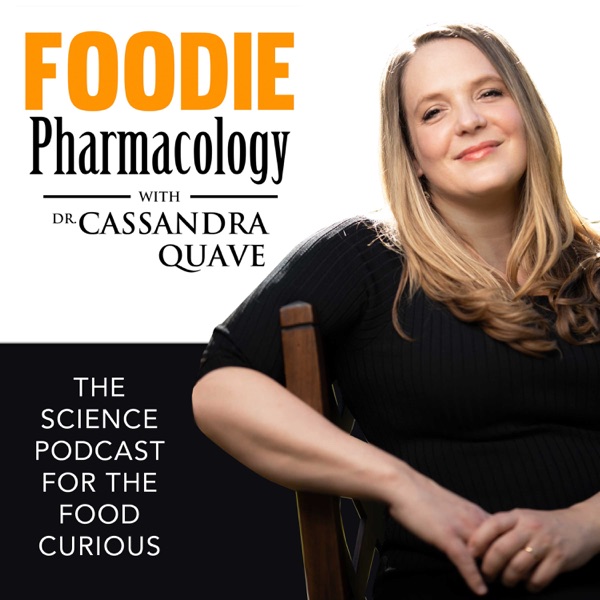
Foodie Pharmacology is the science podcast for the food curious! Dr. Quave is co-creator and host of the show. She speaks with leading experts on certain crops, sustainable farming methods, medicinal plants, and explores the pharmacology--or health impact--of our food through weekly episodes! You can also tune in through subscribing to the podcast on Apple Podcasts. Leave comments and ratings on episodes! Dr. Quave loves to hear from the #FoodiePharmacology fans!
On the charts
Every published chart this podcast appears in, in the snapshot behind this page. Each one links to the chart it came off.
From the feed
The latest episodes published to this podcast’s own RSS feed. Titles and descriptions are the publisher’s.
Can bacteria be bred to feed crops, and do it for a fraction of the cost of chemical fertilizer? This week on the show, Dr. Cassandra Quave talks with Dr. Mariangela Hungria, a soil microbiologist at Embrapa (the Brazilian Agricultural Research Corporation), 2025 World Food Prize laureate, and one of TIME’s 100 Most Influential People of 2026. They discuss how nitrogen-fixing bacteria partner with legumes, grasses, and sugarcane, and why chemical fertilizers added to the soil drive water pollution and greenhouse gas emissions. Dr. Hungria explains how her work with soybeans helped make Brazil a global leader in agricultural biologicals. She shares field-trial results, the economic and climate savings, and what it takes to bring beneficial microbes to crops like tomatoes and potatoes. They also cover restoring degraded pastures, bacteria that help crops tolerate drought, and why synthetic microbial communities are still hard to build. Dr. Hungria’s message is that biologicals can already replace much of the chemical input in farming, and that they can work in conventional and organic agriculture. #SustainableAgriculture #SoilHealth #SoilMicrobiome #NitrogenFixation #Biologicals #RegenerativeAgriculture #FoodSecurity #WomenInScience #WorldFoodPrize #Microbiology #FoodScience
What can microbes living in the dark, mineral-rich corners of a cave tell us about the next generation of medicines? In this episode of Foodie Pharmacology, Dr. Cassandra Quave talks with biomedical geoscientist Dr. Rachel Washburn, director of the Washburn CHAOS Lab (Complex Host and Abiotic Systems). Her team studies the whole system at once: which microbes are present, what chemistry they are making, and how minerals and water shape it. They take samples from wild caves, polluted caves, and tourist show caves across Kentucky. Dr. Washburn explains how sequencing, geology, and metabolomics fit together, using a heavy metal concert analogy. She describes the lab’s early finding of new chemical classes in show caves and the recovery of Hidden River Cave after decades as a sewer. Her goal is a predictive “treasure map” that helps natural product researchers decide where to look for new antibiotics, anticancer compounds, and bioremediation tools. Dr. Washburn also shares her path from Russian studies and Air Force intelligence, through cancer and a PhD, to geoscience. She talks about bringing citizen scientists into the field, and about Scientifically Speaking, her series that treats fictional worlds like real scientific observations. Learn more about the Washburn CHAOS Lab at https://www.washburnchaoslab.com/ . Join a citizen science experience at https://washburnchaoslab.com/citizen-science-experience . Follow Dr. Washburn on Instagram, TikTok, and YouTube at @WashburnCHAOSLab. #FoodiePharmacology #NaturalProducts #Caves #Microbiome #Geomicrobiology #Metabolomics #CitizenScience #SciComm #Bioprospecting #Kentucky
Why do humans have a sweet tooth, and what does the glycemic index actually tell us about food? Dr. Cassandra Quave talks with University of Sydney nutrition scientist Dr. Jennie Brand-Miller about the role of fruit and sugar in human evolution, how different carbohydrates affect blood glucose, and why the type of rice you choose may matter more than whether it’s white or brown. They also explore practical ways to build a balanced plate, what makes pasta a surprising low-GI food, and why Dr. Brand-Miller urges us to enjoy fruit rather than fear its sugar. It’s a conversation that challenges familiar assumptions about carbohydrates while making room for the pleasure of eating. Learn more about her work at www.glycemicindex.com #FoodiePharmacology #GlycemicIndex #NutritionScience #HumanEvolution #BloodGlucose #FoodAndHealth
What if the value of a farm were measured not only by what it produces, but also by the communities, skills, and ecosystems it sustains? This week on Foodie Pharmacology, Dr. Cassandra Quave welcomes environmental anthropologist Dr. Andrew Flachs back to the show to discuss his new book, Feeding the World as if People Mattered: How Small Farms Produce Value Beyond Yields. Drawing on research in India, Bosnia, and the American Midwest, Andrew challenges the assumption that producing more food will solve hunger. Industrial agriculture can generate enormous quantities of inexpensive commodities while obscuring its social and environmental costs. Small and diversified farms offer a different model—one that values skilled labor, ecological resilience, rural livelihoods, cultural knowledge, and the ability of future generations to continue farming. The conversation explores the hidden labor beneath our food system, the risks of monoculture, and why hunger is often rooted in poverty, land ownership, and distribution rather than a simple shortage of calories. Cassandra and Andrew also examine the legacies of the Green Revolution, agricultural antibiotic use, and what it would mean to build a food system that measures success by more than yield and profit. Learn more about Andrew’s work at https://www.andrewflachs.com/ and follow him on social media at @DrFlachsophone. Order Feeding the World as if People Mattered from the University of Arizona Press: https://uapress.arizona.edu/book/feeding-the-world-as-if-people-mattered . Use discount code AZFLR for 30% off. #FoodiePharmacology #SustainableAgriculture #SmallFarms #FoodSystems #FoodSecurity #RegenerativeAgriculture #Biodiversity #FoodJustice #SustainableFood
Could centuries of traditional plant knowledge help scientists discover the next generation of medicines for the brain? In this episode of Foodie Pharmacology, Dr. Cassandra Quave speaks with chemist and neuroscientist Dr. Jacob Hooker, co-founder and CEO of Sensorium Therapeutics, about a new approach to finding treatments for anxiety and other neurological and psychiatric conditions. Dr. Hooker explains how Sensorium combines ethnobotanical records, chemical data, medicinal chemistry, and artificial intelligence in a vast computational knowledge graph. By mapping relationships among plants, molecules, human experiences, and biological activity, researchers can uncover patterns and prioritize promising natural products for investigation. The conversation also explores why so many medicines affecting the brain have roots in nature and why psychoactive compounds need not be psychedelic or hallucinogenic. They examine Cobenfy, a recently approved schizophrenia treatment with roots in the chemistry of the betel nut palm, as an example of how plants can reveal unexpected therapeutic mechanisms. Drs. Hooker and Quave also discuss why natural molecules often require modification to improve their safety, dosing, and selectivity before becoming medicines. Sensorium is applying this “motifs to medicines” strategy to investigational programs for anxiety, drug-resistant epilepsy, and cognition, with its lead anxiety candidate now in early-stage clinical testing. Learn more about Sensorium Therapeutics at https://www.sensorium.bio/ . Read Dr. Hooker’s essays and interviews on neuroscience, psychiatry, and the care of the mind at https://aetherinmind.substack.com/ . Follow Dr. Hooker on LinkedIn at https://www.linkedin.com/in/jacob-hooker-91341112/ and on X at @jmhooker. #FoodiePharmacology #Ethnobotany #NaturalProducts #DrugDiscovery #Neuroscience #MentalHealth #AnxietyResearch #MedicinalPlants #AI #ChemicalBiology #Neuropharmacology
What if some of the most important foundations for lifelong health are established before a child’s second birthday? In this episode of Foodie Pharmacology, Dr. Cassandra Quave speaks with Yale-trained gastroenterologist and microbiome specialist Dr. Savita Srivastava about how the gut microbiome develops during the first 1,000 days of life. They explore how birth, skin-to-skin contact, breastfeeding, antibiotics, environmental exposures, and the introduction of solid foods help shape a baby’s developing microbial community. Dr. Srivastava explains the differences among probiotics, prebiotics, and postbiotics; why metabolites such as butyrate matter for the gut barrier and immune system; and what scientists are learning about connections between early microbial development and allergies, eczema, autoimmune conditions, metabolism, and brain health. The conversation also examines vaginal seeding, the limits of probiotic supplements, and practical ways families can support microbial diversity through fiber-rich foods, fermented foods, and a varied diet. Most importantly, Dr. Srivastava offers reassurance: there is no single perfect formula for building a healthy microbiome, and parents have many opportunities to support their children’s health as they grow. Learn more about Dr. Srivastava and her book and work at https://www.doctorsavita.com/ . Follow Dr. Srivastava on Instagram and Facebook: @gutdoctorsavita #FoodiePharmacology #GutMicrobiome #GutHealth #Breastfeeding #FermentedFoods #ChildNutrition
We’d once again like to thank Thermo Fisher Scientific Incorporated for their sponsorship of this episode. What if a single tick bite could change the way you eat forever? In this episode, I sit down with allergy expert Gary Falcetano to explore alpha-gal syndrome, a strange and increasingly recognized condition triggered by tick bites that can lead to delayed allergic reactions to red meat and other mammalian products. We unpack the science behind this unusual immune response, why symptoms can emerge hours after eating, and why many cases go undiagnosed for years. From hidden sources of alpha-gal in foods and medications to the growing spread of tick species linked to the condition, this conversation reveals how a tiny bite can have surprisingly large consequences. We also share practical tips for prevention, diagnosis, and staying safe outdoors, whether you’re hiking in your backyard or heading out on your next adventure. This Foodie Pharmacology podcast episode is part of a special two-part series sponsored by Thermo Fisher Scientific Incorporated. The views and opinions in this podcast are those of the presenters and represent the synthesis of the science.
Did you know that one of the most important organs shaping lifelong health is only temporary? In this episode of Foodie Pharmacology, I sit down with developmental biologist Dr. Cheryl Rosenfeld to explore the fascinating science of the placenta and its role as the communication hub between mother and developing baby. We discuss the emerging concept of the placenta-brain axis and discuss how maternal diet, the gut microbiome, environmental exposures, and even tiny molecular signals can influence fetal development long before birth. From serotonin and the microbiome to probiotics, inflammation, and the hidden impacts of modern life, this conversation reveals how the earliest environment we experience may shape health outcomes for years to come.
Journey to Brazil to uncover the hidden roots of Candomblé, an Afro-Brazilian spiritual tradition shaped by African plant knowledge, resilience, and cultural memory. In this episode, I speak with ethnobotanist Dr. Bob Voeks to explore how enslaved Africans preserved sacred healing traditions and foodways across the Atlantic, transforming plants into powerful symbols of identity and survival. From spiritual cleansing rituals with sacred leaves to the fascinating story of caruru, a revered okra dish tied to twin deities, we trace the remarkable journey of African plants through the diaspora. Along the way, we uncover surprising connections linking Candomblé, callaloo, and even Southern gumbo, revealing how food can carry history, spirituality, and culture across continents and generations. #Okra #Gumbo #Acarajé #DiasporaFood #AfricanCuisine #BlackEyedPeas
Pet nutrition has undergone a dramatic shift over the past century, moving from whole foods to highly processed convenience diets, and not always for the better. This week on Foodie Pharmacology, Dr. Cassandra Quave speaks with Dr. Judy Morgan, a veterinarian with over 40 years of experience in integrative and holistic care, about what’s gone wrong in the modern pet food industry and how to rethink what we feed our animals. The conversation explores the rise of ultra-processed kibble, gaps in regulation, and the health consequences linked to highly processed diets, while offering practical guidance on incorporating fresher, more species-appropriate foods. From understanding ingredient labels to simple additions like eggs, sardines, and fresh produce, this episode provides a grounded, accessible framework for pet owners looking to support long-term health and longevity in their animals. LISTENER OFFER: Use discount code PHARMACOLOGY50 for 50% off Dr. Judy authored Books found on https://drjudymorgan.com/
Antibiotic resistance is one of the most pressing challenges in modern medicine, raising the risk of a return to a pre-antibiotic era where common infections become life-threatening. This week on Foodie Pharmacology, Dr. Cassandra Quave speaks with Dr. Nadine Ziemert about how scientists are turning to microbial genomes to discover the next generation of antibiotics. A professor of translational genome mining at the University of Tübingen, Nadine explains how bacteria themselves are prolific chemists, producing complex natural products that can be harnessed to fight infection. The conversation explores why traditional discovery methods have slowed, how genome mining reveals hidden “chemical dark matter” in the environment, and how computational tools are helping researchers predict new molecules before they are even isolated in the lab. From the vast, untapped diversity of soil microbes to the future potential of AI-driven discovery pipelines, this episode offers a hopeful look at how science is working to stay ahead in the race against antibiotic resistance. Learn more about Dr. Ziemert’s research on her lab’s YouTube channel .
The health of our environment underpins everything from food systems to future medicines, yet much of the damage done to nature goes unaddressed. This week on Foodie Pharmacology, Dr. Cassandra Quave speaks with Jacob Phelps about a new approach to conservation that brings science into the courtroom. Together, they explore how environmental litigation can move beyond small fines and toward holding offenders accountable for restoring damaged ecosystems, from illegal mining and deforestation to wildlife trafficking. The conversation highlights the gap between strong environmental laws on paper and their limited use in practice, and how interdisciplinary teams of scientists and lawyers are working to change that. From protecting biodiversity and safeguarding food systems to preserving resources that may hold future therapeutic value, this episode offers a powerful look at how legal action can be used as a tool to defend and repair the natural world. Learn more at https://www.conservation-litigation.org/
Spring is a time when many of us think about fresh starts and better health, including the well-being of our pets. This week on Foodie Pharmacology, Dr. Cassandra Quave speaks with Angela Ardolino about natural approaches to supporting aging dogs. Angela, a formulator and educator specializing in cannabinoids, medicinal mushrooms, and adaptogens, explains how these compounds interact with the endocannabinoid system to regulate inflammation, neurological function, and overall balance. They discuss the differences between full-spectrum hemp extracts and isolated compounds, how cannabinoids may support joint pain, seizures, and cognitive decline, and the growing interest in functional mushrooms like lion’s mane, reishi, and cordyceps for brain health of our pets. The conversation also examines what cognitive decline looks like in aging pets, the role of inflammation and the gut-brain connection, and how diet and ultra-processed pet foods may contribute to disease. From reading supplement labels to understanding ingredient sourcing and quality, this episode offers a practical framework for pet owners interested in integrative approaches to animal health. Learn more about Angela’s work at https://angelaardolino.com/
Seed oils are everywhere. From salad dressings to snack foods, they’ve become a quiet staple of the modern diet. But how did they get there, and what do we really know about their impact on human health? This week on Foodie Pharmacology, Dr. Cassandra Quave sits down with nutritionist Cherie Calbom, MS, known as “The Juice Lady,” to unpack the rise of industrial seed oils and the debate surrounding them. Cherie shares her personal journey into nutrition, which began with a serious health crisis and led her to rethink the role of food in healing. Together, they explore what seed oils actually are, how they are processed, and why their chemical structure makes them vulnerable to oxidation. The conversation traces their history from industrial byproducts to “heart-healthy” staples, shaped by wartime supply chains, shifting dietary guidance, and powerful marketing. They also dig into where these oils are hiding in everyday foods, why they can be difficult to avoid even when you are trying to eat well, and how to navigate labels in a highly processed food environment. If you’ve ever wondered what’s really in the oils lining grocery store shelves, or why this topic has become so widely debated, this episode offers a deeper look at the science, history, and real-world implications of seed oils in today’s diet. Learn more about Cherie’s work at thejuiceladycherie.com
Spring is here, and seasonal pollen along with it! This week on Foodie Pharmacology, Dr. Cassandra Quave speaks with Gary Falcetano , PA-C, AE-C, Senior Manager of Global Medical & Scientific Affairs in Allergy at Thermo Fisher Scientific and a longtime clinician and educator in asthma and immunologic disorders, about pollen food allergy syndrome and why certain fresh foods can suddenly cause itching or irritation during allergy season. Also known as oral allergy syndrome, this condition stems from cross-reactivity between pollen proteins and similar proteins found in plant foods. Gary explains how this immune mix-up happens, why symptoms are typically limited to the mouth and throat, and why something as simple as cooking an apple can make it more tolerable. They also cover how common this syndrome is, why it is frequently overlooked, and how clinicians distinguish it from more serious food allergies using detailed history and targeted testing. The conversation highlights the role of IgE, component-resolved diagnostics, and the importance of understanding seasonal exposure. The episode closes with practical tips for managing symptoms, from reducing pollen exposure at home to simple food preparation strategies that can make a real difference during peak allergy season. This Foodie Pharmacology podcast is part of a special two part series sponsored by Thermo Fisher Scientific Inc. The views and opinions in this podcast are those of the presenters and represent the synthesis of science. #FoodiePharmacology #PollenAllergy #OralAllergySyndrome #AllergyAwareness #ItchyMouth #AllergySymptoms #SinusRelief #HealthyLiving #SeasonalAllergies #FoodAllergy
What if the key to reducing food waste, strengthening community, and reconnecting with our food systems is already in your kitchen? In this episode of Foodie Pharmacology, Dr. Cassandra Quave speaks with Dr. Julia Skinner, food writer, fermentation expert, and founder of the Culinary Curiosity School , to explore the practice of food preserving. From fermentation to freezing, Julia shares how preserving is not just a set of techniques but a way of thinking about food with intention and creativity. They discuss her upcoming book, Essential Food Preserving , which takes an ingredient-first approach. Instead of rigid recipes, it asks a simple question: what can you do with what you have right now? That mindset opens the door to everything from fruit leathers and infused vinegars to fermented drinks and pantry staples built from scraps. They also explore the deeper reasons preserving matters. These practices are rooted in food security, seasonality, and survival. Today, they offer a powerful way to reduce waste and reconnect with the sources of our food. Fermentation, in particular, plays an important role in building community. Sharing techniques, recipes, and traditions creates meaningful connections around food. If you’ve ever felt intimidated by preserving, this episode offers an approachable place to begin. Start small, stay curious, and focus on practice rather than perfection. Essential Food Preserving will be released on May 19, 2026, and is available now for pre-orders! Want to learn more? Enter Code “QUAVE” for a 30% discount to a class offered through the Culinary Curiosity School .
Flowers may seem delicate, but they have transformed the planet! In this episode of Foodie Pharmacology, Dr. Cassandra Quave speaks with Dr. David George Haskell, author of the new book How Flowers Made Our World , about the revolutionary rise of flowering plants. They discuss how grasses helped shape human evolution as “grass apes,” why orchids rely on intimate fungal partnerships, and how floral chemistry communicates with pollinators through scent and even electrical fields! From the endosperm that feeds much of humanity to the cultural and aesthetic power of flowers, this conversation examines how flowering plants engineered ecosystems, nourished civilizations, and continue to shape our future. How Flowers Made our World: The Story of Nature’s Revolutionaries is available for pre-order now! Learn more at https://dghaskell.com/
What if the future of antimicrobial discovery lies buried in medieval manuscripts? In this episode of Foodie Pharmacology, Dr. Cassandra Quave speaks with microbiologist Dr. Freya Harrison of the University of Warwick about the emerging field of “Ancient-biotics”. They examine how early medieval remedies such as Bald’s eyesalve are being reconstructed and tested against modern antibiotic-resistant biofilms. Dr. Harrison explains how her lab builds infection models that mimic the human body, why biofilms are so difficult to treat, and how combinations of natural products like honey and vinegar may hold clues to new antimicrobial strategies. This conversation bridges microbiology, Medieval texts, and pharmacology showcasing how historical knowledge can still inform modern medicine.
Inflammation is essential for healing, but when it becomes chronic, it can quietly drive joint pain, blood sugar imbalance, autoimmune conditions, and long-term disease. In this episode of Foodie Pharmacology, Dr. Cassandra Quave speaks with Dr. Josh Redd, founder of RedRiver Health and Wellness and author of The 30-Day Inflammatory Reset, about the root causes of chronic inflammation. They discuss how ultra-processed diets, environmental exposures, stress, hormonal imbalance, and even trauma contribute to inflammatory load, and what practical steps individuals can take to support immune balance through nutrition and lifestyle change. Learn more about Josh’s work at DrJoshRedd.com
Sake sits at the intersection of fermentation science, ritual, and food culture. In this episode of Foodie Pharmacology, Dr. Cassandra Quave is joined by Dr. Eric C. Rath, professor of history at the University of Kansas and author of Kanpai: The History of Sake . Together, they explore what sake really is, how fermentation with koji mold transforms rice into alcohol, and why sake has played such a central role in Japanese ritual, everyday life, and food culture. The conversation also traces the history of home brewing, the rise of izakaya gastropubs, and the emergence of American sake as both adaptation and innovation.
Ranking source
Apple Podcasts rankings via the Mato Topic Intelligence Platform.
Observed October 23, 2026.
Apple and Apple Podcasts are trademarks of Apple Inc., registered in the U.S. and other countries.
Pairs with
Bring this source into Mato to read its transferable patterns, then turn them into an original show for your own audience.