Mato just raised pre-seed Read more

Podcast charts
Published by Rhea Wong
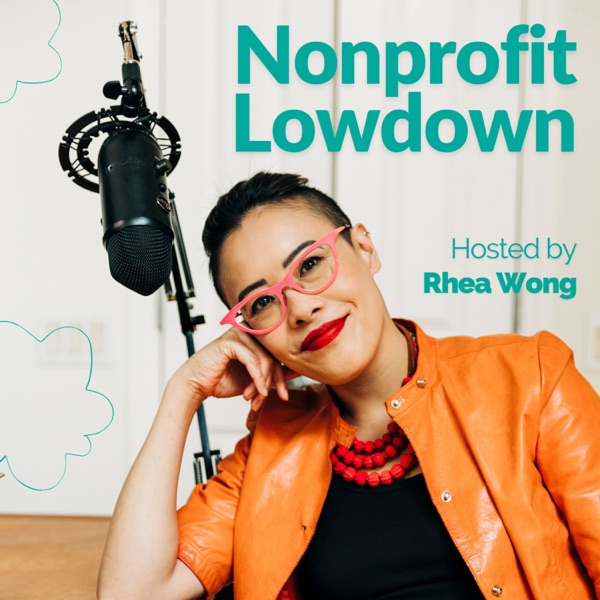
This is Nonprofit Lowdown where I review and recommend the best ideas, resources, tools, tricks and tips to run your nonprofit like a pro!
On the charts
Every published chart this podcast appears in, in the snapshot behind this page. Each one links to the chart it came off.
From the feed
The latest episodes published to this podcast’s own RSS feed. Titles and descriptions are the publisher’s.
Most nonprofit leaders think their biggest problem is raising money. Ny Whitaker says the real problem is influence, and money follows influence. Ny is the founder and chief strategist of Project NYNE , a former White House senior advisor and NYU professor of leadership who has spent 30 years building relationships with elected officials and teaching nonprofits to do the same. We cover why you build the relationship before the budget cut, not after. Ny walks through what a productive meeting with an elected actually looks like: lead with a problem in the district, name the three things your organization does that nobody else does, attach a dollar figure, and ask for the legislative director or budget director instead of the constituent services person who can't move money. She also clears up the thing that keeps a lot of organizations frozen. Your 501(c)(3) can do advocacy. What it cannot do is partisan political activity. That confusion is costing the sector power it already has. I pushed her on ROI too, because I was an ED with city council discretionary funding and the paperwork-to-dollars ratio felt brutal. Her answer is about what that money unlocks: matching funds, other agencies, introductions your elected can make, and being first in the queue the next time a pot of money opens. Plus the version of all this that fits a one-person shop. One thing a week. And the story of the organization that lost $100,000 in a city budget cut on a Thursday and had it restored by Monday. Important Links: Connect with Ny Project NYNE My Big Ask Gifts Program My Book, Get That Money Honey My Newsletter Join the Free Webinar
Donor-advised funds are everywhere. But for a lot of nonprofit fundraisers, they’re still a little mysterious. So I invited Liza Carballeira onto the podcast to break them down. She brings a pretty unique perspective. Liza spent more than 10 years as a frontline fundraiser, then seven years working on the other side with a major DAF institution, advising philanthropists and helping distribute charitable funds. Now, she’s the founder of Epic Philanthropy , where she helps nonprofits understand and activate this increasingly important giving vehicle. In this episode, we get into what a donor-advised fund actually is, where the money comes from, and why nonprofits need to stop thinking about DAFs like traditional foundations. We talk about everything from stock and appreciated assets to the surprising fact that even things like harvested corn can make their way into a DAF. But the really juicy stuff is what happens on the nonprofit side. How do you figure out who is giving through a DAF when the gift comes through an institution? How do you properly credit and steward those donors? And how do you find the clues hiding in your CRM? Liza shares practical ways to identify potential DAF donors and explains why truly anonymous DAF grants are much rarer than many fundraisers think. We also get into some DAF mistakes that could seriously come back to bite you: sending a tax receipt for a DAF gift, accidentally miscrediting the donor, using DAF funds to cover the tangible benefits of an event, and even trying to use a DAF to fulfill an enforceable pledge. There are some surprisingly strict rules here, and you’ll want your fundraising and admin teams to know them, And then Liza gives us her SPARK framework for DAF fundraising: show your legal information, pull DAF donors from your file, add a DAF page, reset your timing to the off-season, and keep talking about it. Simple steps that can help make DAF giving easier for donors and easier for your organization to receive. We also have a spirited conversation about DAF Day, donor fatigue, and why you probably don’t need to add another fundraising holiday to your already overflowing calendar, especially if you’re a small nonprofit without extra bandwidth. If you’ve ever wondered whether DAFs are something your nonprofit should actually be paying attention to, this conversation is for you. Important Links: Connect with Liza Email Liza: liza@epicphilanthropy.com Epic Philanthropy Liza’s DAF Program Use code RHEA for 10% off! My Big Ask Gifts Program My Book, Get That Money Honey My Newsletter Join the Free Webinar
Your year-end plan is actively insulting a segment of your donor file. It's September and that plan is nearly locked, so let's fix it before it goes out. When I was a baby ED, we'd get a $7,500 check from Schwab Charitable in December and I'd code it to Schwab. Not to Susan, who actually made the gift. In my file, Susan looked like she'd bought a gala ticket. She was a major donor and I never once treated her like one, because I didn't know what a DAF was and neither did the person doing my data entry. You probably have Susans right now, sitting in your database dressed up as corporations. Here's what most fundraisers miss: a DAF donor already took her tax deduction the day the money went into the fund. February and December are the same day to her. So every countdown clock and midnight-tonight email you send that segment is factually wrong, and she knows it. It makes you look like an amateur. In this episode I give you the CRM screen to run this week, the four behavioral signals that flag someone holding a DAF who's never given you one, and why I'd rather run this play in January. Everyone decided December was the Super Bowl. January is the empty field. Keep your annual fund calendar exactly as it is, your major gift calendar is a different animal. Important Links: My Big Ask Gifts Program My Book, Get That Money Honey My Newsletter Join the Free Webinar
I had a board member, let's call her Lena, who told me she'd rather stick hot needles in her eye than ask her friends for money. So I asked if we could count on her for the $35,000 check instead. She said yes, done, no problem. Then she spent the next several years opening her home and hosting people for us. Lena wasn't refusing to fundraise. She had no idea what fundraising was. In 20 years I have never met a board that refuses to fundraise. I've met a lot of boards nobody bothered to instruct. And in most board members' heads, fundraising has exactly one definition: standing in front of your college roommate with your hand out. So when you say "we need the board more engaged in fundraising," what lands in their body is "we need you to go be humiliating at a cocktail party." No wonder you get crickets. Underneath that there are two fears nobody says out loud. One is social capital, they don't want to be embarrassed by how you treat their friends. You're asking to borrow their reputation and you haven't told them what you're going to do with it. The other is reciprocity, if I ask Bob, Bob asks me. And the third thing we never talk about: even rich people have money baggage. Money is not neutral territory for anybody. So I show them the machine. Six stages of EFOS, and the board leads engagement, helps with prequalification, participates in qualification, cultivation and stewardship. Staff owns the proposal, and not because it's the scary part. It's the technical part. You physically cannot strong-arm someone inside a system where they're invited to opt out at six separate doors. Then the part nobody believes the first time they hear it: there is no ask. No pounding heart, no number said out loud into silence. We dissolved that moment nine months upstream in qualification. My client Amy ran this exact play last month, donor ballpark was $75,000, they came back with $120,000 unrestricted. Nobody asked anybody for anything. I'm also giving you the board action menu, why the menu itself is the training, the Jeffersonian dinner that changes the host more than the guests, why you recruit in twos and threes, and the one word I want deleted from your vocabulary entirely. Your board is not the obstacle to your major gifts system. They're the first stage of it. What You'll Learn: The three things actually going on when your board "won't fundraise" The two fears your board members will never say out loud Where the board belongs in each of the six EFOS stages Why there is no ask, and how it disappears in qualification The board action menu that teaches without a single training How to set a give/get as a floor, not a ceiling What to do about the board member who does too much of the wrong thing Important Links: My Big Ask Gifts Program My Book, Get That Money Honey My Newsletter Join the Free Webinar
Why AI Cannot Replace Fundraising Strategy I use Claude every day, he's literally my side piece. And I'm telling you to stop buying AI tools. Here's what I'm seeing across nonprofit shops right now: everyone's buying wealth screening software, AI donor tools, personalization platforms. They think the tool will fix it. It won't. AI amplifies what you already have. If your strategy is broken, AI just accelerates the crash. The real problem isn't AI. It's that most nonprofits don't have a strategy. They don't have criteria for what qualifies a major donor. They don't have a framework for moving donors through a process. So they purchase expensive tools and create content slop, technically personalized, completely forgettable. Here's the Ferrari metaphor: You need three things to actually get somewhere. One, the car (your AI tools). Two, to know how to drive (a clear strategy like EFOS). Three, to know where you're going (the skills to execute). Most nonprofits have one. Maybe two. Then they crash and blame the car. In this episode, I'm breaking down the five components of real qualification, timing, capacity, reason, engagement, permission and why wealth screening covers maybe one of them. Then I'm showing you what changes when you nail down EFOS first, then layer AI on top: suddenly AI becomes a qualification accelerator instead of just a donor organizer. What You'll Learn: Why wealth screening is not qualification (and what actually is) The five components of real donor qualification How AI synthesizes your data when you have a clear strategy The Ferrari framework: why most nonprofits crash How to stop chasing donors and start attracting them Why your donor communication tools are creating slop (and how to fix it) Important Links: My Big Ask Gifts Program My Book, Get That Money Honey My Newsletter Join the Free Webinar
When I started this podcast in 2018, I had no strategy. No content calendar. Just a cheap microphone and a genuine desire to connect with busy nonprofit friends who never had time to grab coffee. I didn't think I was doing marketing. I thought I was just... connecting. Turns out, that's exactly what I was doing. But here's what I resisted for years: I didn't want to believe that visibility mattered. I wanted good work to be enough. I wanted to believe that if I just got excellent results for my clients, recognition would come. That the work would speak for itself. I was wrong. Dead wrong. And I'm not the only one. Most of you are probably under-marketing too. You're doing brilliant work. You're getting real impact. And nobody knows about it. Because you're operating on the same belief I was: that excellence gets recognized on its own. It doesn't. Here's the truth I learned in eight years: the best program nobody knows about loses every single time to the mediocre program with a megaphone. I wish that wasn't true. But it is. The math backs it up: 60% of your success comes from exposure. Who knows about you? That's the game. And the game changed. Your donors aren't coming to you anymore. They're researching you. They're Googling, YouTubing, scrolling LinkedIn. They want to self-qualify before they ever call. Which means your content is now your cultivation. Your visibility is your survival. In this episode, I walk through what I learned about visibility that actually works in 2026. Why relationships are necessary but not sufficient (you need a system, not just a lunch). Why the Bob story, the $50K gift I almost fumbled, taught me that you can't leave money on the table by hoping. Why personalization at scale isn't optional anymore. Why authenticity beats polish. And why, if you've ever said "we're the best kept secret," you need to pick up the megaphone. I also talk about the trends I'm watching: trust-based philanthropy. DAFs as the default, not the exception. A wealth transfer that's unprecedented. And a talent crisis that's bleeding your organization dry every time a fundraiser walks out the door. But the real lesson? Start before you're ready. Show up on one platform this week as a human being. Hit record and ship it before it's perfect. Done is better than perfect. Because consistency compounds. And visibility isn't vanity. It's survival. Important Links: My Big Ask Gifts Program: https://go.rheawong.com/big-ask-gifts-program My Book, Get That Money Honey: https://go.rheawong.com/get-that-money-honey My Newsletter: https://www.rheawong.com/
Here's what nobody tells you: when a founder gets $47M in liquidity, they don't call you. They call their advisor. And by the time you find out they exist, the giving decision's already locked in with someone else. Most nonprofits are still running the old playbook. Cold outreach to newly wealthy people (who get 100 asks a day). Hoping they land on your website. Betting on a gala where you can somehow figure out if they have capacity. It doesn't work. And the reason is simple: you're chasing donors when you should be positioning yourself with their advisors. Here's the blind spot nobody talks about: the window to be top-of-mind after a liquidity event is 6 to 12 months. After that, it closes. The advisory team, wealth advisors, tax attorneys, family office managers, they're the ones steering the giving strategy. Not the donor. The donor's overwhelmed. The advisor's asking, "Where should you give?" And if your nonprofit isn't the one they think of, you're invisible. I walk through four systematic levers for accessing this wealth before anyone else does. The Advisor Play (one board connection can generate $250K–$300K annually in referred gifts). The DealBook Scan (fifteen minutes every Monday on Crunchbase finds you one warm outreach opportunity per week). The Candid Play (your profile needs to be the obvious choice when newly liquid people search). And Founder Networks (if you have founder board members, you have direct access to people already thinking about impact). These aren't lottery tickets. They're repeatable revenue streams. The math: one systematic scan nets you roughly six to twelve donors per year at $25K–$100K each. One strong advisor relationship can generate $125K–$500K over five years. The best time to position your nonprofit for newly liquid wealth was three years ago. The second-best time is Monday morning. Important Links: My Big Ask Gifts Program: https://go.rheawong.com/big-ask-gifts-program My Book, Get That Money Honey: https://go.rheawong.com/get-that-money-honey My Newsletter: https://www.rheawong.com/ Join the Free Webinar: The Lapsed Donor Email That 10x'd a Gift
In this episode, I'm calling out the thing nobody says out loud: your major gift program isn't really a program. The gifts come in, but you can't predict them. Your board member lands a home run, then goes quiet. Your ED holds all the relationships in their head, and when they leave, the revenue leaves with them. I've lived this, and I know you have too. I start by naming what I call the invisible revenue gap: the difference between what your list should be raising and what it actually raises. It's costing mid-sized nonprofits hundreds of thousands a year while the financials look perfectly fine on the surface, and it's the thing that wakes EDs up at 4 AM in a cold sweat. Then I get into the diagnosis. You're not bad at fundraising. You're not lazy or unsophisticated. You're un-infrastructured. You know what to do, you just don't have a system to do it consistently, in the right order, every time. I break down why the old five-stage model we all inherited runs on fragile relationships and hope, and why it falls apart with today's busier, more skeptical donors. From there, I walk through what an actual system looks like: the six stages of the Engagement Fundraising Operating System , the real role of your board as door openers (12 board members, one intro each per quarter, that's 48 new prospects a year, the math maths), and the qualification conversation that stops you from chasing people who were never going to give. I also share results from a $6M client who went from 15 prospects to 47 and doubled her close rate. Not by finding richer donors. By building infrastructure. If every quarter feels like crossing your fingers, this one's for you. Important Links: My Big Ask Gifts Program: https://go.rheawong.com/big-ask-gifts-program My Book, Get That Money Honey: https://go.rheawong.com/get-that-money-honey My Newsletter: https://www.rheawong.com/
The biggest gift your organization will ever receive might come from a donor who's been quietly giving you $10 a year for two decades. And most of you are ignoring them. Planned giving evangelist Tony Martignetti , retired attorney and author of the upcoming Planned Giving Accelerated , is back to bust the six nasty myths keeping small and mid-size nonprofits out of the game. It's not too complicated, it's not just for the big guys, and you're not having a "death conversation", you're talking about the life and longevity of your mission. The launch is simple: query your database for loyalty and longevity (gift size doesn't matter), pick your top 3-6 prospects, start conversations. Ten hours a month, no splashy website required. Plus: what to say when you make the ask, and the research showing 75% of donors who put you in their will increase their other giving. If planned giving has been on your someday list, this episode moves it to Monday. Important Links: Connect with Tony: https://www.linkedin.com/in/tonymartignetti/ Tony Martignetti Nonprofit Radio : https://tonymartignetti.com/ Join the Planned Giving Accelerated Waitlist: https://www.plannedgivingaccelerated.com/ My Big Ask Gifts Program: https://go.rheawong.com/big-ask-gifts-program My Book, Get That Money Honey: https://go.rheawong.com/get-that-money-honey My Newsletter: https://www.rheawong.com/
I love a good transformation story, and Lucy Madden's is one of my favorites. Lucy was a middle school science teacher who ran a snail mail pen pal program in her classroom, pairing her students with STEM professionals around the world. She watched her kids start imagining bigger futures for themselves, so she turned it into an organization: Letters to a Pre-Scientist. Now she's the CEO, and she's fundraising for it as a team of basically one. When we started working together, Lucy had 10 to 15 donors giving $1,000 or more, and those gifts felt random. In this episode, she walks through what changed: stepping away from grants, getting her board on board, and shedding the ick she felt about asking individuals for real money. The moment that stuck with me: Lucy called a donor just to say thank you for a $10,000 gift. On that call, the donor did the math on Lucy's growth plan herself and said, "You need $140,000. I think we can do that." It became a multi-year six-figure stock gift, the first stock gift her organization has ever received, on a budget of $500K. We also talk about why snail mail is her secret weapon (in programs and in fundraising), why she stopped throwing spaghetti at the wall, and what shifted internally that let her show up to donor conversations with actual confidence. If you've ever told yourself you're not a fundraiser, this conversation is for you. Important Links: Connect with Lucy: https://www.linkedin.com/in/lucy-madden/ Letters to a Pre-Scientist: https://prescientist.org/ My Big Ask Gifts Program: https://go.rheawong.com/big-ask-gifts-program My Book, Get That Money Honey: https://go.rheawong.com/get-that-money-honey My Newsletter: https://www.rheawong.com/
This episode is a little different. It's a bit of a public service announcement. I recently read new nonprofit sector data, and honestly, I haven't been able to stop thinking about it. The numbers tell a pretty clear story: organizations that rely heavily on grants and government funding are feeling more pressure than ever, while nonprofits with strong individual giving and major gift programs are weathering the storm much more successfully. If your organization has been putting off building a major gift strategy or if your current program just isn't producing the results you need. I hope this conversation gives you permission to rethink where you're investing your time. In this episode, I share why major gifts are becoming more important than ever, the biggest mistakes I see nonprofits make when trying to build a program, and a few practical steps you can take today to start creating more sustainable fundraising. If you're feeling overwhelmed by fundraising right now, know this: you don't have to keep doing things the way they've always been done. Sometimes the smallest shift in focus can make the biggest difference. Important Links: My Big Ask Gifts Program: https://go.rheawong.com/big-ask-gifts-program My Newsletter: https://www.rheawong.com/
One of my favorite takeaways from this conversation with Claire Wang is that fundraising and pricing have more in common than you might think. At their core, both are about understanding people their values, motivations, and the stories they tell themselves about who they are. Claire shares how great pricing isn't just about numbers; it's about listening deeply, understanding what someone truly values, and creating an experience that feels meaningful. We also explore how these same principles apply to major gifts, donor relationships, and building trust over time. If you've ever wondered how to better understand your donors, ask for larger gifts with confidence, or create a more thoughtful donor experience, this episode is full of insights you'll want to take with you. Important Links: Connect with Claire: https://www.claire-wang.com/ My Big Ask Gifts Program: https://go.rheawong.com/big-ask-gifts-program My Book, Get That Money Honey: https://go.rheawong.com/get-that-money-honey My Newsletter: https://www.rheawong.com/
I sat down with my friend Glennda Testone , CEO of the Nonprofit Leadership Lab, to talk about what we're both seeing across the sector right now: burnout, funding uncertainty, increasing demand for services, and nonprofit leaders trying to do more with less. It's easy to get caught up in the anxiety of the moment, but one thing became crystal clear in our conversation: the organizations that will weather this season best are the ones investing in relationships. We talked about why individual donors matter more than ever, the risks of relying too heavily on grants and government funding, and why fundraising is ultimately about human connection not transactions. We also got into some hot takes on galas, donor behavior, AI, and what nonprofit leaders should be focusing on when everything feels uncertain. If you've been wondering how to navigate the current fundraising landscape, I think you'll find this conversation both grounding and encouraging. Important Links: Nonprofit Leadership Lab: https://nonprofitleadershiplab.com/?wickedsource=google&wickedid=Cj0KCQjw0JnRBhDJARIsALobnXYMR6sg7UyNnriy98C0t1QkwFu8XqFOpgP5qXL4hJB-Ly5wREp22jYaAlXLEALw_wcB&w_adid=733701107251&w_campaignid=22263756844&utm_source=google&utm_medium=cpc&utm_campaign=22263756844&gad_source=1&gad_campaignid=22263756844&gclid=Cj0KCQjw0JnRBhDJARIsALobnXYMR6sg7UyNnriy98C0t1QkwFu8XqFOpgP5qXL4hJB-Ly5wREp22jYaAlXLEALw_wcB My Newsletter: https://www.rheawong.com/ My Quiz: https://bit.ly/4vDEBjl
One of my favorite parts of this work is watching nonprofit leaders grow into fundraisers not because they become slick salespeople, but because they discover that fundraising is really about relationships. That's exactly what happened with my guest this week, Andrew Murphy. When Andrew stepped into the Executive Director role at the Wisconsin Inmate Education Association, he inherited an incredible mission and a passionate community of supporters. What he didn't inherit was a fundraising system. Like so many nonprofit leaders, he found himself staring at a donor list, sending emails, making phone calls, and wondering what he was supposed to do next. Over the last two years, I've had the privilege of working alongside Andrew as he built a fundraising program from the ground up. In this conversation, he shares what changed when he stopped thinking about fundraising as asking people for money and started thinking about it as inviting people into a meaningful partnership. We talk about the donor survey strategy that became the foundation of his work, how prison tours helped supporters connect directly with the mission, and why building genuine relationships created more sustainable results than any fundraising tactic ever could. What I love most about Andrew's story is that it isn't about a magic formula. It's about having a system, staying consistent, and leading with authenticity. And the results speak for themselves. WIEA has nearly doubled its individual giving, created a stronger pipeline of supporters, and moved from worrying about making budget to dreaming about what's possible next. If you've ever felt like you're making fundraising up as you go, if you've inherited a donor program without a roadmap, or if you're tired of operating from a place of scarcity and uncertainty, I think you're going to find a lot of encouragement in this conversation. Enjoy my conversation with Andrew Murphy. Important Links: Connect with Andrew: https://www.linkedin.com/in/andrew-murphy-6b960bb8/ My Big Ask Gifts Program: https://go.rheawong.com/big-ask-gifts-program My Newsletter: https://www.rheawong.com/
Ever feel like your major gifts program is held together by spreadsheets, good intentions, and crossed fingers? This week, I'm joined by my client and friend Amy Lester, Major Gifts Officer at Polar Bears International, for a candid behind-the-scenes look at how she transformed her fundraising program in just over a year. When Amy started, she inherited a portfolio, a giant spreadsheet of prospects, and what she lovingly calls a "hope strategy." Fast forward 15 months, and she's exceeded her fundraising goal by more than $400,000, doubled major donor gifts, increased her conversion rate from 40% to 84%, and brought in 19 new major donors. My favorite takeaway? Amy's shift from feeling overwhelmed and reactive to confident and strategic. That's the magic of having a system. If you're sitting on a portfolio full of potential and wondering how to turn donor relationships into real revenue growth, this episode is packed with practical lessons you can apply immediately. Important Links: Connect with Amy: https://www.linkedin.com/in/amy-lester-cfre-40166b49/ My Big Ask Gifts Program: https://go.rheawong.com/big-ask-gifts-program My Book, Get That Money Honey: https://go.rheawong.com/get-that-money-honey My Newsletter: https://www.rheawong.com/ My Quiz: https://bit.ly/4vDEBjl
This episode honestly changed the way I think about planned giving. I sat down with Tess Conrad and walked away realizing that planned giving isn’t just for giant institutions with fancy development teams. Tess made the case that even small nonprofits can start building a legacy giving program—and that some of your best future donors may already be quietly sitting in your database. We talked about why loyal donors matter more than wealthy ones, why monthly donors are often ideal planned giving prospects, and how relationships, not complicated financial knowledge, are really at the heart of this work. One thing that really stuck with me: the average estate gift is around $50,000, and many of those gifts come from people who never made huge annual donations during their lifetime. If you’ve ever thought, “We’re too small for planned giving,” this conversation is for you. Important Links: Connect with Tess: https://www.linkedin.com/in/tess-conrad-cfre/ My Big Ask Gifts Program: https://go.rheawong.com/big-ask-gifts-program My Book, Get That Money Honey: https://go.rheawong.com/get-that-money-honey My Newsletter: https://www.rheawong.com/ My Quiz: https://bit.ly/4vDEBjl
In this episode of Nonprofit Lowdown, I sat down with Janine Quijije to talk about AI but probably not in the way you’re used to hearing about it. Instead of asking, “How can AI help us do more?” Janine asks a much more important question: How can AI help us preserve our energy and prevent burnout? We talk about the reality of being overextended in the nonprofit sector, the pressure to constantly produce, and how AI can actually help us create more sustainable ways of working. One of my favorite takeaways was Janine’s simple exercise of uploading your calendar into ChatGPT and asking it to audit how you’re spending your energy. The results? A little confronting… and incredibly helpful. This episode is really a reminder that your worth is not tied to how exhausted you are. My Ai Analysis Report: Your export contained 239 campaigns, but most showed 100% open rates against tiny send counts — those are automated/triggered sends (welcome flows, single-recipient sends), not list broadcasts. I filtered to campaigns sent to at least 500 people, which isolated 43 real broadcasts to your full list (median list size ~6,400). For each subject line, I tagged structural features (length, emoji, punctuation, opening word, presence of 'you/your', sender voice, editorial framing, etc.) and compared the top 11 and bottom 11 performers to identify what actually correlates with open rate on your list specifically Important Links: Connect with Janine: https://www.linkedin.com/in/janinequijije/ My Big Ask Gifts Program: https://go.rheawong.com/big-ask-gifts-program My Book, Get That Money Honey: https://go.rheawong.com/get-that-money-honey My Newsletter: https://www.rheawong.com/ My Quiz: https://bit.ly/4vDEBjl
This episode felt personal for me because I’ve been watching so many development directors quietly disappear from organizations lately. And honestly? It’s not just about burnout or “bad hires.” Most of the time, it’s a systems problem. In this episode, I’m unpacking the two biggest reasons development directors leave, what it’s really costing nonprofits when they do, and why so many organizations are unknowingly operating without the infrastructure needed to sustain fundraising success. If you’re an ED, board member, or fundraiser, this conversation is your reminder that busy does not always mean effective and that great people cannot thrive in broken systems forever. Important Links: Book a Call: https://connect.rheawong.com/ My Big Ask Gifts Program: https://go.rheawong.com/big-ask-gifts-program My Book, Get That Money Honey: https://go.rheawong.com/get-that-money-honey My Newsletter: https://www.rheawong.com/
This episode felt personal—because it is. In honor of Mental Health Awareness Month, I sat down with Lauren Carson (Black Girls Smile) and April Walker (Philanthropy for the People), and we got real about what’s actually happening right now—in our work, in our communities, and in our bodies. If I’m honest, it feels like a lot. And I know I’m not the only one. We talked about how the pressure out in the world—politics, funding cuts, constant uncertainty—is showing up in our mental health. Especially for Black women and girls, who are so often expected to just… keep going. And then there’s the funding piece. The promises that didn’t last. The lack of transparency. The constant hustle. It’s exhausting—and it’s impacting how we show up as leaders, as teammates, as humans. One thing that really stuck with me: We talk a lot about resilience as “pushing through,” but not enough about healing. And without healing, what are we actually sustaining? So here’s what I’m taking with me this month: Rest isn’t a reward—it’s necessary (even in small moments between meetings) I don’t have to do everything—just focus on what actually matters My inner voice matters—if I’m resting but still beating myself up, that’s not rest And honestly… sometimes the most powerful thing I can do is just breathe If there’s one thing I’d invite you to do this month, it’s this: Tell yourself the truth about how you’re actually doing—and give yourself a little more space to be human. We’re all figuring this out. And you don’t have to do it alone. Important Links: Black Girl Smile: https://www.blackgirlssmile.org/ Stop Flying Blind: Fix Your Leaky Fundraising System: https://go.rheawong.com/donorjourneyauditwebinar-2026 My Big Ask Gifts Program: https://go.rheawong.com/big-ask-gifts-program My Book, Get That Money Honey: https://go.rheawong.com/get-that-money-honey My Newsletter: https://www.rheawong.com/ My Quiz: https://bit.ly/4vDEBjl
We’re diving into a topic I have a serious love-hate relationship with: wealth screening. My guest is Tina Duong, founder of Impact ProTech and a 25+ year fundraising veteran. And let me tell you she has thoughts. We’re getting into what wealth screens get wrong, why fundraisers rely on them too much, and what you actually need to know to identify the right donors. Let’s dig in. Important Links: ImpactPro: https://www.impactpro.tech/ Stop Flying Blind: Fix Your Leaky Fundraising System: https://go.rheawong.com/donorjourneyauditwebinar-2026 My Big Ask Gifts Program: https://go.rheawong.com/big-ask-gifts-program My Book, Get That Money Honey: https://go.rheawong.com/get-that-money-honey My Newsletter: https://www.rheawong.com/ My Quiz: https://bit.ly/4vDEBjl
Ranking source
Apple Podcasts rankings via the Mato Topic Intelligence Platform.
Observed September 18, 2026. Cached outside the daily freshness window; the positions keep the date they were taken on.
Apple and Apple Podcasts are trademarks of Apple Inc., registered in the U.S. and other countries.
Pairs with
Bring this source into Mato to read its transferable patterns, then turn them into an original show for your own audience.