Mato just raised pre-seed Read more

Podcast charts
Published by GZERO Media
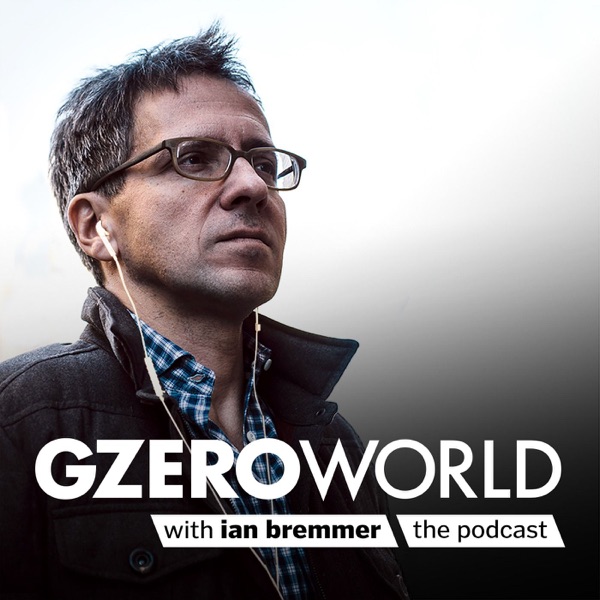
The United States will no longer play global policeman, and no one else wants the job. This is not a G-7 or a G-20 world. Welcome to the GZERO, a world made volatile by an intensifying international battle for power and influence. Every week on this podcast, Ian Bremmer will interview the world leaders and the thought leaders shaping our GZERO World.
On the charts
Every published chart this podcast appears in, in the snapshot behind this page. Each one links to the chart it came off.
From the feed
The latest episodes published to this podcast’s own RSS feed. Titles and descriptions are the publisher’s.
This week marks 25 years since 9/11—the deadliest terror attack the world has ever seen and a defining moment in American history. The attacks transformed US politics and national security. The war on terror became the organizing principle of American foreign policy. Former Secretary of Defense Mark Esper joins Ian Bremmer on the GZERO World Podcast to reflect on the day that forever changed how Americans thought about national security, and how the United States wielded its enormous power around the world. How much did we learn from the post-9/11 era and do we risk repeating the same mistakes? 25 years after the US launched its war on terror, America is once again fighting a war in the Middle East without a clear endgame or exit strategy. The United States is on the back foot in its war with Iran, Esper says. The original goal of getting Tehran to the negotiating table about its nuclear program isn’t even being discussed anymore. And meanwhile, the United States is dropping the ball on countering its biggest existential threat: China. Host: Ian Bremmer Guest: Mark Esper Subscribe to the GZERO World with Ian Bremmer Podcast on Apple Podcasts , Spotify , or your preferred podcast platform, to receive new episodes as soon as they're published. Hosted by Simplecast, an AdsWizz company. See pcm.adswizz.com for information about our collection and use of personal data for advertising.
More than half a century after humans last walked on the Moon, the next era of space exploration is taking shape. Getting there is cheaper, private companies are playing a much bigger role, and discoveries like vast reserves of lunar water have made the prospect of establishing a permanent presence on the Moon far more realistic. Ian Bremmer sits down with Canadian astronaut Chris Hadfield to talk about what this new space age could look like. They discuss the growing competition between the US and China, whether rivals can cooperate on the lunar surface, and who gets to write the rules as governments and companies begin looking beyond simply planting a flag. Hadfield also breaks down the practical challenges of living on the Moon – from powering a settlement through long lunar nights to the unanswered question of whether humans can develop normally in low gravity. He explains how private companies are turning space into a commercial marketplace, why regulation will inevitably struggle to keep pace, and why robots alone can never satisfy humanity’s drive to explore Mars. And drawing on nearly six months aboard the International Space Station, Hadfield reflects on the surprisingly wonderful experience of sleeping in zero gravity, circling Earth 2,600 times, and how seeing the planet from above fundamentally changed his perspective on humanity and our place in the universe. Subscribe to the GZERO World with Ian Bremmer Podcast on Apple Podcasts , Spotify , or your preferred podcast platform, to receive new episodes as soon as they're published. Hosted by Simplecast, an AdsWizz company. See pcm.adswizz.com for information about our collection and use of personal data for advertising.
What happens when the world’s safety net disappears? For decades, international aid has helped fight poverty, stop disease outbreaks, and keep fragile societies from falling over the edge. But after the shutdown of USAID last year, the relief system is in danger of collapsing entirely. International Rescue Committee President & CEO David Miliband joins Ian Bremmer on the GZERO World Podcast to talk about the long shadow cast by America’s retreat from global aid and what comes next. In truth, there has never been enough humanitarian aid to help the millions of people who desperately need it each year. But amid two major global crises–the Ebola outbreak in the Democratic Republic of the Congo and the war in Iran–the system is under more strain than ever before. Humanitarian aid is more than charity, it’s what keeps crises from spiraling out of control and conflict from spilling over borders. Can anything be done to keep the system from collapsing entirely? Who, if anyone, is stepping up to fill the vacuum left by the United States? Fresh from a trip to Ukraine, Miliband talks about the humanitarian need on the ground there, the ripple effects of the US pullback, and where the international relief system goes from here. Subscribe to the GZERO World with Ian Bremmer Podcast on Apple Podcasts , Spotify , or your preferred podcast platform, to receive new episodes as soon as they're published. Hosted by Simplecast, an AdsWizz company. See pcm.adswizz.com for information about our collection and use of personal data for advertising.
Ten years ago, Britain voted to leave the European Union in one of the most consequential political decisions of the 21st century. Supporters promised greater sovereignty, stronger economic growth, and a more independent future. Instead, Brexit ushered in a decade of political upheaval, economic uncertainty, and a fundamental rethinking of Britain's role in the world. On this episode of the GZERO World podcast, Ian Bremmer sits down with former UK cabinet minister Rory Stewart to assess Brexit's legacy a decade later. They discuss whether the referendum's core promises have been fulfilled, why Britain's economy has struggled to regain momentum, and how the global shift toward tariffs, industrial policy, and geopolitical competition changed the landscape just as the UK struck out on its own. The conversation also explores the remarkable rise of Nigel Farage—from Brexit architect to leader of Reform UK—and the financial scandal that now threatens his anti-establishment image. Stewart explains why Britain has cycled through seven prime ministers in ten years, whether Manchester Mayor Andy Burnham represents a new political alternative, and why voter frustration continues to reshape British politics. Finally, Bremmer and Stewart examine Britain's changing relationship with Europe and the United States, the future of the transatlantic alliance, and what the UK's experience can tell us about the broader challenges facing Western democracies. Subscribe to the GZERO World with Ian Bremmer Podcast on Apple Podcasts , Spotify , or your preferred podcast platform, to receive new episodes as soon as they're published. Hosted by Simplecast, an AdsWizz company. See pcm.adswizz.com for information about our collection and use of personal data for advertising.
While the world’s attention has focused on the Strait of Hormuz and the escalating conflict between the United States and Iran, another potentially transformative front has opened in Lebanon. Israeli attacks against the Iranian-backed group Hezbollah have left more than 4,000 people dead and displaced over a million. Now, a fragile ceasefire has raised a question diplomats have struggled with for decades: Can Hezbollah actually be disarmed? On the GZERO World Podcast, Ian Bremmer speaks with Lebanese-born journalist and Middle East expert Kim Ghattas about Iran’s shrinking regional influence, Israel’s possible plans for a long-term buffer zone, and Lebanon’s best chance in decades to reclaim control of its territory. Hezbollah remains armed, but Ghattas argues that it is substantially weaker, while the fall of Syria’s Assad regime has severed a crucial link in Iran’s regional network. Forcing the Lebanese Army to confront Hezbollah could trigger another civil war. Instead, Ghattas says Lebanon must gradually constrain the group, strengthen state institutions, and show Hezbollah’s supporters that diplomacy can deliver more than armed resistance. That will require Israeli withdrawals, international support, and difficult negotiations over the political future of Lebanon’s Shia community. “You constrain their capacity to operate. You crowd them out,” Ghattas says. “You demonstrate that diplomacy works and delivers for the Lebanese people in terms of aid, in terms of improved relations with the US.” Subscribe to the GZERO World with Ian Bremmer Podcast on Apple Podcasts , Spotify , or your preferred podcast platform, to receive new episodes as soon as they're published. Hosted by Simplecast, an AdsWizz company. See pcm.adswizz.com for information about our collection and use of personal data for advertising.
For more than four years, Russia has wagered that it can outlast Ukraine. The Kremlin has more troops, more resources, and a greater tolerance for casualties, betting that Kyiv—and its Western allies—will eventually lose the will to keep fighting. But that assumption is being tested. Ukraine is carrying out increasingly sophisticated strikes deep inside Russian territory, forcing Moscow to defend military bases, energy infrastructure, and even symbolic strongholds like Crimea. At the same time, NATO support has strengthened, Europe is expanding its defense cooperation with Kyiv, and President Donald Trump has struck a noticeably warmer tone toward Ukraine than he did just months ago. On the latest episode of the GZERO World podcast, Ian Bremmer sits down with former Ukrainian Foreign Minister Dmytro Kuleba to discuss whether the momentum in the war is truly beginning to shift. They examine Ukraine's strategy of bringing the war home to Russia, why Kyiv believes pressure inside Russia is essential to changing the course of the conflict, and what Putin's remaining options look like if the costs continue to rise. Kuleba also weighs in on Trump's changing approach to Ukraine, NATO's long-term commitment, Ukraine's path toward the European Union, and why he believes Europe's future security is inseparable from Ukraine's future. Subscribe to the GZERO World with Ian Bremmer Podcast on Apple Podcasts , Spotify , or your preferred podcast platform, to receive new episodes as soon as they're published. Hosted by Simplecast, an AdsWizz company. See pcm.adswizz.com for information about our collection and use of personal data for advertising.
Iran’s government emerged from the war with a powerful new story to tell: it withstood attacks from the United States and Israel, kept its grip on power, and gained fresh leverage in the region. But that is not how the conflict looks from inside the country. For ordinary Iranians, the conflict has brought more fear, deeper economic pain, and little sign that the political change many hoped for is any closer. The protest movement that shook the country has been pushed underground by a brutal crackdown, while the government uses internet restrictions to make it harder for people to organize, communicate, and show the world what is happening. On the latest episode of the GZERO World podcast, Ian Bremmer speaks with New York Times Iran correspondent Yeganeh Torbati about life inside Iran during the war. They discuss why Tehran feels more emboldened, how ordinary people are navigating repression and a worsening economy, why some Iranians feel betrayed by Donald Trump’s promises of support, and whether the frustrations that drove millions into the streets could eventually erupt again. Subscribe to the GZERO World with Ian Bremmer Podcast on Apple Podcasts , Spotify , or your preferred podcast platform, to receive new episodes as soon as they're published. Hosted by Simplecast, an AdsWizz company. See pcm.adswizz.com for information about our collection and use of personal data for advertising.
America turns 250 at a time when even celebrating the country can feel political. In the latest episode of the GZERO World podcast, Ian Bremmer sits down with comedian and political commentator Bill Maher to discuss patriotism, polarization, and the arguments Americans are having over what their country represents. Maher argues that patriotism should not belong to US President Donald Trump or any one political party. Americans can confront the country’s failures, he says, without losing sight of the ideals and institutions that have helped drive progress: the rule of law, civil rights, scientific inquiry, and a system of checks and balances designed to restrain power. The conversation also turns to the future of the Democratic Party, the political costs of ideological purity, and the challenge of winning back the center ahead of 2028. Maher weighs in on Trump’s second term, too, arguing that while the president continues to test the limits of executive power, Congress, the courts, and members of his own party have shown that America’s guardrails still matter. It is a wide-ranging conversation about the country’s past, its present divisions, and whether Americans can still find reasons to celebrate the experiment they share. Subscribe to the GZERO World with Ian Bremmer Podcast on Apple Podcasts , Spotify , or your preferred podcast platform, to receive new episodes as soon as they're published. Hosted by Simplecast, an AdsWizz company. See pcm.adswizz.com for information about our collection and use of personal data for advertising.
What can Democrats learn from winning in America's ultimate swing state? On the latest episode of the GZERO World podcast, Ian Bremmer sits down with Pennsylvania Governor Josh Shapiro to discuss the future of the Democratic Party, the growing crisis of trust in American institutions, and the biggest challenges facing the country at home and abroad. The conversation spans a wide range of issues: the future of North American trade and USMCA, the economic impact of tariffs, the war in Iran, changing US policy toward Israel, and the challenge of regulating artificial intelligence without stifling innovation. Shapiro also explains why he believes government must play a more active role in overseeing emerging technologies and protecting the public from the risks posed by AI. Throughout the discussion, Shapiro returns to a theme that has defined his time as governor: trust is earned through results. Whether the issue is economic opportunity, public safety, education, healthcare, or foreign policy, he argues that voters want leaders who can solve problems and improve people's lives. As speculation continues about the next generation of Democratic leadership, Shapiro offers a window into how one of the party's most closely watched figures thinks Democrats can win again, and what government must do to earn back the public's trust. Subscribe to the GZERO World with Ian Bremmer Podcast on Apple Podcasts , Spotify , or your preferred podcast platform, to receive new episodes as soon as they're published. Hosted by Simplecast, an AdsWizz company. See pcm.adswizz.com for information about our collection and use of personal data for advertising.
The World Cup descends on North America this week, bringing with it billions of viewers, billions of dollars, and no shortage of political controversy. But according World Cup Fever author Simon Kuper , none of that is new - the tournament has always reflected the world around it. On GZERO World, Kuper and Ian Bremmer discuss how national teams have become flashpoints in debates over immigration and identity, why FIFA remains one of the world's most powerful and least accountable organizations, how Iran's World Cup campaign could become a geopolitical spectacle, and what the tournament reveals about nationalism, belonging, and power in the modern world. Yet for all the politics, money, and controversy surrounding the tournament, Kuper argues the World Cup remains one of the few events capable of captivating entire countries and bringing billions of people together. The result is a tournament that reflects the hopes, divisions, and identities of the nations watching it. Subscribe to the GZERO World with Ian Bremmer Podcast on Apple Podcasts , Spotify , or your preferred podcast platform, to receive new episodes as soon as they're published. Hosted by Simplecast, an AdsWizz company. See pcm.adswizz.com for information about our collection and use of personal data for advertising.
From birthright citizenship to the independence of federal agencies, the Supreme Court is poised to decide a series of cases that could redefine the balance of power in Washington. Yale legal scholar and New York Times Magazine staff writer Emily Bazelon joins Ian Bremmer to assess what's at stake and whether the judiciary remains an effective check on presidential authority. Bazelon argues that Trump's effort to end birthright citizenship is unlikely to succeed, but says other pending cases involving the Federal Reserve and the Federal Trade Commission could significantly expand presidential control over agencies that Congress intentionally designed to operate independently. "I think it's very likely the court will rule in the president's favor," she says of the FTC case. The conversation also examines the Court's recent decisions on tariffs and voting rights, including a ruling that further weakened protections against partisan gerrymandering. Bazelon argues that the consequences extend beyond individual cases, contributing to a broader perception that the Court is becoming increasingly political. Yet despite declining public trust, Bazelon sees reasons for cautious optimism. While Congress has largely failed to constrain executive power, she argues that the judiciary, particularly the lower courts, has repeatedly pushed back against actions that exceed legal authority. The bigger question is whether those guardrails will continue to hold as the Court confronts some of the most consequential constitutional disputes still ahead. Subscribe to the GZERO World with Ian Bremmer Podcast on Apple Podcasts , Spotify , or your preferred podcast platform, to receive new episodes as soon as they're published. Hosted by Simplecast, an AdsWizz company. See pcm.adswizz.com for information about our collection and use of personal data for advertising.
Operation Epic Fury may be over, but the Iran war is far from resolved. On this week's episode, American Enterprise Institute Kori Schake joins Ian Bremmer to discuss the conflict's global ripple effects. With the Strait of Hormuz effectively closed to commercial shipping, the US finds itself in what Schake calls a Mexican standoff, unable to force Iran's hand without dramatic escalation, and unwilling to accept the humiliation of ceding control of one of the world's most critical waterways. Meanwhile, Washington's two biggest rivals are gaining ground. Russia is cashing in on higher oil prices at a moment when the Kremlin was under mounting financial pressure over Ukraine. In Beijing, the Trump-Xi summit took place with the White House in a weakened position. The US needs China's help pressuring Iran, and Xi knows it. As Schake puts it: "It's an important measure of just how much President Trump has lost in starting the war in Iran and pursuing it in the way he has, that he's having to go appeal to China, America's most powerful potential adversary, for assistance in delivering us from a problem of our own creation." The costs for US allies are adding up too. Partner countries are absorbing economic pain they had no hand in creating, with energy prices squeezing European economies. Schake also raises a harder structural question: with Patriot systems redirected from Europe to the Gulf and munitions stocks stretched thin, the war has laid bare the limits of the American defense industrial base, and what it means for the credibility of US commitments around the world. Subscribe to the GZERO World with Ian Bremmer Podcast on Apple Podcasts , Spotify , or your preferred podcast platform, to receive new episodes as soon as they're published. Hosted by Simplecast, an AdsWizz company. See pcm.adswizz.com for information about our collection and use of personal data for advertising.
Ian Bremmer's guest this week is author and Bloomberg defense tech reporter Katrina Manson, who spent years reporting on Project Maven for her new book on the Pentagon's AI push. The program launched in 2017 with a narrow mandate: use machine learning to process drone footage. It has since expanded into something far more ambitious. Autonomous weapons, drone swarming technology, and AI-assisted targeting are now central to how the Pentagon talks about modern warfare. The tech rollout is fast, but not reliable. Algorithms fail when the battlefield changes. The targeting process is accelerating to the point where operators are clicking through AI recommendations with little ability to question them. Manson says the military knows about AI's vulnerability "to sycophancy, to escalation, to bias and hallucination," and has not yet found adequate solutions. Subscribe to the GZERO World with Ian Bremmer Podcast on Apple Podcasts , Spotify , or your preferred podcast platform, to receive new episodes as soon as they're published. Hosted by Simplecast, an AdsWizz company. See pcm.adswizz.com for information about our collection and use of personal data for advertising.
Historian Michael Bustamante joins Ian Bremmer to discuss Cuba's economic freefall, Trump's end game, and the hopes of Cuban Americans. This week, Ian Bremmer sits down with University of Miami historian and Cuba expert Michael Bustamante to make sense of the US-Cuba standoff. Cuba is in its worst crisis in 30 years, with basic necessities like fuel, water and food in short supply. Between one and two million Cubans have left in the past five years, the largest exodus in the island's history. And the opposition is too weak, too scattered, and too decimated by exile and imprisonment to be a real political alternative. Trump says 2026 is the year of liberation. But Bustamante argues the hard realities don't match his expectations, and a military invasion is unlikely. A purely economic deal, closer to Obama's 2015 opening, might suit Trump's deal-making instincts, and Cuba's government has signaled it could live with that too. But it would be a betrayal of everything Cuban Americans in South Florida have been promised. And for Marco Rubio, it would be a defining political problem. Together, Bustamante and Bremmer discuss the realistic outcomes -- will Trump get what he wants, and can the 80 years old communist regime survive this crisis? Subscribe to the GZERO World with Ian Bremmer Podcast on Apple Podcasts , Spotify , or your preferred podcast platform, to receive new episodes as soon as they're published. Hosted by Simplecast, an AdsWizz company. See pcm.adswizz.com for information about our collection and use of personal data for advertising.
North Korea has nuclear weapons, a succession plan hiding in plain sight, and a personality cult that has outlasted Stalin's and Mao's combined. Wall Street Journal's Beijing bureau chief Jonathan Cheng argues the world keeps misreading Pyongyang because it insists on reducing it to an authoritarian state. North Korea is also a religious society, built on a divine rule centered on a "god-king", Cheng argues. Kim Jong Un, third generation leader of the Kim dynasty was able to consolidate his power while developping the nuclear arsenal his father had succesfully created. Now, with the Iran war reshaping global order, Kim's long bet on nuclear weapons looks like the smartest foreign policy call of the century. North Korea, long treated as a pariah nuclear nation on the international stage, seems to be taken seriously by top China has quietly dropped "denuclearization" from its own documents. Trump calls Kim Jong Un a friend. And Kim is already preparing a successor, his daughter, reportedly 12 years old, in plain sight. Subscribe to the GZERO World with Ian Bremmer Podcast on Apple Podcasts , Spotify , or your preferred podcast platform, to receive new episodes as soon as they're published. Hosted by Simplecast, an AdsWizz company. See pcm.adswizz.com for information about our collection and use of personal data for advertising.
Rising energy prices, higher inflation, and growing economic uncertainty — a Harvard economist says the fallout from the Iran war is already being felt. On the GZERO World Podcast, Ian Bremmer sits down with Harvard economist and former IMF Deputy Managing Director Gita Gopinath to unpack how the conflict is rippling through the global economy. As oil and gas prices surge, inflation is climbing, adding new costs for households and businesses and putting pressure on growth worldwide. Gopinath explains that while the immediate hit to global growth may seem modest, the bigger concern is longer-term “structural damage”—the slow-moving economic shifts caused by trade fragmentation, strained alliances, and geopolitical conflict. They also discuss why the US may be more insulated than other economies, how China is positioning itself for a more fragmented world, and whether the recent boom in AI investment can offset some of the economic drag. As inflation rises and global economic ties continue to shift, what comes next may matter even more than the immediate shock. Subscribe to the GZERO World with Ian Bremmer Podcast on Apple Podcasts , Spotify , or your preferred podcast platform, to receive new episodes as soon as they're published. Hosted by Simplecast, an AdsWizz company. See pcm.adswizz.com for information about our collection and use of personal data for advertising.
Ian Bremmer sits down with Ivan Krastev , Chairman of the Centre for Liberal Strategies and political scientist, to discuss Hungary's consequential upcoming election and what it means for the far right globally. For sixteen years, Viktor Orbán has dominated Hungarian politics, rewriting rules, consolidating power, and positioning himself as Europe's leading nationalist and Donald Trump's closest ally on the continent. But with parliamentary elections approaching on April 12th, his aura of invincibility is finally cracking. Opposition candidate Péter Magyar, a conservative former Orbán insider, is polling ahead by double digits, and the Trump administration is scrambling to help keep its favorite European in office. Krastev explains what most Americans get wrong about Orbán: that his real economic patron isn't Trump but China. Chinese investment in Hungary now exceeds Chinese investment in Germany and France combined, and Beijing's interest is straightforward: Orbán's willingness to veto any EU anti-China policy. Krastev also breaks down Orbán's ideological roots, arguing he is far closer to Putin than to Trump, anchored in 19th-century Hungarian nationalism and the grief of a nation that lost everything after World War I. Together, Krastev and Bremmer look ahead to what an Orbán loss would mean for Europe's far-right parties, for EU policy on Ukraine, and for Trump's own political brand. "For President Trump and for President Putin," Krastev says, "Orbán losing is going to be their personal loss." And if Trump's oldest, best-known European ally falls, being backed by Washington may soon be worth far less than it once was. Subscribe to the GZERO World with Ian Bremmer Podcast on Apple Podcasts , Spotify , or your preferred podcast platform, to receive new episodes as soon as they're published. Hosted by Simplecast, an AdsWizz company. See pcm.adswizz.com for information about our collection and use of personal data for advertising.
Ian Bremmer and Rahm Emanuel discuss the deepening conflict in the Middle East, US foreign policy under Trump, and the upcoming midterms. Rahm Emanuel argues that this is a war of choice, one President Trump made himself, not one driven by external pressures like Israel’s influence. While the Prime Minister of Israel has long pushed for military action, Emanuel stresses that the responsibility for war ultimately lies with the US president, not foreign actors. He also highlights how America’s fractured political system has complicated decision-making, making it harder for the US to act with a unified voice on the world stage. Emanuel argues that Trump’s actions have eroded relationships with critical allies, particularly in Europe and the Gulf. “The price of belittling your allies is now coming home to roost,” Emanuel warns, pointing to the growing isolation the US faces at a time when global cooperation is needed most. He also discusses the broader implications of US military deployments in the region and the rising threat of Iran's growing influence. Emanuel also addresses the internal division within the US, explaining how China is carefully watching America’s internal dysfunction. “Nothing China does scares me,” he says. “It’s what we don’t do here at home that scares me.”" Subscribe to the GZERO World with Ian Bremmer Podcast on Apple Podcasts , Spotify , or your preferred podcast platform, to receive new episodes as soon as they're published. Hosted by Simplecast, an AdsWizz company. See pcm.adswizz.com for information about our collection and use of personal data for advertising.
Ian Bremmer sits down with Thomas Wright , Brookings Institution fellow and former Senior Director at the US National Security Council, to unpack the deepening war in Iran and the divergent strategies shaping it. What are the possible outcomes for the widening conflict in Iran? What began as a dramatic opening strike has evolved into a far more complex war, with Washington, Jerusalem, and Tehran all pursuing different aims. Wright argues this isn’t simply about degrading military capability; it’s about competing endgames that may pull the region in unpredictable directions. As Wright explains, the United States is hoping for a pragmatic partner inside Iran, while Israel pushes for full regime change. “ Trump couldn’t care less if Larijani runs Iran. The Israelis do… They’re going to go full bore for regime change,” he says. At the same time, efforts to fragment the country risk creating “a much bigger problem… a Syria civil war on steroids.” The conversation also examines how other global players are responding. Europe has been muted, trying to accommodate the US, while China and Russia tread carefully, balancing economic and strategic interests without directly confronting Washington. Wright also discusses domestic implications, including the Pentagon’s evolving relationship with Silicon Valley and how frontier technologies like AI are intersecting with national security concerns. Looking ahead, Wright outlines both best-and worst-case scenarios — from the emergence of a more legitimate leadership to the specter of fragmentation that could intensify regional instability. With no clear exit ramp in sight, this conversation explores what might come next and why the endgame of this war remains so uncertain. Host: Ian Bremmer Guest: Thomas Wright Subscribe to the GZERO World with Ian Bremmer Podcast on Apple Podcasts , Spotify , or your preferred podcast platform, to receive new episodes as soon as they're published. Hosted by Simplecast, an AdsWizz company. See pcm.adswizz.com for information about our collection and use of personal data for advertising.
While Washington has become more hostile to globalization, Americans continue to buy foreign goods in record numbers. Lincicome notes that economic nationalism is “about an inch deep,” with support collapsing when Americans face higher prices for domestic products. The conversation also explores the impact of tariffs on businesses and consumers. Lincicome explains that if certain tariffs are ruled illegal, companies could seek refunds totaling up to $175 billion, potentially through litigation rather than administrative action. Krugman emphasizes that while policy debates grab headlines, public perception and midterm politics may ultimately matter more than the details of trade law or corporate strategy. From the immediate fallout of legal challenges to the broader question of how the U.S. navigates trade and globalization, Bremmer, Lincicome, and Krugman explore the delicate balance between politics, policy, and the economy—and what it could mean for American consumers, businesses, and the upcoming midterms. Host: Ian Bremmer Guests: Paul Krugman, Scott Lincicome Subscribe to the GZERO World with Ian Bremmer Podcast on Apple Podcasts , Spotify , or your preferred podcast platform, to receive new episodes as soon as they're published. Hosted by Simplecast, an AdsWizz company. See pcm.adswizz.com for information about our collection and use of personal data for advertising.
Ranking source
Apple Podcasts rankings via the Mato Topic Intelligence Platform.
Observed September 16, 2026. Cached outside the daily freshness window; the positions keep the date they were taken on.
Apple and Apple Podcasts are trademarks of Apple Inc., registered in the U.S. and other countries.
Pairs with
Bring this source into Mato to read its transferable patterns, then turn them into an original show for your own audience.