Mato just raised pre-seed Read more

Podcast charts
Published by Julie Kratz
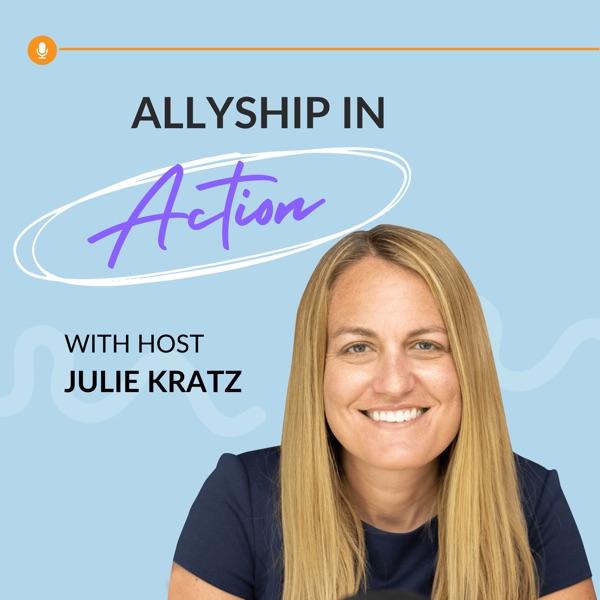
I left Corporate America because the workplace culture sucked. That realization was my personal pivot point, and it's the entire driving force behind my podcast, Allyship in Action. Inclusive workplace culture doesn't happen by accident. It is built through intentional, consistent choices. In every episode of Allyship in Action, my goal is simple. My goal is to cut through the noise, skip the performative shiny stuff, and deliver real, practical tools that turn good intentions into sustainable workplace culture change. Here is the core summary of what Allyship in Action is all about, and how all leaders can be better allies. From Performative Statements to Everyday Practice We've all seen standard corporate declarations like posting a statement on social media or making a grand pledge. While public support isn't inherently bad, true allyship begins when the cameras are off. Allyship isn't a badge you wear or a title you give yourself. Allyship is a verb. It requires continuous learning, unlearning, and showing up even when things get messy or uncomfortable. In our conversations with workplace culture experts, we repeatedly unpack how real allies move from passive empathy to proactive intervention. That means noticing who gets interrupted in meetings, recognizing whose ideas are credited, and ensuring that opportunities are distributed equitably across the entire team. Rewiring Workplace Culture for True Inclusion A healthy workplace culture isn't created by ping-pong tables or free snacks. Inclusive workplace cultures are built on psychological safety, fairness, and trust. For genuine inclusion to take root, organizations must audit the subtle systems that drive daily behavior. How are your meetings structured? How are performance reviews conducted? Who holds the informal power, and how is feedback delivered? On the podcast, we showcase practical tactics—like rotating an Inclusion Booster role during weekly staff meetings to monitor airtime and ensure introverted or underrepresented voices are heard. When you design everyday workflows with inclusion in mind, you stop relying on heroic individual acts and start embedding equity into the DNA of your organization. Protecting the Pipeline and How Inclusion Drives Talent Retention There is both a deep human case and a rock-solid business case for DEI. In today's shifting marketplace, talent retention is one of the single biggest operational challenges leaders face. High performers, especially women, racially diverse team members, neurodivergent colleagues, and Gen Z workers, simply will not stay where they have to mask their true selves or fight uphill against systemic microaggressions. When employees feel seen, heard, and valued for their unique lived experiences, engagement skyrockets, innovation thrives, and turnover drops. Protecting your talent pipeline isn't about complex retention gimmicks; it's about fostering an environment where people know, without a shadow of a doubt, that they belong. Engaging People with Power One of our biggest research insights is that inclusion work stalls when it remains isolated in ERGs or HR departments. Without people in positions of power actively engaged as allies, systemic progress hits a ceiling. Powerful leaders often stay on the sidelines out of a fear of making a mistake or saying the wrong thing. Allyship in Action serves as a compassionate, pushback-proof invitation for leaders to step up. Allyship isn't about having all the answers or acting like a superhero. It's about having the humility to say, "I don't know, but I'm here to listen, learn, and leverage my influence to help." Allyship is a Continuous Journey Allyship is progress over perfection. It's a practice. We are all works in progress. If we want better workplaces, we have to stay curious, challenge our own blind spots, and commit to taking small, consistent micro-actions every single day. When we do allyship well, we don't just change our teams, we also redefine what it means to lead for all.
On the charts
Every published chart this podcast appears in, in the snapshot behind this page. Each one links to the chart it came off.
From the feed
The latest episodes published to this podcast’s own RSS feed. Titles and descriptions are the publisher’s.
Finding balance in leadership and in life often feels like trying to do a high-wire act while juggling toddlers and a full-time career. That is why I was thrilled to catch up with Jess Ekstrom, founder of Mic Drop Workshop and author of Making It Without Losing It . Jess is a powerful storyteller who has built two million dollar businesses. She brings this incredible blend of real-world hustle and laugh-out-loud relatable humor. We got into what happens when we stop chasing everyone else's definition of success and start listening to what actually fuels us. Between tales of toddlers running yoga classes with a three-year-old and life on the road in an RV, Jess dropped some serious wisdom on how we can show up as better leaders, speakers, and advocates without burning ourselves out. Key Themes Lighthouse vs. Spotlight Speaking. True impact happens when you shift your focus away from self-perception and toward serving the audience. "Spotlight speakers go up on stage and they're concerned with perception, but a lighthouse speaker shifts the light from themselves to their audience or their listener. They're not concerned with perception, they're concerned with guidance." Driven by Intrinsic Motivation. Relying on external validation creates a fragile foundation for success, whereas focusing on internal purpose breeds resilience. "If we're always looking for external validation. We can't control that, versus intrinsically, we can only control what's happening inside of us and what motivates us." Managing Life's Four Cups. Time and energy are finite, so managing priorities requires recognizing that not every area of life can be completely full at once. "You have four cups: it's your relationships, your work, your health, your creativity. And then you have one jug of water every day. Every cup is not going to be at its brim. Some are going to have to suffer. And it's also temporary, and it's seasonal and shifts throughout life." Testing New Life Iterations. Growth doesn't require dismantling your entire life all at once. Growth can start with giving yourself permission to try new things in small doses. "Try something on. If there is a way that you can try on a new life, a new hobby, a new idea without blowing up your life in flames that can be very doable." Actionable Takeaway Test an ambition for 10 minutes a day . Instead of feeling pressured to make a dramatic, high-risk leap, give yourself a two-week trial period where you dedicate just 10 minutes daily to exploring that new goal or identity without any permanent commitments. Follow Jess at https://jessekstrom.com/
Have you ever tried dangling a carrot to get a desired behavior out of someone—whether it's offering points to your kids for clearing the dishwasher or dangling a bonus in front of your sales team—only to feel like you've created a transactional nightmare? You're definitely not alone! In this episode of Allyship in Action , I sat down with education scientist and author Dr. Özgür Bolat to unpack why our obsession with extrinsic rewards so often backfires. Drawing from his insightful book, The Reward Trap , Özgür helps us realize that while carrots might get temporary compliance, they secretly erode intrinsic motivation, trust, and genuine ownership. We had a candid, funny, and deeply relatable conversation about breaking free from the points system mindset at home and work, shifting our focus from control to true connection. Key Themes & Highlights Compliance vs. True Ownership: Extrinsic motivators like bonuses or points might get a task done, but they fail to foster genuine engagement or long-term commitment. "Rewards work if you want compliance. But if you want real ownership, real intrinsic motivation, real engagement and commitment, it may not work." The Hidden Costs on Trust and Fairness: Over-relying on rewards often triggers feelings of unfairness among peers and erodes trust between managers and employees or parents and children. "When there's a competition, when there's a winner, always there are some people who complain. As your manager, I start to think: Julie had the capacity... but she only did the bare minimum. Why? Then I will lose trust in you." How Rewards Narrow Creativity and Learning: Extrinsic incentives focus attention strictly on the immediate payout, leading people to take the easiest path rather than exploring creative solutions or deep learning. "When you offer a reward, you narrow that focus. If you offer a reward for creative work, you know what will happen? You will treat it as a mechanical work. Rewards can increase quantity, but not the quality." Shift from Control to Connection: True motivation comes from understanding underlying barriers, fostering agency, and creating shared values rather than imposing transactional rules. "In punishment and rewarding, you only care about one thing: outcome and consequences. You care about controlling. Beyond rewards, we move from control to connection." Actionable Takeaway. Instead of reaching for a reward or a penalty the next time someone struggles with engagement, pause and move from control to connection: ask open-ended questions to uncover the root cause of the hesitation, validate their experience, and collaboratively design a solution that builds internal ownership. Follow Ozgur at https://www.ozgurbolat.com.tr/
This week, I had the absolute pleasure of sitting down with the incredible Alex Partridge—founder of UNILAD and Lad Bible, host of the ADHD Chatter podcast, and author of Why Does Everybody Hate Me? . We dove deep into a topic that so many managers want to get right, but often feel totally lost navigating: supporting neurodiversity in the workplace, specifically when it comes to ADHD. The first time I managed someone with ADHD, I felt lost. I wanted to be an ally and build an inclusive space, but I didn't know what real, everyday support looked like. As Alex and I chatted, it hit me again how much untapped creativity, innovation, and resilience lies within our neurodivergent team members—if we actually build environments where they can thrive. When we take a step back, set aside our assumptions, and approach people with genuine curiosity, we don't just become better leaders, we create workplaces where everyone feels safe enough to drop the mask and bring their whole self to work. Key Takeaways & Themes Understanding Rejection Sensitivity Dysphoria (RSD). "Children with ADHD are exposed to 20,000 extra micro-rejections in their formative years. Over a child's life, they add up, they compound, and they create an adult who suffers from extreme emotional pain when someone criticizes you or rejects you as an adult." Recognizing the Worksite Manifestations of RSD. "If you are living your life constantly expecting criticism or rejection around every single corner, you put up a guard to protect yourself. It means you can't do anything unless it's perfect. You'll stay in the office four hours later than everyone else, or you'll stay up all night simply to complete that work to such a high standard because the thought of your boss even making a tiny correction to it is so painful." Building Psychological Safety from the Top Down. "When people in the office observe vulnerability coming from the top, that trickles down to them, and it creates the impression that if they ask for help. It sends the message that they can make that ask without fear of it being met with any kind of eye roll." The High Cost of Failing to Accommodate Neurodiversity. "80% of neurodivergent employees actually leave a company within three months post-the hiring stage because they are too anxious in that environment to do the job that they're able to do." Fostering Allyship Through Curiosity Rather Than Judgment. "Approach the whole conversation with curiosity rather than judgment. Always have an open mind and have that curiosity to ask yourself, 'Maybe that is the better way to do it?' When that mindset shifts, then suddenly there's a whole door of possibilities that open up to you." Concluding Actionable Takeaway Leading with Open-Ended Support: Instead of singling employees out by pointing to specific neurodivergent traits or diagnosing behaviors, leaders should proactively offer broad, company-wide avenues for help—and regularly ask a simple, open-ended question like, "Is there anything I can help you with?" or "Do you want five minutes to think about that assignment before taking it on?" Follow Alex at https://www.alex-partridge.com/
Welcome back to Allyship in Action! If you've been working in the diversity and inclusion space over the past few years, you know the corporate pendulum hasn't just swung—it's done full-on gymnastics. We've gone from the hyper-reactive commitments of 2020 to the nervous retreats of recent years, leaving many leaders wondering where to anchor themselves. I had the absolute joy of catching up with the brilliant Nani Vishwanath—a strategic leader at The Current Collective—who reminded me that when the external noise gets deafening, the answer isn't to duck and cover; it's to look inward. Nani brings a grounded, refreshingly practical perspective to systemic change (plus, anyone who can turn a conversation about helmet design for big hair into a masterclass on business strategy is my kind of human!). We dove deep into why true inclusion isn't an HR add-on, but a fundamental driver of business resilience. Key Themes 7 Whys Organizations often react to external pressures—whether chasing trends or dodging backlash—leading to fragile, unsustainable DEI strategies. Building an enduring foundation requires pushing past surface-level motives by continuously asking "why" until inclusion aligns directly with the core purpose and long-term success of the business. "If all of your leaders can do that [the 7 whys], the work is going to be so much more successful. And it should really be because of where we're trying to go strategically as a company..." — Nani Vishwanath Inclusive Design — With, Not For Designing workplace systems or products for marginalized communities without active collaboration misses the mark. True inclusive design builds with those who experience the most friction, uncovering systemic improvements that ultimately elevate the experience for everyone. "Build with and for those that are most marginalized or who face the biggest barriers... learn from their experiences with them, and then build something better. And it just leads to better design." — Nani Vishwanath Money is the Outcome — Relevance Diversity and inclusion are not merely cost centers or reactive PR measures; financial returns, innovation rates, and retention are downstream outcomes of staying relevant to an evolving workforce and customer base. "I think the money is truly an outcome of better design... the word I come back to a lot is relevance... you need to remain relevant to both your employees and to your consumers." — Nani Vishwanath Actionable Takeaway for Listeners Before rolling out your next inclusion initiative or revising a workplace policy, gather the team closest to the friction and run the 7 Whys exercise together. Keep asking "why" until you uncover a core reason that directly serves both your internal culture and your external business purpose.
Today we have Dr. Zeke Emanuel, whose new book Eat Your Ice Cream takes a refreshingly sensible look at longevity and what it actually takes to build a happy, healthy life. As an oncologist and world-renowned expert in bioethics and health policy, Dr. Emanuel has spent decades navigating complex medical landscapes—so when he talks about living better, I listen! What I love most about his approach is that he bypasses the extreme health trends and cuts straight to sustainable, real-world habits. We had such a fun conversation, diving into everything from the real math behind everyday risks to why building genuine human connection might just be your most powerful health routine. Key Takeaways Prioritize Life-Long Habits Over Extreme Trends. True longevity is built on sustainable, everyday choices rather than short-term self-deprivation or trendy fads. "You're going to have to do this for decades. And if you do it for decades it's got to be a habit that isn't about self-deprivation, because you will not stick to a habit that's self-depriving." Ground Risk in Perspective and Practical Action. People often fixate on sensationalized health risks or obsess over performance metrics, whereas practical risk assessment leads to far better peace of mind and realistic decisions. "Let's put things in perspective—and not enough people put things in perspective of how 'schmucky' are you. If you're doing [a metric or wearable] for compliance and it's not a motivator, it's anxiety-provoking—stop doing it." Nurture Social Connections as a Core Biological Health Routine. Building and maintaining strong relationships isn't just psychologically pleasant. Relationships (like allyship) directly impact stress hormones, inflammation, and overall physiological well-being. "It's not just in your head, as it were, but it is in your biology. The importance of relationships for health, wellness, and longevity is the most important thing you can do." Keep Learning and Stay Open to Nuanced Science. Cognitive health thrives on challenging the brain with new experiences, alongside maintaining an openness to evolving medical insights rather than rigid dogmatism. "It's good to use your brain in different ways. I'm always open. We've got to be open to new ideas and new research." Actionable Takeaway for Listeners Turn your wellness routines into social events. Whether it's inviting a friend along for your daily walk, joining a local club, or sharing a whole-food meal with family, combining social connection with healthy habits amplifies the physical and emotional benefits of both. Follow Dr. Emanuel at https://www.ezekielemanuel.com/
As an author and allyship advocate, I constantly find myself researching the power of human connection, yet I still fall into the same social traps as everyone else! We all intellectually know that relationships are vital to our health and happiness, yet we consistently talk ourselves out of simple, daily opportunities to connect. In this episode, I had the absolute pleasure of chatting with Nicholas Epley, behavioral science professor and author of A Little More Social . Nick's research translates complex social cognition into real, actionable insights that completely reframed how I think about my own social habits—from asking for help to bridging differences. Key Themes Our Beliefs and Miscalibrated Expectations Create Social Barriers. We often avoid social interaction not because we dislike connecting, but because we wrongly assume others won't respond positively to us. We hold mistaken, pessimistic beliefs that reaching out, asking for help, or expressing gratitude will be awkward or unwelcome. "We think other people will respond less positively when we reach out to connect with them in a warm and friendly way than other people actually do. And that pessimism creates a bar, a barrier, that keeps us from reaching out more often." — Nicholas Epley Frequency Trumps Intensity for Well-Being. Social connection is a choice made up of moments we regularly miss. Small, consistent, daily interactions have a much larger impact on long-term happiness than rare, intense social events. "Psychologists have learned that happiness is really a function not of the intensity of experiences that you have, but rather the frequency of them." — Nick Epley In-Person Conversations Surface Common Ground Across Divides. When we interact with people who hold opposing political views or come from different backgrounds, actual spoken conversations are remarkably effective at reducing dehumanization and building mutual understanding. "Conversation itself is extremely powerful for surfacing common ground, for allowing people to show mutual interest, to reciprocate interest with each other. They report afterwards that having a conversation with someone they disagree with was actually just as pleasant an experience as having a conversation with someone they agree with." — Nick Epley Allyship and Outreach are Appreciated More Than We Guess. Whether it is expressing long-overdue gratitude to a former mentor or reaching out to support someone different from us, the recipient values the interaction far more than the initiator anticipates. "It turns out there's no bad time to get a note from somebody saying they appreciate you so much, or you love them so much, right? There's no bad time to get that." — Nick Epley Actionable Takeaway for Listeners Adopt the "Recognize Easy Opportunities Routinely" (REOR) mindset: Start noticing the moments where you default to avoiding connection—like walking into the office or sitting in a car—and turn them into small, routine social habits.
I was so thrilled to sit down again with my dear friends and true allies, Dave Smith and Brad Johnson . Every time we connect, it feels like a warm reminder of what sustained, meaningful allyship really looks like—not just showing up when it's trending, but doing the steady, daily work that actually moves the needle. Listening to them walk through their allyship trilogy, from Athena Rising to The Good Guys and now their latest book, Fair Share , brought back so many memories of my own journey navigating corporate America as a new mom. (Trust me, I've shed my fair share of tears over spilled milk in a workplace closet!) What I love most about Brad and Dave is how they balance deep research with practical, real-world solutions that lift everyone up. They remind us that creating gender fairness isn't just about asking individual allies to do more. It's about fixing the broken systems so doing the right thing becomes the default. Key Themes Caregiving Skills Build Better Workplace Leaders Active caregiving and fatherhood develop crucial human skills like empathy and emotional intelligence, which directly transfer into effective leadership at work. "Dad's brains begin to shift and change, too. We're developing these skills around empathy that translates right back into the workplace when we go back to work." — David Smith Moving from Individual Allyship to Systemic Change Relying solely on individual (s)heroics isn't enough to achieve true equity. Organizations must embed allyship and gender fairness directly into company policies, metrics, and manager training. "All of these ally efforts are gonna be sort of one by one by one forever. Until the workplace changes, you see all the estimates that we have about a century to go to get to real gender parity." — Brad Johnson Supporting Paid Leave and Caregiving Transitions Creating a culture that normalizes and actively plans for parental and caregiving leave for both mothers and fathers improves employee retention and strengthens managerial capabilities. "Think about the work that's gotta be done when he or she leaves the workforce for this paid leave period, the transition back into the workforce with a plan. The minute you can do that, you're making better managers." — David Smith Unlocking Hidden Talent Through Returnships Organizations facing talent shortages can tap into a massive, highly qualified pool of candidates by creating clear pathways for individuals returning to the workforce after extended caregiving breaks. "Organizations aren't looking at those women, and they're forgetting that. Half the people at the top of the curve on IQ, EQ, creativity, they're out there if you would only create a glide path to return to your organization." — Brad Johnson Actionable Takeaway for Listeners Audit and support your managerial capabilities: To move from individual efforts to systemic fairness, organizations must carefully select managers based on competencies and actively train them to execute flexible work policies, support parental leave transitions, and lead inclusively. Follow Brad and Dave's work at https://workplaceallies.com/
If you've ever found yourself scrolling through social media, wondering if we are somehow slipping backward into the dark ages of workplace dynamics, you are definitely not alone. It is easy to look at the massive rise of toxic online ecosystems and feel a bit of existential dread. That is why I talked with Robert Baker, who always grounds me. He has this incredible gift for taking a heavy, whack-a-mole topic and infusing it with actionable clarity. We dive deep into why male allyship isn't about being an individual superhero, how global shifts are impacting our teams, and why—despite the algorithmic headwinds—there is still so much room for hope and real human connection. Key Themes From Our Conversation The Evolution of the Manosphere and Its Workplace Impact: We unpacked the troubling rise of the "manosphere"—an online ecosystem of influencers exploiting young men's loneliness to promote dominance and misogyny. Robert noted how this spills directly into the attitudes of the next generation entering our workforce. "I can't believe that people think these men are heroes, because basically what they're doing is they're exploiting the loneliness, the misery that younger boys and men can have. And these guys have kind of filled the vacuum with this misogyny." — Robert Baker The Power of Community Over Individual Heroism : True allyship isn't about being a lone savior; it's about creating a culture of positive peer pressure and shared community standards where calling out exclusionary behavior doesn't feel like a dangerous, solo mission. "I think creating an environment where you say, look, here are the standards of behavior in our community, and police it in a way. Using those standards to make sure that we all stick to something very positive." — Robert Baker The Business Imperative of DEI in Europe : While the U.S. landscape faces its own unique hurdles, European organizations continue to lean heavily into diversity and inclusion goals. This isn't just about compliance; it's driven by a firm understanding that diverse teams deliver better performance and innovation. "Europe still believes in this. I think many companies in Europe still believe in it, but they believe in it for business reasons, because they believe that they're going to get better team performance, they think diverse teams are better." — Robert Baker Mitigating Algorithmic Bias and Ensuring Equitable AI Access : Artificial intelligence is a major inflection point for gender equity. Leaders must actively step up to manage inherent data biases and ensure that access to exciting tech developments isn't monopolized by the traditional majority. "Certainly I'm seeing an even greater recognition that leaders need to enable equitable access to AI tools, and also make sure that the systems and the processes that are used within the company that uses AI create fair outcomes." — Robert Baker Actionable Takeaway for Listeners Create Positive Peer Pressure : Don't try to be a lone hero. Focus on building a community within your organization that establishes clear, respectful standards of behavior. By normalizing everyday micro-interventions collectively—like speaking up when someone is talked over in a meeting—you make inclusion the default system rather than an individual burden.
How do we actually live out psychological safety, rather than just talking about it as some grand, academic theory? A couple of years ago, Minette Norman and Karolin Helbig came out with the Psychological Safety Playbook. I've been using her practical phrases in my own training sessions ever since (with full credit, of course!). But as any facilitator, parent, or human being knows, putting this stuff into practice is darn hard. You want to be the supportive expert, but then real-world pressures—like meeting targets, sudden organizational shifts, or just plain old fear of looking foolish—kick in. That's why I sat down with them to talk about their new follow-up book. They wrote it because change-makers kept coming to them on tour, saying, "Okay, we read the basics, but now we're hitting roadblocks. What next?" What I love about their approach is that it's completely "no fluff." They give us real, actionable strategies to bake inclusion right into the DNA of our everyday work life, even when things get a little messy. Key Themes from the Discussion Courage as Vulnerability, Not Heroics. True leadership in a psychologically safe environment isn't about having a flawless track record or acting like a superhero. It requires the humility to acknowledge that you don't have all the answers and to actively invite your team to fill in your blind spots. "It's not about the big heroic acts. It's really about the courage to be vulnerable, for example. Particularly as a leader, that's not easy to do..." — Karolin Helbig The Intentional Practice of Listening . Listening is often treated as an obvious, baseline skill, but true listening requires a conscious commitment to sit with silence and process what is being said, rather than rushing to respond or dominate the room. "It sounds so obvious that we all know how to do it... and it is so darn hard, right? It really is. And we often think we're listening when we're not." — Minette Norman Recognizing Personal Emotional Triggers . Building psychological safety is a slow process that can be shattered instantly by an unmanaged, defensive reaction. Developing self-awareness around your own physical stress signals helps create a vital pause between a trigger and your response. "Psychological safety is really slow to build and quick to break. And if you can avoid these breaks. By becoming more aware of your reactions and handling them more skillfully, then a lot is gained." — Karolin Helbig Shifting the Narrative Around Failure . For teams to innovate, leaders must actively destigmatize mistakes. This means moving away from finger-pointing and instead treating unexpected outcomes as valuable learning experiments, a process that must be modeled from the top down. "If you're trying something new, and certainly if we're trying to innovate, there will be failure along the way. So the question is, how quickly can we learn from them and improve and move forward?" — Minette Norman Designing for Inclusion via Rotating Roles . Inclusion doesn't happen by accident; it has to be deliberately engineered into team dynamics. Using a rotating role like an "Inclusion Booster" ensures that monitoring the health of a meeting becomes a shared team habit rather than solely the leader's responsibility. "Meetings by default are not inclusive. So we need to design them for inclusion. The idea of the inclusion booster is just to have a rotating role of somebody in facilitating the meeting and paying attention that we actually behave in the way we earlier defined." — Karolin Helbig Actionable Takeaway for Listeners To move your team from theory to practice, introduce the "Inclusion Booster" role into your next recurring meeting. Rotate this responsibility among different team members each week, tasking them with observing meeting dynamics, ensuring equal airtime, and calling out interruptions using a lighthearted tool like the "ELMO" (Enough, Let's Move On) principle. Follow Karolin and Minette at https://thepsychologicalsafetyplaybook.com/
You might remember Katryn from episode 292, where we dove deep into the behavioral blueprint for inclusion. Well, a lot can happen in a year—or in our current case, since the wild ride of the 2026 election—and the DEI landscape is shifting beneath our feet. I'll admit, when I first started this work ten years ago, I thought we could just shout from the rooftops that inclusion matters and everyone would just magically get it. But as we look at the headlines today, it's clear that "shiny object syndrome" has left us with a lot of noise and not enough real, systemic change. Katryn and I sit down to unpack what global leaders are actually doing right now to push past the performative and get to the heart of what makes workplaces genuinely fair. Key Themes from the Conversation Moving from Noise to Systemic Change. Organizations frequently focus on highly public, performative declarations of inclusivity rather than restructuring the underlying processes that perpetuate bias. "Organizations were doing a lot of the shiny stuff... doing what we would call noisy things, right? Proclaiming, saying, being public... but obviously that not necessarily translating to real-world change." — Katryn Wright The Problem with Unconscious Bias Training. Treating broad, one-size-fits-all training modules as a standalone solution is ineffective and can create artificial metrics that trigger cultural backlash. "An awful amount of money was spent on something that the science shows is... ineffective at best, counterproductive at worst." — Katryn Wright Inclusion as an Aspiration, Not a Default Value. Framing inclusion as a predefined company value mistakenly implies that the work is already complete, whereas framing it as an ongoing aspiration invites employees to actively participate in closing the gap. "When we talk about inclusion as a value, it is not as effective as when we talk about inclusion as an aspirational goal... it suggests that we've been missing a trick to be bringing people on as much as we can." — Katryn Wright Precision and Data Science in Workplace Fairness. True progress requires identifying the exact inflection points in employee experiences—like hiring, promotion, and retention stages—where disparities emerge, and applying targeted behavioral interventions. "Let's go and be as precise as possible about changing behavior in that exact situation... when we are able to be as precise as possible about which specific behaviors need to change, we can get to those outcomes." — Katryn Wright Actionable Takeaway for Listeners Stop trying to de-bias your entire team all at once with sweeping declarations. Instead, pick one specific process in your daily workflow—whether it's how you audit resumes, run performance reviews, or distribute project assignments—and analyze the data to find where the equity gaps lie. Designing small, targeted interventions at precise moments is how real cultural evolution happens. Follow Katryn at https://www.morethannow.co.uk/
Sad to admit, after 350+ episodes, I have never dedicated a full show to sleep . I'll be the first to admit that I've been doing a ton of deep-diving into sleep lately . Between life changes, career shifts, and navigating perimenopause, my nights haven't exactly been peaceful . In fact, coming off a rough night myself, I'm sitting here with a massive afternoon coffee, fully aware that I reached for a sugary lunch to get through the slump ! We've all been trapped in that vicious cycle, right ? But today, we are busting the toxic, old-school corporate narrative that sleeping is lazy or just for babies. To help us break it down, I'm joined by the brilliant Dr. Carlos Nunez, Chief Medical Officer at ResMed . Carlos brings decades of medical expertise—and some truly humbling personal stories—to show us why sleep isn't just a healthy habit. Sleep is the absolute foundation of inclusive, effective leadership and a kinder workplace . Key Themes from the Conversation The Foundational Pillar of Human Health For decades, society has obsessed over diet and exercise trends, while treating sleep deprivation like a corporate badge of honor . In reality, sleep is the baseline that determines whether those other health goals even happen . "People are starting to realize it's not just one of the three pillars, it's probably the foundation on which the other two pillars sit." — Dr. Carlos Nunez The Direct Link Between Poor Sleep and Workplace Behavior A severe lack of sleep impairs cognitive function and emotional regulation to a level equivalent to intoxication, which directly drives erratic, negative, or toxic leadership behaviors in the workplace . "I was extremely sleep-deprived, and I remember being in a meeting, and I went off, like, in a way that I've never done before. I probably looked scary to my team because I was so sleep-deprived." — Dr. Carlos Nunez The Hidden Danger of Digital Engagement While blue light filters are helpful, the real disruptor keeping our minds awake at night is the mental stimulation and chemical rushes from pre-bedtime screen use . "What's worse than the light is the activation of your nervous system. The dopamine hits that you get from doomscrolling TikTok or social media for 30 minutes." — Dr. Carlos Nunez The Biological Toll of Untreated Sleep Disorders Ignoring long-term sleep issues due to ego or stigma does more than cause daytime fatigue—it starves the body of oxygen and significantly escalates severe cardiovascular and long-term cognitive health risks . "The research shows untreated sleep apnea, within 3 years, you have a 35% chance of dying... Your risk for cardiovascular mortality is 55%." — Dr. Carlos Nunez The Mind-Quieting Power of Arbitrary Focus When workplace stress and a lack of situational closure spark late-night rumination, shifting the brain toward simple, structured mental exercises can effectively short-circuit intrusive thoughts . "Getting your brain to focus on something that's really not thinking, that's kind of easy to do, all of a sudden, you drift off." — Dr. Carlos Nunez One Actionable Takeaway To protect your health and show up better for your team, establish a strict 30-minute digital wind-down routine before bed . Swap out the late-night doomscrolling or email checking for a period of quiet mindfulness . If your brain starts ruminating on tomorrow's to-do list, physically write down those 3 or 4 lingering tasks on a notepad to trick your mind into a sense of closure, or practice a simple, low-stakes mental word game to help your nervous system gently drift off . Learn more about Carlos' research at https://sleepsurvey.resmed.com/
When I started my business, I wanted to create spaces where every single person felt seen, heard, and like they truly belonged . It sounds so beautifully simple on the surface, doesn't it? But as we all know, making sure people feel heard at work can get incredibly messy . This week, I had the absolute pleasure of chatting with a peer of mine from grad school, Daniel Newton, an Associate Professor at the University of Iowa, whose research on workplace engagement is quite literally out of this world . He's spent years studying how people speak up and stay engaged, working with everyone from corporate teams to actual astronauts aboard the International Space Station . Now, I always say that if an astronaut floating in zero gravity can feel ignored by Mission Control, it's okay if your team is struggling to communicate during shift changes ! Daniel and I shared some great laughs about the black box of office suggestion boxes (which usually just collect dust and some very chaotic notes) and how we can all become better allies by lifting each other's ideas . Key Themes from the Conversation Even Astronauts Struggle to Feel Heard. Feeling heard requires more than just listening. Speaking up requires responsive action or transparent feedback . When leaders or institutions fail to act, it creates a sense of being ignored, even in high-stakes environments like space exploration . "I worked with an astronaut that literally shared an idea with Mission Control and they didn't do anything, so he had to say it again, and then again. Even people that train for years and years, and have the complete trust of NASA, even they don't feel heard in their work sometimes." – Daniel Newton The Power of the Newcomer Perspective. People often hesitate to speak up because they are new, young, or feel like an imposter . However, fresh eyes bring the highest level of creative disruption and innovation to long-standing, status-quo systems . "The newcomer perspective is really valuable because you're gonna see things differently. And so we may hesitate to speak up because we feel like we're too new." – Daniel Newton Problems Drive Action, While Ideas Risk the Back Burner. Voicing workplace problems creates an immediate sense of urgency that forces management to respond and implement solutions quickly . The paradox is that while problems get fixed, proactive and creative new ideas are often pushed aside . "Creating urgency means that managers respond faster, and the company is more likely to implement and resolve those problems. But the downside of that potentially could be that new, yet important ideas get put on the back burner." – Daniel Newton AI as a Useful Sounding Board, Not a Human Replacement. Artificial intelligence serves as a fantastic, low-stakes rehearsal partner to build confidence before pitching ideas . While AI excels at optimizing usefulness and efficiency, human input remains essential for true originality and novel thinking . "AI-generated ideas were really good with the usefulness component. But the humans were really good at the originality component. If we're generating new ideas, we need the human in the loop." – Daniel Newton The Power of Indirect Framing (The "Midwest Nice" Strategy). For those who struggle to be blunt, framing an idea or problem as a collaborative question lowers defensiveness in dominant leaders and invites them into the solution rather than putting them on the defensive . "Have we thought about X? Or might we consider doing this? Being indirect, asking or speaking up in the form of a question is helpful because it didn't put leaders on the spot. They don't feel as threatened." – Daniel Newton One Actionable Takeaway To help an idea land successfully with a dominant supervisor or to ease your own anxiety about speaking up, frame your insight as a question (e.g., "I wonder if we might consider..." or "Have we looked at..." ) rather than a direct mandate . This invites collaboration, lowers leadership defensiveness, and creates an immediate open door for your perspective to be heard .
Jenny Bates Heaton is the founder of Bates Leadership and has a brilliant new TEDx talk. What really blew me away during our chat was how Jenny used her personal journey facing a massive medical decision after a cancer-risk mutation diagnosis to completely rewrite the script on how we make choices. It got me thinking about my own life and how often we make decisions based on what we think we should do, rather than what aligns with our deepest values. For me, everything comes back to fairness, justice, and a whole lot of strength. When things feel off-balance in the world, my mental health definitely takes a hit with serious anxiety, but anchoring into those core values is what keeps me grounded. Jenny's framework isn't just a clinical exercise. It's a warm, slightly humorous, and deeply practical guide to finding your own word—whether that's power , strong , or serenity —and letting it do the guiding when life is A LOT. Key Themes From the Conversation The Power of Personal Reflection Prompts: True decision-making frameworks cannot be imported from someone else. Decisions must be organically mined from an individual's unique motivations and joys. "I started circulating my questions to everyone, and I didn't really get any reaction from people. because they weren't their questions. They didn't focus on their values. Now, I guide people through exercises to pull out their word to guide their decisions." — Jenny Bates Heaton The Intersection of Imposed Limitations and Good Intentions: Well-meaning colleagues often inadvertently sideline individuals, particularly from historically marginalized groups, by assuming their needs or limitations rather than asking them directly. "People with the best of intentions trying to protect me said, 'Oh gosh, I know you're going through a lot so let's catch up in a couple of months.' I had to advocate for myself quite a bit to convince them like, 'No, no, I'm good.'" — Jenny Bates Heaton Shifting toward Employee-Led Talent Management: Organizations must move away from paternalistic, closed-door succession and promotion processes and actively integrate the employee's voice to reduce systemic bias. "Think about how many times you don't have the employee's voice in the room for talent review and for promotions. Most companies do not allow an employee to put their name in the box for the roles that they would like to apply for. That's weird." — Jenny Bates Heaton Embracing the "Good Day, Bad Day" Culture: Cultivating psychological safety in a corporate system requires acknowledging that organizations, like people, will have off days without those mistakes defining their permanent identity. "The good day, bad day is one of my favorite exercises because it gives you permission to talk about the bad because it's just a day. It doesn't mean that you're always going to be bad, everyone has a bad day. Corporate culture personas are very much that way with good days and bad days just like humans." — Jenny Bates Heaton Actionable Takeaway Audit your favorite activities to find your decision-making anchor. Take a notebook and write down one or two hobbies you love to do consistently (like gardening, skiing, or reading). Ask yourself: What is the underlying feeling or motivation that compels me to keep doing this? Distill that feeling into a single core word—such as strength , control , or connectedness —and actively use that word as a litmus test for the next major professional or personal decision you have to make. Connect with Jenny at https://www.batesleadership.com/
If you are feeling a bit battered by the cultural waves and political turbulence swirling around us right now, trust me—you are not alone. I'll admit, when I woke up the morning after the 2024 election, I felt physically sick worrying about what the fallout would mean for our businesses and the hard choices ahead. That is why I love this conversation with Tara Jaye Frank. She met me right in that messy space with the ultimate reframe, sharing a beautiful story about how a simple grocery delivery from a man named Socrates gave her the title for her new book, You Are Before the World . It is a powerful reminder that before we can tackle the chaos of the world, we have to settle and stabilize ourselves first. We can't write people off, and we certainly can't pour from an empty cup, so let's dive into Tara's profound wisdom on how we can sustain ourselves while doing the heavy work of inclusion. Key Themes from the Conversation Emotional Detachment as a Tool for Curiosity: Facing deep misalignment in values doesn't mean you have to compromise who you are. Instead of absorbing disdain or getting defensive, true allyship requires shifting into the posture of a learner to understand the root of another person's perspective. "I have become good at that momentary emotional detachment. This conversation is not about me. My values are not at risk because I am engaging. And then I just get curious." The Power of Strict Media Boundaries: To protect your nervous system from chronic stress and cortisol spikes, you must take active control over how and when you consume information rather than letting alerts dictate your emotional state. "I get no news alerts sent to me. I retrieve the news when I feel I can take it in. I go get it, and I catch up, and then I move along." Relying on Routine During Dark Times: When navigating immense personal or professional disruption, implementing strict, loving routines provides a stabilizing anchor that protects mental health without requiring heavy cognitive lifting. "During the most difficult times in my life, I relied heavily on routine that didn't require any thinking, and that really helped me because routines calmed me down, they anchored me, they helped me reconnect to myself." Believing in the Generative Power of Others: Allyship means offering deep empathy and care without automatically swooping in to fix every problem, which ultimately respects and preserves the autonomy of others to navigate their own growth. "I have stopped automatically jumping into the deep end of other people's pools and instead, believing in their generative power. I'm watching people build confidence in their own generative power." Refusing to Pre-Work Unready Situations: To avoid professional exhaustion and burnout, stop over-preparing scenarios for partnerships, clients, or projects before you have the foundational data and aligned partners necessary to move forward. "I stopped getting ready for things that are not ready for me. I won't pre-work anymore, because to me, I now know that that is a waste unless there is alignment." One Actionable Takeaway for Listeners To protect your energy and remain an effective ally, audit your digital boundaries today by turning off all automated breaking news and social media alerts. Instead of allowing negative external forces to aggressively push information into your space throughout the day, choose one specific window when your nervous system is regulated to intentionally pull and process the updates you need. Think about a healthy news consumption routine you could adopt. Get Tara's book and follow her work at: https://tarajayefrank.com/
This week, we dive deep into a topic that's been on everyone's mind—and probably in every news alert you've received lately: AI. While the world seems to be split between AI will save us all, and AI is coming for our jobs, our guest and AI expert, Christopher Lind, brings us back to earth with a much-needed reality check. As Christopher points out, the real risk isn't just the tech itself, but the disconnect between leadership's lofty expectations and the actual human experience on the ground. He often jokes about AI being a hammer looking for a nail, but in our rush to be efficient, are we accidentally hammering away at the very human connections that make our organizations thrive? Christopher's insights remind us that while AI can help us move faster, it can't tell us where we're going or why it matters—that's still up to us. Key Themes and Insights The Disconnect Between Responsibility and Accountability: Senior leaders often have a skewed perception of AI's impact because they are removed from the daily tactical work. "One of the gaps that I keep talking about that continues to grow that is extremely concerning is the gap between responsibility and accountability in leadership. It's massive." AI as an Enabler, Not a Replacement: AI is a tool that requires a skilled, intentional human hand to be effective; it amplifies what is already there, whether that is skill or recklessness. "In the hands of someone who knows what they're doing it's great. In the hands of an amateur or someone who is being reckless, that amplification effect still applies." The Looming Labor Shortage and the Myth of AI Solutions: Despite the hype, AI cannot replace the massive human capital leaving the workforce as demographics shift, and relying on it as a quick fix avoids addressing deeper organizational issues. "The real problem's complicated and hard to figure out, and it's just easier for some to say AI's going to fix this." The Critical Importance of Human Connection and Trust: In an era of rapid technological change, fostering trust and genuine care for employees is a profound competitive advantage. "Demonstrating that you care about the people you work with is a profoundly interesting competitive advantage right now." Quality Over Quantity in the Age of Noise: Increased efficiency through AI shouldn't just mean producing more content or work, but rather freeing up time for higher-quality, deeper human engagement and development. "If all it's doing is making you faster at doing the same thing you were doing before, you are fundamentally failing with AI because it should be freeing up your time to be focusing on creating new or better solutions to problems." Actionable Takeaway Measure Trust as a Business Metric: Start treating trust within your team or organization as a tangible KPI. High trust creates resilience that no algorithm can replicate. When AI automates a task, don't just fill that time with more digital noise—reinvest it into people time through coaching, mentorship, and transparent conversations. Check out Christopher's Substack piece on AI: https://christopherlind.substack.com/p/the-labor-crisis-hidden-in-plain?r=2iledl and connect with him at https://christopherlind.co/ .
This week, Rebecca Hinds, the brilliant mind behind what is officially my new favorite book, Your Best Meeting Ever, is with us at Allyship in Action. I'll be honest—I listened to this one on Audible, and hearing Rebecca's voice felt like she was sitting right there with me, narrating every meeting catastrophe I've ever lived through! We've all been there: trapped in a conference room (or a Zoom square) while someone reads slides at us, doing the mental math of just how much this hour is costing the company. But as I always say in my leadership training, a meeting is a snapshot of your culture. If we want to build inclusive, equitable workplaces, we have to start by fixing the way we talk to one another. Rebecca reminds us that leading a great meeting—or saving a bad one—is a leadership superpower. Key Themes from the Conversation The Origins of Meeting Sabotage The modern, dysfunctional meeting actually mirrors tactics found in the WWII-era Simple Sabotage Field Manual, which advised citizens in enemy territory to disrupt progress through long-winded, frequent meetings. "It's ironic, it's frustrating, it's a little bit humorous that we use the same tactic that was once advised as a weapon of sabotage as business as usual." The 4D CEO Test for Meeting Necessity To combat meeting volume, organizations should use a two-part filter to decide if a live gathering is actually necessary or if it can be handled asynchronously. "A meeting should only happen if the purpose is to debate, decide, discuss, or develop yourself or your team. The content either needs to be complex or emotionally intense." Meeting Doomsday and the Power of the Reset Instead of a simple audit, a meeting doomsday involves a 48-hour calendar reset that clears all recurring meetings to break the status quo and alleviate social guilt. "I've come to believe we need that type of drastic measure because meetings become so ingrained on the calendar and we have an immense social guilt, often, associated with canceling them." Designing for Delight and Human Connection Effective meetings should engage the senses and include moments of delight—a combination of joy and surprise—to create positive associations and boost memory. "Leaving people with one moment of delight is another pretty concrete way to ensure that they're leaving the meeting remembering that experience and having a positive association." AI as a Tool, Not a Replacement While AI can automate administrative drudgery, sending a digital twin to a meeting in your place can signal that your time is more valuable than your colleagues'. "If you have a broken meeting culture, you know, AI is not going to fix that. Sending a digital twin is a pretty good sign you, as the organizer, haven't thought as carefully as you should about meeting design." Actionable Takeaway Audit your next agenda using the Verb and Noun rule. Instead of a vague heading like Budget Discussion, label the item Align on the Q3 Budget. This provides clarity on the objective, tells the group exactly when they have been successful, and prevents the first item from eating up the entire hour. Get the book and follow Rebecca at https://www.rebeccahinds.com/.
In this episode of the Allyship in Action podcast, Julie Kratz connects with Dr. Shawn Andrews to discuss the critical intersection of leadership, gender, and emotional intelligence. Allyship is not a one-time declaration but a continuous practice of small, intentional behaviors that bridge the gap between good intentions and real impact. Core Themes for Inclusive Leadership Allyship as a Sustainable Practice. Effective allyship flourishes when it aligns with an individual's natural strengths rather than feeling like a forced performance. "Allies can start by asking, ' How can I do this in a way that just naturally flows for me?" The Power of Micro-Behaviors. Meaningful systemic change is built on a foundation of small, daily actions within one's immediate sphere of influence. "Start with doing allyship at a micro level, and then scaling that up to systemic levels." Emotional Intelligence and Values as Anchors. Self-awareness and a firm connection to personal values prevent leaders from being swayed by external pressures or discomfort. "Being anchored into their values helped them to close that gap, and to make key changes in how they were showing up." Curiosity Over Certainty. A growth mindset requires the humility to stay curious and challenge the internal narratives we often take for granted. "How do I know that's true? Based on what information? Because we kind of have to detect our own lies from time to time." Actionable Takeaway Identify your top three character strengths and choose one specific micro-behavior—like checking in with a colleague—that feels like a natural extension of those strengths to practice this week. Take the allyship assessment and get in touch with Dr. Andrews at https://www.drshawnandrews.com/5levelsofallyship
I recently sat down with the brilliant Alexis Redding, a developmental psychologist at Harvard who is doing the heavy lifting to help us understand what's actually going on with young adults today . Alexis shared how we often look at the "kids these days" and think they're living in a completely different world, but Alexis's research shows that while the hashtags have changed, the big, messy feelings of figure-it-out-ness are the same as they were 50 years ago . Whether you're a parent to an almost teenager like I am, or a leader managing a Gen Z team, this episode is all about ditching the magic wand approach and getting real about our own stumbles to build authentic, human connections . Key Themes from the Conversation Ditching the Direction for Exploration. When giving advice to young people who aren't yet self-authoring, it's better to offer competing options that invite them to choose, rather than a single directive . "They have not heard from me guidance and a suggestion, they have heard a direction... what I want to do instead is give them two possible answers that contradict with each other slightly, that invite exploration." The Power of the Messy Middle. Leaders and mentors should share their own failures and C- moments to normalize the struggle and move away from the pressure of a perfect trajectory . "I need them to know that I know what it feels like to get a C-, and to feel disoriented by that... and also to know that it was kind of okay on the other side." Re-evaluating the Mental Health Crisis Label. Labeling every struggle as a crisis can ramp up the temperature and prevent honest, human conversations that might not actually require clinical intervention . "If a student says, 'I'm feeling really depressed,' what does that mean to you?... you might find in that conversation is that student is having an emotional reaction that does need clinical care... But we might equally find a student who says... 'it just feels really hard this week.'" Validation Over Problem-Solving. The most effective way to support someone in a difficult transition is to sit with them in the uncertainty rather than rushing to fix the situation . "It's not validation for validation's sake... it's like, 'that feels hard, and here's the conversation we're gonna have about it,' so that it is authentic, so that when that person walks away, they feel seen and heard." Actionable Takeaway The next time a young person or a direct report comes to you with a struggle, take three minutes to ask "What does that look like for you?" before offering a solution. Resisting the urge to fix things immediately allows them to feel seen and often helps them identify their own path forward . Enjoy getting to know Alexis? Watch Alexis' TEDx Talk and get her book Mental Health in College .
It was such a treat to sit down with my friend Kelsey Kates and really geek out over a topic that we often leave at the playground: play. I've felt that slow boil in my own career—trading my personality for steel-toed boots and a suit just to fit the corporate mold until I didn't even recognize myself in the mirror. Kelsey is here to remind us that we don't have to lose our joy to be high-performers. She brings this incredible blend of Google leadership experience and MIT neuroscience to show us that playfulness isn't about being childish; it's about a state of being that lowers our defenses and actually makes us better at our jobs. Key Themes from the Conversation The Difference Between Childish and Childlike: Kelsey clarifies that professional playfulness isn't about lacking impulse control, but about maintaining the neuro-flexibility to pivot and experiment in low-stakes environments. "We're not asking you to be childish... but inviting you to be childlike. That ability to shift and modify behaviors in that moment—that neuro-flexibility actually allows me to extrapolate that into other contexts." Play as a Signal for Psychological Safety: Incorporating humor or lightheartedness as a leader signals to your team that the environment is safe, reducing the biological stress response that serious corporate communication often triggers. "If I can signal with playfulness... I am reducing the power dynamic to say we are equals, we are in this together. I'm building rapport and wanting others to feel seen." The Neuroscience of Engagement: Play triggers dopamine, which isn't just a feel-good chemical; it actually aids in memory retention, focus, and deeper engagement with the subject matter. "In your memory, play is engendering deeper levels of focus and engagement and retention. There is neurochemistry that is happening." Authenticity and Leadership Credibility: Contrary to the fear that playing makes a leader look weak, research shows that leaders who embrace playfulness are actually viewed as more authentic and trustworthy by their teams. "When a leader shows up playfully, they are seen as more authentic, more trustworthy, because they are choosing to do it in a place where it's not necessarily looked at as a positive performance trait." Actionable Takeaway Start your meetings with a Purposeful Primer. Before diving into the agenda, spend the first three minutes on a low-stakes, high-connection prompt—like sharing a song from a personal pump-up playlist or discussing something you tend to over-analyze. Getting everyone's voice in the room within the first three minutes significantly increases their likelihood of staying engaged and collaborative for the rest of the meeting. Check out the extra resources Kelsey kindly shared to add play to your leadership tool kit. Play: How it Shapes the Brain, Opens the Imagination, and Invigorates the Soul by Stuart Brown: This is essentially the "Play Bible." It's a beautiful look at why we are biologically wired to play at every age. Brown, S. L., & Vaughan, C. C. (2009). Play: How it shapes the brain, opens the imagination, and invigorates the soul. Avery. Humor, Seriously by Jennifer Aaker and Naomi Bagdonas: One of my absolute favourites. Aaker, J., & Bagdonas, N. (2021). Humor, seriously: Why humour is a secret weapon in business and life (and how anyone can harness it. Trust us). Currency. Huberman Lab: The Science & Power of Play : I know you already listened to this, so more for the show notes. Huberman, A. (Host). (2022, February 14). Using play to rewire & improve your brain [Audio podcast episode]. In the Huberman Lab . Scicomm Media. Understanding the social benefits for playful employees in the workplace - building trust and authenticity Li Guo , Wenqi Liu , René T. Proyer , Suosuo Jia & Ying Wang September 2025.
Welcome back, everyone! I am just so thrilled to share my conversation with Sabrina Caluori, the CMO at Chief. You know, I talk a lot about capacity erosion—that feeling where your mental load is so heavy you're basically walking through quicksand while trying to run a marathon . Sabrina gets it. She's been in those high-stakes rooms at Paramount, hitting a wall of burnout so thick she didn't even have the words to name it yet . But what I love about her perspective is how she's flipped the script, moving from stepping off the ladder to building a community that reminds us we aren't alone in the isolation of leadership . We laughed about my grandma sleep schedule, but honestly, if we don't start treating our rest and autonomy as non-negotiable business assets, we're just designing our own exhaustion . Key Themes from the Conversation The Evolution of Ambition and Autonomy. The narrative that women are losing ambition is simply untrue; rather, their needs have shifted toward seeking more control over their impact and schedules . "Women are still as ambitious as ever, but the kind of tenure of that ambition had evolved... what's different is its autonomy, and influence, and flexibility." Rest as a Strategic Business Tool. Prioritizing restorative time and white space is not a luxury but a biological and professional necessity for high-level problem solving . "We forget, as leaders, that actually that rest, that restorative time... is when, a lot of times, the best bigger, more kind of white space-type ideas come back." Solving Isolation Through Peer Community. Senior leadership can be incredibly isolating, and having a peer network outside of one's own organizational chart is vital for sustained success . "Chief exists to solve isolation at the top... the ability to bring peers together to have the conversations that were so hard to have inside our org charts." Intentionality in the Age of AI. While technology is moving rapidly, women leaders are focusing on intentional leadership by prioritizing thoughtful deployment over mere speed . "We're putting intentional leadership first, over the speed of deployment... 80% of women are involved in leading AI efforts." Actionable Takeaways Audit your calendar for Thinking Time. Proactively block out small windows of time every single day to step away from your screen, reset your nervous system, and allow for the strategic white space your brain needs to lead effectively . Know the real story. Chief's data confirms women can find joy and autonomy at work. From the Chief/Harris Poll study on women's ambition: Women's definition of ambition may be evolving, but their belief in the power of community remains constant. The study found that 93% of women believe they have the collective power to build new "centers of influence." 94% say being around other ambitious women fuels their own ambition. Two-thirds believe their problem solving accelerates when brainstorming with other women leaders on business challenges. From the most recent Chief/Harris Poll study on women and AI: 86% of women leaders say their peer network is a competitive advantage in the AI era. 83% learn more from peer conversations about AI than from any formal training. 84% say they have made smarter AI-related decisions because of insights from their community
Ranking source
Apple Podcasts rankings via the Mato Topic Intelligence Platform.
Observed September 15, 2026. Cached outside the daily freshness window; the positions keep the date they were taken on.
Apple and Apple Podcasts are trademarks of Apple Inc., registered in the U.S. and other countries.
Pairs with
Bring this source into Mato to read its transferable patterns, then turn them into an original show for your own audience.