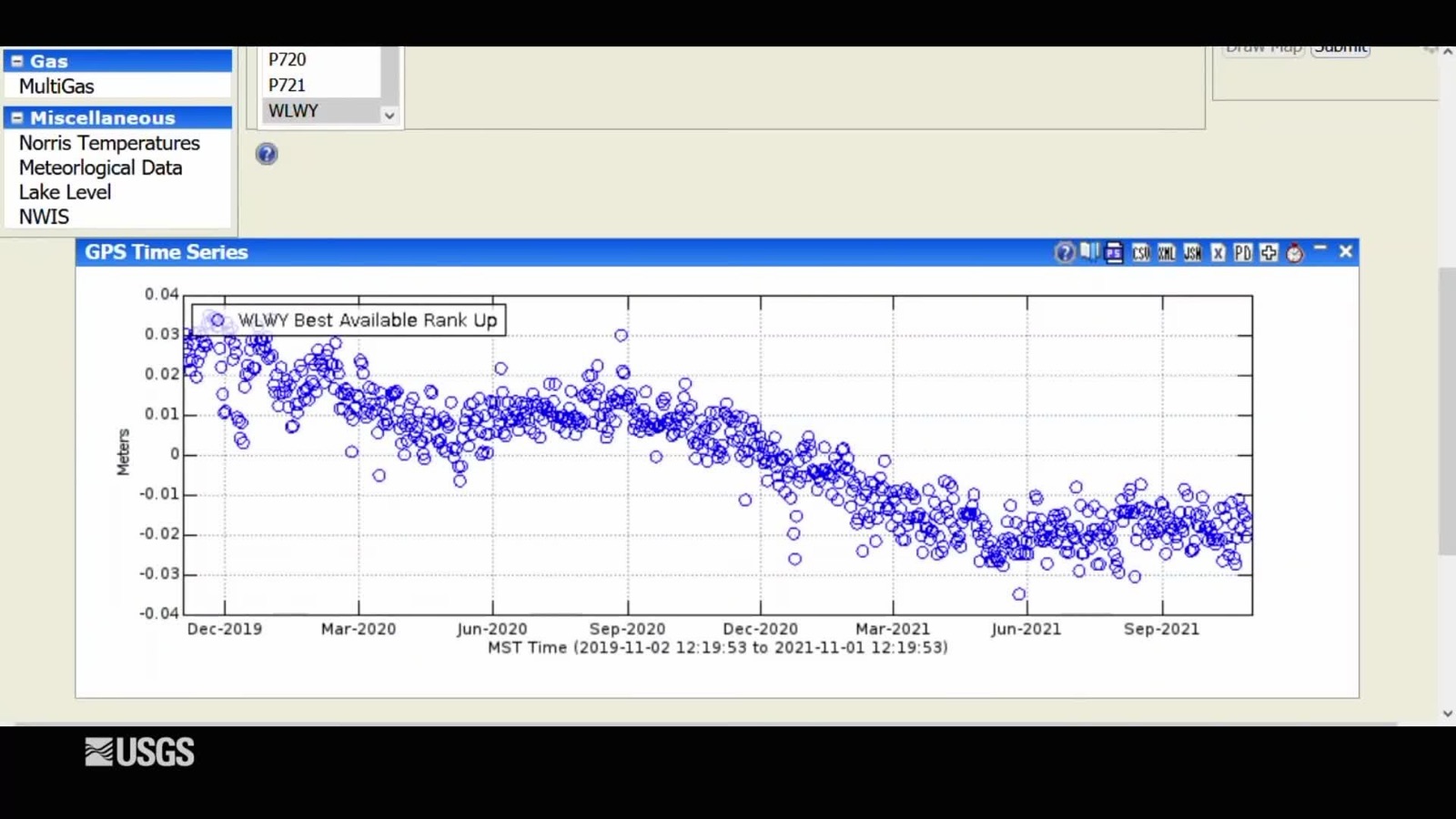
In the November 2021 update, Poland said the GPS record suggested a bit of uplift might be starting over the summer, amounting to only 1 to 1.5 centimeters, less than an inch. Newsweek reported that Poland said the uplift appeared to have started in July and that its cause was unclear.
He listed a seasonal change, or hydrothermal or magmatic processes deep below the surface, as the possibilities. Poland pointed to hydrothermal fluids as the most likely cause. Dissolved minerals can coat the subsurface pipes that carry hot water, much like corroded pipes in a house, and changes to those conduits can deform the ground above them.
Norris has done this before
The episode noted that Norris had uplifted in 2013 to 2014 and again from 2015 to 2018. Poland told Newsweek that there was also a major episode of uplift in 1996 to 2004, and he called uplift there common.
The 2013 to 2014 episode was the largest of recent decades, with the ground rising 5 cm in about four months. It ended on March 30, 2014, the day of a M4.8 earthquake, the largest in Yellowstone since 1980. Research later showed that water that would normally flow through the subsurface near Norris had been accumulating. Poland likened it to a kink in a hose, with the earthquake acting as the valve breaking open and letting the water out, after which the ground subsided.
A smaller version came in December 2017, when the station closest to the basin, NRWY, subsided by about 2 cm over two to three weeks before uplift resumed. YVO suggested that a blockage had breached and then resealed. The area around Norris deforms independent of the caldera, so the caldera-wide summer pause and Norris's own behavior are separate things to track.
How the Norris signal was later interpreted
By the December 1, 2021 update, the picture had changed. Norris had shown 1 to 1.5 cm of upwarp in the summers of 2019, 2020, and 2021, and it was unclear whether this was lasting uplift or the same seasonal pattern seen at other caldera stations. Over the following month the signal turned around just like the other stations, so YVO concluded that the Norris uplift appeared to be related to seasonal groundwater recharge.
Later updates found no lasting change. The June 2023 YVO update reported that a GPS station near Norris had recorded steady subsidence totaling about 2 cm since October 2022. The September 2025 update says Norris also recorded the seasonal uplift, with no overall changes over the past several years. The 2021 bump is best read as an early observation that later data explained, not as a new uplift episode.