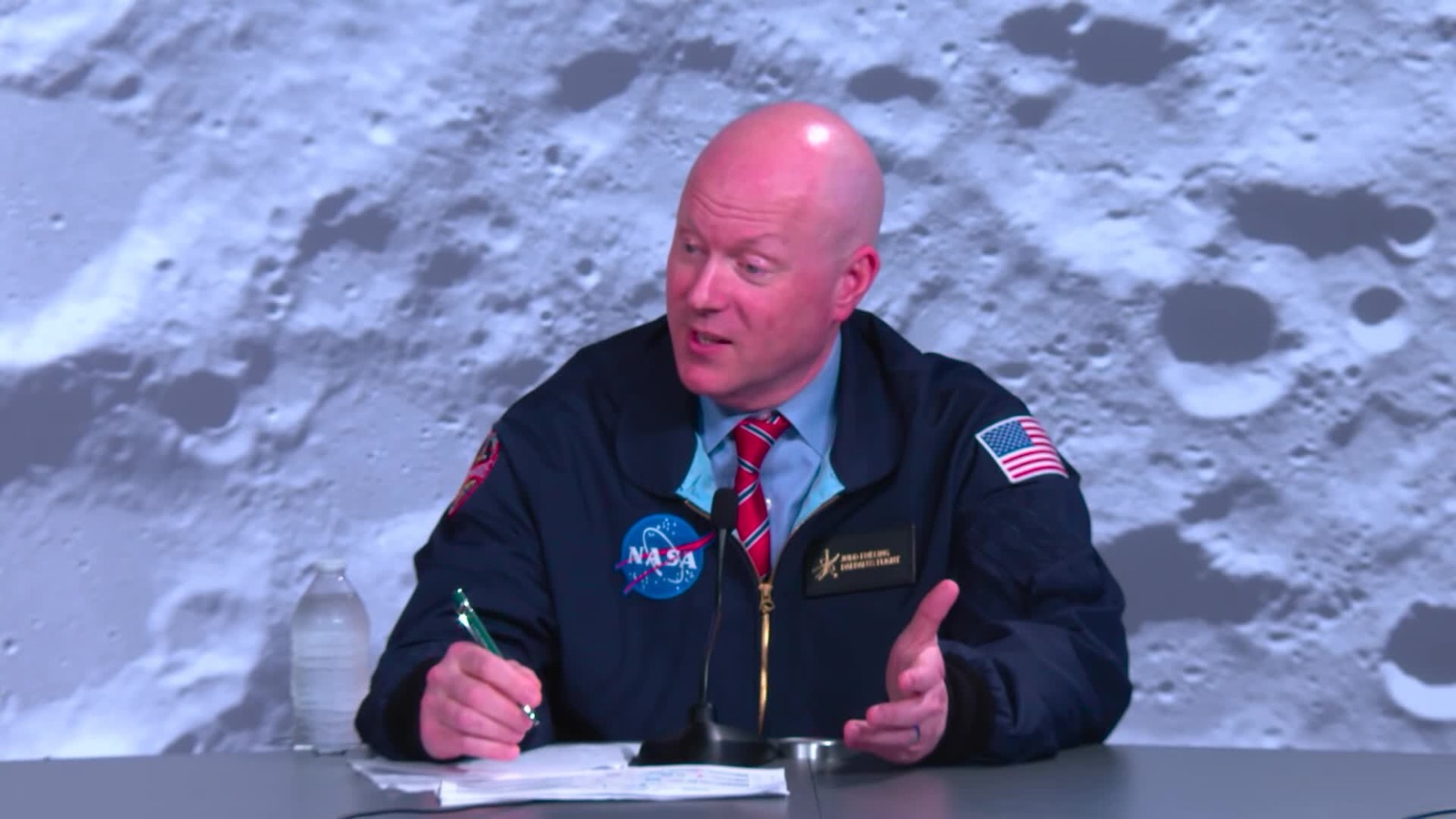
Artemis I had no caution and warning system because it had no crew. On Artemis II, a suspected cabin leak and other alarms proved false, and the team says the fix is to correct in real time, then update the limits.
By the Landing the Moon desk
Why false alarms matter on a crewed test flight
Artemis II flew the first caution and warning system that NASA has run with a crew aboard Orion, and some of its alarms turned out to be wrong. A suspected cabin leak and several caution alarms came on during the mission and were later found to be false. The team's explanation at a mission status briefing was direct. The alarm limits were set before the vehicle flew in its real environment, and some of them were not fully right.

This story has a soundtrack. Listen in the Mato player while you read.
Artemis II mission status briefing
Why Artemis I had no caution and warning system

A caution and warning system compares measurements from a spacecraft against preset limits and alerts the crew when a value drifts outside them. It exists for people. Speaker 3 at the briefing said Artemis I had no such system because there was no crew on board to alert.
That flight also carried no ECLSS, the environmental control and life support system that keeps cabin air, pressure, and temperature livable. Speaker 3 said the team measured many things on Artemis I, but without an ECLSS aboard it had not yet seen how that system would behave. Artemis II was the first time the crewed version met real flight conditions.
Outside observers made the same point. Chris Bosquillon of the Moon Village Association said in a Daily Mail report carried by NewsBreak that Orion's life support and deep-space systems had never been flown with a crew before. Orion itself had flown only once, on Artemis I, which makes it far less proven than a vehicle like SpaceX's Crew Dragon.
How alarm limits are set before flight
Speaker 2 described the process. Caution and warning limits are established jointly by the engineering team and the flight operations team. Putting both groups on each limit pairs knowledge of how the hardware should behave with knowledge of how the vehicle will be flown.
The catch, in Speaker 2's account, is that the vehicle has to operate in its environment, and that environment varies. A limit chosen before flight rests on predictions. Once real sensors report real values, some of those predictions miss. Speaker 2 said so plainly: sometimes the team does not get it fully right.
A limit set too tight raises an alarm for a condition that is still normal. A limit set too loose stays quiet when it should speak up. The examples discussed at the briefing were of the first kind, alarms that sounded and then proved false. Speaker 2 added that this keeps the team on its toes, because watching the systems closely is only useful if the team also understands what a system is telling them.
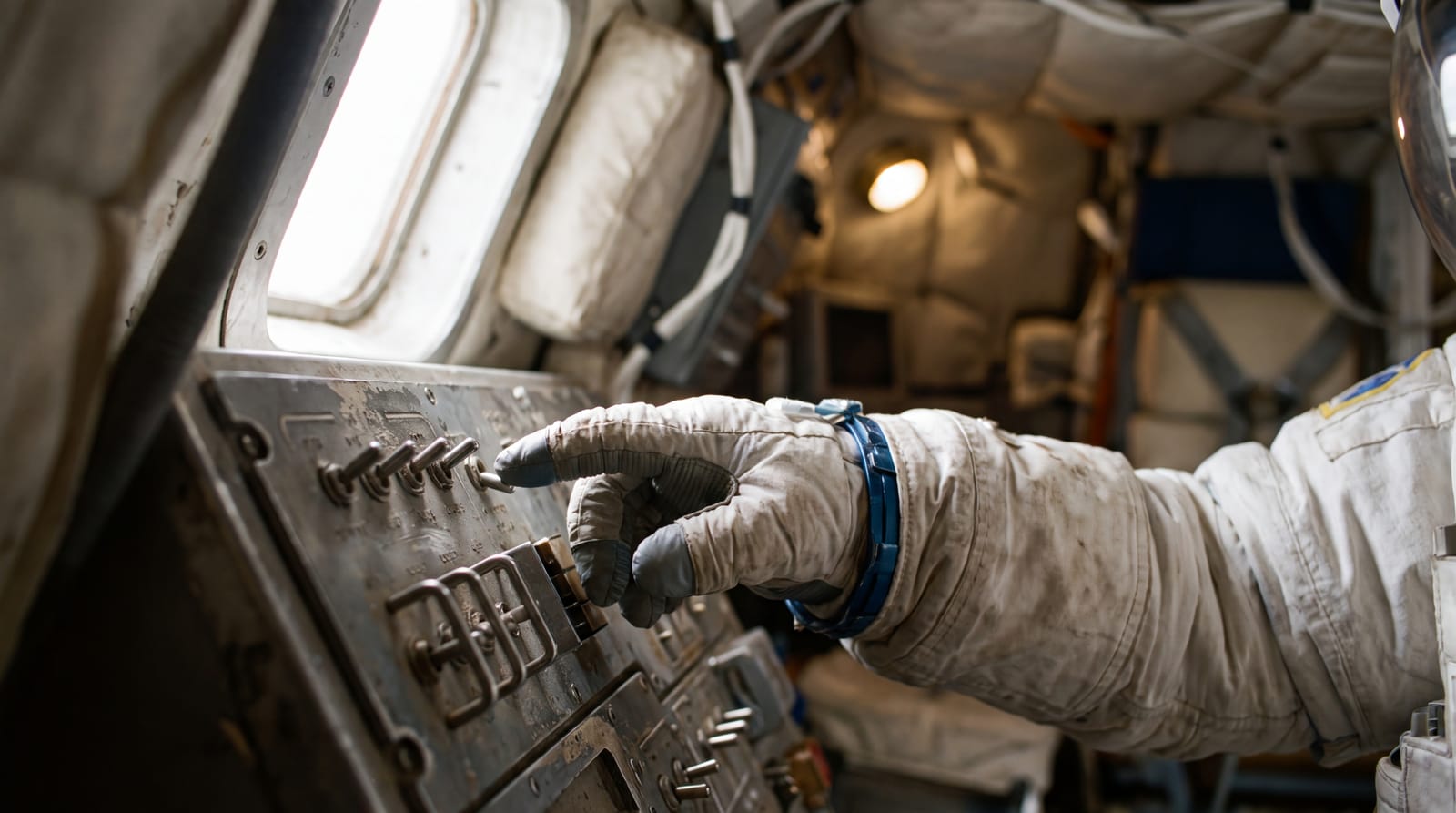
Learning how the vehicle operates with the human system in the loop.
The suspected cabin leak alarm
The most vivid false alarm came around Orion's translunar injection burn, the engine firing that sends the spacecraft toward the Moon. In the crew's first live interview from space, astronaut Jeremy Hansen said the crew received a warning message reading "cabin leak suspected," according to the Daily Mail report.
Two independent checks resolved it. Hansen said Houston confirmed it was seeing good cabin pressure, and the crew saw the same on board. UNILAD's account of the interview reports the same exchange and describes the message as a false alarm. Hansen said the crew then did the burn and was heading to the Moon.
Accounts differ on timing. The Daily Mail report says the message came 20 minutes after the burn, while UNILAD describes it as arriving as the crew entered a critical stretch tied to the burn. Hansen's own wording places it close to the burn. This article does not try to settle that. Both reports also mention a cold cabin, and UNILAD adds toilet problems, but those are separate issues from the cabin leak alarm.
Random glitches or a pattern?
A reporter at the briefing asked about the loops, the recorded audio of mission control conversations. Various sensor issues seemed to be cropping up that did not turn out to be real problems, including the suspected cabin leak and caution alarms that came on and then proved false. Was the team sensing a pattern, or were these random glitches on a test flight?
Speaker 2 answered with the limits explanation above. Speaker 3 added that Artemis I had no caution and warning system and no ECLSS, and called all of this learning: learning how the vehicle operates with the human system in the loop. Later, asked whether mission control was changing anything, Speaker 3 pointed to the "funnies" seen with sensors and the way systems behave. The team is reacting to them.
Correct in real time, then update the limits
Speaker 2 laid out a two-step approach. When a limit proves wrong, the team corrects it and makes adjustments in real time where it can. If it needs to, it makes adjustments for the future as well, once it has all the data.
The order matters. Real-time corrections keep the current flight usable, since a crew that learns to ignore a noisy alarm is less safe than one with a quiet, accurate one. The later update is where the lesson is stored. Changing a limit mid-flight on one anomaly risks tuning to noise, while waiting for the full data set lets the team see whether a value is a one-off or a consistent offset.
The cabin leak episode shows the first step working. An alarm arrived, the crew and Houston checked it against cabin pressure readings they each had, and the answer came from the signal that mattered rather than from the alarm alone.
What changes for Artemis III: data values, not code
Near the end of the briefing, Speaker 2 was asked about software changes. The answer was that the changes would be to caution and warning for sure. The limits the team put in place will teach it a lot, Speaker 2 said, and while people may call that software, it is really data values for limits. Those values will change.
The distinction is useful. Speaker 2 said the team had not seen any issues with the flight software, meaning the code itself, though more would be learned over the next few days. Updating a table of thresholds is a smaller and better-understood change than rewriting logic, and it reflects the finding that the false alarms came from limits set before flight, not from faulty code.
Context on Artemis III has shifted since the briefing. According to CSIS analysis of the revised plan, NASA revised Artemis III in February 2026 into a mission that tests landers, rendezvous operations, and spacesuits in low Earth orbit, with the crewed lunar landing moved to Artemis IV, no earlier than 2028. The sources reviewed here do not confirm which specific limits were changed for that mission.
What remains unverified
Several things are not established. The specific sensor causes behind the false alarms have not been identified in the material reviewed. Neither is it known which limits will change or by how much. The exact timing and wording details of the cabin leak message differ between reports, as noted above.
One forum-style post, a discussion thread on Orion reworks, lists open hardware items and speculates about recertification and schedule effects. Its claims are unverified, so this article does not treat them as fact. The hardware questions are also a different subject from alarm limits, and nothing in the briefing ties the false alarms to any of them.
Takeaway for anyone testing complex systems
A false alarm in a first-of-its-kind test is data. It says that a limit chosen from prediction met reality and did not match. The first response is to verify against independent signals, as Houston and the crew did with cabin pressure. The second is to fix what can be fixed while the system is live. The third is to carry the findings back into the limits once the full record is available.
Further reading
What Comes Next for Artemis? (CSIS). Analysis of the revised Artemis III and IV plan and its risks.
Artemis II astronauts' warning about a cabin leak turned out to be a false alarm (UNILAD). Media account of the crew's interview about the cabin leak message.
What to take with you
No crew, no alarm system
Artemis I had no caution and warning system because it had no crew to alert, and it also flew without an environmental control and life support system.
Limits set before flight
Caution and warning limits are set jointly by engineering and flight operations before flight, and the team acknowledged they do not always get them fully right.
Checked against cabin pressure
The suspected cabin leak message was checked against cabin pressure readings from both Houston and the crew, and it proved false.
Correct now, adjust later
The team's approach is to correct in real time where possible, then adjust the limits for the future once all the data is in.
Data values, not code
Speaker 2 expects the main software change for Artemis III to be updated limits, which are data values rather than flight software code.